PeekMeet - Local Dating & Chat
- 45.00
- 4.8
- Installs
- 10.00K
- Price
- Free

Screenshots



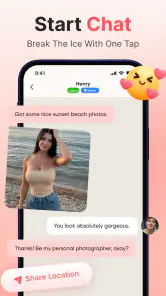


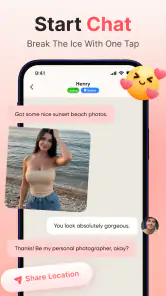

Analysis by Reviewed
I approached PeekMeet as someone looking for a more local, conversational way to meet people rather than another endless profile-scrolling routine. It is a free social dating app from Too sweet LLC, aimed at adults who want to discover nearby singles, begin a conversation, and decide whether there is a genuine connection. My overall impression is positive, but it depends heavily on what you need from a dating service and how comfortable you are making decisions with limited context.
The app is listed for mature users aged 17 and over, runs on Android versions from 6.0 onward, and is currently at version 1.0.0. Its early reception is encouraging, with a 4.8 average from around 1.1 thousand ratings and more than 10 thousand installs. Those numbers suggest that the basic idea is resonating, although they do not replace the experience of judging profiles and conversations for yourself.
How PeekMeet feels to use in everyday dating
I found the everyday appeal of PeekMeet in keeping local dating focused: a brief look at nearby profiles can lead into a conversation without requiring a whole evening of browsing. I’d use that rhythm to check whether the app fits my schedule and whether its local audience feels relevant, then judge its staying power by how naturally those conversations fit into the weeks that follow.
Readability and navigation that keep the first step simple
What I like most about PeekMeet’s concept is its directness. The purpose is easy to understand: look for local singles, start chatting, and see whether your personalities fit. That is a more approachable starting point than an app that asks you to complete a lengthy identity exercise before you can do anything useful.
For a new user, the most important question is usually not how many settings exist. It is whether the next action is obvious. PeekMeet benefits from having a narrow focus. When I imagine opening it after work, I can picture a short session built around checking nearby profiles, deciding who seems worth contacting, and returning later to continue a promising conversation. That makes it suitable for people who dislike turning dating into a daily administrative task.
The interface is also easier to evaluate when you separate two kinds of clarity. There is visual clarity, such as whether text is comfortable to read and controls are easy to identify, and there is social clarity, meaning whether a profile gives you enough information to make a sensible choice. An app can be visually tidy while still leaving users unsure why a person might be a good match. With PeekMeet, I would pay close attention to how much useful context appears before starting a chat, because local discovery is only helpful when profiles offer more than a face and a vague impression.
My practical advice is to treat the first few sessions as an orientation period. Notice which parts of a profile help you decide, which details you repeatedly overlook, and whether conversations can be revisited without losing your place. This is especially useful for people who find rapid swiping tiring or who prefer to make one considered decision at a time.
More From Our News Desk

Weather by Xiaomi Review: Clear at a Glance, Less Clear Up Close

X Under Pressure: Can It Recover When Posting Goes Wrong?

Clash of Clans Is Won Between the Battles

Android Auto Makes the Case for Quieter Car Software

MobiOffice: Transforming Mobile Productivity with Seamless Integration

EA SPORTS FC™ Mobile Soccer: Redefining Mobile Sports Gaming
The app’s free entry point lowers the pressure to commit immediately. You can test whether its style suits you before deciding whether any optional purchase is worthwhile. In-app items range from $4.99 to $99.99, so I would not buy anything during the first visit. First establish whether there are enough nearby people, whether the conversations feel respectful, and whether the app fits your routine. A paid option cannot solve a weak local pool or an uncomfortable communication style.
Motor and sensory considerations in real use
Dating apps can create physical and sensory friction even when their main purpose seems simple. Repeated swiping may be uncomfortable for someone with limited hand movement, tremors, or fatigue. Fast visual browsing can also be difficult for users with low vision, attention differences, or sensory sensitivity. PeekMeet’s local, chat-focused idea may work better for those people when used in short, deliberate sessions rather than as an endless browsing feed.
I would approach the app with a slower workflow: open a small number of profiles, read the available information, and pause before responding. That reduces the need for constant gestures and makes it easier to judge whether a conversation feels worthwhile. If a person relies on larger system text, screen magnification, voice input, or other device-level assistance, the sensible test is whether the app remains usable with those settings enabled. The experience can vary by phone, operating system, and personal setup, so I would not assume that a clean appearance automatically means every control will be comfortable.
Chatting can be an advantage for people who communicate better in writing than in spontaneous face-to-face conversation. A message gives you time to choose words, reread what you wrote, and decide whether you want to continue. That can make first contact less intimidating for someone with social anxiety or a communication style that benefits from extra processing time.
At the same time, text-first dating is not universally easier. Users with dyslexia, visual fatigue, limited literacy, or difficulty interpreting tone may find long conversations demanding. Short messages, plain language, and one question at a time are useful habits. I also recommend telling a new contact early if you prefer slower replies or clearer wording. That is not an accessibility setting, but it can prevent a mismatch from being mistaken for disinterest.
People with hearing-related access needs may appreciate that an initial conversation can happen through text rather than a call. Conversely, anyone who depends on captions, sign-language communication, or a particular audio arrangement should consider whether the app’s communication style matches their needs before investing much time. I would not choose PeekMeet specifically for advanced communication accommodations; I would choose it for the possibility of starting with manageable written contact.
Situational access: where the local focus helps
The local angle is most useful when your dating life is shaped by geography. Someone who has recently moved, works remotely, or wants to meet people within a practical travel distance may find the idea more relevant than a broad service that mixes distant profiles into the same browsing experience. It can also suit a person who has limited energy and wants to avoid arranging dates that require an unrealistic journey.
There is an important trade-off, though. A local service is only as useful as the people available in your area. In a large city, nearby discovery may feel lively and varied. In a smaller town, the selection may be narrower, and the same profiles may appear more often. That is not a flaw unique to PeekMeet, but it changes the value proposition. If your area has a small dating population, a larger established alternative may give you more choice, while PeekMeet may still be useful as an additional channel rather than your only one.
I can imagine using it during a normal weekday in a very specific way. After finishing work, I might spend ten minutes reviewing a few local profiles while my attention is still available, then answer one conversation later when I am relaxed. Instead of trying to maintain several chats at once, I would keep the number manageable and move toward a clear plan only when the exchange feels comfortable. That approach reduces screen fatigue and makes it easier to notice whether someone respects boundaries.
For users with mobility limitations, local discovery can be more than a convenience. A shorter distance may make a first meeting easier to plan around accessible transport, familiar surroundings, rest breaks, or support from a trusted person. I would still confirm the exact venue independently and choose a public place with the facilities you need. The app can help narrow the geography, but it cannot guarantee that a particular date location will work for your body or circumstances.
Shift workers, caregivers, and people with unpredictable schedules may also benefit from a chat-first approach. You can begin a connection without promising immediate availability. However, this only works if both people understand that delayed replies are normal. I would state my schedule plainly rather than allowing a gap in responses to create unnecessary pressure.
How it compares with familiar dating alternatives
Compared with a large, general-purpose dating platform, PeekMeet feels more focused around local discovery and the first conversation. That can be refreshing if the usual alternatives overwhelm you with elaborate profiles, constant recommendations, or a high volume of matches. A narrower experience may help you concentrate on people who are realistically close enough to meet.
The compromise is breadth. Bigger services often have deeper user pools, more established routines, and a wider range of preferences represented. They may be better for someone seeking a very specific community, a long-distance connection, or a large number of active conversations. PeekMeet is a more sensible experiment for a person whose priority is meeting local singles without turning the process into a full-time hobby.
It also differs from social networks that happen to include dating features. A general social platform may be better for maintaining existing communities or finding people through shared interests. PeekMeet’s advantage is that the dating intention is clearer from the start. That clarity can save time, but it also means you should be comfortable with a more direct romantic context.
I would not replace every other option with it immediately. I would use the free version to compare the quality of local conversations with the services I already know. If PeekMeet produces more natural exchanges or a better geographic fit, it earns a regular place in my routine. If another app offers a stronger community for my identity, interests, or communication needs, that alternative is the better choice even if PeekMeet is easier to open.
Remaining barriers and points that deserve caution
The biggest practical barrier is not the sign-up cost; it is uncertainty. A short profile may not tell you enough about communication style, intentions, accessibility needs, or personal boundaries. That means the user has to do some of the work that a richer profile system might normally handle. I would avoid making quick assumptions from location or appearance and use the first messages to clarify what each person wants.
Another limitation is the emotional effort of local dating. When the pool is small, an awkward conversation can feel more visible, and repeated encounters with similar profiles can become discouraging. People who need a large and constantly changing selection may find a broad dating service more satisfying. PeekMeet is better approached as one focused route to meeting people, not as a guarantee of immediate compatibility.
Because the app is mature-rated, it is not appropriate for children, and adults should still apply ordinary online-dating caution. I would keep personal details private at the beginning, avoid sending money or sensitive documents, and arrange an initial meeting in a public place. Tell a trusted person where you are going, use your own transport when possible, and leave if the interaction becomes controlling or uncomfortable. Those steps matter regardless of how polished a dating app feels.
Accessibility also requires personal testing. I would check whether text remains comfortable with my preferred display settings, whether touch targets are manageable, whether notifications interrupt me at unsuitable times, and whether chat demands more concentration than I can comfortably give. These are practical questions rather than claims about formal accessibility support. If the app does not fit your device settings or communication needs, no amount of local reach makes it the right tool.
Users should also think carefully before making an in-app purchase. The available items span from $4.99 to $99.99, which is a wide enough range to justify a cautious approach. I would only consider paying after identifying a concrete benefit in my own use, such as a workflow improvement that saves time or reduces frustration. I would not spend simply because a conversation is slow; the problem may be the local audience, the profile quality, or the match itself.
Who I would recommend it to
I would recommend PeekMeet to adults who want a straightforward way to explore nearby dating possibilities and begin with text. It is particularly appealing if you have recently moved, prefer realistic travel distances, dislike crowded dating interfaces, or need time to think before replying. Someone with limited energy may also appreciate a short-session routine built around a few profiles and one or two meaningful conversations.
I would be more cautious about recommending it as the only dating app for people in small communities, people looking for a highly specialized dating group, or anyone who needs extensive communication accommodations. Those users may get better results from a larger service with a more established community or from a platform designed around their specific needs.
The developer, Too sweet LLC, has positioned this release as a focused social experience rather than a complicated dating ecosystem. Since the current version is 1.0.0, I would judge it mainly on whether the core path works for me: can I comfortably find relevant local people, understand enough to start a respectful chat, and manage the conversation without unnecessary strain? That is a more useful test than chasing every possible extra feature.
My inclusive verdict
PeekMeet is worth trying if local connection and a low-pressure start matter more to you than having the largest possible dating network. I like the way its central idea can support different routines: a person can browse briefly, write carefully, and decide at their own pace whether a conversation deserves more attention. That makes it a reasonable option for users who find fast, high-volume dating tiring.
My recommendation comes with clear boundaries. Test readability and touch comfort on your own device, do not assume that a local profile guarantees an accessible meeting place, and compare the available community with alternatives before paying for anything. If the nearby pool feels thin or the communication demands do not suit you, another service may be more inclusive in practice.
For me, the strongest reason to install it is not the promise of instant romance. It is the chance to make local dating feel more manageable: fewer unrealistic distances, a clear reason for being there, and room to begin with a conversation. If that matches your situation, the free starting point makes PeekMeet a sensible experiment. If you need a broader community or more specialized support, keep looking rather than forcing the app to solve a problem it was not built to address.
PeekMeet - Local Dating & Chat Frequently Asked Questions
Is PeekMeet available for my device, and what age is it intended for?
PeekMeet is a social app for Android devices running version 6.0 or later, and its content rating is Mature 17+. That age rating makes it important to consider whether the app is appropriate for you before downloading. It is designed around meeting local singles and chatting, so users should approach profiles and conversations with the same care they would use on any dating platform.
Who makes PeekMeet, and is it an established app?
PeekMeet is developed by Too sweet LLC. It has more than 10,000 installs and an average rating of 4.8 from around 1,100 ratings, with 45 written reviews. Those figures can offer a quick sense of its store presence, but they cannot predict whether you will find active, compatible people in your area; that experience can vary depending on your location and the local user community.
What is PeekMeet - Local Dating & Chat, and how does it work?
PeekMeet is a location-focused dating and chat app designed to help you discover people nearby who may be interested in meeting or starting a conversation. After creating a profile, you can browse other users, review their photos and personal details, and interact through the available matching or messaging features. The experience depends on your location, profile activity, and the number of active users in your area.
Is PeekMeet free to download and use?
PeekMeet is free to download, but some features may require in-app purchases ranging from $4.99 to $99.99 per item. Basic access may allow you to create a profile and explore other members, while enhanced options can include increased visibility, additional messages, advanced discovery tools, or other premium benefits. Check the app’s payment screen carefully before confirming any purchase.
Does PeekMeet require my location, and can I control my privacy?
Because PeekMeet focuses on local dating, it may request access to your device location to show potentially relevant people nearby. You should review the permission request and choose the level of access available on your device, such as approximate location or access only while using the app. Avoid sharing your home address, workplace, financial details, or other sensitive information in your profile or conversations.
Pros
- Location-based discovery helps you meet people nearby.
- Quick chat tools make starting conversations simple.
- Profile browsing is easy to understand for new users.
- Useful for casual dating and low-pressure social connections.
- Compact app design keeps the main features easy to access.
Cons
- Matching quality may vary depending on activity in your area.
- Some features may require in-app purchases or a subscription.
- Location-based services can raise privacy concerns for some users.
- Profiles may differ widely in detail and authenticity.
- You may encounter ads or prompts encouraging upgrades.
- Category
- Social
- Version
- 1.0.0