OneWire: Latest News & Alerts
- 158.00
- 4.5
- Installs
- 100.00K
- Price
- Free

Screenshots





Analysis by Reviewed
News apps are easy to judge by their headlines, but much harder to judge by the way they fit into everyday life. I spent time with OneWire: Latest News & Alerts as a mobile news and magazine app, paying particular attention to how useful its alerts feel, how much control the reader has, and where caution is sensible. My overall impression is that it aims to put breaking stories, nearby updates, and severe-weather information in one place without asking the reader to build a complicated news routine.
That focus makes it more practical than a traditional magazine-style reader when I want a quick update rather than a long browsing session. At the same time, I would not treat it as my only source for important events. Its strongest role is as a convenient first notice: something that helps me realize an event is developing, after which I can read more carefully and compare the information with established local or specialist sources.
What the app is trying to solve
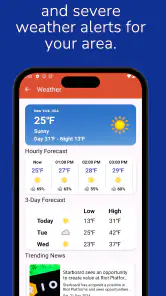
The app comes from AppSpark Group and sits in the News & Magazines category. Its central idea is straightforward: combine fast-moving news, local information, and severe-weather alerts so I do not have to switch between several apps whenever something happens. That combination is especially relevant on busy days, when I may not have time to open a full news website and search through sections.
I found the concept most useful when I treated the home screen as a starting point rather than a complete newspaper. A short session can tell me what deserves attention, while a longer session lets me follow several topics in one place. This is a different experience from a single newspaper app, which usually gives me a stronger editorial identity but may be less convenient for mixing general events with local conditions.
The app is free to install and is suitable for Everyone, which makes it approachable for households with different levels of technical confidence. It supports Android devices running version 8.0 or later. That older compatibility is helpful if I am using a phone that is not current, although the experience can still depend on the device, notification settings, and how much background activity I allow.
Its public reception is encouraging without being a reason to stop evaluating it critically. OneWire has a 4.5 average from around 786 ratings and has passed 100K installs. I read those figures as evidence that the basic idea works for a meaningful group of readers, not as proof that every alert or story will suit every person.
Trust starts with what I can actually control
For a news-alert app, trust is less about a polished interface and more about whether I can decide when it interrupts me, what kind of information I see, and whether I can step back when the stream becomes too noisy. I therefore pay more attention to visible choices than to broad promises. A useful news tool should make its behavior understandable while I use it, particularly around alerts and any request for attention.
More From Our News Desk

Clash of Clans Is Won Between the Battles

Android Auto Makes the Case for Quieter Car Software

MobiOffice: Transforming Mobile Productivity with Seamless Integration

EA SPORTS FC™ Mobile Soccer: Redefining Mobile Sports Gaming

How Microsoft OneDrive Became a Mobile Productivity Giant

How Google Translate Breaks Language Barriers Effortlessly
OneWire is best approached with that practical mindset. I would install it, look through the available settings, and decide deliberately whether breaking news and weather notices deserve immediate delivery. If I want a quiet phone, I would avoid giving every alert the same importance. If I am preparing for travel or a day outdoors, I would pay closer attention to severe-weather information and review how notifications behave before relying on them.
The most important trust habit is to treat an alert as a prompt to investigate, not as the final word. A notification can be useful because it arrives quickly, but speed and completeness are different qualities. When a headline concerns safety, travel, health, or money, I would open the item, check its context, and compare it with a relevant official or specialist source.
How I would set up a sensible routine
My preferred approach is to begin with a low-interruption setup. I would first read the app normally, notice which kinds of stories are genuinely relevant, and only then decide how prominent alerts should be. This avoids the common mistake of allowing a new app to dominate the phone before I know whether its updates improve my day.
A useful routine is to check the app at planned moments rather than reacting to every notification. For example, I might glance at it before leaving home, once during a break, and again in the evening. Severe weather is the exception: if conditions are changing quickly, timely notices may matter more than my usual schedule. The trade-off is clear—fewer interruptions bring more calm, while broader alert coverage may improve awareness but create fatigue.
I would also keep the app alongside, not instead of, the sources I already trust for high-stakes information. A local authority, emergency service, transport provider, or specialist publication may provide details that a general news feed cannot. OneWire can help me discover that I need those sources; it should not automatically replace them.
Reading experience, local awareness, and everyday usefulness
The app’s mix of breaking news and local updates gives it a practical advantage over a purely national news reader. Local information often matters precisely because it is less dramatic: a developing disruption, a nearby event, or changing conditions can affect my plans more directly than a major story elsewhere. Having those two levels together reduces the need to jump between a broad news app and a separate local source.
A realistic example would be a weekday morning when I am deciding whether to drive across town. I could use the general news stream to understand the wider situation, then look for local updates and severe-weather information before leaving. If an alert suggests a problem, I would not simply change plans based on one line of text. I would open the report, look for timing and location details, and verify the practical impact through a local authority or transport channel.
That workflow shows where the app earns its place. It compresses the first stage of information gathering, but it does not remove the need for judgement. Readers who want a quick orientation may appreciate that balance. Readers who expect every story to include deep background, careful source comparison, and extensive analysis may prefer a dedicated newspaper or magazine app.
I also see value for people who are tired of maintaining several specialized apps. A separate weather tool may offer more detailed forecasting, while a local publication may provide stronger community reporting. OneWire’s appeal is convenience: it brings related reasons to check the phone into one news-focused experience. Convenience is helpful, but it is also the trade-off. A combined feed may feel less specialized than the best individual service in each area.
Where the format can create friction
Breaking-news feeds naturally change quickly, and that can make them feel repetitive or emotionally tiring. The same event may develop through several updates, which is useful when facts change but less useful when I am only looking for a concise summary. I would avoid judging the app solely by how many items appear; a busy stream is not automatically a more informative one.
Alerts can create a second kind of friction. Severe-weather notices deserve attention, but frequent general-news interruptions can make me mute everything, including the alerts I actually need. This is why I would review notification behavior after a day or two rather than leaving the initial setup untouched. If the app does not give me enough control for my preferred level of quiet, I would use it as an on-demand reader instead of an always-on alert service.
There is also a difference between local relevance and personal relevance. A story may be geographically close but still have no effect on my plans, while a distant national event may matter greatly. I would therefore treat local updates as useful context, not as a perfect filter for my interests. The app is more attractive to readers who want broad awareness than to people who want a narrowly customized professional briefing.
Privacy-minded use without guessing beyond the screen
Because this is an app built around news and alerts, I would pay close attention to the choices presented during setup and in the settings area. I would read each permission request in context, allow only what makes sense for the functions I intend to use, and revisit those decisions if my use changes. I would not grant access simply because an alert sounds useful; I would first decide whether that alert is important enough to justify the related device access.
The same principle applies to account controls and data practices. I would look for visible options governing notifications, personalization, sign-in, and any data-sharing choices, then select the least expansive arrangement that still supports my needs. If I only want to browse headlines occasionally, I would avoid creating a more involved setup than necessary. If I want a more persistent news routine, I would still review the available controls periodically rather than assuming the first choice is permanent.
In practical terms, the most sensitive moments are the ones where convenience encourages me to click quickly: accepting every setup prompt, enabling every alert, or making an in-app purchase without checking what it changes. OneWire is free, but it includes in-app purchases ranging from $0.99 to $9.99 per item. I would regard those purchases as optional decisions that deserve the same attention as any other digital purchase, especially if someone else uses the device.
I also prefer to separate the value of the free reading experience from the temptation to unlock extras. Before paying, I would ask whether the purchase solves a specific problem—such as reducing interruptions or improving the way I follow news—or merely makes the app feel more complete. If the free version already covers my occasional reading, spending money may not add enough value. If I rely on the app daily, the decision becomes more personal and depends on the controls actually visible in the purchase flow.
Who will get the most from it
I would recommend trying OneWire to someone who wants one place for fast news, local awareness, and severe-weather notices. It suits readers who prefer short check-ins, people who move between different areas during the day, and anyone who wants a convenient signal that something deserves closer attention. Its free entry point also makes testing the routine relatively easy.
It is less suitable for a reader who wants a single publication’s distinctive reporting voice or a carefully edited long-form magazine experience. It may also disappoint someone who expects specialist weather detail, minute-by-minute emergency guidance, or a fully personalized professional news dashboard. In those cases, a dedicated weather service, local authority channel, or subscription publication may be the better primary tool.
I would be especially cautious about recommending it as the only source for children or for anyone who tends to react immediately to alarming headlines. The Everyone rating describes broad accessibility, not a guarantee that every news topic will feel comfortable or that every report will be easy to interpret. A calmer routine, selective alerts, and adult guidance where appropriate are sensible choices.
What I would check before keeping it installed
After installing, I would spend a few minutes answering four practical questions through normal use. Can I find the local information that matters to me? Do alerts arrive at a level I can live with? Can I understand what an item is saying without opening several unrelated screens? And can I change my choices without feeling locked into the original setup?
I would then test it during an ordinary day rather than only during a major news event. A normal day reveals whether the app helps me stay informed or simply adds another stream to manage. I would note which notifications I actually open, which ones feel repetitive, and whether the local content is useful enough to justify keeping alerts enabled.
That small trial also answers a question many readers have before committing: does this replace my existing news tools? In my view, usually not completely. It can reduce the number of apps I open for quick awareness, but specialist sources still have an advantage when I need depth, official instructions, or a tightly focused subject area.
My cautious verdict
OneWire: Latest News & Alerts is a sensible option for readers who value convenience and want breaking news, local updates, and severe-weather information close at hand. I like its role as an early-warning and orientation tool more than I would use it as a complete replacement for careful reporting. The combination is practical, particularly when I am busy and need to decide quickly what deserves further attention.
My recommendation comes with a clear condition: set it up around your attention span and your trust habits. Keep notifications selective, inspect the controls that are visible to you, and verify important claims through appropriate primary or specialist sources. That approach lets the app remain useful without allowing a fast-moving feed to dictate the entire day.
With version 2.31.4, the app is a current free choice for Android readers who meet its minimum system requirement, and its 4.5 average shows that many users find the experience worthwhile. I would still make the decision based on the first-hand fit of its alerts and local coverage rather than its popularity alone. For quick awareness with a cautious, user-controlled routine, I think it is worth trying; for deep reporting or highly specialized information, I would keep a more focused alternative nearby.
OneWire: Latest News & Alerts Frequently Asked Questions
Is OneWire: Latest News & Alerts available for my phone?
OneWire: Latest News & Alerts is available for Android devices running version 8.0 or later. Before downloading, check your phone’s operating-system version and make sure you have enough space for the app. Compatibility matters because an unsupported device may not be able to install or run the current version smoothly.
Who makes OneWire, and is it intended for all ages?
OneWire is developed by AppSpark Group and is a news app intended for a general audience. Its Everyone content rating means it is categorized as suitable for all ages. As with any news service, individual stories may cover serious or upsetting events, so parents may still want to consider what younger users read and discuss news coverage with them.
What is OneWire: Latest News & Alerts?
OneWire: Latest News & Alerts is a news and notification app designed to help users stay informed about current events, breaking stories, and important updates. It typically brings news content into one place and may use alerts to notify you when notable developments occur. Before downloading, review the app’s description, supported regions, available categories, and the type of news sources it uses, as coverage and features can vary by location.
What kind of news and alerts can I receive with OneWire?
The app may provide updates across several topics, such as world news, politics, business, technology, entertainment, sports, and local events, depending on the version available in your country. Alerts are intended to highlight urgent or trending stories, but the frequency can differ based on your selected interests and notification settings. You should check which categories can be customized so your phone is not overwhelmed by unwanted notifications.
Does OneWire: Latest News & Alerts require an account or personal information?
Whether an account is required can depend on the app version and the features you want to use. Some news applications allow basic reading without registration, while personalized feeds, saved stories, or synchronized preferences may require an account. Before signing up, read the privacy policy and app-store disclosures carefully to understand what information may be collected, how it is used, and whether data is shared with third parties or advertising partners.
Pros
- Fast access to breaking news and important alerts
- Clean interface makes headlines easy to scan
- Useful notifications for staying updated on the go
- Covers a broad range of current events and topics
- Convenient way to follow news without checking constantly
Cons
- Frequent alerts may feel excessive without notification controls
- Some stories may provide limited background or context
- News availability can vary by region and location
- Content may depend heavily on external news sources
- Requires internet access for the latest updates
- Category
- News & Magazines
- Version
- 2.31.4