NOVA Community
- 2.00
- 3.7
- Installs
- 10.00K
- Price
- Free

Screenshots

Analysis by Reviewed
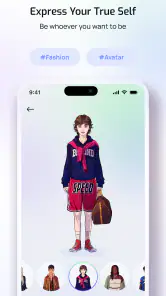
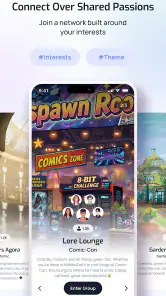
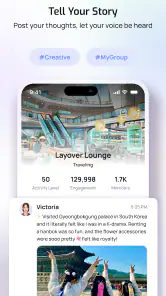
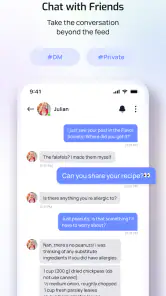
I approached NOVA Community as a social app built around the idea of bringing people together through voices and avatars. Its store summary presents it as “NOVAverse: Nexus of Voices & Avatars,” while the shorter description calls it “NOVA Community.” In practical terms, that places it in the social space rather than the productivity, entertainment, or messaging categories. The central appeal is the chance to take part in a community where identity and interaction are represented through more than a plain text profile.
My first impression is that this is an app for people who enjoy discovering online communities and expressing themselves visually. The avatar element gives the experience a more personal feel than a conventional feed, while the focus on voices suggests that conversation is meant to matter. I would not treat it as a replacement for every social network I already use, but I can see why someone might want a separate place for community-oriented interaction.
How NOVA Community feels in everyday use
The app is developed by ENSAPIA Corporation and is listed as free to download. That distinction matters: I could approach it without paying an entry fee, which makes experimenting with the community less risky than joining a service that requires a subscription before showing its value. At the same time, in-app purchases range from $1.99 to $49.99 per item, so free access should not be confused with an entirely cost-free experience.
I think the fairest way to judge the app is to separate its basic accessibility from the possible value of optional purchases. The free starting point is useful for anyone who wants to see whether the atmosphere, conversations, and avatar-driven presentation suit them. Spending only makes sense after the community itself has earned your attention. I would be cautious about buying anything early, because the usefulness of social customization depends heavily on whether you actually find people and spaces you want to return to.
The app is rated for Teen users, which is an important signal for families and younger users making a decision together. It is not a reason to assume every interaction will be suitable for every person, but it does place the app in a more mature social setting than a service designed specifically for small children. I would still recommend using the available account and device safeguards and discussing sensible privacy habits with younger members of a household.
On the technical side, the current version is 1.2.3 and it requires Android 8.0 or later. That requirement keeps the app accessible to many older Android phones, although the actual comfort of using an avatar-focused social experience will depend on the phone’s performance, display, and connection. On a device that already struggles with modern apps, I would expect the experience to feel less pleasant than it does on a newer handset.
The strongest reason to try it
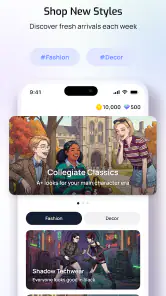
The most interesting part of NOVA Community is the combination of community participation with a visible digital identity. Many familiar social apps reduce identity to a username, photo, and stream of posts. Here, an avatar can make interaction feel more intentional. Even without treating it as a game, I can imagine enjoying the small creative decisions involved in presenting myself and recognizing other people through their chosen representations.
More From Our News Desk
Weather by Xiaomi Review: Clear at a Glance, Less Clear Up Close

X Under Pressure: Can It Recover When Posting Goes Wrong?

Clash of Clans Is Won Between the Battles

Android Auto Makes the Case for Quieter Car Software

MobiOffice: Transforming Mobile Productivity with Seamless Integration

EA SPORTS FC™ Mobile Soccer: Redefining Mobile Sports Gaming
That approach may also lower the pressure some users feel about posting personal photographs. An avatar can provide a layer of separation between everyday identity and online participation. It does not make someone anonymous or remove the need for care, but it can make joining a new community feel less exposed than immediately building a profile around a real face.
The voice-centered idea is another potential advantage. Text is efficient, but it can flatten tone and make casual conversation feel formal or easy to misunderstand. A community that gives voices a meaningful place may feel warmer for people who prefer speaking to typing. It could be especially appealing after work, during a commute, or when someone wants to participate without composing long messages.
There is a practical trade-off here. Voice-based interaction can be more expressive, but it also requires a setting where listening or speaking is comfortable. I would be less likely to use that side of the app in a quiet office, on public transport, or around sleeping family members. The app’s appeal therefore changes with the situation: it may be more engaging at home than during a short break in a crowded place.
A realistic way I would use it
Imagine finishing a long day and wanting conversation without the pressure of maintaining a polished public profile. I would open the app, use the avatar as my recognizable identity, look for a community that matches my current interest, and spend a short period listening before joining in. That “observe first” habit is valuable in any social service, but it is particularly useful here because the quality of a community matters more than the novelty of the interface.
If I found a group that felt welcoming, I would return at a regular time rather than jumping between every available conversation. That creates a better test of value than judging the app after one visit. A community app becomes useful when it helps form a repeatable social routine, not merely when its first screen looks different from the alternatives.
I would also keep my first profile deliberately restrained. An avatar and a simple identity are enough to begin. I would avoid sharing personal contact details, location information, workplace details, or anything that makes it easy to connect the account to my offline life. This is not a criticism unique to NOVA Community; it is the sensible way to explore any new social environment while learning how people interact there.
Where it differs from usual social alternatives
Compared with a conventional text-first network, NOVA Community appears better suited to people who want a sense of presence rather than an endless sequence of written updates. A standard social feed is often efficient for news, links, and quick reactions. This app’s avatar and voice emphasis suggest a more participatory experience, where the feeling of being in a community may matter more than collecting information.
Compared with a traditional messaging app, it seems less focused on conversations that already exist between close contacts. Messaging apps are excellent when I know exactly whom I want to reach. A community-oriented service is more interesting when I want to discover people with shared interests or enter a social setting that is separate from my personal address book.
It also differs from a multiplayer game. Avatars can make an app feel game-like, but that does not automatically mean the purpose is competition, progression, or play. I would choose NOVA Community for social exploration, not because I expect the structured goals of a game. Someone searching for challenges, match-making, or a deep virtual world should look elsewhere unless the community itself is the main attraction.
That distinction helps set expectations. The app’s value is likely to come from the people and conversations available through it, rather than from a guaranteed stream of content. If I already have active groups on another platform, moving those relationships may not be worthwhile. If I am looking for a new social setting and enjoy avatar-based expression, the difference becomes more meaningful.
What the free entry point really offers
Because the app is free to download, the sensible first step is exploration rather than purchase. I would install it, complete only the information needed to begin, and spend enough time evaluating whether the community feels active and comfortable. The important question is not whether the interface is novel; it is whether I can find conversations I genuinely want to revisit.
The presence of optional purchases changes the value calculation. A paid item might be worthwhile for someone who cares deeply about personalizing an avatar or supporting a social identity inside the app, but that value is subjective. It is not the same as paying for a guaranteed improvement in communication. I would treat any purchase as discretionary decoration or participation value unless the app clearly shows a different purpose at the point of sale.
My advice is to delay spending until the free experience has answered three practical questions: Do I enjoy returning? Do I recognize or connect with people I want to hear from? Does the avatar-based identity add something I would miss in a normal social app? If the answer to those questions is no, a purchase will not fix the underlying mismatch.
The broad purchase range also means users should pay attention to each item rather than assuming all optional content costs roughly the same. A small purchase and a much larger one represent very different commitments. I would use device purchase protections, especially on a shared phone, and make sure younger users understand that free installation does not mean every in-app option is free.
Limitations that may affect the decision
The biggest limitation is the dependency on community quality. No social platform can create a satisfying experience for someone if the available conversations do not match their interests, schedule, or preferred tone. An attractive avatar system may encourage a first visit, but only useful interaction will create a reason to stay. This is why I would judge the app over repeated visits instead of relying on a single session.
Voice can also be a barrier rather than an advantage. Some people prefer text because it is searchable, discreet, and easier to shape before sending. Others may not want to speak with strangers or may find voice participation tiring. For those users, a text-first alternative may be more comfortable and more practical, even if NOVA Community offers a more expressive identity.
There is a similar issue with avatars. They can make self-presentation fun and less exposing, but they can also add another layer of attention to an already busy social experience. If I simply want to send a quick message to a friend or read updates from people I know, creating and maintaining an avatar identity may feel unnecessary.
The Teen rating should also influence expectations. I would not present the app as a private family communication tool or as an environment that removes the need for supervision. Anyone joining a public or semi-public social space should understand blocking, reporting, privacy, and contact boundaries before becoming active. Those habits are especially important when voice and visual identity make interactions feel more personal.
The app’s relatively modest public footprint is another reason I would approach it as an experiment. It has over ten thousand installs, an average rating of 3.7 from around twenty ratings, and two written reviews. Those figures suggest that the experience is still being evaluated by a comparatively small audience, so I would not assume it has the depth or consistency of a long-established social network. The rating is neither a warning nor a guarantee; it is simply a reminder to test the app personally.
Who is most likely to get value
I would recommend trying NOVA Community to someone who enjoys meeting people through shared interests, likes customizing a digital identity, and is open to voice-led or voice-aware interaction. It may suit a person who feels that ordinary feeds are too passive and that direct messaging is too limited when the goal is to discover a wider community.
It could also work for a user who wants a social profile that does not depend entirely on a personal photograph. The avatar approach may make experimentation easier, particularly for someone joining a new group and wanting to establish a recognizable presence without immediately revealing much about offline life.
People who should probably skip it are those seeking a simple private messenger, a professional networking tool, or a content platform with a dependable flow of news. I would also point elsewhere if the main goal is competitive gaming, long-form collaboration, or a tightly controlled space for young children. NOVA Community makes the most sense when community discovery and expressive identity are the priorities.
For families, I would make the decision together rather than treating the Teen label as a complete safety assessment. Discuss what information should stay private, how to respond to uncomfortable contact, and when to leave a conversation. That preparation is more useful than assuming an avatar automatically protects a user.
My buy-or-skip recommendation
My recommendation is to try the free version first and keep the first session exploratory. The app has a clear point of difference in its combination of avatars, voices, and community participation, and that is enough to justify a test for the right kind of user. I would not install it expecting a replacement for every social service on my phone; I would install it to see whether this particular style of interaction feels more natural.
I would skip optional purchases at the beginning. Free access gives enough room to decide whether the social environment deserves a place in my routine, while the paid items should be considered only after I understand what I personally value inside the app. Someone who rarely returns to a community will get poor value from customization, regardless of how appealing it looks at first.
After repeated use, the decision becomes straightforward. If the conversations feel welcoming, the avatar adds personality, and voice participation fits your daily habits, NOVA Community can offer a distinctive social experience at no download cost. If you mainly want fast private messages, quiet text interaction, or a mature platform with a large established network, a familiar alternative will probably serve you better.
Overall, I see NOVA Community as a promising niche social app rather than an all-purpose replacement. Its strongest idea is giving community interaction a visible, voice-aware identity. Its main risk is that the experience depends on finding an active and compatible community. Try it for the people and conversations first, and treat every purchase as optional until the free experience proves that you will genuinely return.
NOVA Community Frequently Asked Questions
Who develops NOVA Community, and what is its focus?
NOVA Community is a social app developed by ENSAPIA Corporation. Its store summary describes it as “NOVAverse : Nexus of Voices & Avatars,” pointing to a community-centered experience built around people and their online presence. If you are looking for a place to connect with others, consider whether this focus matches what you want from a social app before downloading.
What age group is NOVA Community intended for?
NOVA Community is rated Teen, so it is intended for teen users and older audiences rather than young children. Parents and guardians may still want to review the app’s privacy settings and community features with younger users, especially when it comes to sharing profile details or interacting with other members. The rating is useful context when deciding whether the app is appropriate for your household.
What is NOVA Community, and what can I use it for?
NOVA Community is a social platform designed to help people connect, communicate, and participate in community-focused activities. Depending on the available features, users may be able to create a profile, join discussions, share updates, discover groups, and interact with other members. Before downloading, it is worth checking whether the communities and topics available in the app match your interests and location.
Is NOVA Community free to download and use?
NOVA Community is free to download, though optional in-app purchases range from $1.99 to $49.99 per item. The app’s paid options may affect what you can access or customize, so review the purchase details before confirming any transaction. If you plan to use the app without spending, check which community features are available at no cost and avoid purchasing anything unless the price and terms are clear to you.
Do I need to create an account to use NOVA Community?
Most community and social applications require users to create an account in order to participate fully. Registration may involve providing an email address, phone number, name, or other profile information. Some content might be visible without signing in, but posting, messaging, joining groups, or accessing personalized features could require an account. Check the permissions and privacy information during registration.
Pros
- Connects NOVA users in one dedicated community space.
- Makes it easier to discover updates
- events
- and shared resources.
- Encourages discussion and peer support among members.
- Useful for exchanging tips
- feedback
- and user experiences.
- A focused alternative to broader social media platforms.
Cons
- Its usefulness depends on having an active and responsive community.
- Some discussions may be repetitive or lack detailed answers.
- Notifications can become distracting if many groups are active.
- New users may need time to understand the community structure.
- Privacy settings and moderation quality may vary by section.
- Category
- Social
- Version
- 1.2.3