Nationwide SmartRide®
- 548.00
- 4.4
- Installs
- 100.00K
- Price
- Free

Screenshots
Analysis by Reviewed
I approached Nationwide SmartRide® as a driver who wanted to understand one practical question: can a phone-based insurance program make safer driving financially worthwhile without becoming a daily nuisance? The app’s central idea is straightforward. It is designed to help Nationwide customers save on auto insurance by observing driving behavior through a smartphone.
That focus makes it different from a typical insurance app. Instead of mainly being a place to view policy information or start a claim, this is a driving-behavior companion in the Auto & Vehicles category. I found the experience most interesting when I treated it as a long-term record of my habits rather than as a navigation tool or a general-purpose vehicle assistant.
The application is free, is rated for Everyone, and comes from Nationwide. It has reached over one hundred thousand installs and holds a 4.4 average from around one thousand ratings, which suggests that many users find the basic proposition worthwhile. Those figures do not remove the need to think carefully about privacy, phone handling, and whether the possible insurance saving justifies participating, but they do show that the concept is established enough to attract a real user base.
What SmartRide is really measuring
The useful capability is behavior-based insurance feedback
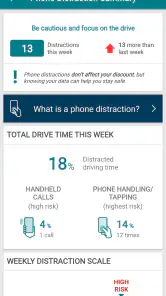
The most important capability here is not simply recording a journey. It is connecting driving behavior with an insurance-saving program. In practical terms, the app gives Nationwide a way to evaluate how a driver tends to use a vehicle, while giving the driver a reason to pay attention to habits such as abrupt actions, unnecessary phone interaction, or driving at less favorable times.
That changes the role of the phone. With an ordinary insurer app, I would expect to check documents, contact support, or handle routine account tasks. With SmartRide, the phone becomes part of an ongoing driving assessment. The value is therefore cumulative: one trip rarely tells the whole story, while repeated ordinary journeys can create a more representative picture of how someone drives.
This is also why I would not judge it like a navigation app. It is not trying to replace a map, provide entertainment, or offer a complete garage-management toolkit. Its purpose is narrower and more consequential. The app is useful when the driver wants insurance participation to reflect everyday conduct behind the wheel.
Why the distinction matters before you enroll
A driver who already has Nationwide auto insurance and is comfortable with a telematics-style program is the natural audience. Someone looking for a standalone tool that improves driving technique without any insurance connection may find the experience less compelling. The app’s reason for existing is the relationship between observed driving and potential savings, so that relationship should be clear before installation.
I also think expectations need to be realistic. A program like this is not a magic discount button. Safer driving can support a better outcome, but the app does not turn every short trip into an immediate reward. It asks the user to participate consistently and accept that the result depends on the driving record gathered over time.
That makes the app a better fit for people who drive regularly and want their normal habits to count. It is less attractive for a person who rarely drives, changes vehicles often, shares one phone between drivers, or dislikes any insurance program that uses driving information as part of its evaluation.
How the experience fits into a normal routine
In use, the important habit is to treat the app as something that should operate around a trip rather than something I need to stare at while driving. The safest workflow is to prepare before moving: keep the phone secured, avoid handling it on the road, and let the journey be captured without turning the driver into an app operator.
That sounds obvious, but it is one of the main practical trade-offs. A driving-monitoring app is only useful if the phone can recognize the trip reliably, yet interacting with the phone to check whether everything is working would undermine the very safety behavior the program is intended to encourage. I would set it up once, establish a routine, and resist the temptation to inspect the screen during a journey.
After a trip, the useful moment is reflection. Rather than checking every small movement, I would look for patterns across several ordinary drives. Was phone handling more likely during rushed errands? Did a familiar commute feel different from a late return home? Did I make smoother progress when I left earlier? The app’s greatest practical benefit is that it can turn vague impressions about driving into a reason to examine recurring habits.
A realistic everyday scenario
Imagine a driver who uses the car for a weekday commute, grocery runs, and occasional family visits. Before using SmartRide, that person may think of safe driving only in broad terms: obey the limit, watch traffic, and avoid obvious distractions. Once participating, the driver has another incentive to notice the small decisions that happen repeatedly.
For example, the driver might begin preparing the route before leaving instead of reaching for the phone after starting the car. They might leave a few minutes earlier to avoid hurried lane changes, keep the device out of reach, and create a smoother routine for school or shopping trips. None of those changes requires a dramatic lifestyle adjustment. The potential advantage comes from repeating them on the journeys that already make up most of the driver’s week.
This is where I see the capability having a real effect. The app does not need to lecture the user every minute. Its presence can make ordinary driving feel more deliberate. A person who responds well to feedback and incentives may gradually replace rushed habits with calmer ones, while also gaining a clearer sense of whether participating in the program is worthwhile.
What I would do before the first regular trip
I would begin by reading the enrollment and setup instructions carefully, then make sure the phone is positioned safely and consistently. A loose phone on a seat or in a cup holder can create confusion and temptation. A stable, hands-off arrangement is better for both safe driving and dependable participation.
I would also avoid testing the app with an unusual journey as my first impression. A long holiday drive, a trip in heavy traffic, or a route with several stops may not represent my normal routine. Starting with familiar commutes and errands makes it easier to notice whether the process fits naturally into daily life.
Another useful step is to agree on who is driving when a vehicle is shared. The phone and the driver need to make sense together. If several people use the same car but only one person carries the participating phone, the resulting record may not reflect a single, consistent pattern. That is not a reason to reject the program automatically, but it is a reason to discuss the arrangement before relying on the results.
The best scenario: a consistent driver with repeatable trips
The strongest use case is a Nationwide customer who drives one vehicle regularly, carries one phone, and has a predictable mix of commuting and errands. Consistency makes the program easier to understand because the recorded behavior is more likely to belong to the person who expects to benefit from it.
This driver can use the app as a quiet accountability tool. Before leaving, they can remove the need to touch the phone. During the trip, they can concentrate on the road. Later, they can consider whether the routine is encouraging calmer choices. The process works best when it becomes nearly invisible rather than another dashboard demanding attention.
It is particularly suitable for someone who already wants to reduce distractions but struggles to maintain that goal. The insurance connection adds a concrete reason to keep practicing. That does not make the driver perfect, and it does not guarantee a particular result, but it can make safe intentions easier to sustain.
Where the usual alternatives may be better
The usual alternative is simply to manage insurance without a driving-monitoring program. That approach is cleaner for people who want a conventional policy experience and do not want driving behavior connected to their insurance participation. It also avoids the setup and routine required by a telematics app.
A navigation app is another alternative in a different sense. Navigation is better when the immediate problem is finding a route, estimating a journey, or receiving turn-by-turn guidance. SmartRide is not a substitute for that. A vehicle-maintenance app or dashboard tool may also be more useful for someone whose priority is fuel tracking, service reminders, or mechanical information rather than insurance savings.
For a driver comparing insurers, the right question is not only which company offers a monitoring program. I would compare the overall policy, the terms of participation, the expected value of the saving, and my comfort with the information involved. A discount possibility should not distract from coverage that is unsuitable for the driver’s actual needs.
The main trade-off is information for potential value
The central compromise is easy to describe: I receive a possible financial benefit in exchange for allowing my driving behavior to play a role in the program. Some people will consider that a fair exchange, especially if the app encourages safer habits. Others will decide that the principle matters more than the possible saving.
That choice is personal, and I would not treat hesitation as irrational. Driving data can feel more sensitive than ordinary app activity because it is connected to where and how a person travels. Even when the practical goal is safety, users should be comfortable with the program’s terms and with the idea that their participation is being evaluated over time.
There is also a psychological trade-off. A driver may become more cautious in a helpful way, but may also become overly focused on how each trip will be judged. I would use the app as a prompt for sensible behavior, not as a reason to make abrupt decisions, drive unnaturally, or watch the phone for reassurance. Road safety must remain more important than optimizing a record.
Small sources of friction that matter
Phone-based driving programs depend on a routine that can be disrupted by everyday life. Battery concerns, a phone being left at home, a different person taking the car, or a driver forgetting the setup can all make participation feel less seamless. These are not dramatic defects, but they matter because the value depends on repeated use rather than a single interaction.
Shared vehicles deserve special attention. If partners or family members alternate driving, I would clarify how the program is intended to handle that situation before assuming the record represents everyone equally. A person who drives only occasionally may also find the process less rewarding because it takes longer for regular behavior to become meaningful to them.
There is a further limitation for drivers whose schedules are unpredictable. Someone who works rotating shifts, drives in unusual conditions, or frequently uses rental or borrowed cars may not experience the same fit as a regular commuter. The app can still be worth considering, but its strongest advantage belongs to a stable driving pattern.
Who gains the most from using it
I think the biggest gains are likely for three kinds of users. The first is the careful driver who wants their habits to support a possible insurance saving. The second is the person actively trying to reduce phone distraction and rushed driving. The third is the Nationwide customer who prefers a digital, self-managed way to participate rather than handling everything through traditional insurance interactions.
For these users, the app’s narrow purpose is a strength. It does not bury the driving program beneath unrelated vehicle features. The experience can stay focused on one question: does the way I drive make this participation worthwhile?
I would be more cautious if you are uncomfortable with telematics, rarely drive, share a phone or car in a complicated way, or expect instant feedback after every trip. I would also skip it if the possible saving is not important enough to justify changing your routine or reviewing the participation terms carefully. In those cases, a standard insurance arrangement may feel simpler and more appropriate.
Version, access, and long-term practicality
The app was released on June 1, 2020, and its current version is identified as nwsmart-v4.4.0.0-98115-g88ef6c5-prod. It requires an operating system version of 10 or newer, so I would check the phone before planning around it. That requirement is especially relevant for anyone keeping an older device as a backup or using a phone that receives few system updates.
Because the app is free, the decision is less about an upfront purchase and more about whether the participation model suits you. Free access does not mean there is no personal cost: setup time, attention to the routine, battery management, and comfort with driving information all belong in the calculation.
The Everyone age rating makes the app broadly accessible from a content perspective, but the practical decision still belongs to the policyholder and driver. A young or inexperienced driver may benefit from developing calmer habits, yet the insurance implications and household driving arrangements should be understood by the adults responsible for the policy.
My recommendation after weighing the experience
I would recommend Nationwide SmartRide® to a Nationwide customer who drives consistently and is genuinely open to behavior-based insurance. Its best quality is not flashy functionality. It is the way a simple monitoring routine can make safe driving more intentional, especially when the same commute and errands repeat week after week.
I would not recommend installing it casually just because it is free. First decide whether you are comfortable with the exchange involved, then prepare a hands-off phone routine and consider how shared driving will work. If you approach it as a long-term habit rather than a quick discount trick, the experience makes much more sense.
My final view is positive but conditional. The app can be a useful bridge between safer driving and insurance value, and its 4.4 average indicates a generally favorable reception. Still, the right choice depends on your driving pattern and privacy preferences. Choose it when consistent driving and potential savings matter more to you than keeping insurance completely separate from phone-based monitoring.
Nationwide SmartRide® Frequently Asked Questions
Is Nationwide SmartRide® available to every driver?
Nationwide SmartRide® is intended for eligible Nationwide customers, so downloading the app alone does not necessarily enroll every driver or make the program available on every policy. Eligibility and participation terms can vary by state and policy. Before installing, check whether SmartRide® is offered for your coverage and review the enrollment requirements that apply to your account.
What does Nationwide SmartRide® need from my phone to work?
The app may need access to location services, motion activity, Bluetooth, and background operation to recognize and assess driving activity. Keeping these permissions enabled can help trips register more consistently, though it may affect battery use. Your device must run Android 10 or later to meet the listed minimum operating-system requirement, so check compatibility before downloading.
What is Nationwide SmartRide®?
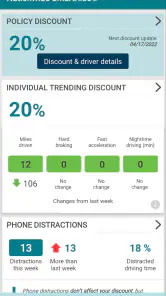
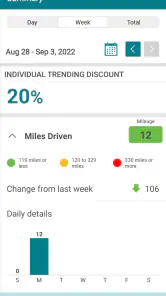
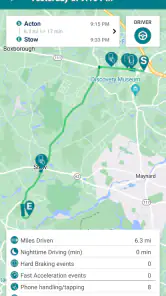
Nationwide SmartRide® is a usage-based insurance program designed to help eligible drivers understand how their driving habits may affect their auto insurance costs. After enrollment, the program uses information collected from qualifying trips—such as mileage, time of day, acceleration, braking, and phone distraction indicators—to create a driving score. Availability, features, and potential savings can vary by state, policy, and driver.
How does the Nationwide SmartRide® app collect driving information?
The app generally uses your smartphone’s sensors, location services, and related permissions to identify and evaluate driving activity. Depending on your device and program version, it may detect trips automatically or require you to start and stop a drive. Accurate results usually require Bluetooth, GPS, motion access, and background permissions, so reviewing the app’s privacy settings and battery impact before enrollment is important.
Can Nationwide SmartRide® lower my insurance premium?
SmartRide® is intended to provide eligible Nationwide customers with an opportunity to earn a participation discount or receive pricing benefits based on program rules and recorded driving behavior. Savings are not guaranteed, and the exact amount depends on your policy, state regulations, enrollment terms, and driving results. Carefully read the program disclosures because poor results, incomplete participation, or policy changes may affect the outcome.
Pros
- Tracks driving habits to help identify safer driving patterns.
- May support personalized insurance savings for eligible policyholders.
- Trip data can make driving feedback easier to understand.
- Useful for monitoring mileage and everyday driving activity.
- Digital enrollment reduces the need for paper-based participation.
Cons
- Requires location and driving data
- which may concern privacy-conscious users.
- Battery usage can increase while background trip detection is active.
- Savings and rewards may vary by state
- policy
- and driving results.
- Automatic trip detection may occasionally misclassify rides or journeys.
- Some features may require an active Nationwide auto insurance policy.

- Category
- Auto & Vehicles
- Version
- nwsmart-v4.4.0.0-98115-g88ef6c5-prod