Flare
- 90.00
- 4.6
- Installs
- 10.00K
- Price
- Free

Screenshots

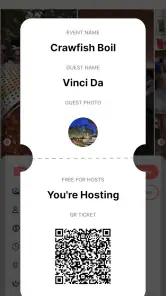
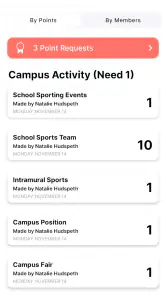
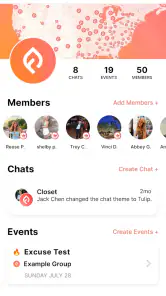
Analysis by Reviewed
I first looked at Flare as a practical social app for people who need one shared place to stay connected, rather than as another feed to scroll through. That distinction matters. Its store summary calls it an all-in-one for groups, and in everyday use I found that the idea makes the most sense when several people need to coordinate around the same plans, conversations, or shared activity. It is free to use, comes from Flare App, Inc., and carries a Teen age rating, so I would approach it as a general group-communication tool rather than a child-focused household manager.
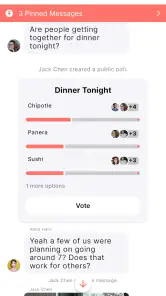
The most useful way to judge Flare is to imagine a busy home, a group of friends, or a small community trying to avoid scattered messages. One person may be asking about dinner, another about a ride, and someone else looking for an update on a shared plan. In a normal messaging app, those subjects can quickly become buried in separate chats. Flare’s appeal is the possibility of keeping group interaction together in one social space, with less jumping between unrelated conversations.
How Flare fits into shared everyday use
When I think about shared everyday use, the key is agreeing on what belongs in the group before the messages start piling up. I’d begin with one recurring need—such as coordinating a household plan—and let that establish a useful rhythm. From there, the next question is how to make that first shared space comfortable for everyone joining it.
A realistic household scenario
Imagine a household where everyone is moving at a different pace. One person is out buying groceries, another is deciding when to come home, and someone else needs an answer about a weekend plan. I would use Flare as a common meeting point for those conversations, especially when the goal is to keep information visible to the people involved instead of repeating it privately several times.
That does not mean the app replaces every private conversation. A shared group is useful for coordination, but sensitive subjects still belong in a direct exchange or another trusted channel. The strength here is reducing the number of places where ordinary group information lives. If the same people regularly need to discuss schedules, errands, activities, or decisions, an all-in-one social space can be easier to remember than a collection of disconnected chats.
There is also a useful difference between a household group and a temporary event group. A household may need a continuing space, while a group organizing a trip, club activity, or project may only need a focused place for the duration of that activity. I would decide on the purpose before inviting everyone. That simple step prevents the app from becoming a noisy room where every topic competes for attention.
My practical advice is to establish a clear reason for each group. A space for household coordination should remain focused on household matters. A space for friends can be more casual. Mixing both too early makes it harder to understand who is expected to respond and which messages actually matter. Flare works best when the social boundary is deliberate rather than when every contact is added by default.
More From Our News Desk

Weather by Xiaomi Review: Clear at a Glance, Less Clear Up Close

X Under Pressure: Can It Recover When Posting Goes Wrong?

Clash of Clans Is Won Between the Battles

Android Auto Makes the Case for Quieter Car Software

MobiOffice: Transforming Mobile Productivity with Seamless Integration

EA SPORTS FC™ Mobile Soccer: Redefining Mobile Sports Gaming
Starting without losing control of the audience
Setup is not only about installing the app. It is about deciding who should see what. Before creating a group, I would make a short list of the intended participants and think about whether the conversation is genuinely shared. This is particularly important on a shared device, where different people may use the same phone or tablet at different times. A social app can make coordination easier, but it cannot replace careful account boundaries.
I would also avoid treating a family group as an automatic substitute for individual accounts. Adults and teenagers may have different expectations about privacy, tone, and availability. A shared household space should not imply that every person has to expose every conversation or answer immediately. The app is more comfortable when everyone understands that group participation is for agreed subjects, not constant monitoring.
For a shared device, I would be especially cautious about leaving an account open. Anyone who can access the device may see whatever the active account can see. That is a general device-use issue rather than a special Flare feature, but it affects the experience directly. If several people use one device, logging out when appropriate and keeping personal conversations separate are sensible habits.
Another useful boundary is deciding when a message belongs in the group and when it should stay one-to-one. A reminder that affects everyone belongs in the shared space. A personal disagreement, private appointment, or sensitive detail does not. This sounds obvious, yet it is one of the biggest differences between a helpful group app and an exhausting one. Flare gives the household a common social location; the users still have to decide what deserves to be placed there.
Coordination without turning the app into a chore
I found the “all-in-one” idea most convincing when it reduced small amounts of friction. The value is not necessarily in sending more messages. It is in making the right message easier for the right group to find. For example, a household could use one shared conversation for a plan that needs everyone’s input, then keep unrelated personal discussion elsewhere. That creates a lightweight record of the decision without requiring someone to summarize it repeatedly.
A good workflow is to post the main question clearly, include the decision needed, and avoid adding several unrelated subjects in the same message. If I were asking who can help with an errand, I would state the task and the time window rather than burying it inside a long update. This makes the group more usable for people checking quickly between activities.
Flare can also suit groups where participation is uneven. In most households, one person naturally becomes the organizer while others respond only when necessary. I would not interpret quiet participation as failure. Some members may only need the group as a place to check information. The trade-off is that the organizer must avoid expecting instant replies from everyone. A shared social app improves visibility, but it cannot guarantee equal involvement.
One non-obvious advantage of a single group space is reduced duplication. When several people can see the same update, there is less temptation to send the identical question to multiple individuals. That can make coordination calmer, particularly for recurring household decisions. The downside is that important updates may still be overlooked if the group becomes too active, so I would keep the number of ongoing conversations manageable and repeat crucial arrangements in a concise form when needed.
For a temporary activity, I would create a narrow purpose and close out the conversation mentally once the activity is finished. For a continuing household group, I would periodically remove stale topics from my own attention rather than allowing every old discussion to remain an urgent reference point. This is not a glamorous feature, but it is a realistic way to keep a group app from becoming cluttered.
Age, trust, and the meaning of a Teen rating
Flare is marked for Teen users, and I would take that seriously when deciding whether it belongs on a shared family device. The rating makes it more suitable for older children and teenagers than for young children, but it is not a replacement for an adult conversation about online behavior. Parents or guardians should explain who may be invited, what personal information should not be posted, and what to do if a conversation becomes uncomfortable.
I would also avoid assuming that a family group automatically creates a safe environment. Trust is built through clear expectations and respectful behavior. Teenagers may want a group for practical coordination while still needing private space. Adults may want visibility into plans without expecting access to every personal interaction. Flare can support a shared channel, but the household has to define the limits in a way that respects age and independence.
For younger users, I would choose a service specifically designed around child supervision if that is the main requirement. Flare’s social-group focus makes more sense for families who can manage participation through conversation and established household rules. It is not the app I would select simply because a child needs a tightly controlled communication environment.
The same principle applies to trust between adults. A group app should not be used as a substitute for consent. Adding someone to a group changes what they can see, and removing confusion later can be difficult if private details have already been shared. I recommend agreeing on the group’s purpose before inviting neighbors, relatives, classmates, or coworkers. The smaller and clearer the audience, the more useful the conversation tends to be.
How it compares with ordinary messaging apps
Most people already know how to use a standard messenger, which gives those apps a major advantage: familiarity. If a household only needs occasional messages, a conventional chat may be faster because everyone is already there. The same is true for a group that has no need for a broader social environment. Switching apps introduces a small but real cost, especially when some participants do not want another account or another place to check.
Flare becomes more appealing when the group wants a more unified experience than a simple stream of direct messages. Its positioning as an all-in-one group app suggests a broader approach to shared interaction, and I would consider it when one community needs a dedicated social home rather than a single-purpose exchange. The benefit is organization around the group; the risk is that people may spend time learning a new routine that does not improve their particular situation.
Compared with a large public social network, a focused group tool can feel more appropriate for household coordination because the audience is intentional. Public platforms are built around discovery and broad sharing, while a household usually needs clarity and limited participation. Still, I would not assume that a smaller group is automatically private or consequence-free. Users should continue to think carefully before posting personal details, images, locations, or information about someone else.
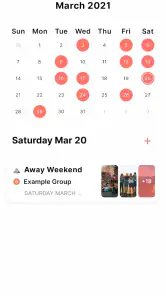
Compared with a task manager or shared calendar, Flare is better suited to conversation and social context than to formal scheduling. If the household’s main problem is remembering appointments, assigning recurring chores, or tracking deadlines, a dedicated planning tool may be the better choice. If the problem is keeping people connected while discussing those plans, Flare has a more natural role. In practice, I see it as a communication layer rather than a complete replacement for every organizational tool.
What I noticed about the day-to-day experience
The biggest practical question is whether people will actually check the app. A group platform only helps when its members agree that it is one of the places where important updates belong. I would introduce it with a small, useful purpose instead of asking everyone to move every conversation at once. A shared weekend plan or household update is a better starting point than a vague instruction to “use this for everything.”
Another trade-off is attention. An all-in-one social space can reduce app switching, but it can also concentrate more activity in one place. If the group is lively, useful information may compete with casual conversation. I would encourage short, descriptive messages and avoid sending repeated reminders when the issue has already been resolved. The app cannot decide which posts deserve priority for your household, so group habits matter as much as the interface.
I also think Flare is more convincing for stable groups than for people who communicate with many unrelated circles. A household, close friend group, or recurring community has a clear membership boundary. Someone who regularly moves between professional, personal, school, and public networks may prefer a more established messenger with wider adoption. The best choice depends less on the label “social” and more on whether the people you need are willing to participate there.
From a device perspective, I would install it on a personal phone first when possible, then consider shared-device use only after reviewing who can access the account. This is a concrete but important distinction. A shared screen can be convenient for a household, yet it increases the chance that one person sees another person’s conversations. Account separation is therefore part of the setup, not an optional detail to think about later.
Who should use it, and who should skip it?
I would recommend Flare to people who want a dedicated place for a defined group and who are willing to establish simple communication rules. It is a good candidate for households coordinating everyday matters, friends organizing shared plans, and small communities that want more context than a series of isolated private messages. The free price also makes trying it less of a financial decision, although the more important question is whether the group will adopt it consistently.
I would be more cautious for families with very young children, users who require formal parental controls, or anyone looking for a complete calendar, task manager, or emergency communication system. The Teen rating and social focus point toward an older, conversation-ready audience. I would also skip it if everyone already communicates efficiently in an existing messenger and there is no clear problem to solve. Adding another app simply because it promises to gather things together can create more checking, not less.
For privacy-sensitive conversations, I would choose the service and channel that best match the sensitivity of the subject, rather than assuming a group app is appropriate for everything. Flare is most useful when the information is genuinely shared and the membership is understood. It is less suitable when the audience is uncertain or when the group needs strict administrative controls.
Current details and my overall household verdict
Flare is listed as a free social app from Flare App, Inc. It launched on February 8, 2019, and its current version is 6.3.8, with support beginning at iOS 9. The app has an average rating of 4.6 from around four hundred ratings, and it has passed ten thousand installs. Those figures suggest a real but relatively focused user base, rather than the reach of a mainstream messenger.
That smaller scale cuts both ways. It may appeal to someone looking for a group-centered alternative without the feel of a huge public network. At the same time, adoption is the practical hurdle: an app is only useful for a household if the household members are prepared to use it. I would invite the people who actually need the shared space, explain its purpose, and test it with one ordinary coordination task before moving more activity there.
My final view is positive but specific. Flare makes sense as a shared social room for a clearly defined group, especially when the goal is to keep everyday coordination together without turning every issue into a separate private message. Its strongest use is not replacing every app on a phone; it is giving one household or community a common place to communicate.
My recommendation is to try Flare when your group has a clear coordination problem and a shared agreement about boundaries. Keep personal conversations personal, treat the Teen rating as a reason for age-aware supervision, and do not expect the app to provide the structure of a dedicated planning tool. Used with those limits, it can be a practical addition for shared-device households and close groups. Used without them, it risks becoming another crowded inbox.
Flare Frequently Asked Questions
What devices and operating systems can I use Flare on?
Flare is a social app for mobile devices, and its minimum operating-system requirement is version 9. Check your device’s software version before downloading, then use the official app store for your platform. Keeping your operating system current can also help with compatibility and security, while the exact experience may vary between Android and iOS.
Who makes Flare, and what is the app’s main focus?
Flare is developed by Flare App, Inc., and its store summary describes it as “The all-in-one for groups.” That gives prospective users a useful starting point: the app is intended for group-oriented social use. If you are considering it for a particular group or activity, read its current description and explore the available features after installation to see whether they suit your needs.
What is Flare, and what can I use it for?
Flare is an app designed to help users manage and access its main features from a mobile device through a simple, centralized interface. Depending on the version and platform, it may provide tools for communication, organization, content access, or account management. Before downloading, review the official description carefully because available functions can differ between Android and iOS releases.
Is Flare free to download and use?
Flare is free to download. Before using it, review any pricing information displayed in the app and its official store page, particularly if you encounter an optional paid feature or service. Pay attention to any subscription terms, trial periods, renewal details, and cancellation instructions before agreeing to a charge, so you can decide whether the available options suit your budget.
Does Flare require an account or personal information?
Depending on how Flare works, you may be able to explore certain sections without registering, while other functions may require an account. Registration can involve information such as an email address, phone number, profile details, or login credentials. Before signing up, read the privacy policy to understand what data is collected, why it is needed, and how it is stored.
Pros
- Clean
- intuitive interface that is easy to navigate
- Quick access to essential features and information
- Useful customization options for different user preferences
- Responsive performance during everyday use
- Regular updates can improve stability and functionality
Cons
- Some advanced features may require extra setup
- The app may use noticeable battery during extended sessions
- Certain functions can feel limited without an account
- Occasional notifications may become distracting
- Compatibility and features can vary between devices
- Category
- Social
- Version
- 6.3.8