Find License Plate Owner
- 81.00
- 4.0
- Installs
- 10.00K
- Price
- Free

Screenshots
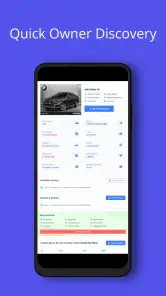
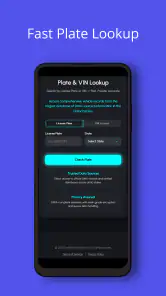
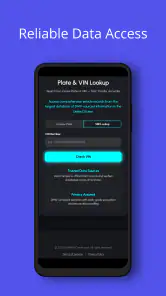
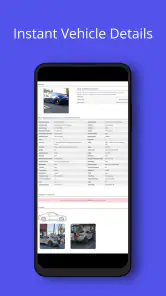
Analysis by Reviewed
I approached Find License Plate Owner as a practical vehicle-information tool rather than a general-purpose car app. It sits in the Auto & Vehicles category and is developed by ReverseLookup, with a focused purpose: helping users look up a license plate or VIN through a private service while also pointing them toward official sources. That combination makes it more interesting than a simple search box, but it also means the app is best understood as a starting point for research, not as a replacement for government records or a guarantee of personal information.
The app is free to use, which immediately changes how I judge it. There is no purchase decision to make before trying the basic experience, so the main question is whether it saves time and organizes a lookup more conveniently than searching the web manually. I found its appeal strongest in short, specific situations: checking a vehicle before spending serious time on it, identifying the right official channel for a plate-related question, or keeping a VIN lookup workflow in one place.
How the lookup experience fits real vehicle research
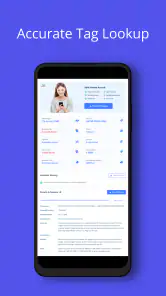
The short description, “Find License Plate Owner,” sounds very direct, but the more useful way to think about the app is as a bridge between a private lookup service and official information sources. That distinction matters. A user may open it expecting a complete identity report from a plate number, while the practical value may instead come from combining the app’s lookup route with links or directions to authoritative sources.
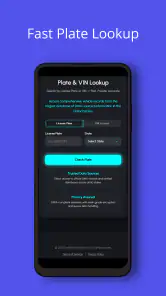
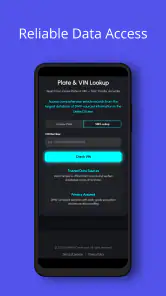
In everyday use, I would begin with the exact identifier I have available. If I am looking at a used car, that may be the VIN supplied by the seller. If I am dealing with a parking or vehicle incident, it may be a license plate. I would double-check every character before submitting it, especially with VINs, where letters and numbers can be easy to confuse. A single incorrect character can make a result irrelevant, and the app cannot compensate for an input mistake.
One useful habit is to treat the first result as a lead rather than a final answer. If the private lookup returns information, I would compare it with the official-source options presented through the app. This two-step approach is more reliable than copying a result into a purchase decision immediately. It also helps separate information that is useful for orientation from information that carries formal or legal weight.
The official-source links are an important part of the concept. Many people know they should check an official vehicle database but do not know which agency or page to use. A tool that places those routes beside a private lookup can reduce the time spent searching for the correct destination. In my view, this is one of the app’s less obvious strengths: it can make the research path clearer even when the private service is not enough on its own.
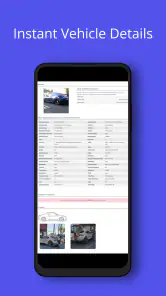
That workflow is especially relevant when shopping for a used vehicle. Imagine finding a car through a local listing and receiving a VIN from the seller. I would enter it, note what the lookup presents, then use the official-source route for confirmation before arranging an inspection or paying a deposit. I would also keep the seller’s description, service records, and an independent mechanical inspection in the same decision process. A plate or VIN lookup can reveal useful clues, but it should not be treated as a substitute for seeing the vehicle in person.
What the free price means in practice
Find License Plate Owner is available for free. That gives it a clear advantage over services that require payment before a user can decide whether the workflow is useful. I can install it, try the lookup process, and decide whether it fits my needs without committing money first. For occasional users, that low barrier may be the app’s strongest value.
Free access does not automatically mean every lookup will answer every question. The value depends on what the private service can return for a particular plate or VIN and on what the relevant official source makes available. I would therefore avoid judging the app by the expectation of a guaranteed owner identity. The responsible value proposition is convenience and guidance, not certainty about information that may be restricted or unavailable.
Because the app is free, the tradeoff is less about financial risk and more about time, expectations, and privacy. I would not spend an afternoon repeatedly submitting slightly different versions of the same identifier. I would first check the entry carefully, use the app’s result as an initial signal, and move to the official route when the question requires a formal answer. That keeps the free tool in its proper role and prevents a frustrating search from becoming an expensive mistake elsewhere.
The app has an average rating of 4.0 from around 99 ratings, with roughly 81 written reviews. Those figures suggest that users have found enough value to respond positively overall, while also leaving room for mixed experiences. I read that as a reason to keep expectations practical: the concept is useful, but the outcome of an individual lookup can vary.
Private lookup versus official sources
The app’s private-service approach is convenient because it gives users a quick place to begin. A private interface can feel simpler than navigating a government website, especially when someone does not know which department handles vehicle records. The official-source links then provide a second route for checking information through the appropriate authority.
Neither route should be confused with the other. A private result may be easier to access, but an official source is generally the better choice when documentation, registration questions, or a formal record is involved. If I were trying to resolve a dispute, report an incident, or verify a vehicle for a major purchase, I would use the app to organize the search and then rely on the relevant official process for confirmation.
This is also where the app compares differently with ordinary web searching. A search engine may produce many unrelated results, outdated pages, or unofficial services with unclear relevance. Find License Plate Owner offers a narrower route built around the identifier itself. On the other hand, a direct official website may provide more context and authority once I know where to look. The app is most useful in the middle: faster than starting from a blank search page, but not necessarily the final destination for every task.
Compared with a full vehicle-history service, the app also appears more focused. A paid history report may be preferable for a buyer who wants a broad record assembled in one report and is comfortable paying for that specific purpose. Find License Plate Owner makes more sense when I want an initial lookup, a path to official sources, or a free way to decide whether deeper research is justified.
Small workflow choices that improve the result
My first practical tip is to separate plate research from ownership assumptions. A plate can help identify the vehicle or guide a search, but I would never treat a displayed name or detail as permission to contact, confront, or investigate a private individual. If a situation involves an accident, suspected fraud, or a safety concern, the right next step is to involve the appropriate authority rather than trying to handle the matter personally.
My second tip is to record the context alongside the identifier. When checking a used car, I would note the VIN, the seller’s advertised model, the mileage shown in the listing, and the date of the inquiry in my own notes. That makes it easier to spot a mismatch later. The app can support the lookup, but the comparison work still belongs to the user.
A third useful approach is to use the app before contacting a seller, not instead of contacting one. If the lookup raises a question, I would ask the seller for documentation and an explanation. A clear answer supported by records is more valuable than a rushed conclusion based on a single search result. This is a subtle but important strength of the app: it can help me form better questions, even when it cannot settle the entire purchase decision.
I would also use official-source links as a navigation shortcut rather than assuming that every result inside the app has equal authority. If I need a record for a legal, registration, or insurance matter, I would follow the relevant official process and keep any confirmation it provides. The app is convenient for discovery; official channels are the safer choice for decisions that require dependable documentation.
Where the app may create friction
The biggest limitation is expectation management. The phrase “find license plate owner” can lead people to expect unrestricted access to a person’s identity. In real-world vehicle research, access to personal information can be limited, and a responsible lookup should not be treated as a shortcut around privacy protections. I would install this app for vehicle research and source discovery, not for tracking a stranger.
Another limitation is that a private service may not answer every query in the same way. A clean result can be helpful, while a partial or unclear result may require checking the official source or asking the vehicle owner for documents. That variability is not a reason to dismiss the app, but it does mean the tool works best as one stage in a broader process.
There is also a practical difference between a quick lookup and a complete vehicle-history investigation. If I am about to spend a large amount on a used vehicle, I would not stop after using a free app. I would combine the lookup with a test drive, a mechanic’s inspection, documentation review, and any formal history checks appropriate to the vehicle and location. A free first step is valuable precisely because it can tell me whether deeper checking is worth my time.
Users should also be prepared to verify the jurisdiction. License plate systems and vehicle-record access vary by location, so an official source that is useful for one vehicle may not apply to another. I would confirm that the source matches the vehicle’s registration area before drawing conclusions. This is an easy detail to overlook when an app makes the search feel universal.
Who will get the most value
I think the app is a good fit for occasional car shoppers, private sellers, drivers organizing information after a vehicle-related incident, and anyone who wants a simple starting point for plate or VIN research. It is particularly useful for people who would otherwise search randomly for an official database and are unsure which source to trust.
It can also help a cautious buyer structure a conversation. After checking the available information, I can ask focused questions about the vehicle’s history, registration, or documentation instead of relying only on the seller’s short advertisement. That does not guarantee a good purchase, but it improves the quality of the questions I bring to the inspection.
I would skip it if my only goal is to obtain private personal details about another driver. I would also look elsewhere if I need a comprehensive paid history report, a professional appraisal, or a formal legal record immediately. In those cases, a specialist service, government office, insurer, or qualified professional is a better match than a free lookup app.
The app is available for Everyone, which makes its general audience broad, but that does not remove the need for responsible use. I would explain to younger or less experienced users that a lookup result is not proof of wrongdoing and that personal information should not be shared or used to harass anyone. The simple interface implied by its focused purpose is helpful, but good judgment remains essential.
Compatibility and current release
Find License Plate Owner requires Android 6.0 or later, so it remains accessible to people using older supported Android devices. The current version is 1.0.5, and the app was released on August 9, 2025. Those details matter mainly when deciding whether an older phone can run it and whether the app is still early in its development. I would keep the app updated through the normal store process, particularly for a tool that depends on external lookup routes.
The install base is over 10 thousand, which places it in the category of a focused utility rather than a universally established vehicle platform. That does not make it unusable, but it reinforces my preference for verification. I would test it with a non-urgent lookup first, learn how its private-service result and official-source links work, and only then include it in a time-sensitive vehicle search.
My recommendation after weighing the tradeoffs
My verdict is positive, with clear limits. For a free first step in plate and VIN research, this app offers practical value without asking for a purchase commitment. Its best feature is not the promise of discovering everything about a vehicle or its owner; it is the combination of a private lookup route and official-source guidance in one focused place.
I would recommend it to a friend who is checking a used car, trying to understand where to verify vehicle information, or looking for a quicker alternative to starting with an unfocused web search. I would tell that friend to enter identifiers carefully, compare the result with official sources, and never treat a lookup as a substitute for an inspection or formal record.
For me, the decision is simple because the app is free: it is worth trying when the task is occasional and exploratory. The right reason to keep it installed is convenience, not an expectation of guaranteed owner identification. If the job demands complete history, legal certainty, or professional interpretation, I would move to a specialized or official alternative. Used with that distinction in mind, ReverseLookup’s app is a useful research companion rather than an all-purpose answer.
Pros
- Quickly checks available vehicle and plate information.
- Simple interface makes searches easy for most users.
- Useful for verifying details before buying a used vehicle.
- Can help identify possible registration inconsistencies.
- Convenient access to information from a mobile device.
Cons
- Results may be incomplete or unavailable for some regions.
- Personal data access may be restricted by privacy regulations.
- Search accuracy depends on the quality of public records.
- Some features or reports may require payment.
- Using the app for harassment or unauthorized tracking can be unlawful.

- Category
- Auto & Vehicles
- Version
- 1.0.5