Driveology®
- 436.00
- 4.4
- Installs
- 50.00K
- Price
- Free

Screenshots
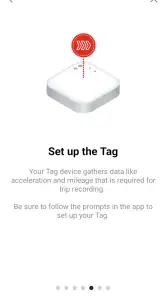
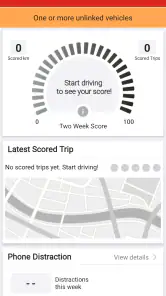
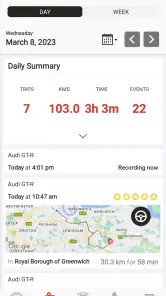
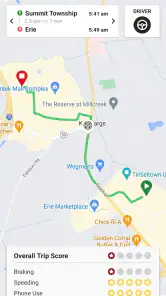
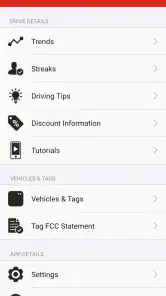
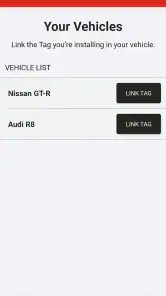
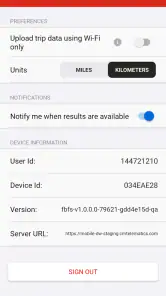
Analysis by Reviewed
I approached Driveology® as a practical driving companion rather than another app that simply sits on a phone after installation. Its focus is safe driving, and that makes the most sense when you judge it by a simple question: will it help you become more aware behind the wheel, or will it feel like one more digital task competing for your attention? After using it with that question in mind, I see it as a focused option for drivers who want guidance connected to everyday road habits, especially if they already have a reason to pay attention to their driving.
It is a free app in the Auto & Vehicles category, developed by FBL Financial Group, Inc. The age rating is Everyone, and it is available for devices running operating system version 10 or later. That combination makes it approachable for a broad range of drivers, although the practical benefit depends much more on how consistently you engage with it than on simply having it installed.
The app has reached over fifty thousand installs and holds a 4.4 average from around nine hundred ratings, with roughly four hundred reviews. Those figures suggest that it has found a useful audience, but they do not remove the need to decide whether its particular approach suits you. Safe-driving tools are personal: a new driver may want instruction, an experienced driver may want accountability, and a household may want a shared reason to discuss habits. Driveology® can fit some of those situations better than others.
How I Would Decide Whether Driveology® Fits
Start with the driving problem, not the download button
Before choosing this app, I would identify what I actually want to improve. If the problem is distraction, I need something that encourages me to put the phone away while moving. If the problem is inconsistent habits, I need a way to reflect on what happens across ordinary trips. If I am looking for navigation, traffic information, fuel prices, or vehicle maintenance, I would begin with a different class of app entirely.
That distinction matters because “safe driving” can mean several things. It can refer to learning the rules, avoiding risky behavior, understanding patterns, or receiving immediate warnings. Driveology® is most appealing when I treat it as part of a broader safe-driving routine rather than as a replacement for attention, judgment, or formal instruction.
My first decision criterion is therefore usefulness during real life. A tool that makes me interact with the screen while the car is moving would be a poor fit, regardless of how well designed it looks. I would set it up before a trip, review anything after parking, and avoid turning the app into a dashboard that demands attention at the wrong time. The safest feature is still a driver who is not using the phone while driving.
Consider who will use it and why
For a newer driver, a safe-driving app can provide a useful structure for thinking about choices that otherwise become automatic. It may also give a parent or mentor a natural starting point for conversations about speed, focus, following distance, and decision-making. I would not use it as a substitute for supervised practice, but I can see value in pairing it with calm discussions after a trip.
For an experienced driver, the benefit is less about discovering that safe driving matters and more about noticing routines that have become invisible. Many people consider themselves careful drivers while still checking a notification at a light, rushing through familiar streets, or becoming less patient during a commute. A reflective tool can be valuable precisely because familiar routes encourage autopilot.
For a professional driver, frequent commuter, or household with several drivers, the decision becomes more complicated. The app may be useful as a personal habit aid, but I would want to understand how well its workflow fits repeated trips and whether every person using it is comfortable with the same approach. I would not assume that one person’s preferred method of learning or reviewing driving behavior will work for everyone else.
Check the practical setup before relying on it
Driveology® was released on June 5, 2023, and the current version is identified as fbfs-v2.2.0.0-96254-g35a7879-prod. I would check compatibility before installing, particularly on an older phone, because the minimum operating-system requirement is version 10. I would also complete the initial setup while parked, not in a hurry before leaving home.
That small preparation step is more important than it sounds. Safe-driving apps work best when the driver has already decided how and when to use them. I would review the available screens at home, make sure I understand what requires interaction, and establish a rule that any review happens only after the vehicle is parked. This avoids the common mistake of treating a safety app as permission to handle the phone on the road.
What I would expect from the experience
The store summary presents the app as “The Science of Safe Driving,” while the short description identifies it as Driveology®. I read that positioning as an emphasis on learning and behavior rather than entertainment. I would therefore judge it by whether it helps me think more clearly about driving decisions, not by whether it offers the visual excitement or instant feedback associated with a navigation or vehicle companion app.
One useful way to test it is to give it a fair trial across different kinds of trips: a familiar commute, a busy errand route, and a longer drive. A single trip can be misleading. On a quiet road, almost any approach may feel effortless; on a rushed weekday, the friction of opening, reviewing, or remembering the app becomes more apparent. That comparison tells me whether the app belongs in my routine or only sounds useful in theory.
Where Driveology® Earns Its Place
It keeps the conversation centered on behavior
The strongest reason I would recommend Driveology® is its clear subject. It is not trying to be a general-purpose vehicle toolbox. By concentrating on safe driving, it gives the user a reason to examine habits that are easy to excuse or overlook. That narrow focus can be a strength because the app does not need to compete with maps, music, service reminders, or fuel tools to be useful.
I especially like this approach for someone who wants a deliberate reset. A driver who has recently started commuting again, bought a different vehicle, begun driving with children, or noticed increased stress on the road may benefit from a dedicated safety routine. The app can serve as a prompt to slow down mentally before a trip and reflect afterward, which is different from simply reacting to a warning in the moment.
It can support a repeatable personal routine
My practical recommendation would be to connect the app with an existing habit. For example, I might use it as part of a weekly review rather than opening it randomly. After parking at the end of a demanding week, I could think about which trips felt rushed, when distractions appeared, and what I want to change during the next week. This turns the app from a novelty into a small piece of a broader routine.
That workflow is a non-obvious advantage for people who dislike sudden, judgmental reminders. Instead of waiting until a bad moment, I can choose a calm time to reflect. The trade-off is that the app cannot create discipline on its own. If I never return to it, the installation has little value. The user has to supply the consistency.
It is accessible as a starting point
Because it is free and rated for Everyone, Driveology® is easy to consider without a financial commitment or an age-specific barrier. That makes it suitable for households that want to introduce safe-driving conversations without immediately buying equipment or subscribing to a specialized service. I would still make the conversation about responsibility rather than surveillance, particularly with younger drivers.
The app’s broad accessibility also helps when recommending it to a friend. I do not need to explain a complicated purchase decision first. I can suggest trying it, setting it up while parked, and deciding after a few ordinary trips whether it adds something meaningful. That low-risk entry point is one of its clearest practical advantages.
A realistic everyday scenario
Imagine a driver leaving work late, already thinking about dinner and a message that needs an answer. The route home is familiar, which makes the situation more dangerous in a quiet way: the driver may feel comfortable enough to stop paying full attention. I would not open Driveology® during that trip. Instead, I would use the situation later as a review point, asking what created the pressure and what could be changed before the next commute.
In that scenario, the app’s value is not a dramatic intervention. It is the chance to turn an ordinary near-mistake or tense drive into a concrete adjustment: silence notifications before leaving, allow more time, keep the phone out of reach, or pause before starting the engine. That kind of small behavioral change is more realistic than expecting an app to transform a driver overnight.
It has a clear identity instead of trying to do everything
Many driving apps are useful because they combine several functions, but that can also make their safety message easy to ignore. Navigation apps prioritize reaching a destination. Vehicle apps often prioritize maintenance, fuel, or controls. Dashcam tools prioritize recording. Driveology® has a more focused identity, and I think that is helpful for a person who already has those other needs covered.
Its best use is as a safe-driving habit companion, not as a replacement for navigation, roadside assistance, driver training, or vehicle care. Keeping that boundary clear prevents disappointment and makes the app easier to evaluate honestly.
Small workflow choices that improve the experience
I would begin with a short, low-pressure trial rather than promising myself that I will use it forever. Install it when the car is parked, explore it without rushing, and decide on one specific goal such as reducing phone checks or becoming more deliberate on familiar roads. A single goal is easier to remember than a vague promise to “drive better.”
I would also keep the review moment separate from the driving moment. If the app encourages reflection, I would do that after arriving, when I can give it proper attention. For family use, I would ask each driver to describe one useful takeaway rather than turning the app into a scorekeeping contest. This preserves its educational value and avoids making safe driving feel like a competition.
Where the experience may feel limited
The same focus that makes Driveology® approachable may feel narrow to users who want a full driving toolkit. Someone searching for live route changes, parking information, fuel tracking, service records, or vehicle diagnostics will likely need other apps. I would not install this expecting it to replace those tools.
There is also a natural limit to behavior-focused software: awareness does not guarantee action. A driver can understand every safe-driving principle and still make poor choices when tired, angry, distracted, or late. The app can support a decision, but it cannot control the environment or remove every temptation. That is why I would treat it as reinforcement rather than proof that my driving is safe.
When another category is a better match
If my main concern is getting from one place to another efficiently, a navigation app is the better first choice. If I need evidence after an incident, a dashcam app or dedicated camera may be more appropriate. If I am teaching a new driver the fundamentals, professional instruction and supervised practice offer something an app alone cannot provide. If I want to monitor vehicle condition, I should look at maintenance-oriented tools instead.
Driveology® makes more sense when the missing piece is attention to driving behavior. That distinction is the key trade-off. It may be less exciting than a feature-packed alternative, but it can be more relevant to a person who already has enough driving utilities and wants a focused reminder to make better choices.
The cost of switching is mostly personal consistency
Since the app is free, the main cost of trying it is not money. It is time, attention, and the effort of changing a routine. I would need to learn where it fits, remember to review it when parked, and decide whether its guidance changes anything I do. That is a modest commitment, but it is still a commitment.
Switching from a general driving app to Driveology® may also mean accepting that not every need will live in one place. I might still use another app for directions or vehicle information. For me, that is not automatically a disadvantage, but I would avoid creating a cluttered phone setup with several tools competing for attention in the car.
On the other hand, switching away from it may cost me a useful moment of reflection if I tend to treat driving as automatic. The right question is not whether it contains every feature I use elsewhere. The better question is whether its safety-focused approach changes my behavior enough to justify keeping it in my routine.
Who should try it first
I would recommend Driveology® to a driver who wants a free, focused way to think about safer habits and is willing to engage with it when parked. It is particularly suitable for someone beginning a new driving routine, a family starting conversations about responsibility, or an experienced driver who wants to challenge complacency on familiar routes.
I would be more cautious about recommending it to someone looking for instant alerts, detailed vehicle data, or a complete replacement for several automotive apps. I would also skip it if I knew I was unlikely to review it after installation. A safety tool that is ignored becomes decoration, no matter how sensible its purpose may be.
My recommendation
My overall view is positive, with a clear condition: use Driveology® intentionally. Its free access, broad age rating, and focused safe-driving purpose make it easy to try, while its value depends on turning reflection into a specific habit. I would install it before a quiet period, explore it while parked, and test it across different kinds of trips rather than judging it after one opening.
The app is not the right answer for every automotive need, and I would not pretend that it can replace training, common sense, or attention. However, that is not a weakness unique to this product; it is the boundary of the category. For drivers who want a dedicated prompt to examine how they behave on the road, Driveology® is worth trying as a practical companion to safer driving decisions.
After that trial, my decision would be simple. If it helps me notice one recurring risk and change one routine, I would keep it. If I only use it because I feel I should, while my real needs are navigation, maintenance, or incident recording, I would choose a more specialized alternative. That is the honest reason to recommend it: not because it does everything, but because it gives the right driver a focused way to make everyday driving more deliberate.
Driveology® Frequently Asked Questions
Who is Driveology® intended for?
Driveology® is a driving-focused app for people who want to understand their driving habits and use safety-related feedback. It may be especially relevant to someone invited to use it through an insurance or other participating program. Before installing, consider whether you are comfortable using an app connected with driving activity and check that you can access the program or services you need.
What is Driveology® and what does the app do?
Driveology® is a driving-focused mobile application designed to help users better understand and improve their driving habits. Depending on the version and supported services, it may provide trip information, driving behavior insights, safety-related feedback, and other tools connected with vehicle use. Before downloading, check the official app description to confirm which features are available in your country and whether your vehicle, account, or insurance program is supported.
Is Driveology® free to download and use?
Driveology® is free to download. Access to all of its services can still depend on how the app is provided. Some features may require enrollment through a participating insurance company, employer, vehicle program, or other partner. You should review the current terms, eligibility requirements, and privacy information before registering, since data plans, optional services, or program-specific conditions could affect the overall cost.
What permissions does Driveology® require?
Because Driveology® is related to driving and trip activity, it may request permissions such as location access, motion and fitness data, Bluetooth, notifications, and background activity. These permissions can be necessary for automatic trip detection or accurate driving analysis. Read each permission request carefully and understand that disabling certain access may limit tracking, reports, alerts, or the app’s ability to function correctly.
Does Driveology® track my location or driving behavior?
Driveology® may collect information connected with trips and driving behavior, such as location, route details, movement, phone interaction, acceleration, braking, or other safety indicators, depending on the program configuration. The exact data collected varies by provider and device. Before using the app, review its privacy policy and program terms to learn how information is stored, analyzed, shared, and used.
Pros
- Clear driving insights help users understand and improve their habits.
- Useful trip history makes it easier to review past journeys.
- Can encourage safer
- smoother
- and more fuel-efficient driving.
- Simple tracking concept makes the app easy to use regularly.
- Helpful feedback may support better awareness behind the wheel.
Cons
- Requires reliable phone sensors and permissions for accurate tracking.
- Battery usage may increase during longer journeys.
- Automatic trip detection may occasionally record unwanted journeys.
- Some features may depend on a compatible vehicle or device setup.
- Driving data and location information may raise privacy concerns.

- Category
- Auto & Vehicles
- Version
- fbfs-v2.2.0.0-96254-g35a7879-prod