Divine
- 67.00
- 3.5
- Installs
- 10.00K
- Price
- Free

Screenshots

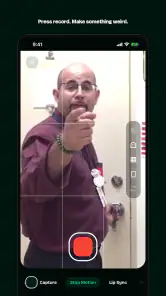
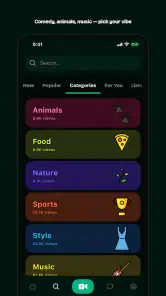

Analysis by Reviewed
Divine is a social app built around an unusually tight format: very short videos made by people rather than polished media brands. I found that its appeal depends less on editing tools or endless customization and more on the feeling of dropping into a quick, human moment. That makes it easy to understand, but it also means the quality of the experience is closely tied to your connection, your patience with a smaller social catalog, and the kind of content you actually want to see.
Developed by Verse Communication PBC, Divine is free to use and aimed at mature users aged seventeen and over. It has reached over ten thousand installs, with an average rating of 3.5 from more than two hundred ratings and dozens of written reviews. Those figures suggest a young service with an audience still forming rather than a fully established social giant. I would approach it as an interesting, focused experiment in short-form social video, not as a complete replacement for every platform already on your phone.
How Divine feels when the connection is doing the work
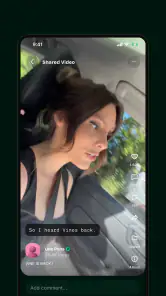
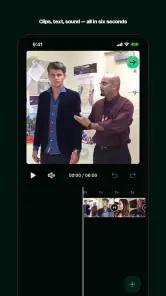
The central idea is simple: videos last six seconds, and the emphasis is on people sharing immediate moments. That limit changes how I use the app. On larger video platforms, I often prepare myself for a long session because every clip can lead to another recommendation, a longer explanation, or a heavily edited performance. Here, the short duration makes each item feel more like a glance through a window. I can open the app with only a small amount of time available and still see several different moments.
That convenience is also the first important trade-off. A six-second clip has almost no room for context. It can capture a reaction, a gesture, a visual detail, or a tiny slice of a routine, but it cannot reliably explain a complicated story. When the connection is smooth, the format feels brisk and natural. When loading pauses or clips arrive unevenly, the experience loses its rhythm quickly because each piece is so small. A delay that might be tolerable before a longer video feels disproportionate when the video itself is over almost immediately.
I would not judge Divine by the same standards as a conventional video editor. Its value is not in producing a polished mini-film. Instead, it encourages a different habit: notice something, record it quickly, and let the moment stand on its own. That is a useful distinction if you are tired of social feeds where every post appears designed for maximum attention. It is less useful if you want tutorials, detailed commentary, music discovery, or a carefully organized archive of content.
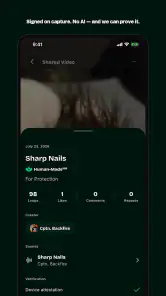
The human-only positioning gives the app a clear personality. In practice, I read that less as a guarantee that every clip will be profound and more as an invitation to look for ordinary, unfiltered interactions. The strongest use is often not a spectacular scene but a small event that would otherwise disappear: a funny expression, a passing view, a friend’s reaction, or an atmosphere that is difficult to describe in words. The short limit rewards immediacy, although it can also make posts feel disposable when there is no clear reason to watch them again.
Why the six-second limit matters more than it first appears
The time limit affects both sides of the social exchange. As a viewer, I can make a quick decision without committing to a long clip. As a creator, I have to choose one idea rather than trying to fit an entire story into a tiny package. That can make posting less intimidating for someone who dislikes talking to a camera or spending time on edits. It also creates a practical discipline: if the moment cannot be understood visually or emotionally almost at once, it may not suit the format.
More From Our News Desk
Weather by Xiaomi Review: Clear at a Glance, Less Clear Up Close

X Under Pressure: Can It Recover When Posting Goes Wrong?

Clash of Clans Is Won Between the Battles

Android Auto Makes the Case for Quieter Car Software

MobiOffice: Transforming Mobile Productivity with Seamless Integration

EA SPORTS FC™ Mobile Soccer: Redefining Mobile Sports Gaming
There is a subtle downside for people who communicate through detail. A cooking demonstration, travel explanation, news discussion, or educational post needs more time than Divine’s format allows. Even a personal update may feel incomplete if the viewer needs background to understand it. I would therefore use the app for atmosphere and quick expression, while keeping a longer-form service for anything that depends on sequence, explanation, or evidence.
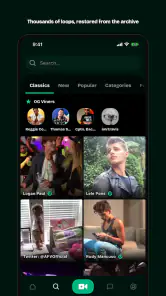
Another consequence is that repetition becomes more noticeable. If the feed contains many clips with similar framing or the same kind of reaction, the very short format can make the app feel narrow rather than efficient. On a longer platform, variety can come from duration and subject matter. Here, variety must come mainly from the people and moments themselves. That makes the size and character of the community especially important to the long-term experience.
Using it in real mobile situations
Divine makes the most sense in the small gaps of a normal day. I can imagine checking it while waiting for a friend, taking a short break between tasks, or sitting on public transport with only a few minutes available. The app’s format does not demand the same concentration as a long video, and the quick cycle of viewing and moving on fits naturally into those situations.
That does not mean every mobile setting is equally comfortable. In a crowded place, a phone may be held at an awkward angle, the screen may be difficult to see, and surrounding noise can make any sound-based moment less effective. Since the clips are so brief, there is little time to recover from missing the opening. If I look away for a second, the post may already be finished. I found that Divine works best when I can give the screen at least a little attention, even if I am not settling in for a full viewing session.
A realistic example would be a commute where I have a few stops before arriving. I might open the app, watch several moments, and close it without feeling that I abandoned a long piece of content. If reception becomes inconsistent in a station or between buildings, however, the experience can become frustrating because the app’s main benefit is its flow. In that situation, a service with a more predictable saved-content system or a broader range of longer posts would be a better companion.
For creators, the mobile context can be an advantage. A six-second idea is easier to capture before the moment disappears. I would keep the phone ready for situations where timing matters, but I would avoid overthinking the result. Trying to turn every clip into a production defeats the reason to use this particular app. The best workflow is to identify one clear moment, keep the framing steady enough to understand it, and stop before the post becomes crowded with unnecessary action.
At the same time, I would be careful about recording other people. The app’s emphasis on human moments should not be treated as permission to film strangers casually. If a clip includes someone else in an identifiable way, asking first is the considerate choice. That is especially important with a mature social audience, where context and boundaries may vary considerably from one post to another.
What happens when the network fails
Connectivity is not a minor background detail here; it shapes the entire pace of discovery. Divine is built around moving from one short video to the next, so a weak connection can interrupt the exact quality that makes the format attractive. A longer video can sometimes justify waiting because the eventual viewing period is substantial. With a six-second post, the balance is different: waiting may take as long as watching.
I would use the app most confidently on a stable home or office connection, or in places where mobile reception is dependable. On a variable signal, I would expect the browsing experience to feel less consistent and would avoid treating it as my only source of entertainment. This is not a criticism of the concept itself. It is a direct consequence of choosing a feed made of many small pieces rather than a single continuous activity.
When a clip fails to load or the feed loses momentum, the best recovery is usually to pause rather than repeatedly tap through the same action. I would check whether the connection has returned, close and reopen the app if the feed remains stuck, and then continue only when the stream behaves normally. That simple routine prevents a brief network problem from turning into a longer session of frustration. It also helps distinguish a temporary connection issue from a problem with the app’s current state.
Creators face a different kind of failure. A spontaneous moment may be gone by the time the connection is good enough to share it. That makes Divine better suited to people who are comfortable with imperfection than to users who need every post to be published immediately and reliably. If the moment is important, I would first keep a local copy in the phone’s normal camera workflow and then share it when the connection is steady, rather than assuming the social app should be the only place where the recording exists.
That approach also reduces pressure. The point of a short human clip is the moment itself, not a race to publish it before the opportunity disappears. Keeping the original recording gives me a fallback if uploading is interrupted, and it lets me decide whether the clip still feels worth sharing once I have a better signal. I see that as one of the most practical habits for using a connection-sensitive social app responsibly.
Being careful with mobile data
Short videos can create a misleading impression of low data use. Each clip is brief, but a feed can contain many clips in a short session, especially when discovery is effortless. I would not assume that the six-second limit automatically makes Divine light on a mobile plan. The safer habit is to watch how quickly a casual session grows and to use a home connection when I expect to browse for a while.
My data-conscious routine would be straightforward: keep sessions intentional, avoid leaving the feed running while doing something else, and stop once I have seen what I opened the app to find. I would also avoid using it as background entertainment during a long journey unless I already know that my plan and signal can handle repeated video loading. The short format encourages “just one more” viewing, and that can quietly turn a brief check into a much longer stream.
Creators should think about the same issue before posting repeatedly. A series of tiny clips may feel harmless because each individual video is short, but frequent uploads still create a larger viewing burden for followers. I prefer a selective approach: share the moments that have a clear emotional or visual point, rather than treating the app as a running camera roll. That improves the feed for other people and makes each post feel less interchangeable.
There is also a privacy angle to data-conscious use. A quick social video can reveal more than intended through background details, nearby voices, location clues, or people passing behind the subject. Before sharing, I would watch the clip once without focusing only on the main action. The six-second format makes it tempting to publish immediately, but the short duration does not make the information inside it insignificant. A moment can be brief and still be revealing.
Who will enjoy it, and who should choose something else
I think Divine is a good fit for someone who enjoys spontaneous social discovery and wants a lighter alternative to highly produced short-form feeds. It suits viewers who appreciate small human details, creators who dislike lengthy editing, and people who want a social app that can be checked in short bursts. The format is also approachable for anyone who feels that traditional video platforms demand too much preparation before posting.
I would be more cautious recommending it to users who need a large, mature community with dependable content variety. With over ten thousand installs and an average rating of 3.5, it appears to be at an earlier stage than the biggest social networks. That can be appealing if you like discovering a service while its identity is still developing, but it may also mean that the feed does not always provide the depth or consistency you expect from a long-established platform.
People looking for detailed educational material, extended conversations, professional presentation, or strong search and organization should probably stay with a conventional video service. Those platforms are better when the goal is to learn a process, follow a story, compare products, or revisit a specific piece of information. Divine is not the right tool simply because it contains video; its value depends on whether the six-second, people-centered format matches your reason for opening a social app.
I would also skip it if I mainly want private messaging or a controlled circle of close contacts. A discovery-oriented social experience answers a different need from a dedicated chat app. Likewise, if my priority were watching content during unreliable travel conditions, I would favor an option whose offline behavior and saved viewing experience were clearly suited to that purpose rather than relying on a rapid live feed.
What I would check before making it a daily habit
My first test would be the quality of the feed at different times and in different places. I would not decide after watching only a handful of clips. The important question is whether the people and moments remain varied enough to hold attention without needing the app to imitate a larger platform. If the feed feels personal and surprising, the narrow format works. If it becomes repetitive, the six-second limit starts to feel like a restriction instead of a creative prompt.
I would also pay attention to how often I am opening it automatically. Divine is designed for quick discovery, which is convenient but can encourage reflexive checking. I find it more satisfying when I give myself a small purpose: see what people are sharing, capture a particular kind of moment, or take a short break. Without that boundary, even a compact video format can become another feed that fills every spare second.
For posting, I would use a simple three-question check. Is the subject clear almost immediately? Does the clip show one moment rather than several competing ideas? Would I still be comfortable with the background if someone watched it without knowing me? Those questions are more useful here than trying to copy trends from longer video apps. They keep the post aligned with Divine’s strengths while reducing accidental oversharing.
The current release is version 1.0.20 and requires at least operating system version 9, so compatibility is worth checking before installation, particularly on an older phone. I would also remember that the mature age classification means this is not an app I would hand to a child or treat as a general family feed. That rating should shape both who uses it and how carefully adults supervise access on shared devices.
Its free price lowers the barrier to trying it, but free does not mean costless in practical terms. Time, mobile data, attention, and privacy are still part of the decision. I would give it a short trial on a reliable connection, observe whether the community feels worthwhile, and then decide whether it deserves a regular place on my home screen. That is a better test than installing it simply because the clips are short.
My connectivity verdict
Divine has a clear idea and sticks to it: quick, people-focused video moments rather than long explanations or heavily produced posts. I like the way the six-second structure lowers the effort needed to watch and share something, and I can see it fitting naturally into brief mobile breaks. Its strongest experiences come when the connection is stable, the feed has enough variety, and I approach it as a place for small observations rather than a full replacement for every social format.
The same focus creates its limitations. Network interruptions are unusually visible because there is so little viewing time in each clip. A small community may not satisfy people who need endless variety, and the format cannot carry much context. Mobile data can also disappear faster than the short videos suggest when browsing becomes habitual. These are not reasons to dismiss the app, but they are important trade-offs before making it part of a daily routine.
My recommendation is therefore selective. I would suggest Divine to a friend who enjoys discovering ordinary human moments, wants a low-pressure way to experiment with short video, and usually has a reliable connection. I would point that friend toward a larger or more specialized service for tutorials, long-form stories, private communication, or travel where connectivity is uncertain. Its real strength is not the amount of content, but the immediacy of a moment that does not need to become a production.
After trying it, I see Divine as a promising social niche rather than an all-purpose network. The free entry makes it easy to explore, while the mature audience, early-stage scale, and connection-dependent rhythm call for realistic expectations. If the idea of sharing and discovering tiny, human snapshots sounds more refreshing than exhausting, it is worth a careful test. If you need structure, depth, or dependable access away from a network, another category of app will serve you better.
Divine Frequently Asked Questions
What is Divine’s age rating, and is it suitable for younger users?
Divine is rated Mature 17+, so it is intended for adults rather than younger users. Its focus on short videos and social discovery may bring users into contact with a range of perspectives and content. If you are choosing an app for a teenager, review the age rating and consider whether this social experience is appropriate for them before downloading.
What kind of videos can I expect to find on Divine?
Divine centers on six-second videos created by humans, with an emphasis on sharing and discovering authentic moments. That brief format is suited to quick, personal clips rather than long-form viewing. As a social app, it gives people a way to create and explore short videos, so the experience is shaped by the moments users choose to post and share.
What is Divine and what can I use it for?
Divine is an app designed to provide users with a focused spiritual and reflective experience through its available content and tools. Depending on the version and platform, it may help with personal reflection, inspirational material, guidance, or discovering meaningful daily content. Before downloading, check the store description to confirm the exact features offered in your region and whether the app matches your personal expectations.
Is Divine free to download and use?
Divine can generally be downloaded without an upfront charge, but some features or content may require in-app purchases, a subscription, or an upgraded account. I recommend reviewing the pricing section in the Google Play Store or Apple App Store before registering. Also check whether the app offers a free trial, how long it lasts, and whether the subscription renews automatically after the trial period ends.
Is Divine available for both Android and iPhone?
Availability depends on the specific version of Divine and the country associated with your app store account. The application may be offered for Android devices, iPhones, or both, but compatibility can vary according to operating-system version and device model. Before installing, review the official store listing for supported requirements, recent update information, and any restrictions that could prevent installation on your phone.
Pros
- Simple interface makes the app easy to navigate for new users.
- Offers a focused experience without overwhelming menus or unnecessary tools.
- Runs smoothly on most modern Android and iOS devices.
- Useful for users seeking quick access to its core features.
- Regular updates may improve stability and add helpful refinements.
Cons
- Some features may require an internet connection to work properly.
- The free version may include ads or limitations on certain functions.
- Compatibility can vary between older devices and operating system versions.
- Advanced users may find the available customization options limited.
- Privacy details and permissions should be reviewed before creating an account.
- Category
- Social
- Version
- 1.0.20