Dealert - Track Product Sales
- 61.00
- 3.8
- Installs
- 10.00K
- Price
- Free

Screenshots
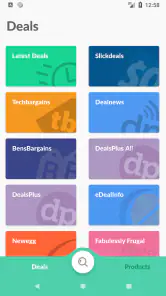
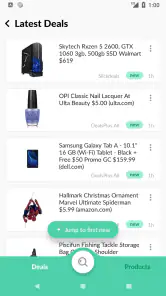
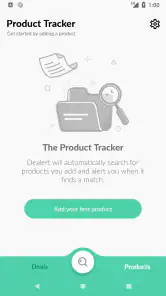
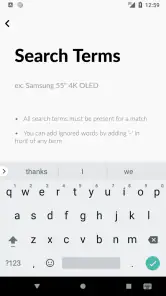
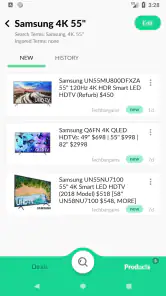
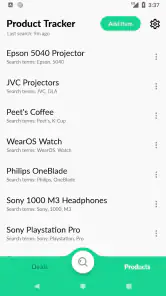
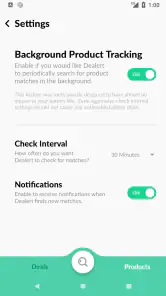
Analysis by Reviewed
I approached Dealert - Track Product Sales as a practical shopping companion rather than another place to browse products. Its purpose is simple: help me keep an eye on items I may want to buy when their prices change. That narrow focus matters. If you regularly postpone purchases while waiting for a better offer, an app built around tracking can be more useful than opening a large shopping marketplace every day.
The app is free to install, belongs to the Shopping category, and was developed by Kevin Foreman. It is suitable for Everyone and runs on devices using Android 6.0 or later. The current version is 1.5.2, while its store presence dates back to December 2, 2018. Those details make it feel like an established, focused utility rather than a newly launched shopping experiment.
My overall impression is that Dealert is best judged by one question: do you need a lightweight way to remember products and watch for sales, or do you want a complete shopping service with search, checkout, delivery, loyalty programs, and seller comparisons? For the first job, it has a clear reason to exist. For the second, a conventional retailer or price-comparison service will usually be a better fit.
What I would decide before installing it
The first decision is whether your shopping habits are planned or spontaneous. Dealert makes more sense for planned purchases: a replacement appliance, a book you can wait for, a gift you want to buy later, or an item that is useful but not urgent. If I need something today, tracking a future sale adds friction instead of saving money.
The second decision is how many products I genuinely need to monitor. A focused tracker is valuable when I have a short list and want to avoid relying on memory. It is less attractive if I only shop occasionally or already maintain a reliable wish list inside my preferred retailer. In that situation, adding another app can create a second place to check without changing the result.
I would also consider how much control I want over the buying process. A tracker can help me notice an opportunity, but the actual purchase still belongs to the retailer or marketplace where the product is sold. That separation is important. Dealert should be viewed as a layer for awareness, not as a replacement for checking shipping, seller reputation, return terms, or the final price at checkout.
Finally, I would ask whether I am comfortable making a decision based on a sale alert rather than an immediate need. A lower price is not automatically a good deal if the item is poor quality, the discount is small, or I would not have bought it otherwise. The app can support discipline, but it cannot create discipline on my behalf.
More From Our News Desk

Clash of Clans Is Won Between the Battles

Android Auto Makes the Case for Quieter Car Software

MobiOffice: Transforming Mobile Productivity with Seamless Integration

EA SPORTS FC™ Mobile Soccer: Redefining Mobile Sports Gaming

How Microsoft OneDrive Became a Mobile Productivity Giant

How Google Translate Breaks Language Barriers Effortlessly
How I would use it in an ordinary week
Imagine I am furnishing a home office and want a particular desk lamp, keyboard, and storage unit. I do not need all three immediately, so I add the products I am seriously considering instead of bookmarking dozens of possibilities. I then use the list as a waiting room: rather than searching again every evening, I return when I am ready to review possible savings.
That workflow is more useful than it may sound. The real benefit is not merely seeing a cheaper number. It is separating research from purchase timing. I can decide what I want first, then wait for a suitable moment to buy. This reduces the temptation to choose a substitute quickly just because it happens to be visible in a daily shopping search.
A second useful situation is gift planning. I might identify a product weeks before a birthday and track it while I compare alternatives. When the price becomes more attractive, I can revisit the product with the original reason for choosing it still fresh in my mind. That is better than remembering only that “it was cheaper once” without knowing whether it was actually the right gift.
For larger purchases, I would use the app as one step in a broader checklist. I would note the product I want, watch for a favorable moment, and then verify the seller, delivery estimate, warranty, and return policy separately. The non-obvious lesson is that tracking should happen before the final comparison, not instead of it.
Where the focused design helps
The strongest part of Dealert is its narrow purpose. A full shopping app often mixes recommendations, advertising, categories, promotions, account prompts, and checkout features. That can be convenient, but it also makes it easy to lose sight of the item I originally wanted. A dedicated sales-tracking tool can keep my attention on purchase timing.
I also like the idea of using it as a personal shortlist rather than a general catalog. When a product is already under consideration, tracking it is more efficient than repeatedly searching broad marketplaces. This is especially helpful for people who compare carefully and prefer to wait rather than buy at the first available price.
The app’s free price lowers the barrier to testing that workflow. I can try it without committing to a subscription, although in-app purchases are listed at $4.99 per item. That makes it important to understand what I am willing to pay for before building a large tracking habit. I would begin with a small number of meaningful products and evaluate whether the added convenience justifies any paid items that appear during use.
Its age rating of Everyone also makes the concept approachable for a broad audience. Parents planning household purchases, students watching the cost of equipment, and older users who prefer a simple shopping aid can all understand the basic value without needing a complicated financial system.
The public response suggests moderate rather than universal appeal: the app has a 3.8 average from around 130 ratings and over 60 written reviews. I read that as a reason to keep expectations realistic. It has enough attention to show that the idea resonates with some shoppers, but the score does not suggest that every shopping style will find it indispensable.
Practical habits that make tracking more useful
My first tip would be to track only products that pass a “would I buy this soon?” test. Adding every interesting item creates noise. A short list gives each alert or price change more meaning and makes it easier to act when the timing is right.
My second tip is to record the reason for waiting in my own notes outside the app if necessary. I might be waiting for a specific budget, a replacement deadline, or a seasonal purchase. Without that context, a discount can feel urgent even when it does not solve a real need. The app can show an opportunity; my personal rule decides whether it is worth taking.
My third tip is to compare the complete purchase, not just the item price. Delivery charges, accessories, warranties, and return conditions can change the value of a deal. I would therefore treat a tracked price as a prompt to perform a final check, not as proof that the transaction is automatically favorable.
There is also a useful distinction between tracking a product and tracking a category. If I need any suitable office chair, monitoring one model may be too restrictive. If I specifically want a certain design or feature, tracking that exact item is more sensible. Dealert appears better suited to the second situation, where the product is already defined and timing is the main uncertainty.
Where a conventional shopping app may fit better
Dealert is not the obvious choice for someone who wants discovery. Large retailer apps and marketplaces are usually stronger when I am still deciding what to buy, need many alternatives in one place, or want product reviews beside search results. They also tend to connect browsing directly to payment and delivery, which reduces the number of steps between finding an item and ordering it.
A price-comparison service may be preferable when the same product is sold by many retailers and I want to compare the current total cost immediately. That kind of tool is designed for breadth across sellers. Dealert’s appeal is different: it is about keeping a product on my radar rather than replacing every part of the comparison process.
A retailer’s built-in wish list can also be enough for some people. If I already shop mostly with one store, its saved-item function may be more convenient because it keeps products, account details, delivery information, and checkout together. Installing Dealert becomes worthwhile when I want a separate watchlist mindset or when my shopping is spread across different places.
Deal forums and coupon communities serve another purpose. They are useful for discovering unexpected promotions, but they can encourage impulse buying because the deal comes first and the need comes second. Dealert is more appropriate when I already know the item and want to wait. If I enjoy browsing for whatever happens to be discounted, a deal-discovery service may feel livelier.
There is a trade-off here that is easy to miss: specialization can make an app calmer, but it can also make it less complete. I would choose Dealert for focused monitoring and a retailer or comparison tool for research, seller evaluation, and checkout. Using both types can be sensible, but users who dislike switching between apps may prefer an all-in-one service.
What the version and cost mean in daily use
The current version, 1.5.2, is compatible with Android 6.0 and newer. That broad operating-system coverage is helpful if I use an older Android phone, although compatibility alone does not tell me how smoothly the app will behave on every device. I would still install it on the phone I actually use and judge the experience through a small trial list before depending on it for an important purchase.
The free entry point is appealing, but the listed $4.99 per-item in-app purchase changes how I would approach the app. I would not add products casually until I understood which actions are free and which may involve a purchase. A good cost-control habit is to start with one or two planned purchases, observe how the tracking workflow fits my routine, and only then decide whether paid functionality has a clear benefit.
This is also where the cost of switching matters. Moving from a retailer wish list to a separate tracker means recreating a shortlist and remembering to check another destination. Moving in the opposite direction may mean losing the focused separation between “items I am watching” and “items I am ready to buy.” Neither choice is difficult, but the best option depends on whether convenience or purchase timing is more important to me.
I would not recommend paying simply because a product is discounted. The right calculation is whether the app saves enough attention or prevents enough unnecessary spending to justify an individual purchase. For a person who tracks one expensive item carefully, that may be reasonable. For someone who makes small, frequent purchases, the extra cost and extra step may outweigh the benefit.
Who should use it and who should skip it
I would recommend Dealert to patient shoppers who already know what they want and are willing to wait. It is particularly suitable for planned household purchases, gifts, non-urgent electronics, and products where timing matters more than immediate availability. It can also help people who repeatedly forget which items they intended to revisit.
I would be more cautious recommending it to bargain hunters who want a constant stream of new offers. They may find a marketplace, coupon service, or deal community more useful because those products are built around discovery. Dealert’s focused approach may feel too quiet for that style of shopping.
I would also suggest skipping it if I need a complete purchase journey in one place. When delivery tracking, returns, seller communication, and payment are central to the experience, a retailer app will usually reduce friction. Dealert can still be part of the research process, but it should not be mistaken for the entire shopping infrastructure.
People who are highly vulnerable to impulse buying should use any deal tracker carefully. A notification or lower price can create pressure even when the purchase was never planned. I would set a budget and a waiting rule before tracking anything. If the product fails that test, I would not add it merely because the sale sounds attractive.
My recommendation after weighing the trade-offs
I see Dealert as a useful specialist rather than a universal shopping replacement. Its value comes from giving planned purchases a place to wait while I decide whether the timing is right. That is a real need, especially for people who dislike paying the first price they see but also do not want to search manually every day.
At the same time, I would keep my expectations measured. The app does not remove the need to verify the final offer, assess the seller, or decide whether I need the product at all. The in-app purchase model also means I would test the free experience carefully before spending anything. Those are not reasons to dismiss it; they are reasons to use it deliberately.
With a 3.8 average and over 10 thousand installs, it has found a modest audience without looking like a must-have for every shopper. That matches my own verdict. I would recommend giving it a trial if your shopping list contains specific products you can wait for, especially when you want a dedicated alternative to a retailer’s wish list. I would choose a marketplace or price-comparison app instead if I need broad discovery, immediate checkout, or detailed seller comparison.
My clear recommendation is to try Dealert for a small, purposeful watchlist, not as your only shopping app. Used that way, its focused role can make delayed purchases easier to manage and help turn “I will buy it when the price is right” into an actual routine. If your shopping is mostly spontaneous or already handled comfortably inside one retailer, the cost of switching probably is not worth it.
Dealert - Track Product Sales Frequently Asked Questions
What devices can run Dealert - Track Product Sales?
Dealert is a shopping app for keeping track of products and sales. On Android, it requires version 6.0 or later, so check your device’s operating system before downloading. The app is free to install, with in-app purchases available. Its content rating is Everyone, making it suitable for a broad audience.
Who makes Dealert, and is it widely used?
Dealert - Track Product Sales is developed by Kevin Foreman. It has an average rating of 3.8 from 131 ratings, with 61 written reviews and over 10,000 installs. Those figures offer a quick sense of its reach, but individual experiences can differ. Reading recent user feedback can help you decide whether its shopping tools suit the way you look for deals.
What is Dealert - Track Product Sales used for?
Dealert - Track Product Sales is designed to help users monitor products and stay informed about price changes, discounts, and sales opportunities. After adding products or searching for items, you can use the app as a central place to follow deals instead of checking several online stores manually. It may be especially useful for shoppers who want to compare prices and wait for a better offer before buying.
How do I track a product in Dealert?
To track an item, you generally search for the product inside Dealert and add it to your personal tracking list. Depending on the product and supported retailer, the app can display relevant pricing information and notify you when a change or deal is detected. Make sure the product name, link, or store selection is correct, because similar listings can sometimes have different sizes, colors, sellers, or shipping conditions.
Does Dealert support notifications for price drops and sales?
The main benefit of Dealert is its deal-monitoring functionality, which can alert you when a tracked product becomes cheaper or when a relevant sale appears. Notification timing may depend on the app’s settings, the retailer, and how frequently product information is updated. Before relying on alerts, review the notification permissions and configure your preferred price or deal preferences so important updates are not blocked.
Pros
- Simple interface for monitoring product sales and deal activity.
- Useful tracking tools help compare prices across different products.
- Notifications can alert you when tracked items change in price.
- Helps organize shopping research in one convenient place.
- Can save time by reducing the need to check stores manually.
Cons
- Tracking accuracy may depend on supported retailers and product listings.
- Some deals may expire before you receive or open a notification.
- Price data may not always include shipping
- taxes
- or extra fees.
- Frequent alerts can become distracting if many products are followed.
- Certain features may require an account or in-app purchases.
- Category
- Shopping
- Version
- 1.5.2