Court TV
- 985.00
- 3.7
- Installs
- 100.00K
- Price
- Free

Screenshots
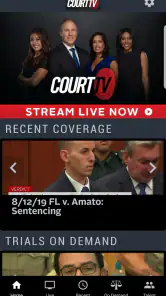

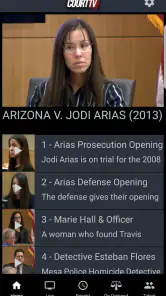



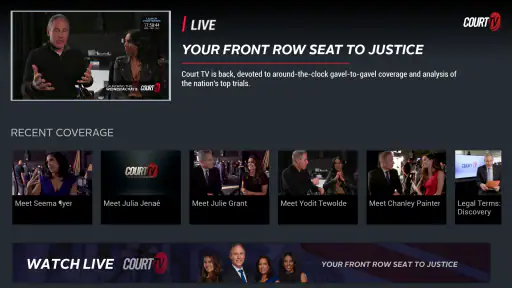
Analysis by Reviewed
When I want to follow a major courtroom story without relying on short clips or secondhand summaries, Court TV is one of the more focused apps I reach for. It is a free news and magazines app from Katz Broadcasting, LLC, built around live courtroom coverage rather than a broad mixture of headlines. That narrow purpose is both its biggest strength and its clearest limitation: if a trial is the story I care about, the app can feel unusually direct; if I want a complete daily news service, I need something else alongside it.
My overall view is positive, but with an important qualification. Court TV works best as a dedicated viewing tool for people who want to watch proceedings as they happen and keep a trial in context. It is less useful for someone who only wants quick summaries, general breaking news, or a polished newspaper-style feed. The experience makes sense when you treat it as a courtroom window, not as an all-purpose news replacement.
What the app does well when a trial matters
The central appeal is its live, gavel-to-gavel approach to prominent trials. Instead of reducing a hearing to a headline, a short social-media clip, or a commentator’s conclusion, the app gives me a way to stay with the proceeding itself. That changes how I understand a case. I can follow the rhythm of testimony, notice how arguments develop, and see why a particular moment becomes important rather than encountering it only after someone else has selected the most dramatic part.
That focus is especially useful during a long-running case. Courtroom stories often arrive in fragments: one day brings opening arguments, another brings a witness, and later coverage may concentrate on a single exchange. A live channel helps connect those moments. I do not have to depend entirely on a constantly changing social feed, where context can disappear as posts move quickly down the screen.
I also appreciate the app’s straightforward identity. Court TV is not trying to be a general portal for weather, sports, finance, entertainment, and local alerts. Its category is News & Magazines, but the experience is much more specialized than a typical news reader. That specialization makes the choice simple: I open it when courtroom coverage is the reason I am there.
In practical terms, I find it most useful on days when I cannot keep a television on in the background. I can check the app during a break, follow the live coverage for a while, and return later when the proceeding becomes relevant again. That makes it suitable for a viewer who wants more than a recap but cannot structure an entire day around a courtroom schedule.
A realistic example is a person following a trial while working from home. During a quiet period, they can watch the live feed for a few minutes to understand what is happening. If the testimony becomes significant, they can continue; if work calls, they can step away without having to search through unrelated news stories. The app does not remove the time commitment involved in serious trial coverage, but it makes access more convenient than waiting for an evening program to explain the day.
More From Our News Desk

Clash of Clans Is Won Between the Battles

Android Auto Makes the Case for Quieter Car Software

MobiOffice: Transforming Mobile Productivity with Seamless Integration

EA SPORTS FC™ Mobile Soccer: Redefining Mobile Sports Gaming

How Microsoft OneDrive Became a Mobile Productivity Giant

How Google Translate Breaks Language Barriers Effortlessly
Another strength is the difference between watching proceedings directly and reading commentary. Written reporting is often more efficient, and I would choose it when I need the basic facts quickly. However, direct coverage is valuable when tone, sequence, and timing matter. A written paragraph may say that a witness faced questioning, while live viewing lets me understand how the exchange unfolded. That is not always necessary, but for people who care about legal process, it can be the entire reason to use the app.
The app is also approachable for casual viewers because it is free and carries an Everyone content rating. That does not mean every trial topic will feel comfortable for every person; courtroom cases can involve disturbing allegations and emotionally difficult testimony. It does mean the app is presented as a broadly accessible news product rather than a service restricted to a specialized professional audience.
Its reach is respectable as well, with over one hundred thousand installs and an average rating of about 3.7 from around two thousand ratings. I read that as evidence of a useful but not universally loved experience. The rating is not a reason to dismiss it, but it suggests that expectations matter. People who want a focused live courtroom source may be satisfied, while users expecting a feature-rich general news platform may judge it more harshly.
The app first appeared on May 1, 2019, and it supports Android six or later. That makes it accessible on many older devices, which is helpful if I want to use a spare phone or an aging tablet for background viewing. Still, compatibility alone does not guarantee a perfect experience on every device. Older hardware, weaker connections, or limited battery capacity can make any live video session less comfortable, so I would test it on the device I plan to use regularly rather than assuming that support means identical performance everywhere.
Why live courtroom coverage is different from ordinary news
The most important benefit is not simply that the app shows a trial. It is that live coverage encourages a different kind of attention. I can distinguish between what is happening in court and what commentators think it means. That separation is useful for anyone who wants to form a more careful opinion, especially when online discussion becomes highly confident before the full context is available.
There is also a hidden trade-off here: live coverage is more complete in one sense, but less efficient in another. A proceeding may contain long stretches that are important procedurally but not dramatic to watch. If I only have ten minutes, a concise report will usually give me more information per minute. If I want to understand the progression of a case, however, the slower format is an advantage rather than a flaw.
My practical tip is to decide what I want before opening the app. If I am looking for the day’s key development, I should not expect live video alone to save me time. If I want to observe the hearing and understand how the development emerged, then the app becomes much more worthwhile. This simple distinction prevents the most common disappointment: treating a live courtroom service like a headline aggregator.
The limits I noticed in the focused approach
The narrow subject matter can become a weakness when there is no trial I particularly want to follow. Court TV does not replace a broad news app, a local news source, or a conventional magazine reader. Someone who wants several topics in one place may find the experience too specialized and may prefer a mainstream news application that combines articles, alerts, and multiple sections.
Live viewing can also demand more patience than many mobile users expect. A phone is convenient for checking a story, but it is not always the ideal screen for extended courtroom coverage. I would be more comfortable using a tablet or a larger display when I plan to watch for a long period. On a phone, the app is better suited to checking in, following a meaningful segment, or keeping up during a short break than to replacing a full television setup.
Another limitation is the difference between access and organization. Seeing live coverage is not the same as having a carefully arranged research archive. If I am trying to build a detailed timeline of a case, compare every statement, or locate a particular exchange later, I may need reporting from other sources and my own notes. The app’s value is strongest in the present moment; it is not the only tool I would use for serious long-term reference work.
That matters because courtroom coverage can be emotionally persuasive. Watching an exchange directly may feel more authoritative than reading a summary, but it does not automatically provide legal expertise or complete case context. I would still compare what I see with reliable reporting, especially when the legal significance of a moment is unclear. Live access is not the same as a complete explanation. That is an important habit for any viewer who wants information rather than simply a compelling broadcast.
The free price is a clear advantage, but I would not interpret free access as a promise of a frictionless experience in every situation. Live video depends on a stable connection and can use more battery and data than reading text. On a limited mobile plan, I would reserve viewing for Wi-Fi or monitor data use carefully. This is not unique to Court TV, but it is particularly relevant because the app’s main purpose encourages longer sessions than a short article usually requires.
I also would not choose it solely because a trial is famous. Public attention can make a case feel urgent, but the app is most rewarding when I genuinely want to follow the proceeding itself. If I only want a neutral overview, a well-edited written report may be faster and easier to evaluate. If I want legal education, a dedicated educational resource may explain terminology and procedure more clearly. Court TV occupies the space between those options: closer to the event than a recap, but not a substitute for formal instruction.
Who should install it and who should skip it
I recommend Court TV to viewers who follow high-profile trials closely, want a direct view of courtroom proceedings, and are willing to spend time with a live format. It is also a good fit for people who dislike receiving trial news only through clipped videos and social posts. The app gives those users a more grounded way to watch the story develop.
It can suit a family member, student, journalist, or simply a curious viewer who wants to understand how a public case unfolds. The Everyone rating makes it broadly accessible, although I would still use personal judgment around the subject matter of individual trials. Younger viewers may need context from an adult because courtroom testimony can be complex or upsetting even when an app itself is not restricted to mature users.
I would be more cautious recommending it to someone who rarely watches live video. That person may install it expecting a stream of quick articles and conclude that it is not useful. A general news application would be a better first choice for a daily mix of headlines. Likewise, anyone with very limited data, a small screen, or little time may get more value from written coverage.
One of my more useful ways to use the app is as a supplement rather than a sole source. I can watch a relevant portion to understand the actual proceeding, then read a separate report to clarify the background and legal interpretation. This two-step workflow is more reliable than either extreme: relying only on commentary can remove context, while watching everything without outside explanation can leave important details unclear.
Another tip is to use it selectively during major transitions. Opening statements, testimony from central witnesses, significant arguments, and other pivotal moments are generally more valuable to me than leaving a stream running continuously without a clear purpose. Selective viewing helps conserve battery, reduces data use, and keeps the experience from becoming background noise.
It is also worth remembering that a live broadcast can shape attention toward the most visible moment. I try to write down the basic issue I am following before I watch, such as what a witness is expected to address or why a hearing matters. That small preparation makes it easier to separate genuine developments from dramatic but less meaningful exchanges. The app supplies access; I still need to bring a critical viewing habit.
How it compares with the usual alternatives
Compared with a general news app, Court TV offers depth of attention but less breadth. A general service is better when I want headlines from several subjects in a few minutes. Court TV is better when the courtroom itself is the subject and I want to stay with the source material longer.
Compared with social media, it offers a calmer and more continuous way to follow a case. Social platforms are useful for discovering that something happened, but they can mix verified reporting, opinion, speculation, and clipped footage. Courtroom coverage does not eliminate the need for judgment, yet it gives me a more direct reference point than a rapidly changing stream of posts.
Compared with television, the mobile app is more flexible. I can follow coverage without being tied to a television set, which is useful when moving between rooms or fitting viewing around work. The compromise is that a phone or small tablet may not be as comfortable for a long session, and the quality of the experience will depend heavily on the device and connection I use.
Compared with written legal reporting, the app gives me immediacy and sequence, while articles usually provide better compression and explanation. I would choose the written alternative when I need a quick briefing or a carefully organized account. I would choose Court TV when I want to see the proceeding rather than only learn its outcome through someone else’s summary.
My final recommendation
After using Court TV as a focused courtroom news app, I see it as a specialized tool with a clear purpose rather than a universal news solution. Its strongest quality is the ability to bring live trial coverage to a mobile device for free, making it easier to follow important proceedings directly. Its main weakness is equally clear: live courtroom viewing takes time, and the app cannot provide the breadth, speed, or explanatory structure of every alternative.
For me, the right question is not whether it replaces my usual news sources. It does not. The better question is whether I want a direct, flexible way to watch a prominent trial when written summaries feel incomplete. When the answer is yes, this app earns a place on my phone. When I only need fast headlines, broad coverage, or formal legal explanation, I would use another source instead.
Court TV is worth installing if courtroom access is your priority, not merely because a trial happens to be in the news. Its free availability, broad age rating, support for Android six and later, and focused live coverage make it easy to try. I would recommend it to patient viewers who value context and firsthand observation, with the practical advice to pair it with reliable written reporting and to choose a larger screen when watching for a long stretch.
In short, I find it most successful when used deliberately: open it for the proceeding that matters, watch with a specific question in mind, and then check a separate source for explanation. Used that way, Court TV offers something ordinary headline apps cannot: a closer connection to how a major courtroom story actually unfolds.
Court TV Frequently Asked Questions
Which devices can install Court TV, and is it suitable for older phones?
Court TV is a mobile app for Android and iOS, so check that your phone or tablet meets the requirements for its operating system before downloading. On Android, it requires version 6.0 or later. The app is in the News & Magazines category and is intended for watching trial coverage and other video content on a mobile device.
What is Court TV, and what can I watch on the app?
Court TV is a legal-news and trial-coverage app focused on live and on-demand courtroom programming. After installing it, users can typically watch live trial coverage, legal analysis, expert commentary, breaking-news reports, and selected video clips. The exact content may vary by location, broadcast schedule, licensing agreements, and whether a particular case is being covered at that time.
Is Court TV free to download and use?
The Court TV app is free to download, and much of its content may be available without a paid subscription. However, access can depend on your region, television provider, internet connection, and the app’s current distribution agreements. Some features may also require signing in through a participating TV provider, so it is worth checking the access requirements shown in your app store before downloading.
Can I watch Court TV live on an Android or iPhone?
Yes, the app is designed for mobile viewing on compatible Android and iOS devices, allowing users to follow live Court TV programming away from a television. A stable Wi-Fi or mobile-data connection is recommended, especially for extended courtroom streams. Video quality may adjust automatically according to your connection, and older devices may experience slower performance or limited compatibility.
Does Court TV provide full courtroom trials or only short news clips?
Court TV may offer both live courtroom coverage and shorter on-demand videos, depending on the trial schedule and the rights available for each case. Some proceedings can be shown for long periods, while others may be interrupted by analysis, advertisements, or programming changes. Courtroom access is also subject to legal restrictions, local rules, and decisions made by the court or broadcaster.
Pros
- Live courtroom coverage offers an engaging alternative to traditional TV.
- On-demand episodes make it easy to catch up on missed cases.
- Clear video playback provides a comfortable viewing experience.
- Case-focused programming helps viewers follow legal developments.
- Useful alerts can keep you informed about new content and trials.
Cons
- Availability of some streams may vary by location or licensing rights.
- The app may use significant mobile data during extended live viewing.
- Frequent ads can interrupt programs and reduce viewing comfort.
- Some cases may be emotionally intense or unsuitable for younger viewers.
- A stable internet connection is needed for reliable live streaming.
- Category
- News & Magazines
- Version
- Varies with device