Cars & Bids
- 23.00
- 4.2
- Installs
- 10.00K
- Price
- Free

Screenshots



Analysis by Reviewed
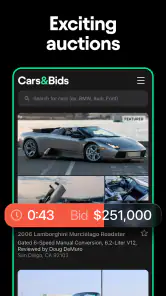
I installed Cars & Bids expecting a straightforward way to browse enthusiast vehicles, and I found an app that makes the auction format feel much more immediate than a normal classified listing. It belongs in the Auto & Vehicles category, but it is not simply a searchable inventory of cars. The real appeal is the combination of browsing, timing, research, and decision-making that comes with watching vehicles compete for attention in an online auction.
That distinction matters. If I want a quick commuter car with a fixed price, I would probably start elsewhere. If I am looking for an unusual modern enthusiast vehicle and enjoy studying photos, descriptions, bidding activity, and auction momentum, this app is much more interesting. It is free to install, aimed at Everyone, and developed by Cars & Bids, LLC. The store presents it as a marketplace built for car enthusiasts, and that focus is clear from the moment I begin browsing.
The Android release I tested is version 26.7.2 and requires Android 10 or later. The app has passed the early discovery stage, with over ten thousand installs, while its average sits at 4.2 from roughly seventy ratings. Those figures suggest a smaller, focused audience rather than a mass-market shopping platform. I see that as both a strength and a limitation: the experience feels more specialized, but it may not be the first place every driver would think to search.
How I use the app from the first search to a sensible bid
My baseline workflow starts with browsing before I decide what I actually want. That sounds obvious, but auction marketplaces reward patience. I look through the available vehicles, open the listings that match my interests, and pay attention to the way each one is presented rather than reacting only to the headline model or apparent bargain. A car can look compelling in a few images and become much less attractive once I consider its condition, history, specification, and the remaining auction time.
The first useful habit is to separate interest from commitment. I may save a vehicle mentally as one worth following, but that does not mean I should bid. I use the early part of an auction to learn what information is available, how clearly the vehicle is described, and whether the listing gives me enough confidence to continue researching. This prevents the common mistake of treating the current bid as the final cost or assuming that an attractive photograph tells the whole story.
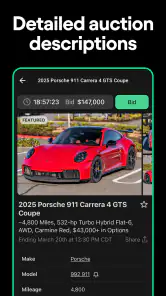
When I open a listing, I read it in a fixed order. I begin with the basic vehicle identity and specification, then move through the images and written details, and only after that look closely at the bidding situation. This keeps the current price from anchoring my opinion too early. If I see the number first, I am more likely to judge the car as a bargain or an overpay before I have considered whether it suits my needs.
For an enthusiast, the app works particularly well as a research window. I can compare different examples of the same type of vehicle, notice which details repeatedly matter, and build a clearer idea of what makes one listing more desirable than another. I would not use it as my only source of mechanical verification, though. An online auction listing can organize information very well, but it does not replace an independent inspection, a conversation with the seller, or a careful review of ownership and maintenance records.
A realistic everyday scenario would be browsing during a lunch break after spotting an interesting weekend car. I might open the listing, examine the images, read the description, and make notes about questions I still need answered. Instead of bidding immediately, I would use the remaining time to check comparable listings, estimate transport and registration costs, and decide on a maximum amount. That small pause is important because auction excitement can make a vehicle feel more urgent than it really is.
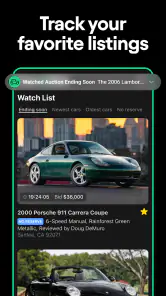
The app is also useful when I am not actively buying. I can use it to follow the market for cars that are difficult to find through ordinary classified sites. Enthusiasts often want a specific generation, unusual trim, manual transmission, performance package, or distinctive modification. A general marketplace may bury those details among thousands of ordinary listings, while a specialist auction environment makes the browsing experience feel more relevant.
What I check before treating a listing seriously
I do not judge a vehicle by its headline alone. I look for consistency between the written description and the images, paying attention to wear, modifications, warning signs, and details that could affect future ownership. If the listing emphasizes a desirable feature, I want to understand how that feature fits with the rest of the car. A well-presented enthusiast vehicle can still be a poor purchase if its condition, usage, or maintenance needs do not match my budget.
One of my more useful habits is to create a short question list before contacting anyone. I ask myself whether I understand the vehicle's history, whether the images answer the obvious condition questions, and whether there are areas I would need to inspect in person. This is more effective than sending a vague message because it turns browsing into a repeatable process. It also helps me notice when enthusiasm is filling gaps that the listing has not actually resolved.
I also treat auction timing as a reason to plan, not a reason to panic. A listing with little activity can still become competitive, while an active listing can move beyond my limit quickly. Watching the final stage may be useful, but I avoid confusing attention with value. My maximum bid is based on the vehicle and my total ownership plan, not on how much time I have already spent reading the page.
Settings and phone habits that make browsing easier
There are no settings I would describe as a magic shortcut to better buying decisions. The most valuable checks are practical: make sure the app is current, confirm that Android 10 or later is available on the device, and review the phone's notification behavior so important auction activity is not lost among unrelated alerts. I would rather spend a minute arranging a reliable routine than assume the app will rescue me from missing a deadline.
On a phone, image inspection benefits from slowing down. I enlarge photographs, rotate the device when a wider view helps, and return to the written description after looking at the images. This is a simple but surprisingly useful sequence because it reduces the chance of remembering only the most attractive picture. I also keep a separate note with the listing name, questions, transport estimate, and my spending ceiling. That note becomes a guardrail when the auction becomes competitive.
For people who browse from more than one device, consistency matters. I would not rely on memory to track a vehicle I have been following. I use the same shortlist and the same question checklist whether I am checking the app casually or sitting down for a serious review. The app is most useful when it becomes part of a routine rather than an impulse-driven stream of attractive cars.
Because the service is free, there is little financial barrier to installing it and exploring the marketplace. That does not mean the buying process is cost-free. The eventual vehicle price is only one part of the decision. I would also consider inspection, transportation, taxes, registration, insurance, storage, and immediate maintenance. Cars & Bids can help me discover and evaluate opportunities, but it cannot turn an unsuitable car into a sensible purchase.
Faster patterns for experienced browsing
After using the app repeatedly, I find that speed comes from reducing repeated decisions. I start with a clear target: perhaps a body style, a type of driving experience, or a maximum ownership budget. Then I scan listings for the details that can eliminate a candidate quickly. If a vehicle fails one of my non-negotiable requirements, I move on instead of spending ten minutes trying to persuade myself that the requirement is not important.
A second efficient pattern is the two-pass review. On the first pass, I decide whether the listing deserves attention. On the second, I inspect the details that could change the decision. This keeps casual browsing enjoyable while reserving deeper research for vehicles that genuinely fit. It is especially helpful on a phone, where jumping randomly between images, descriptions, and auction activity can make the process feel more confusing than it needs to be.
I also compare vehicles by ownership scenario rather than by appearance. One car may be ideal for weekend drives but frustrating as a daily driver. Another may be less dramatic yet easier to maintain, insure, store, and use. The app encourages enthusiasm, which is part of its charm, but I get better results when I translate that enthusiasm into a concrete question: where would I drive this, how often, and what inconvenience am I willing to accept?
Another advanced habit is to distinguish a listing problem from a vehicle problem. If I cannot understand the description, that does not automatically mean the car is poor, but it does mean I need more information before bidding. Likewise, a detailed listing does not guarantee a perfect vehicle. This distinction keeps me from rewarding presentation alone and reminds me that the app is a marketplace interface, not an independent mechanical authority.
Compared with ordinary classified apps, the auction format gives Cars & Bids a stronger sense of occasion. A fixed-price marketplace is often better when I already know the exact car I want and need a direct negotiation. A broad classifieds platform may offer more everyday vehicles and local convenience. This app makes more sense when the discovery process is part of the fun and when the vehicle's enthusiast appeal is central to the purchase.
Where the auction format reaches its limits
The biggest limitation is psychological rather than technical. Auctions create pressure, and pressure can make a rare-looking car seem impossible to replace. I have to remind myself that walking away is a successful outcome when the price exceeds my plan or the information is incomplete. The app is not the right choice for someone who dislikes competition, needs a guaranteed fixed price, or wants a simple transaction with minimal research.
There is also a practical limit to remote evaluation. Photos and descriptions can organize what I know, but they cannot provide the same confidence as seeing the vehicle, checking it mechanically, and verifying important documents. If I am considering an expensive or highly modified car, I would want an inspection strategy before bidding. That might mean arranging a local inspection, asking focused questions, or involving someone who understands the particular model.
Another trade-off is selection versus certainty. A specialist marketplace can surface cars that are difficult to find in ordinary searches, but unusual vehicles may also involve unusual parts, maintenance, insurance, or resale considerations. The very feature that attracts me to a rare specification can make ownership less convenient. I would use the app to find the opportunity, then research the long-term consequences outside the auction screen.
The app may also be less satisfying for someone who wants a broad vehicle-shopping tool. Its enthusiast focus is a benefit when I am searching for character, but it is unnecessary if I simply need a dependable hatchback, family crossover, or inexpensive local runabout. In those cases, a conventional classified service, dealer inventory, or local marketplace may provide a wider and more practical set of choices.
For sellers, the same specialization can be valuable but demanding. A distinctive car benefits from a knowledgeable audience, yet the presentation has to be clear enough for remote buyers to assess it. Good photographs, accurate details, and straightforward answers matter because enthusiasts tend to look beyond the headline. I would not treat the app as a place to hide weaknesses behind excitement; its audience is more likely to examine the details that casual shoppers ignore.
Who should install it and who should skip it
I recommend Cars & Bids to people who enjoy enthusiast vehicles, are comfortable researching before spending, and see an auction as part of the experience rather than an obstacle. It is especially appealing if I am tracking a particular kind of modern performance or unusual car and want a focused place to discover possibilities. The free price makes exploration easy, and the Everyone rating means the app is broadly accessible from an age-rating perspective.
I would skip it if I need a car immediately, want a predictable fixed price, or do not have room in my schedule for due diligence. I would also be cautious if I am buying my first vehicle and do not yet know how to evaluate condition, ownership costs, or modifications. In that situation, a trusted mechanic, experienced friend, or more conventional purchase route may be a better foundation than entering an auction alone.
One question many users will have is whether installing the app means they must bid. In my experience, browsing is valuable by itself. I can use the marketplace to learn what vehicles appear, compare specifications, and understand how enthusiast cars are presented without treating every interesting listing as a purchase opportunity. That makes it useful even when I am only researching a future project.
Another practical question is whether the app replaces inspection and research. It does not, and I would not use it that way. I see it as the discovery and auction-monitoring part of the process. The responsible purchase still requires checking the vehicle's condition, paperwork, logistics, and total cost. The app can make those questions easier to organize, but it cannot answer every question from a screen.
Users may also wonder whether it is better than a normal classifieds app. My answer depends on intent. For enthusiast-focused discovery and the excitement of bidding, this is the more natural fit. For a fixed budget, quick local pickup, or a broad search across ordinary transportation, a conventional marketplace is likely more efficient. I would happily use both, because they solve different problems rather than competing in exactly the same way.
My verdict after building a repeatable routine
Cars & Bids works best when I approach it with enthusiasm and discipline at the same time. Its strongest quality is focus: the app is built around the kind of browsing that makes car people stop, compare, investigate, and imagine ownership. The auction structure adds energy, while the specialist audience makes unusual vehicles feel more at home than they might on a general-purpose listing service.
Its weaknesses are tied to that same design. The excitement can encourage impulsive decisions, and remote listings still require independent judgment. I would not install it expecting a frictionless fixed-price shopping trip. I would install it expecting a focused marketplace where the best results come from setting a budget, reading carefully, asking precise questions, and being willing to leave an auction behind.
After using the app, my preferred routine is simple: browse widely, shortlist selectively, inspect details in a consistent order, check the phone settings that affect timely attention, and set a maximum before the bidding becomes emotional. That workflow turns the app from an endless stream of tempting cars into a useful research tool. The smartest Cars & Bids habit is knowing when not to bid.
For the right reader, I would recommend Cars & Bids without hesitation. It is free, focused, and enjoyable for anyone who treats cars as more than transportation. Just remember that the app opens the door to an auction; your research, inspection, budget, and patience decide whether walking through that door is actually a good idea.
Pros
- Specializes in enthusiast cars
- making listings easy to browse by niche interests.
- Auction countdowns and bidding activity create an engaging
- competitive buying experience.
- Detailed photos and seller descriptions help assess a vehicle before making an offer.
- Community comments can reveal useful ownership history and potential concerns.
- Winning bids and listing results provide helpful insight into current market values.
Cons
- Auction-style buying can pressure users into making rushed financial decisions.
- Vehicle condition still depends heavily on seller-provided information and inspections.
- Shipping
- taxes
- registration
- and other purchase costs may be difficult to estimate.
- International buyers may face extra complexity with import rules and logistics.
- Some desirable vehicles can attract intense bidding and exceed expected budgets.

- Category
- Auto & Vehicles
- Version
- 26.7.2