Big Rig Savings
- 12.00
- 3.7
- Installs
- 10.00K
- Price
- Free
Screenshots
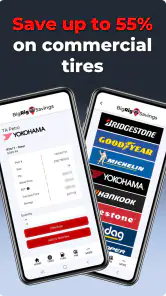
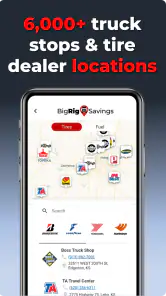
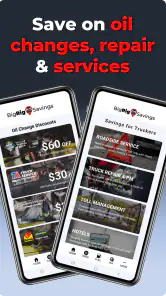
Analysis by Reviewed
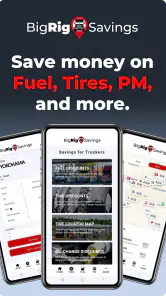
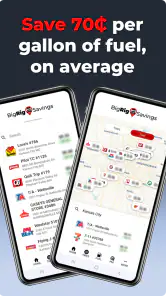
For truckers and small fleets, saving money is rarely about one dramatic decision. It is usually the result of many small choices made during a long route: where to stop, when to refuel, which expenses deserve attention, and how much time can be spent comparing options. Big Rig Savings is an Android app in the Auto & Vehicles category that aims to support that kind of everyday decision-making. I found its appeal easy to understand: it is focused on the working reality of over-the-road driving rather than trying to become a general-purpose travel app.
The app is free, carries an Everyone age rating, and comes from crownsource. Its store summary presents it as a savings tool for truckers and fleets, while the shorter description keeps things even simpler with the name itself. That narrow focus is important. I would not approach it as a complete dispatch platform, electronic logging system, navigation replacement, or maintenance manager. I would approach it as a practical companion for looking at the cost side of trucking while moving between stops.
My overall impression is that Big Rig Savings makes the most sense when it becomes part of a repeatable driving routine. It is not the sort of app I would expect to transform a trip on its own. Its value depends on whether the information and workflow fit the way you already plan fuel stops and control operating expenses. For an independent driver, that can mean a quick check before committing to a stop. For a fleet, it may be more useful as one small piece of a broader cost-control process.
How the app feels during ordinary route planning
A focused tool rather than a full trucking command center
When I think about speed in an app like this, I do not only mean how quickly a screen opens. The more important question is how quickly I can reach a useful decision without being distracted by unrelated tools. Big Rig Savings benefits from its focused identity. A driver who already knows the route can open it with a specific purpose: compare a possible stop, review a saving opportunity, or make a more deliberate choice before pulling off the highway.
That focus also sets a reasonable expectation. This is not an app I would use as my only source of route intelligence. A dedicated truck navigation app is generally better for bridge clearances, truck restrictions, turn-by-turn guidance, and road-specific planning. A fleet-management system is usually better for dispatch visibility, driver communication, and centralized reporting. Big Rig Savings occupies a narrower space, and I think it works best when that limitation is understood from the beginning.
For a driver, the ideal workflow is short. Check the app before the next major fuel decision, compare the likely benefit with the extra distance or time involved, and then return to the primary navigation tool. That approach avoids a common mistake: treating every apparent saving as worthwhile. A cheaper stop is not automatically the better stop if reaching it adds a detour, creates parking problems, or disrupts the planned driving day.
Where the real time savings can come from
The most useful performance benefit is likely to come from reducing mental switching. Instead of searching through scattered notes, remembering past stops, and estimating costs from memory, I can use a dedicated savings-oriented app as a checkpoint. Even when the final decision still requires judgment, having one place to consult can make the process more consistent.
I would use it before leaving a rest area, not while driving. That sounds obvious, but it matters for both safety and efficiency. A driver who tries to research savings while moving is turning a potentially helpful tool into a distraction. The better habit is to make the decision during a legal break, while parked, or before the route begins. In that setting, the app has time to support planning rather than interrupting it.
For fleet users, the time question changes slightly. A single driver may be looking for a practical stop on today’s route, while a manager may be looking for repeatable behavior across several vehicles. The app’s value in that environment depends on whether drivers can apply it consistently and whether the resulting choices can be incorporated into the company’s existing records. I would not assume that a savings app replaces accounting or fleet software; it is more sensible to treat it as a decision aid alongside those systems.
A realistic day on the road
Imagine an independent driver preparing for a long haul. The truck is loaded, the main route is already planned, and the next fuel decision will happen after several hours on the road. Before departure, the driver checks Big Rig Savings while parked and identifies a possible lower-cost option near the planned corridor. The important step is not simply choosing the lowest visible cost. The driver also considers whether the stop is accessible to a large vehicle, whether the approach is sensible for the route, and whether the stop will interfere with the delivery schedule.
Later, during a break, the driver checks the plan again rather than waiting until the tank is nearly empty. That timing creates room for a better decision. If traffic, weather, or a changed delivery appointment makes the original stop inconvenient, the driver can reconsider without pressure. This is one of the less obvious ways to use a savings app: treat it as an early planning tool, not as an emergency search when fuel or time is running short.
For a small fleet, the same workflow can be turned into a simple internal rule. Drivers can review likely savings before a route, make the choice while parked, and record the reason when a more expensive option is selected. That last step is useful because the cheapest option is not always operationally sensible. A slightly higher cost may be justified by access, timing, truck services, or avoiding a long detour. The app can support the comparison, but it should not be allowed to make the business judgment automatically.
Heavy-use moments, stability, and practical limits
What happens when the app becomes part of a busy routine
Big Rig Savings is most likely to be opened at high-pressure moments: before a fuel stop, during a short break, or while coordinating several decisions on a demanding route. In those situations, simplicity matters more than visual polish. I want to know where to look, what decision I am making, and whether the result is useful enough to act on. A savings tool that requires too much exploration can lose its value precisely when the driver needs it.
I would also be careful about using any app repeatedly in poor connectivity or under difficult road conditions. Trucking takes place across areas with uneven mobile coverage, and a driver may be using an older phone with limited free storage or memory. I cannot treat Big Rig Savings as a substitute for offline route preparation. Before leaving, I would make sure the essential route, fuel plan, and contact information are available through tools that I already trust for those purposes.
That does not make the app unsuitable for long-distance work. It simply places it in the right role. Use it when the phone is connected and the vehicle is stationary, then keep the actual driving task with the navigation and communication tools designed for it. This separation also helps battery management: the app does not need to remain active throughout the entire drive if its main purpose is to support decisions at selected points.
Reliability is more than whether the screen opens
For me, reliability has three parts. The app needs to open when I need it, present information in a way I can understand quickly, and help me recover when a decision changes. The first two are basic, but the third is especially important for trucking. Routes change, stops fill up, appointments move, and a plan that looked efficient in the morning may no longer fit by afternoon.
That is why I would avoid building a rigid route around one expected saving. A better approach is to keep a primary option and a reasonable fallback. Big Rig Savings can be consulted at both stages, but the driver should still use common sense and the main navigation system to confirm that the alternative works for the truck and schedule. This is a practical recovery strategy: the app helps with the comparison, while the driver maintains control of the broader plan.
Another useful habit is to check the app early enough to leave room for correction. If I wait until the last possible moment, even a small delay can erase the benefit of a cheaper choice. If I review options before the tank is critical and before the delivery window becomes tight, I have more flexibility. That is not a flashy feature, but it is the kind of workflow improvement that can make a focused tool more dependable in real use.
Device constraints and the right hardware expectations
The current version is 5.0.0.0, and the app supports Android versions beginning with 4.4. That broad compatibility is helpful for drivers who keep an older dedicated phone in the cab instead of using their newest personal device. It also makes the app more approachable for small operators who do not replace hardware frequently.
At the same time, support for older Android versions should not be confused with a guarantee that every old handset will feel equally comfortable. Screen size, battery health, background activity, and general responsiveness can vary widely between devices. On an aging phone, I would keep the setup practical: close unrelated apps, avoid using the savings tool alongside unnecessary background services, and check it while parked rather than trying to perform several tasks at once.
A dedicated cab phone can be a sensible arrangement, but it introduces its own trade-off. The device may be stable and familiar, yet it may not have the strongest connection or the clearest display. A newer phone may be faster and easier to read, but it is also the device most likely to receive calls, messages, navigation prompts, and other interruptions. Whichever device I choose, I would test the workflow before relying on it during a paid route.
Resource demands matter because truckers often run several tools together. Navigation, music, hands-free calls, and charging can already place pressure on an older phone. I would not leave Big Rig Savings open unnecessarily throughout the day. Open it for the planning task, make the decision, and return to the tool that needs to stay active. That approach reduces clutter and makes it easier to notice when the phone is becoming warm, slow, or low on power.
Who will benefit most from the app
The clearest audience is an independent over-the-road driver who wants to bring more discipline to fuel and operating-cost decisions without paying for a large fleet platform. The free price makes experimentation easy, and the narrow purpose means the app can be evaluated on a real route rather than adopted as a major business system. If I were driving regularly and wanted a dedicated savings check before stops, I would consider trying it.
Small fleets may also find a place for it, especially when drivers currently make stop decisions from memory or habit. The important condition is that the company should define how the app fits with existing procedures. It can support a conversation about why one stop was chosen over another, but it should not replace formal expense records, dispatch instructions, or safety rules.
I would be less enthusiastic for someone who wants one app to manage every part of trucking. If your priority is truck-specific navigation, electronic logs, maintenance scheduling, fuel-card administration, or live fleet tracking, you should look at specialized alternatives first. Big Rig Savings is more attractive as a companion than as a central operating system.
How it compares with the usual alternatives
The usual alternative for a driver is not always another savings app. Often it is a combination of a general map, a navigation app, a spreadsheet, saved notes, and personal memory. That combination can be flexible, but it also spreads the decision across several places. Big Rig Savings has an advantage when its focused workflow is quicker than manually assembling the same information from unrelated tools.
Dedicated truck navigation remains the better choice for route legality and vehicle-specific road planning. General mapping services may be more familiar for everyday directions, while fuel loyalty programs or fleet-card systems may be stronger for account-based discounts and transaction records. Accounting software is better for reconciling expenses after the trip. The best setup may therefore be a combination: use Big Rig Savings to think about savings, navigation to confirm the route, and accounting tools to document what actually happened.
The trade-off is extra app switching. A driver who already has a smooth process may not gain much from adding another tool. The benefit becomes clearer when fuel decisions are inconsistent, when a small fleet wants a common planning habit, or when the operator wants to examine savings before the stop rather than only reviewing costs afterward.
My performance verdict
Big Rig Savings is a focused, free Auto & Vehicles app that I would judge by usefulness at specific decision points rather than by how many tasks it can perform. Its strongest case is an independent trucker or small fleet looking for a dedicated way to think about savings before committing to a stop. Its compatibility with older Android versions also makes it practical for a broad range of cab devices, provided the phone itself remains usable and the driver plans around connectivity and battery limits.
The app has a 3.7 average from 23 ratings, with 12 written reviews, and has passed 10K+ installs. Those figures suggest a modest but real user base rather than a universally established trucking standard. I would read that as a reason to test it on a few ordinary routes before making it part of a company-wide process. The free price lowers the risk of that trial, but it does not remove the need to verify that the workflow suits your routes and equipment.
My recommendation is measured. Try it if you want a savings-focused companion and are willing to use it while parked, alongside navigation and record-keeping tools. Skip it if you need a complete fleet-management suite or if your current combination of navigation, fuel programs, and accounting already handles the job cleanly. Its value comes from making cost-conscious planning a repeatable habit, not from replacing every other tool in the cab.
For the right driver, that is enough. A small improvement made before several fuel decisions can be more useful than a crowded app that promises to manage everything. I would keep Big Rig Savings in the category of practical specialist tools: worth testing, useful when integrated thoughtfully, and best judged by whether it helps you make calmer, better-informed choices on the road.
Pros
- Simple interface makes savings and account details easy to check.
- Useful for tracking deposits and monitoring progress toward savings goals.
- May help users build a regular saving habit with automated contributions.
- Digital access is convenient compared with managing savings only in person.
- Clear account information can make routine financial planning easier.
Cons
- Availability and features may depend on your location and eligibility.
- Interest rates and fees should be compared with other savings providers.
- Some transfers may take time to process
- limiting immediate access to funds.
- Customer support options may be less personal than branch-based banking.
- The app may offer fewer advanced budgeting tools than dedicated finance apps.
- Category
- Auto & Vehicles
- Version
- 5.0.0.0