Bienestar MX | Apoyos Info
- 25.00
- 4.8
- Installs
- 50.00K
- Price
- Free

Screenshots



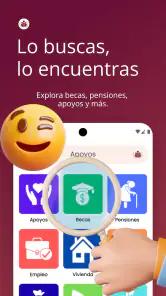
Analysis by Reviewed
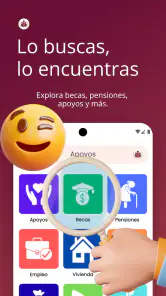
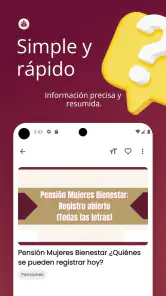
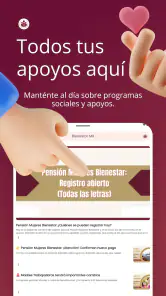
Bienestar MX | Apoyos Info is the kind of news app I would open when I want practical information about women’s wellness in Mexico without sorting through a general news feed. Its focus brings together wellness news, scholarship information, pension topics, and support resources, so it is aimed less at entertainment and more at helping readers notice opportunities and understand issues that can affect everyday decisions.
After spending time with it, my impression is that its value depends on how closely those subjects match your needs. It is not trying to replace a broad newspaper, a dedicated health service, or an official government portal. Instead, it works as a focused starting point. I found that useful because a narrow editorial purpose can make relevant stories easier to notice, especially for readers who do not want to search through unrelated headlines.
The app is free, suitable for Everyone, and comes from PasApps. It belongs to the News & Magazines category, runs on Android six point zero or later, and is currently at version one point zero point zero. Those details matter because this is still an early release: the basic experience has room to mature, and users should approach it as a focused information reader rather than a finished all-in-one public-service platform.
How the current experience feels
The clearest strength is the subject mix. Women’s wellness is broad enough to cover personal concerns, while scholarships, pensions, and support information give the app a more practical direction than a general magazine reader. I like that combination because it connects reading with possible action. A wellness article may help someone understand a concern, while a scholarship or pension item may prompt a reader to check eligibility, prepare documents, or look for an official application route.
That does not mean every item should be treated as a final authority. My most important recommendation is to use the app as a discovery layer. When a story refers to financial assistance, a pension process, or a scholarship, I would verify the requirements with the responsible official organization before sharing personal information or making plans. This is especially important for deadlines, eligibility rules, and documents, which can change independently of any news app.
A realistic everyday use case is a short morning check. I could open the app while having breakfast, scan for a wellness topic relevant to my household, and then save the useful details mentally or in my notes before checking the official source. Later, I might return to a support-related story when I have time to compare requirements. That workflow makes more sense here than leaving the app open all day waiting for a continuous stream of breaking news.
Another practical use is family support. Someone helping a mother, daughter, sister, or friend may not know which topics deserve attention. A focused feed can act as a reminder to discuss preventive care, financial support, or education opportunities. The benefit is not that the app completes the process for you; the benefit is that it may help you notice a topic before it becomes urgent.
More From Our News Desk

Clash of Clans Is Won Between the Battles

Android Auto Makes the Case for Quieter Car Software

MobiOffice: Transforming Mobile Productivity with Seamless Integration

EA SPORTS FC™ Mobile Soccer: Redefining Mobile Sports Gaming

How Microsoft OneDrive Became a Mobile Productivity Giant

How Google Translate Breaks Language Barriers Effortlessly
A focused reader rather than a complete service desk
Compared with a general news app, Bienestar MX | Apoyos Info should feel more relevant when your interests are specifically connected to women’s wellbeing and support in Mexico. General alternatives offer wider coverage, stronger customization in many cases, and more varied reporting, but they also make focused information easier to miss. Here, the narrower purpose is the main reason to install it.
Compared with official websites, the trade-off is different. Government and institutional pages are usually the places I would trust for final procedures, forms, and current requirements. They can also be harder to browse, especially when information is divided across several sections. This app may be more approachable for discovering a subject, but I would still move to the official source before acting.
Compared with a wellness-only application, this one has a broader social and financial angle. That is useful when health, education, pensions, and support are connected in real life. It is less suitable if your only goal is symptom tracking, exercise guidance, appointments, or personal health records. Those tasks require a different type of tool.
The app’s public response is encouraging: it has an average rating of four point eight from around seven hundred seventy-eight ratings and has passed fifty thousand installs. I see that as a sign that the concept is reaching people, not as proof that every article or workflow will suit every reader. Ratings can tell me that the general direction is appreciated, while my own decision still depends on whether the coverage matches my information needs.
What the early version means for existing users
Because the current version is one point zero point zero, existing users should expect the foundation of the product to matter more than a long list of polished extras. The app’s identity is already clear: it is a free information tool centered on women’s wellness and support-related subjects. What will determine its long-term usefulness is how consistently that focus is maintained and how clearly readers are guided from an article toward a reliable next step.
For someone already using it, the best habit is to separate three kinds of information while reading. First, note the general explanation that helps you understand an issue. Second, identify any practical claim about support, pensions, or scholarships. Third, look for the organization or process that should be checked independently. This simple separation prevents an informative article from being mistaken for an application form or an official decision.
I would also avoid treating a single headline as a complete answer. A scholarship story may introduce an opportunity but still leave questions about location, eligibility, dates, or required paperwork. A pension article may explain a change or concern without replacing personalized advice. A wellness article may be helpful for awareness while still being inappropriate as a diagnosis. The app is most useful when it starts a careful research process rather than ending one.
There is a less obvious benefit to this approach: readers can build a personal information routine without becoming dependent on constant notifications or broad social feeds. I would check it at a time when I can follow up on something important. If an article points toward a support program, I would copy the program name and the questions I need answered, then visit the relevant official channel. That turns casual reading into a small, repeatable workflow.
Where the experience still needs care
The biggest limitation is inherent in the subject matter. Information about pensions, scholarships, and support is sensitive to changes in rules and circumstances. Even a well-written article can become less useful if a program changes its conditions. For that reason, I would not install this expecting it to provide a permanent, definitive record of every benefit or service available in Mexico.
The app may also feel too narrow for readers who want international news, politics, business, sports, or a full daily newspaper. Its specialized theme is an advantage only when it matches your priorities. If you prefer one application that combines every category, a larger news platform will probably be more convenient. Installing this alongside a general reader makes more sense than expecting it to replace one.
Another point is that the app’s name and summary suggest a support-oriented purpose, but readers should still pay attention to the distinction between information and direct assistance. I would not assume that reading about a benefit means the app itself processes applications, confirms eligibility, or provides personal counseling. Before entering sensitive details anywhere, I would identify the responsible institution and make sure I am using its trusted channel.
For wellness topics, the same caution applies. I appreciate an app that makes health-related subjects easier to discover, but I would not use an article as a substitute for a clinician, especially when symptoms are serious, persistent, or urgent. The app can help me prepare questions and understand vocabulary before an appointment. It should not be my only source for an individual medical decision.
These limitations do not make the app a poor choice. They define the right role for it. I see it as a reader, organizer, and prompt for further checking. I would be disappointed if I expected a case-management service, but satisfied if I wanted a focused way to notice relevant news and support topics.
Small habits that make it more useful
My first tip is to read with a follow-up question in mind. Instead of asking only whether an article interests you, ask what you would need to verify before acting. For a scholarship, that might be the issuing organization and application route. For a pension topic, it might be the current eligibility rule. For wellness coverage, it might be whether the article is general education or advice that needs professional interpretation.
My second tip is to use the app at a fixed point in the day rather than refreshing it repeatedly. A short, deliberate session makes it easier to remember which items require action. It also reduces the risk of confusing a headline with a complete update. This is particularly useful for readers who are helping someone else and need to turn information into a checklist.
My third tip is to keep official verification separate from casual reading. If I find a promising support item, I would write down its exact topic, then search for the responsible institution through a trusted route. I would compare names, requirements, and instructions before sharing it with family. This extra step may feel slow, but it is worthwhile when personal documents or financial decisions are involved.
A fourth useful habit is to judge relevance by life situation, not by the app’s broad theme. A reader looking for education support may gain more from the scholarship coverage than from general wellness news. Someone assisting an older relative may care more about pension information. Someone seeking health awareness may use the wellness section as a starting point. The app can serve different people, but its value changes depending on which part of the mix they actually need.
What I would watch as the product develops
Since the app is at an early version, I would pay attention to how the content experience evolves. The most meaningful progress would be clearer context around support-related stories, visible distinctions between general reporting and official instructions, and practical guidance that helps readers verify a claim. Those improvements would increase trust without changing the app’s focused identity.
I would also watch whether the coverage remains balanced across its main themes. A product centered on women’s wellness, scholarships, pensions, and support needs consistency. If one topic dominates while the others become occasional, the app may feel less useful to people who installed it for a specific reason. A steady editorial balance would make it easier to build a reliable reading routine.
For existing users, future changes are most valuable when they reduce the distance between discovery and responsible action. That could mean better explanations, clearer source context, or more useful ways to revisit an item. I would welcome improvements that help readers remember what they found without encouraging them to treat the app as an official application portal.
The developer, PasApps, has a clear opportunity here: keep the interface approachable while respecting the seriousness of the subjects. A free app with an Everyone rating can reach a wide audience, but accessibility should be paired with careful wording. When information involves health, money, or personal eligibility, clarity matters more than dramatic headlines.
My recommendation
I recommend Bienestar MX | Apoyos Info to readers in Mexico who want a focused news companion for women’s wellness and practical support topics. I especially see value for people who regularly help relatives, look for education opportunities, or want a simple way to notice pension and assistance news before researching it in depth.
I would skip it if you need a full newspaper, a personal health tracker, direct professional advice, or a guaranteed official source for applications. In those cases, a general news service, a dedicated health tool, or the relevant institution’s own channel will be a better fit. The app should complement those options, not replace them.
Overall, I like the direction because it addresses subjects that are easy to overlook in broad news feeds. Its strongest feature is its focus, while its main responsibility is to help readers understand where informative coverage ends and official verification begins. With that expectation, the free early release is worth trying. Use it as a practical starting point, then confirm important details before you act.
Bienestar MX | Apoyos Info Frequently Asked Questions
Who is Bienestar MX | Apoyos Info intended for?
Bienestar MX | Apoyos Info may be useful to people looking for news and information about women’s wellness, scholarships, pensions, and support in Mexico. Its focus is informational, so it can serve as a starting point when exploring these topics. Anyone who needs to make a decision about a benefit should check the relevant official source as well, since program details and procedures can change.
Is Bienestar MX | Apoyos Info free, and what devices can run it?
The app is free to download and is rated for everyone. It runs on Android devices with version 6.0 or later, making it accessible on a range of compatible phones and tablets. Check that your device meets this minimum requirement before installing. As with any app, review the permissions and privacy information shown during installation so you can decide whether you are comfortable using it.
What is Bienestar MX | Apoyos Info, and what can I use it for?
Bienestar MX | Apoyos Info is an informational app designed to help users learn about Mexican government welfare programs and social support initiatives. It may provide summaries of available benefits, eligibility guidance, application-related information, and updates. Before relying on any details, compare the information with official government sources, because program requirements, dates, coverage, and registration procedures can change.
Is Bienestar MX | Apoyos Info an official government application?
Users should verify the app’s publisher and privacy information before assuming it is operated by the Mexican government. An app that shares information about Bienestar programs may be independent and not an official government service. It should not be treated as proof of enrollment or approval. For applications, payments, appointments, or personal assistance, use official Mexican government websites and authorized offices.
Can I apply for government support or receive payments directly through the app?
The app may explain programs and direct users toward relevant procedures, but informational applications generally do not replace official registration channels. Do not assume that installing the app automatically creates an application, confirms eligibility, or activates a payment. Follow the instructions provided by the appropriate government agency, and never send passwords, banking details, card numbers, or sensitive documents unless the destination is verified.
Pros
- Centralizes information about Mexican government support programs.
- Simple interface makes browsing available aid easier.
- Useful for checking eligibility details before applying.
- Helps users discover programs they may not know about.
- Convenient reference for families
- students
- and older adults.
Cons
- Information may change when official program rules are updated.
- Not every support program may be listed or covered in detail.
- The app does not replace official government application channels.
- Some listings may require additional verification from official sources.
- Availability and usefulness can vary by state or municipality.
- Category
- News & Magazines
- Version
- 1.0.0