AtoB: Find and Save on Fuel
- 118.00
- 4.6
- Installs
- 10.00K
- Price
- Free

Screenshots
Analysis by Reviewed
I came away from AtoB: Find and Save on Fuel with a fairly clear impression: it is most useful when fuel spending is a regular business concern rather than an occasional household expense. The app sits in the Auto & Vehicles category and comes from AtoB, with a focused purpose built around helping people in transportation find savings on fuel. That narrow focus is also its biggest strength. It does not try to be a general navigation app, a vehicle maintenance tracker, or a broad personal finance tool.
In practical terms, I see it as a companion for drivers and operators who want to make fuel decisions more deliberately. If you drive for work, manage several vehicles, or spend enough time on the road for small fuel-price differences to matter, the idea makes immediate sense. If you only fill a private car occasionally, the value is less obvious because the benefit depends on how often you use fuel and how consistently you act on the information.
What the app is really good at
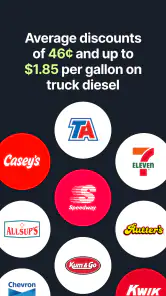
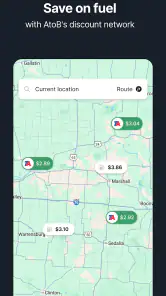
The most convincing part of the experience is its straightforward financial purpose. Fuel is one of those costs that can quietly grow throughout a week, especially for delivery work, long-distance driving, service calls, or commercial transport. An app dedicated to finding better fuel opportunities can turn that recurring expense into something you actively manage instead of simply accepting at the pump.
I like that the concept is easy to understand without a long learning curve. You are not downloading it to build a complicated driving profile or spend time configuring a large collection of vehicle settings. You are opening it because fuel costs matter and you want a practical way to approach them. That directness makes the product more appealing than many broader motoring apps that offer dozens of tools but give fuel savings only a small amount of attention.
The app is free, which removes the most obvious barrier to trying it. It is also rated for Everyone, so its presentation is not aimed at a narrow age group. On the Android side, it supports devices using Android 7.0 or later, making it accessible on older phones that may still be perfectly serviceable for driving-related tasks. The current release is version 1.73.0, and the app has passed the ten-thousand-install mark, giving it a modest but meaningful presence among fuel-focused tools.
Its public reception is encouraging without being a reason to stop thinking critically. A 4.6 average from roughly 662 ratings suggests that many people who have tried it are satisfied, while the 118 written reviews indicate that there is at least some detailed user feedback behind that score. I would treat that as a positive signal, not a guarantee that the app will fit every route, vehicle, or driving routine.
A better way to think about fuel savings
The useful insight here is that saving money on fuel is not always about finding the absolute lowest price on a single occasion. For a working driver, the better question is whether a fuel stop fits naturally into the route and whether the saving is meaningful after considering extra distance, waiting time, and the vehicle's consumption. That is where a focused fuel app can be more helpful than casually checking nearby stations.
For example, imagine I am finishing a delivery route with enough fuel for the return trip but not enough to avoid stopping. Rather than pulling into the first familiar station, I can use the app before leaving the current area, compare the available opportunity with the route I already need to take, and decide whether the saving justifies changing my stop. The important habit is checking before the tank becomes nearly empty. Last-minute decisions usually favor convenience, not economy.
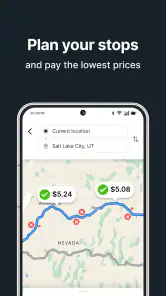
A second practical use is planning repeated routes. If I regularly travel between the same towns, I can pay attention to where a fuel stop makes sense in relation to the route rather than treating every fill-up as an isolated event. Over time, that can help me recognize which stops are genuinely convenient and which ones only look attractive because they are slightly cheaper. The app is most effective when it supports this kind of routine decision-making.
There is also a less obvious benefit for small operators: it can encourage a separation between driving and fuel administration. Instead of relying on memory after a long day, I can make the fuel decision before the route, keep the reasoning consistent, and avoid choosing a station solely because it is familiar. That does not replace proper business records, but it can make fuel planning less casual.
Where it compares well with ordinary alternatives
The usual alternative is to use a general map, search for fuel stations, and compare whatever information appears first. That approach can work, but it often makes fuel discovery secondary to navigation. A general map is excellent when I need directions, traffic context, or a broad view of nearby businesses. It is less focused when my main question is where I can reduce a recurring transportation expense.
AtoB's advantage is therefore specialization. It frames the problem around fuel savings rather than simply showing fuel locations. For someone who already knows the route and wants to make a smarter stop, that focus is more useful than opening a large navigation app and searching manually. The trade-off is that I would not treat it as a complete replacement for navigation. I would use it to inform the fuel decision, then rely on my normal route-planning method for the journey itself.
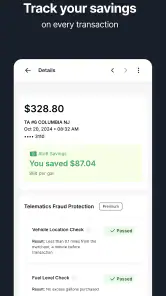
It also differs from a spreadsheet or notes app. A spreadsheet can be valuable for tracking fuel receipts, mileage, and operating costs, but it requires me to gather and interpret everything myself. AtoB is aimed at the decision that happens before or during a fuel stop. The two approaches can complement each other: the app helps me choose more thoughtfully, while records help me see whether those choices are actually improving my operating costs.
That distinction matters because a cheaper fill-up is not automatically a cheaper trip. If I drive out of my way, spend extra time waiting, or make a detour that complicates a delivery schedule, the apparent saving may be canceled. My advice is to judge the app by total trip efficiency, not by the lowest visible fuel figure alone.
The friction I would not ignore
The focused nature of the app can feel limiting if I expect a complete driving toolkit. Someone looking for route guidance, maintenance reminders, expense accounting, or detailed vehicle analytics may find that a broader motoring app is a better central hub. AtoB makes more sense as a fuel-saving layer than as the only app involved in managing a vehicle or fleet.
There is also a behavioral limitation: the app cannot make a saving worthwhile if I do not change my habits. Installing it is easy; checking it before a stop, comparing the option with the route, and resisting an unnecessary detour require discipline. Drivers who always refuel at the same station for convenience may not see much benefit unless they are willing to reconsider that routine.
Another point is timing. Fuel decisions are often made while someone is already driving, which is not a good moment to study options. I would use it while parked or before starting a route, not as something to interact with actively behind the wheel. That sounds obvious, but it changes the workflow: the app is strongest during planning, not when attention should be on traffic.
I would also be cautious about treating any fuel-saving recommendation as universally suitable. A commercial driver may have restrictions created by vehicle size, payment arrangements, company procedures, or delivery deadlines. A station that looks attractive for a private car may not be practical for a larger vehicle or a tightly scheduled route. The app can support the decision, but it does not remove the need for common sense about access, timing, and the actual vehicle being driven.
Who should make it part of a routine
I think the best audience is made up of people who buy fuel often enough for planning to have a noticeable effect. That includes independent delivery drivers, tradespeople traveling between jobs, small transport operators, and anyone who spends a large portion of the working week on the road. For these users, a small improvement repeated across many stops can be more valuable than a one-off bargain.
It may also suit a driver who does not manage a fleet but wants to become more intentional about everyday costs. The app is a reasonable starting point for someone who currently chooses fuel stations from habit. My suggested routine would be simple: check before leaving, identify an option that fits the existing route, and then record the result separately if tracking expenses matters.
Fleet managers may find the concept useful as part of a wider process rather than as a complete management system. They could encourage drivers to consider fuel costs during route preparation, while handling mileage, receipts, maintenance, and driver policies elsewhere. That division of labor is more realistic than expecting one focused app to manage every operational detail.
On the other hand, I would skip it if I drive very little, always use a fixed fuel arrangement, or have no flexibility in where I refuel. It is also not the first app I would choose if my main need is turn-by-turn navigation or a full record of vehicle ownership costs. In those cases, a general map or dedicated expense tool may solve the central problem more directly.
Small habits that improve the experience
My first tip is to check before the fuel warning becomes urgent. When the tank is nearly empty, the nearest acceptable option usually wins, and there is little room to compare. Looking earlier gives me time to consider whether a saving is genuinely on the way or whether it requires an inconvenient detour.
My second tip is to compare the saving with the entire movement required to reach it. I would ask myself whether the stop lies along the route, whether it adds time, and whether the vehicle is carrying enough fuel to reach it comfortably. This is particularly important for larger or heavily loaded vehicles, where an extra diversion can undermine the point of saving at the pump.
My third tip is to use the app as a planning prompt, not as a promise of a fixed result. Fuel conditions and personal circumstances can change, and the best decision depends on the route I am actually driving that day. The most useful outcome may simply be avoiding an automatic choice at a familiar station.
A fourth useful habit is to review the pattern rather than obsess over one stop. If I am using the app for work, I would periodically compare my fuel spending with the routes and stops I choose. That gives me a more honest picture of whether the app is helping. A single inexpensive fill-up is encouraging, but repeated sensible decisions are what make a fuel tool worthwhile.
My final recommendation
AtoB is a focused, free app with a practical reason to exist: it helps put fuel spending in front of the driver as a planning decision. I appreciate that it aims at a real cost rather than trying to become an oversized all-purpose vehicle companion. Its strongest case is for people who drive frequently and can adjust where or when they refuel.
My reservation is equally clear. This is not the right choice for every driver, and it should not be mistaken for navigation, accounting, or complete fleet management. Its value depends on regular use, sensible route judgment, and a willingness to trade a little convenience for better fuel decisions. If your driving is occasional or your fuel choices are fixed, the benefit may be too small to justify adding another tool.
For working drivers and small operators, though, I would recommend giving it a fair trial. Start by using it before planned fuel stops, avoid unsafe interaction while driving, and judge results by the whole journey rather than the pump price alone. With that mindset, the app works best as a practical fuel-planning companion, not a magic shortcut. That is a modest promise, but for anyone whose vehicle is part of the working day, it can be a useful one.
Pros
- Compares nearby fuel prices to help identify cheaper refueling options.
- Supports route planning with fuel stops along the journey.
- Useful for drivers covering long distances or commuting daily.
- Can reduce time spent searching for affordable stations.
- Simple interface makes fuel-price checks quick and convenient.
Cons
- Price accuracy depends on how recently station data was updated.
- Coverage may vary significantly between countries and regions.
- Some stations or fuel types may be missing from the listings.
- Location access is needed for the most relevant nearby results.
- Savings can be offset by detours or extra driving to cheaper stations.

- Category
- Auto & Vehicles
- Version
- 1.73.0