Anyfans-Make Friends&Live
- 12.00
- 3.6
- Installs
- 500.00K
- Price
- Free

Screenshots


Analysis by Reviewed
I approached Anyfans-Make Friends&Live as a communication app for a very specific mood: I wanted to discover live content, meet people around it, and decide whether casual online interaction could become a regular part of my routine. It is free to start, aimed at mature users, and developed by BCTO. The basic promise is easy to understand, but the real question is whether the path from opening a stream to forming a useful connection feels natural.
My experience is that the app works best when I treat it as a live social space rather than as a replacement for a private messenger. That distinction matters. If I want a quiet conversation with people I already know, a conventional messaging app is usually more direct. If I want to browse live activity and possibly meet unfamiliar people, Anyfans has a clearer purpose. The trade-off is that discovery can be more interesting than predictable, while the quality of interaction depends heavily on the people and streams I happen to encounter.
From opening the app to finding a reason to stay
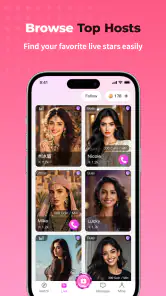
The starting condition is simple: I open it without needing an existing group of friends or a prepared conversation. That makes the first few minutes different from a typical chat application. Instead of beginning with a contact list, I am looking for something active enough to hold my attention. The live-stream focus gives the app a sense of immediacy, but it also means I need to be comfortable with browsing and making quick judgments.
I found it useful to decide what I wanted before spending too long exploring. Sometimes the goal is entertainment, sometimes it is meeting people with similar interests, and sometimes I only want to see what kind of community is active at that moment. Without that small decision, the experience can become aimless: I move between live spaces without establishing a reason to participate.
The app is listed in the communication category, but it does not feel like a standard text-first tool. Its appeal comes from the combination of conversation and live presence. A stream gives me context before I write anything, which can make an opening message feel less random. At the same time, the public nature of live interaction creates more social pressure than sending a private message to someone I already know.
For a new user, the most important early habit is to observe before joining in. I would watch how a room communicates, whether the tone feels welcoming, and whether the conversation moves too quickly for me to follow. This is a practical way to avoid wasting time in a space that does not match what I am looking for. It also makes the first message more relevant because I have some idea of what is already happening.
Choosing a live space instead of scrolling without a plan
The app’s live-stream orientation encourages quick sampling. I can look for a stream that seems active, stay briefly, and move on if it does not suit me. That low-commitment approach is one of the better parts of the experience. I do not have to invest in a long setup before discovering whether a conversation feels comfortable.
You May Like

Clash of Clans Is Won Between the Battles

Android Auto Makes the Case for Quieter Car Software

MobiOffice: Transforming Mobile Productivity with Seamless Integration

EA SPORTS FC™ Mobile Soccer: Redefining Mobile Sports Gaming

How Microsoft OneDrive Became a Mobile Productivity Giant

How Google Translate Breaks Language Barriers Effortlessly
My advice is to judge a stream by interaction quality, not only by how busy it appears. A crowded room may be difficult for a newcomer to enter, while a smaller conversation may offer a better chance of being noticed. That is a non-obvious trade-off: popularity can create energy, but it can also reduce the chance of a meaningful handoff from watching to participating.
Another useful approach is to give myself a clear stopping point. Live apps can encourage passive browsing because there is always another room to inspect. I get more value when I either join the conversation, decide that the space is not for me, or leave after a short look. This keeps the app from becoming background noise and makes the social outcome easier to evaluate.
Turning observation into participation
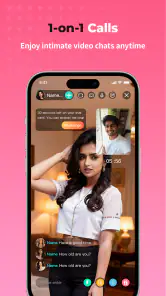
Once I find a stream that feels suitable, the next step is participation. I prefer to begin with a message connected to what is happening rather than a generic greeting. That makes the interaction feel less intrusive and gives the other person something specific to respond to. In a live environment, timing matters more than it does in an ordinary chat, because the conversation may change while I am writing.
This is where Anyfans differs from a normal social messaging app. The live setting supplies a shared moment, but it does not guarantee a reply. A message can be missed, the host may be focused elsewhere, or the room may move on quickly. I would not interpret silence as a personal rejection. The format itself creates more interruptions and uneven attention.
For someone who is shy, the app can be easier if the first goal is simply to understand the atmosphere rather than to make an immediate friend. Watching for a while reduces the pressure to perform. For someone who enjoys direct, structured conversation, however, this same openness may feel inefficient. A conventional messaging service is better when I need a reliable response from a known contact.
The mature age classification is important here. I would not treat the app as a general-purpose space for children or younger teenagers. Adults should still use ordinary online-safety judgment: avoid sharing sensitive personal details too quickly, be cautious when a conversation becomes pressuring, and remember that a friendly live interaction is not the same as verified trust.
Managing the handoff from public interaction to personal contact
The most important handoff is the move from a live room into a more personal exchange. This is the point where a casual viewer may become a recurring contact, but it is also where I need to slow down. I would first look for consistency: does the person communicate respectfully over time, and does the conversation remain comfortable when I set a boundary?
I would keep the first exchanges within the app’s social context instead of immediately revealing identifying information. That is not a criticism of Anyfans specifically; it is simply sensible behavior in any service built around meeting unfamiliar people. The live format can create a quick feeling of familiarity, even though the relationship is still new.
A good handoff has a clear reason. Perhaps we enjoyed the same stream, found a shared interest, or want to return to a conversation later. A weak handoff is driven only by pressure to move quickly or by promises that sound too good to be true. I found the app more enjoyable when I allowed connections to develop gradually instead of measuring success by how many people I contacted.
This is also where spending deserves attention. The app is free to download and use as an entry point, but in-app items range from under a dollar to well over two hundred dollars per item. That wide range makes it important to understand what an on-screen purchase means before confirming it. I would use device purchase controls, check the amount carefully, and avoid treating paid interaction as proof of friendship or attention.
The presence of purchases changes the social calculation. In a normal messaging app, the main cost is usually time and data. Here, the possibility of paid items means I need a firmer personal limit. If I am only exploring, I would keep the experience free until I understand the community and the value I am actually receiving. That single rule prevents curiosity from turning into an impulsive expense.
A realistic evening workflow
Imagine that I have finished work and want light conversation without arranging a group chat in advance. I open the app, browse live spaces, and spend a few minutes identifying one with a tone I enjoy. I watch first, then send a relevant comment instead of trying to dominate the room. If someone responds naturally, I continue; if the exchange feels forced, I leave without treating the session as a failure.
On a better evening, the interaction develops into a small recurring connection. I remember the person or the type of stream that suited me, return later, and see whether the same quality is still there. The outcome is not necessarily a close friendship. It may simply be a pleasant conversation, a new creator to follow within the service, or a clearer sense of what kind of live community I enjoy.
That workflow shows the app’s real strength: it lowers the barrier to entering a social environment. I do not need to organize an event or persuade existing friends to be online at the same time. The weakness is that the outcome is variable. I can follow the same steps and still find no conversation that feels worthwhile, because the app depends on live availability and social chemistry.
Where the experience becomes frustrating
The first point of friction is discovery. Browsing live content is appealing when I find something relevant quickly, but less satisfying when I keep sampling rooms without a clear match. A live feed can feel active without feeling useful. Users who prefer organized topics, dependable communities, or detailed search may find the experience less efficient than a forum or a focused group-chat service.
The second issue is uneven participation. A live stream can look inviting while still being difficult to enter. The host or other participants may not notice new messages, and a newcomer may not know the local rhythm. I would not recommend Anyfans to someone who needs every message to receive a prompt response. Its social design is more spontaneous than reliable.
The third issue is the boundary between socializing and spending. Because purchases can be substantial, I would never enter a stream with the vague intention of “seeing what happens” if I am easily tempted by digital items. Set a budget beforehand, or keep purchases disabled through your device settings. The free starting point is useful, but it should not be confused with a completely cost-free social environment.
Privacy is another reason to use care. Live communication rewards openness, yet oversharing can happen quickly when a conversation feels personal. I would avoid posting information that identifies my home, workplace, daily route, or financial situation. I would also be cautious about moving to another service simply because someone asks. A respectful contact should accept a slower pace.
There is also a practical device question. The app requires Android six or newer, so anyone using an older phone or operating system would need a different option. On supported devices, I would still consider battery, mobile data, and headphones during longer live sessions. These are not reasons to reject the app, but they are part of deciding whether live communication fits my routine.
How it compares with ordinary communication apps
Compared with a standard messenger, Anyfans is stronger at creating an immediate social starting point. A regular messenger is excellent when I already know whom I want to contact, need a dependable private exchange, or want a clean record of practical information. Anyfans is more exploratory: I enter through live activity and see whether conversation develops.
Compared with a forum, it offers more immediacy but less permanence. A forum is often better for thoughtful questions, searchable advice, and communities organized around a specific subject. Anyfans suits the moment rather than the archive. If I want to return later and find a detailed answer, I would choose the forum; if I want to see people interacting now, the live format has the advantage.
Compared with a video-only live platform, the communication angle is more central to my decision. I am not using it only as a broadcast screen. I am evaluating whether the surrounding interaction feels accessible and worthwhile. That makes the app a better fit for people who want social discovery, while viewers who prefer to watch quietly may find a conventional streaming service more comfortable.
The right choice therefore depends on the desired outcome. Choose Anyfans when the starting point is “I want to see who is active and possibly meet someone.” Choose a familiar messenger when the starting point is “I need to reach this person.” Choose a forum when the starting point is “I want durable, topic-based information.” Those distinctions are more useful than calling one service universally better.
Who will get the most from it
I think Anyfans is most suitable for adults who enjoy informal live interaction and do not mind that the quality of a session changes from one visit to the next. It can also suit people who are tired of empty contact lists and want a lower-pressure way to discover conversations. The free entry makes experimentation easy, provided I remain conscious of the purchase system.
It is less suitable for anyone looking for a tightly moderated professional network, a private family messenger, or a predictable support channel. It is also a poor match for users who dislike meeting strangers online, feel uncomfortable with live social pressure, or want to avoid any possibility of paid digital interaction. In those cases, a more controlled communication tool would be the better recommendation.
The public rating sits at around 3.6 from roughly 746 ratings, while the app has passed 500,000 installs. I read those figures as a sign of a real but mixed user experience rather than a guarantee of consistent quality. The app has attracted a substantial audience, yet the moderate average fits what I felt in use: the concept is appealing, but individual sessions can vary considerably.
What to know before installing
The current release is version 3.5.1, and the app was released on November 1, 2021. It is free, carries a Mature 17+ classification, and works on Android six or later. I would check those basics before installing, especially if the phone is older or the intended user is under the age classification.
I would also decide in advance whether I am willing to make purchases. The listed range is from $0.99 to $219.99 per item, which is a meaningful difference in commitment. My practical setup would be to start without spending, learn how live interactions work, and only consider an item when I understand its purpose and have already chosen a limit.
After installation, I would give the app a short trial built around a specific goal rather than judging it after one random glance. Try several live spaces, participate politely, and notice whether the handoff from watching to conversation feels natural. If every interaction feels noisy, pressured, or disconnected from what you want, that is useful information: the format may simply not suit you.
My final recommendation
Anyfans is an interesting communication app because it starts with live presence instead of an established contact list. I like that it gives me a way to enter a social environment without arranging everything beforehand. The best moments come when I observe carefully, join a room that matches my mood, and let a conversation develop without forcing it.
Its limitations are equally clear. Discovery can be inconsistent, replies are not guaranteed, and the purchase range means I need to protect my budget. The mature classification and stranger-oriented format also call for sensible boundaries. I would recommend it to an adult who enjoys spontaneous live communities and is comfortable with uncertain outcomes.
My honest verdict: try it for discovery, not dependability. If your goal is to browse live streams, make casual connections, and see where a conversation leads, BCTO’s app is worth exploring. If you need private, predictable, topic-focused communication, I would choose a conventional messenger or forum instead. The app succeeds when I accept its live, variable nature; it disappoints when I expect it to behave like a simple chat inbox.
Anyfans-Make Friends&Live Frequently Asked Questions
Is Anyfans-Make Friends&Live suitable for younger users?
Anyfans-Make Friends&Live is rated Mature 17+, so it is intended for adults rather than children or younger teens. Its focus on live streams and conversations with other users can expose people to mature discussions or interactions. Parents and guardians should consider the age rating and the app’s social features before allowing a young person to download it.
Which devices can run Anyfans-Make Friends&Live?
The app requires Android 6.0 or later, so check your device’s operating system before downloading it. If your phone meets that requirement, you can explore its friend-making and live-streaming features. Keeping your operating system and apps updated is also a sensible way to support compatibility and security while using a communication app.
What is Anyfans-Make Friends&Live, and what can I do with it?
Anyfans-Make Friends&Live is a social and live-streaming app designed for meeting new people, watching live broadcasts, and interacting with creators or other users. Depending on the available features in your region, you may be able to join live rooms, send messages, follow profiles, participate in conversations, and use virtual gifts. The experience is centered on real-time social interaction rather than traditional offline matchmaking.
Is Anyfans-Make Friends&Live free to download and use?
The application is free to download, but some features may require in-app purchases, which can range from $0.99 to $219.99 per item. Live-streaming platforms commonly offer virtual coins, gifts, premium interactions, or other paid options. Before spending money, check the current pricing shown inside the app and review your account’s payment settings. Availability, subscriptions, and costs may differ depending on your country and device platform.
Is Anyfans-Make Friends&Live safe for meeting and chatting with strangers?
As with any app that connects you with people you do not know, you should use Anyfans-Make Friends&Live carefully. Avoid sharing your address, passwords, financial information, private photographs, or verification codes. Review profiles critically, keep conversations inside the platform, and block or report suspicious behavior. Parents should also check whether the app’s age rating and social features are appropriate for younger users.
Pros
- Live video and social features encourage real-time interaction.
- Users can discover creators and communities with shared interests.
- The interface makes browsing profiles and live content straightforward.
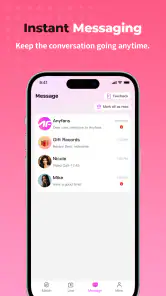
- In-app messaging supports more personal conversations.
- Frequent content updates can keep the experience engaging.
Cons
- Some features may require paid coins
- gifts
- or subscriptions.
- Public live content can vary widely in quality and moderation.
- Privacy settings should be reviewed carefully before sharing personal details.
- Notifications may become frequent and distracting.
- The app may use significant battery and mobile data during live streams.

- Category
- Communication
- Version
- 3.5.1