ADESA
- 68.00
- 3.6
- Installs
- 50.00K
- Price
- Free

Screenshots
Analysis by Reviewed
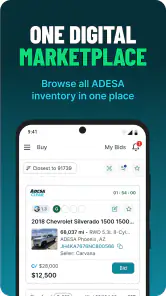
I approached ADESA as a practical tool for people who buy vehicles through auctions rather than as a general car-shopping app. That distinction matters. Its purpose sits in the Auto & Vehicles category, and the developer behind it is ADESA US. The central idea is straightforward: give users a place to browse auction inventory, follow vehicles of interest, and take part in bidding from a mobile device.
My first impression was that the app is aimed at users who already understand the auction process. It feels more useful when you have a specific reason to be there, such as sourcing stock for a dealership, checking vehicles for resale, or managing purchases while away from a desktop. It is less naturally suited to someone who simply wants to compare ordinary retail cars and book a test drive.
The app is free to install, which makes trying it low-risk. It is rated for Everyone, and its current version is 3.1.56, with support for Android 10 or later. That combination makes the basic entry point accessible, although access to an auction platform should not be confused with the total cost of buying a vehicle. The app itself does not turn an auction purchase into a free car, and I would keep that difference in mind before treating the download as a bargain.
Using ADESA as an auction workspace
The most useful way to think about ADESA is as a mobile workspace for auction activity. Instead of relying on a browser session at a desk, I can use the phone to check what is available, review candidates, and stay closer to the bidding process. That mobility is valuable for professional buyers who are already moving between inspections, transport arrangements, and other dealership tasks.
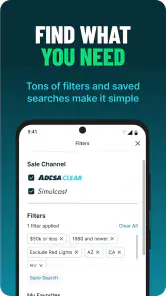
A good workflow starts before bidding. I would first narrow the inventory to vehicles that fit a defined plan: a particular body style, price ceiling, repair tolerance, or resale audience. The temptation in an auction environment is to react to a low-looking bid and decide afterward whether the vehicle makes sense. The app is more useful when it supports a buying plan rather than replacing one.
Latest News
One practical habit is to create a short list of realistic candidates instead of watching every interesting vehicle. A short list makes it easier to compare condition notes, timing, and expected costs without confusing one attractive listing with a genuinely profitable purchase. I would also keep a separate written ceiling for each vehicle, because the excitement of live bidding can make an apparently small increase feel harmless.
That ceiling should include more than the bid. A buyer needs to think about transportation, inspection, repairs, registration, storage, and the margin required after the vehicle is prepared for its next owner. The app can help me participate in the auction, but it cannot make those business calculations for me. That is one of the clearest differences between an auction platform and a conventional shopping app.
Where the mobile format helps
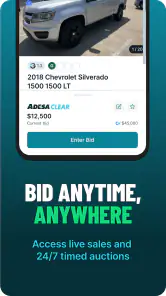
The phone format is particularly helpful when timing matters. A buyer may be away from a computer while checking vehicles at another location, speaking with a mechanic, or handling paperwork. Having auction access in the same device used for calls and notes reduces the need to return to a fixed workstation.
I also see value in using the app as a second screen. For example, I could review a candidate on a larger computer, then use the phone to monitor selected vehicles while handling other work. That does not eliminate the need for careful inspection, but it makes the auction process less tied to one room and one device.
There is a less obvious benefit to this approach: it encourages deliberate monitoring rather than one-time browsing. Auction inventory changes, and a vehicle that is not suitable today may still teach me something about the kind of stock appearing on the platform. Over time, a disciplined buyer can use saved candidates and repeated checks to refine what deserves attention.
That said, I would not treat a mobile screen as a substitute for examining a vehicle properly. Photos, descriptions, and auction information can support a decision, but they do not remove the risks of hidden mechanical problems, cosmetic surprises, or transport complications. The app is a decision-support tool, not a remote inspection service.
Who will find the free access worthwhile?
Because the app is free to download, it is easy to test without committing money to the software itself. That is useful for a dealer evaluating whether mobile auction access fits an existing routine, or for a qualified buyer who wants another way to manage vehicle sourcing. The free entry point also makes sense for someone who already has a clear reason to use ADESA and wants convenience alongside other buying tools.
The important qualification is that free access does not establish free participation in every part of the purchasing process. Auction buying can involve eligibility requirements, transaction obligations, logistics, and vehicle-related expenses. I would confirm that I am able to buy through the relevant auction channel before building a purchasing strategy around the app.
This is also where the app differs from a free classified marketplace. A classified app may be better for casual browsing, direct communication with individual sellers, and arranging a conventional viewing. ADESA is more relevant when the auction model itself is part of the user’s work. If I only want to browse consumer cars with no intention of bidding, the specialized focus may not justify adding another app to my phone.
Three habits that make the experience more useful
My first recommendation is to separate discovery from bidding. During discovery, I would collect candidates and compare them calmly. During bidding, I would follow only the vehicles that passed that first filter. This two-stage approach reduces impulsive decisions and makes the app feel like a controlled purchasing tool rather than an endless stream of tempting listings.
My second recommendation is to keep a vehicle-specific cost note outside the app. I would record the maximum bid, expected transport, likely repairs, and the minimum margin I need. This is a small step, but it protects against a common auction mistake: treating the winning bid as the complete purchase price. The app can be open beside the note, while the note keeps the financial decision grounded.
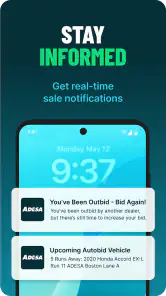
My third recommendation is to use the mobile experience for alerts and timing, but reserve final judgment for a fuller review. A phone is excellent for noticing that a vehicle is approaching its auction moment or checking a saved candidate. It is less comfortable for detailed side-by-side analysis, especially when several vehicles have similar descriptions. I would use the app to stay informed and another screen or document to make the final comparison.
A fourth useful habit is to divide vehicles by purpose. I would not judge a potential retail car by the same standard as a parts vehicle, a trade-in candidate, or a unit intended for a specialized buyer. The right bid depends on the exit plan. This kind of classification is not a flashy feature, but it is the difference between browsing inventory and actually using it intelligently.
Strengths, friction, and the right audience
The strongest part of ADESA is its focus. It is not trying to be a general-purpose driving app, a repair tracker, or a broad consumer marketplace. For someone who needs auction access on a mobile device, that focus is more valuable than a collection of unrelated automotive tools. I appreciate apps that are built around a specific job, and this one clearly serves the auction side of vehicle buying.
The audience size also suggests that it has reached a meaningful group of users: it has more than fifty thousand installs, alongside an average rating of 3.6 from roughly one hundred seventy ratings and sixty-eight written reviews. I would read that as evidence of real usage, but not as a reason to assume the experience is perfect for everyone. The rating is middling rather than exceptional, so I would approach it as a useful specialist tool with room for frustration.
One likely source of friction is that auction apps demand more attention than ordinary shopping apps. A buyer has to interpret listings, understand timing, evaluate risk, and track obligations beyond the screen. New users may expect the app to guide them through every part of the purchase, but the value is greater for people who already know what they are looking for and how they intend to handle the vehicle afterward.
Another trade-off is convenience versus context. Mobile access is convenient, but a smaller display can make long descriptions, images, and comparisons less comfortable than on a computer. If I were making a high-value purchase, I would not rely on quick glances between other tasks. The app helps me remain connected to the auction, yet it also makes it easy to act too quickly if I confuse availability with suitability.
The app is not the right choice for every car shopper. I would skip it if my goal were simply to find a personal vehicle from nearby private sellers, compare dealership financing, or schedule test drives. A traditional marketplace is usually better for those needs because it matches the buying process more closely. I would also skip it if I were unwilling to research auction terms and estimate post-purchase costs independently.
On the other hand, ADESA makes more sense for a professional buyer, a dealership employee, or an experienced auction participant who needs flexibility away from a desktop. It can also suit someone building a repeatable sourcing routine, provided that person is comfortable maintaining records and making decisions based on total cost rather than the visible bid alone.
Questions I would settle before relying on it
A new user may reasonably wonder whether installing the app is enough to start bidding. I would not assume that. I would first make sure my account and buying situation are eligible for the auction activity I want to perform. The app is an access point, but access to a platform and readiness to purchase are separate matters.
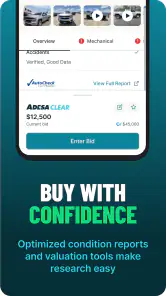
Another important question is whether the app replaces an inspection. In my view, it does not. I would use the information available through the auction workflow to screen vehicles, then seek the most reliable inspection and condition information available before committing. If I cannot evaluate the risk, I would lower my ceiling or walk away rather than let the convenience of mobile bidding make the decision for me.
Users may also ask whether free installation means the overall purchase is inexpensive. It does not. The software has no download price, but the vehicle transaction can still carry substantial financial consequences. I would calculate the full path from winning bid to usable or resale-ready vehicle before deciding what the app is worth to me.
Finally, I would ask whether the mobile experience is enough for daily professional use. That depends on the workflow. For monitoring, quick checks, and staying connected while away from a desk, it is a sensible companion. For deep comparison across many vehicles, detailed record keeping, or final approval of a risky purchase, I would pair it with a larger screen and my own evaluation process.
My verdict on value
I see ADESA as a useful specialist app rather than a universal automotive recommendation. Its free installation lowers the barrier to trying it, and its focus on auction buying gives it a clear purpose. The value comes from convenience and mobility: the ability to keep track of auction activity when a computer is not immediately available.
That value is strongest when the app fits an existing buying operation. If I already understand auction purchasing, maintain a cost limit, and know how I will inspect and transport a vehicle, the mobile access can save time and make the process more manageable. The app becomes part of a larger workflow instead of being asked to solve every problem by itself.
I would be more cautious if I were a first-time buyer who expects a simple retail shopping experience. The moderate average rating reinforces my view that this is not an effortless, one-size-fits-all tool. I would install it for a defined auction-related purpose, test how well it fits my routine, and judge it by whether it helps me make better decisions rather than merely place bids faster.
My recommendation is therefore conditional but positive: try ADESA if auction access is genuinely part of your vehicle-buying needs. Keep your own budget and inspection process beside it, use the mobile format for monitoring rather than impulse, and compare it with a conventional marketplace if your goal is ordinary consumer car shopping. For the right buyer, the free app is a practical addition; for everyone else, its specialized focus may be more limitation than advantage.
ADESA Frequently Asked Questions
How much does the ADESA app cost, and what devices can run it?
ADESA is free to download and is listed for devices running Android 10 or later. The app is in the Auto & Vehicles category and is intended to support vehicle-auction activity, so its usefulness depends on whether you can access auctions and services through an eligible account. Before installing, check that your device meets the operating-system requirement and that you are downloading the official app.
What is ADESA, and what can I use it for?
ADESA is an online vehicle marketplace designed primarily for automotive dealers, wholesalers, and other qualified industry buyers. After creating an account, users can browse available vehicles, review auction information, inspect photos and condition details, place bids, and manage purchases through the platform. Inventory, auction access, and available services may vary depending on your location and account type.
Can anyone buy vehicles through ADESA, or is a dealer account required?
ADESA is generally intended for licensed automotive dealers and approved commercial buyers rather than ordinary private consumers. Registration typically requires business information and may involve verification before you can participate in auctions or purchase vehicles. Requirements can differ by country, state, or auction location, so prospective users should check the current eligibility rules and documentation requirements before downloading the app or opening an account.
Are the vehicles on ADESA inspected, and can I trust the listing information?
Vehicle listings on ADESA usually include photographs, descriptions, mileage, condition reports, announcements, and other auction-specific information. However, the amount of detail can vary between vehicles and locations, and listings should not be treated as a substitute for independent verification. Before bidding, carefully read all disclosures, review the condition report, check title or sale information, and arrange an inspection when possible.
How do bidding, purchasing, and additional fees work on ADESA?
The bidding process depends on the specific auction, sale format, and location. Some vehicles may be sold through live or timed auctions, while others may use fixed-price or negotiated purchasing options. Winning a bid can involve more than the displayed vehicle price, including buyer fees, transportation, taxes, storage, documentation, or other charges. Always review the final terms and fee schedule before submitting a bid.
Pros
- Streamlined online vehicle auctions for dealers and automotive professionals.
- Detailed listings help buyers compare mileage
- condition
- and vehicle history.
- Convenient bidding access reduces the need to attend auctions in person.
- Search filters make it easier to find vehicles matching specific requirements.
- Digital auction tools can save time during purchasing and inventory sourcing.
Cons
- Primarily designed for registered dealers
- not everyday private buyers.
- Vehicle availability and auction access may vary by country or region.
- Bidding fees
- buyer fees
- and transport costs can increase the final price.
- Remote purchases make physical inspection difficult before committing.
- Some listings may require experience to assess accurately from photos alone.

- Category
- Auto & Vehicles
- Version
- 3.1.56