AA Grapevine
- 52.00
- 4.4
- Installs
- 10.00K
- Price
- Free

Screenshots



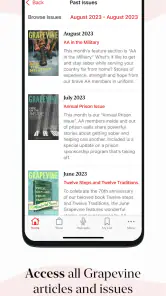
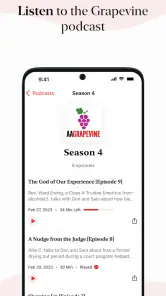



Analysis by Reviewed
AA Grapevine is the kind of news app I would keep installed for one clear reason: it puts Grapevine-related information in a place I can check without opening a browser and sorting through unrelated pages. Developed by Grapevine and La Viña Apps, it belongs to the News & Magazines category and is free to download, with optional in-app purchases ranging from $2.99 to $29.99 per item. My overall impression is that its value comes from focus rather than spectacle. It is designed for people who already care about Grapevine and want that material close at hand.
The app’s store summary describes carrying everything Grapevine on a smartphone, and that idea is more useful than it may sound. A dedicated app changes the habit from “I should look that up later” to “I can check it when I have a spare minute.” That makes a difference when I am between errands, waiting for an appointment, or trying to catch up without committing to a long reading session. The strongest part of AA Grapevine is its single-purpose focus.
Why the dedicated Grapevine experience matters
AA Grapevine is not trying to be a general news reader. Its short store description is simply “AA Grapevine,” which tells me that the app is aimed at a specific audience rather than casual readers looking for a broad magazine shelf. That narrow purpose is its main advantage. Instead of mixing Grapevine material with headlines, social updates, and recommendations from unrelated publications, the app gives the subject its own space.
In everyday use, a focused app can reduce the small bits of friction that make people abandon a reading routine. I do not need to remember which web page I used last time, search for the right publication, or move through a general news app before reaching the content I wanted. I open the app because I already know what I am there to read. That predictability is especially helpful for someone who checks the publication regularly rather than only once in a while.
I also see a practical benefit for readers who want a clear boundary between recovery-related reading and the rest of their phone activity. A browser session can quickly turn into email, shopping, social media, or unrelated news. A dedicated app encourages a more intentional visit. It does not force me to make that choice, but it makes the choice easier.
That said, the focused approach will not appeal to everyone. If I only want occasional background reading, a browser may feel sufficient. Someone who prefers to collect several publications in one place may also find a single-publication app less convenient than a magazine reader or a general news application. AA Grapevine makes the most sense when the publication itself is the destination.
What the app is really good at
The best way to think about this app is as a reliable access point, not as a replacement for every other reading tool. Its purpose is to make Grapevine material part of a phone-based routine. That can be useful for a person who wants to read during short breaks, revisit an article later in the day, or keep a dedicated place for this particular source.
One non-obvious advantage of that arrangement is mental organization. When I use separate apps for separate interests, I can decide what kind of attention I want before I open anything. AA Grapevine is not competing with a stream of unrelated headlines, so the act of launching it already narrows my intention. For readers who are easily distracted by broad news feeds, that is a genuine trade-off in its favor.
Another useful insight is that the app can serve as a conversation starter. A reader may encounter a personal story, a perspective, or a piece of recovery-focused writing and later want to return to it when speaking with someone else. A dedicated home for the publication makes that return visit more natural than relying on a browser tab that may disappear among dozens of others.
How I would use it during a normal day
Imagine that I have a short lunch break and want something connected to Grapevine without spending the entire break navigating. I open AA Grapevine, read what interests me, and close it when I am finished. Later, if I have a little more time, I can come back for another reading session. The app fits that stop-and-start pattern better than a long-form reading plan that expects me to sit down for a fixed period.
The same workflow works at home. I might use the phone version when I am away from my usual reading setup, then continue with another format when I have more time. That flexibility is important because the app does not need to become my only way of engaging with Grapevine to be useful. It can simply be the convenient option when my phone is already in my hand.
I would also recommend treating it as a deliberate check-in rather than leaving it open in the background of the day. The value is in choosing when to read, not in turning the app into another endless feed. A simple routine—opening it at a consistent point in the day, reading one item carefully, and leaving—can make the experience feel more purposeful.
For a new user, my practical advice would be to spend the first few sessions learning how the app presents its material before deciding whether it belongs in a daily routine. Notice which parts you return to, whether the phone format suits your reading pace, and whether the focused selection is enough for you. That small test is more useful than judging the app after a single quick launch.
The best scenario for AA Grapevine
The clearest use case is a reader who already knows that Grapevine is relevant to them and wants a convenient mobile doorway into it. This could be someone who reads related material regularly, someone who wants a dedicated source for reflective reading, or someone who often finds themselves away from a computer when they have time to catch up.
It is also a good fit for a person who dislikes the noise of general news apps. Broad platforms are convenient when I want variety, but variety can become clutter. If I open one app for world news, entertainment, opinion, and recovery-related material, the item I actually wanted may be buried. AA Grapevine removes that particular problem by keeping the destination clear.
A realistic scenario would be a reader traveling to a meeting or waiting for one to begin. Instead of scrolling through social media, the reader can use that short window for Grapevine material. The app does not need to provide a complicated workflow to be useful here. Its benefit is that the right subject is already one tap away, with less temptation to wander into unrelated content.
Families and support networks may also find the focused format useful when they want to understand the publication’s perspective without searching randomly online. However, I would not treat the app as a substitute for personal guidance, a meeting, or professional support. It is a reading tool. Its role is to provide access to material, not to replace the human parts of recovery and community.
Where it falls short compared with usual alternatives
The main alternative is the mobile browser. A browser is more flexible: I can search across many sources, open several publications, and avoid installing another app. For someone who reads Grapevine only occasionally, that flexibility may outweigh the convenience of a dedicated application. The browser also makes it easier to compare different sources in one session.
A general news or magazine app offers the opposite trade-off. It can bring many subscriptions and topics together, which is helpful for readers who want one central reading list. But that convenience usually comes with more visual noise and less subject-specific focus. AA Grapevine is better when I want Grapevine first; a broader reader is better when I want variety first.
There is also a question of commitment. Installing a dedicated app makes sense when I expect to return to it. If my interest is temporary, the extra icon may not earn its place on the home screen. I would skip it if I prefer reading everything through one browser, if I rarely look at Grapevine material, or if I need a single app that combines several publications.
The presence of optional purchases is another point to consider. The app itself is free, which lowers the barrier to trying it, but some content or functions may involve purchases. I would check what is included before assuming that every part of the experience is covered by the free download. This is not necessarily a problem, but it matters for readers who want a completely cost-free reading routine.
Compatibility is straightforward for many users: the current version is 1.23.0 and it requires Android 9 or later. That makes it unsuitable for a phone that cannot run that operating system, so I would check the device before planning around it. The app is rated for Everyone, which makes its general audience broad, although parents and guardians should still use their own judgment about what any publication contains.
Small habits that make the app more useful
My first tip is to make the app part of a specific moment rather than opening it whenever I am bored. A planned check-in helps separate purposeful reading from automatic scrolling. It also makes it easier to notice whether the app is genuinely helping me stay connected with Grapevine or merely adding another unused icon.
My second tip is to read for depth instead of measuring the experience by how much I consume. A focused publication app works best when I give the material enough attention to think about it. If I rush through it like a headline feed, I lose the main reason to choose a dedicated source over a general news stream.
My third tip is to use the phone format as a bridge, not a limitation. If a piece deserves more concentration, I can note the subject and return when I have a quieter setting. The app is especially convenient for discovery and short sessions, while a larger screen or printed material may be more comfortable for extended reading. That division of labor avoids expecting the phone to do everything.
A fourth consideration is privacy of attention. Because the app is tied to a specific subject, I can open it with a clear purpose and close it without drifting into unrelated feeds. For me, that is a stronger benefit than simply having another place to read. The app supports a boundary around the content, even though the phone itself remains full of distractions.
Who will gain the most from it
The best audience is made up of regular Grapevine readers who use Android phones and value quick, focused access. The app has a 4.4 average from around 145 ratings, and it has passed 10 thousand installs, so it has already found a modest audience among people interested in this specific experience. Those figures suggest a useful level of adoption without making the app feel like a general-purpose platform.
I would also point it toward someone establishing a more consistent reading habit. The free entry point makes it easy to try, while the dedicated format removes some of the searching and browsing that can interrupt a routine. It is particularly suitable for readers who want their phone to support a focused interest rather than constantly offer a larger stream of distractions.
On the other hand, I would not recommend it as the first choice for a person who wants breaking news from many subjects, a large collection of magazines, or a highly customizable reading dashboard. Those users will probably be happier with a general news service or browser-based setup. AA Grapevine earns its place through relevance, not breadth.
The developer, Grapevine and La Viña Apps, has positioned the product around the Grapevine identity rather than trying to make it everything for everyone. That clarity helps me understand what I am downloading. I would approach it with the expectation of a specialized reading companion, not a full replacement for my phone’s browser, news apps, or support resources.
My recommendation after using it
I recommend AA Grapevine to readers who already want Grapevine material within easy reach and who appreciate a quieter, more focused alternative to general news feeds. Its strongest capability is simple but meaningful: it turns a specific publication into a dedicated mobile destination. That can make regular reading easier, especially during short gaps in the day.
I would be more cautious if I only wanted occasional access or if I disliked managing separate apps for separate interests. The optional purchases also mean I would review the available content before assuming the free installation covers every need. Those are reasonable limitations, but they are important when deciding whether a specialized app fits my habits.
Overall, I see this as a practical companion for the right reader rather than an essential app for everyone. If Grapevine is already part of your reading life, the focused access is likely to feel worthwhile. If you are searching for a broad news platform, a multi-publication library, or a replacement for personal support, I would choose something else. For its intended audience, the app’s real strength is making focused Grapevine reading easier to reach and easier to keep separate from the rest of the phone.
Pros
- Clear
- practical guidance for Alcoholics Anonymous members and newcomers.
- Includes meeting information and recovery-focused resources in one place.
- Helpful for finding local support and staying connected with the AA community.
- Simple content makes key recovery information easy to access on mobile.
- Useful companion for people seeking sobriety resources while traveling.
Cons
- Meeting details may vary by region and could become outdated.
- Some features depend on accurate location and internet access.
- The interface may feel basic compared with modern community apps.
- Content is focused on AA and may not suit alternative recovery approaches.
- Privacy-conscious users may be cautious about location-based meeting searches.

- Category
- News & Magazines
- Version
- 1.23.0