Z Route: Redemption
- 233.00
- 4.4
- Installs
- 5.00M
- Price
- Free

Screenshots
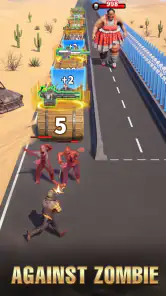



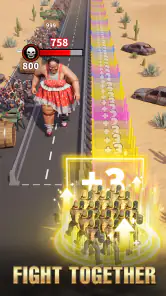
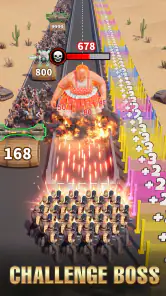
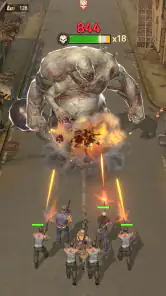

Analysis by Reviewed
I like strategy games that make a decision feel immediate rather than burying it under menus, and Z Route: Redemption presents a compact premise with exactly that appeal: choose a route, weigh the danger, and try to make it through. The first choice is easy to understand, but the interesting part is deciding whether a promising path is worth its risk when survival is the real goal. It is a game I would consider when I want a focused decision-making session, not a sprawling strategy campaign.
Every choice starts with a route
The game’s central idea is built around choosing the right door in a world where survival is at stake. That framing gives each decision a clear purpose: I am not choosing simply to collect something or complete a checklist; I am trying to keep a run alive. It is an approachable entry point for players who enjoy strategy but do not want to spend their first session studying a complicated ruleset.
As a strategy game from 37GAMES GLOBAL, Z Route: Redemption puts the emphasis on judgment under uncertainty. The useful habit is to pause before treating any option as automatically safe. A route that looks attractive can still carry a trade-off, so I find it more satisfying to think about what I am risking than to click through choices as quickly as possible.
That small pause is also what makes the premise work. If I am playing between errands or during a short break, I can grasp the immediate question and make a decision without needing to reconstruct a long story first. On the other hand, anyone looking for a strategy game built around extensive planning, a large technology tree, or long tactical battles should temper expectations. The appeal here is the pressure of choosing, not the promise of a deep simulation.
How I approach the first decision
I treat an early route choice as a chance to learn the game’s way of communicating risk. Rather than chasing the option that sounds most rewarding, I look for what the choice seems to ask of me and whether I am comfortable accepting that uncertainty. This is a practical approach for a game whose premise makes survival more important than a flashy short-term gain.
There is a trade-off to this style. If you prefer every strategy decision to have a fully visible outcome, a choice-driven setup can feel less comfortable than a conventional board-like tactics game. I would recommend it to players who enjoy making a call with incomplete certainty; I would point a strict optimizer toward a game where the battlefield and consequences are easier to calculate in advance.
Feedback that makes the next choice matter
The core rhythm is straightforward to describe: act, see what the decision leads to, and decide whether to continue. That feedback loop is the source of the tension. A choice has meaning because it can influence whether the attempt holds together, and the prospect of another decision keeps the run moving. I find that more engaging than a sequence of options that feels disconnected from the goal.
A useful way to play is to notice which kinds of choices make you hesitate, then use that reaction as information about your own priorities. Do you lean toward a route that feels cautious, or are you willing to risk a less certain path for a potential advantage? Thinking about that pattern can make subsequent decisions feel deliberate instead of random, even when there is no guarantee of a perfect outcome.
The game is best suited to short bursts of attention. A realistic use case is opening it during a quiet stretch of a commute or while waiting for an appointment: you can focus on a decision, see how the attempt develops, and stop when you reach a natural break. It is less ideal when you need a game that can be left open for a long, uninterrupted strategic session or one that rewards carefully managing a complex set of units at once.
Keeping a run readable
My practical tip is to avoid making every choice at top speed. When a route seems obvious, take a moment to ask what makes it attractive and what might make it costly. That simple check turns the game’s central premise into an actual strategy habit, rather than a series of taps. It also helps if you are new to this kind of decision-driven play: you can learn what you personally consider a worthwhile risk without needing to master a stack of systems first.
There is a limit to how much depth this approach can provide on its own. Players who want to study detailed combat math or build a long-term plan across many interconnected systems may find the choices too immediate. That is not necessarily a flaw; it is a matter of what kind of strategic satisfaction you want. Here, the decision itself is the event, so the game will suit you best if that is enough to hold your attention.
What makes a successful attempt feel worthwhile
In a survival-focused loop, the reward is tied to the feeling that a decision worked out and the run continued. That is a different pleasure from steadily expanding an empire or collecting a large roster of characters. I enjoy it when a game lets me connect an outcome to the judgment I used, because even a brief attempt then has a small story: I chose, accepted the uncertainty, and saw what followed.
The important trade-off is that a reward built around continuing a run can feel modest if you want constant, visible accumulation. If your favorite strategy games give you a clear long-term project that grows every time you play, this may not scratch the same itch. Z Route is a better fit when you like the satisfaction of getting through a dangerous decision and are willing to let that immediate result be the reason the session mattered.
For a newcomer, I would focus first on understanding the logic of choices rather than trying to force a perfect outcome from the opening moments. That keeps the experience useful even when a run does not go as hoped: you can consider what you would choose differently next time. This kind of reflection is one of the more interesting parts of a compact strategy game, because it gives a failed attempt a purpose instead of making it feel like time simply disappeared.
It is also worth being realistic about spending. The game is free to play, while optional in-app purchases range from $0.99 to $99.99 per item. I would begin without buying anything and decide later whether the experience itself earns further investment. That is a sensible approach for a game whose appeal depends on whether its repeated decisions remain engaging for you, rather than on an extensive feature list.
Why another session begins
The reset is part of the loop’s appeal: after an attempt ends, the question becomes whether you want to take another shot with a different judgment. That can make a second session feel like a small experiment rather than a simple replay. I might change how cautiously I approach a route, or reconsider an option that seemed compelling the first time. The important point is that a new run gives me a reason to test my decision-making, not just repeat the same clicks without thought.
This structure has an obvious downside for players who dislike starting over. If you prefer a strategy campaign where each session permanently advances a large plan, a run-based rhythm can feel less substantial. It also may not be the best choice if you want a game that requires constant social coordination or lengthy competitive matches. The value here is personal: can you enjoy making another attempt because you have a better idea of how you want to respond?
Compared with more traditional strategy games, where the fun often comes from positioning pieces, managing resources over time, or executing a plan across a long match, this one places its weight on route decisions and survival pressure. That makes it easier to pick up than a dense tactics title, but it also means it is not a substitute for one. I would choose a more elaborate strategy game when I want a long evening of planning; I would choose this when I want a contained challenge built around a few consequential calls.
Who should try it, and who should pass
I would recommend it to someone who likes survival themes, quick strategic judgments, and the feeling of learning from a previous attempt. It may also suit a casual player who wants a strategy game that is easier to approach than a sprawling management simulator. Its Teen content rating makes that audience context clear, and the game is available for Android devices running version 6.0 or later.
I would suggest skipping it if your ideal strategy game depends on precise tactical control, extensive progression between sessions, or complete information before you commit. Likewise, if you dislike uncertainty and resets, the same loop that creates tension here may become irritating rather than exciting. Knowing that distinction before installing is more useful than expecting the game to satisfy every kind of strategy fan.
The game has a 4.4 average from around 7,900 ratings, alongside over 230 written reviews and more than 5 million installs. It is currently at version 1.37.06. Those figures point to a substantial audience, but they do not answer the personal question that matters most: whether choosing under pressure is your kind of fun. I would use the first sessions to answer that before spending money or expecting a long-form campaign.
The loop’s real verdict
For me, the strongest reason to try this game is how clearly its premise connects action to consequence. I make a route choice, see how the attempt responds, and get a reason to decide whether another session is worth it. The experience is most satisfying when I treat each run as a small lesson in risk rather than expecting a vast strategy sandbox.
Its limits are equally clear. The focused loop will not replace a deep tactical game, and repeated attempts are only appealing if you enjoy adjusting your judgment and starting again. But if the idea of making a survival-minded choice, living with the result, and testing a different approach sounds good, Z Route: Redemption is an easy game to consider. I would try it free, take my time with the first decisions, and keep playing only if the next attempt genuinely makes me curious.
Z Route: Redemption Frequently Asked Questions
What is Z Route: Redemption about?
Z Route: Redemption is a zombie-themed action game built around surviving dangerous encounters and progressing through a post-apocalyptic setting. Players take on the role of a survivor, face hostile undead, and work through challenges that test their combat skills and resource management. The exact story details and available modes can vary by version, so check the current store listing for a full description before downloading.
How does the gameplay work in Z Route: Redemption?
The game focuses on navigating through zombie-filled situations and using available weapons or other tools to stay alive. Expect action-oriented play, with success depending on how you handle enemies and make progress through each stage or objective. Controls, difficulty, and the pace of progression may differ across updates or devices, so first-time players should take a moment to learn the on-screen controls and consult any in-game tutorial.
Is Z Route: Redemption free to download, and does it include in-app purchases?
Whether Z Route: Redemption is free, contains advertisements, or offers in-app purchases depends on the version and platform available in your region. Review the Google Play or App Store listing before installing, paying particular attention to the price, purchase options, and notes about ads. If the game offers optional purchases, you can usually restrict them through your device’s parental controls or purchase settings.
Can I play Z Route: Redemption offline?
Offline access is not guaranteed for every release of Z Route: Redemption. Some games can launch and support certain stages without a connection, while others may need internet access for initial setup, account features, advertisements, or updates. Check the app’s store description and test its available features before relying on it during travel or in areas with limited connectivity. Keep in mind that online features will require a connection.
Is Z Route: Redemption suitable for children, and what should I check before installing it?
Because Z Route: Redemption features zombies and action-oriented combat, it may include frightening imagery or violence that is unsuitable for younger players. Check the age rating and content descriptors shown in the relevant app store, and review screenshots and any available gameplay information to judge whether it fits your household. Also confirm that your device meets the listed requirements and that you are downloading the official release.
Pros
- The story gives players a clear reason to keep progressing through the campaign.
- Combat encounters reward careful timing and attention to enemy patterns.
- The post-apocalyptic setting creates a strong
- consistent atmosphere.
- Mission-based progression makes it easy to play in short sessions.
- Unlockable upgrades add a sense of development as the journey continues.
Cons
- Some encounters may feel repetitive after several missions.
- Progress can slow if upgrades require repeated play or resource grinding.
- Combat may be challenging for players who prefer a relaxed pace.
- The bleak setting and themes may not appeal to every player.
- Performance and controls can vary depending on the device.

- Category
- Strategy
- Version
- 1.37.06