Wonder Blast
- 279.00
- 4.6
- Installs
- 1.00M
- Price
- Free

Screenshots
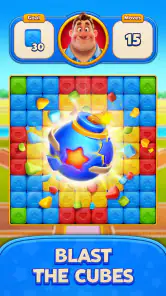



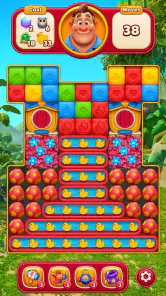
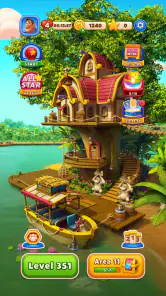

Analysis by Reviewed
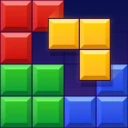
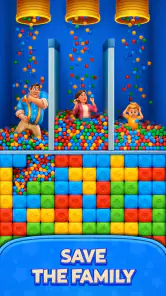
Wonder Blast is a free puzzle game from Fugo Games that puts the Wilson Family at the center of a light adventure built around blast-style puzzles. I found it easy to understand within a few moves: you tap matching groups, clear space, and try to complete the current objective with a limited number of moves. That familiar foundation makes it approachable, but the real appeal comes from learning when to wait, where to create a larger combination, and how to avoid wasting a useful move too early.
The game is available for everyone and runs on Android devices using version 8.0 or later. It has attracted more than a million installs and holds a 4.6 average from roughly twenty-one thousand ratings, which fits my impression of it as a polished, accessible choice for short puzzle sessions. It is free to start, although optional in-app purchases range from $0.99 to $99.99 per item. I would recommend trying it without spending first, because the early experience gives you enough time to decide whether its rhythm suits you.
How a normal Wonder Blast session feels
My usual workflow begins with a quick look at the entire board rather than an immediate tap. In a blast puzzle, the most obvious group is not always the best one. A small cluster may clear a little space now, while a nearby larger group can create a much stronger chain if I leave it untouched for one more move. That small pause is the first habit that separates relaxed play from simply tapping whatever is convenient.
The Wilson Family gives the game a more personal frame than an endless collection of disconnected boards. The adventure presentation helps each level feel like part of a continuing journey, even though the core action remains simple. I liked that combination because it gives me a reason to continue after a difficult board without turning the story into a barrier between puzzles.
Each level works best when I identify its goal before making the opening move. If the objective involves clearing particular areas or reaching a target under a move limit, I try to work toward that requirement immediately. Clearing random pieces can make the board look tidier while leaving the important problem untouched. A useful rule is to ask, “Which part of this board can become harder to reach later?” and deal with that section first.
This is also where the game is comfortable for everyday use. I can play a few levels while waiting for a coffee, take a break between tasks, or settle into a longer session at home. The controls are simple enough for one-handed play, and the short-turn structure makes it easy to stop after a board instead of committing to a long match. Players who enjoy quick, colorful puzzle games will understand the appeal quickly.
At the same time, I would not describe the experience as completely effortless. Later decisions can punish careless taps, especially when a move removes the only convenient access to a difficult section. The game is friendly at the surface, but it still expects attention. If you prefer puzzles with deep deduction, wordplay, or a clearly solvable logic grid, this may feel too dependent on board arrangement and opportunity.
More From Our News Desk

Weather by Xiaomi Review: Clear at a Glance, Less Clear Up Close

X Under Pressure: Can It Recover When Posting Goes Wrong?

Clash of Clans Is Won Between the Battles

Android Auto Makes the Case for Quieter Car Software

MobiOffice: Transforming Mobile Productivity with Seamless Integration

EA SPORTS FC™ Mobile Soccer: Redefining Mobile Sports Gaming
What I check before committing to a move
I first scan for groups that can affect several parts of the board at once. A move near the center often changes more future options than a move at an edge, but that is not an absolute rule. If a side contains the pieces required by the objective, the edge may deserve priority. I also look for blocked or isolated areas, because leaving them until the end can force awkward single-purpose moves.
Another useful habit is to protect flexibility. When two groups are equally helpful, I usually choose the one that leaves more colors or shapes connected afterward. A board with several possible follow-up moves is safer than one that looks cleaner but has become fragmented. This is a small strategic distinction, yet it makes the game feel less random during difficult attempts.
I also avoid spending a powerful combination simply because it is available. A large blast can be satisfying, but its best use is often tied to the level objective or to opening a congested area. Using it on an easy section may leave the genuinely troublesome part untouched. I treat strong opportunities as tools rather than rewards to be collected immediately.
Settings and practical checks worth making
Before playing seriously, I check the device’s sound and notification behavior rather than assuming the game will fit my surroundings. Puzzle sessions are often played in public or during work breaks, so I prefer to control audio at the device level when I need a quiet experience. If you are installing it for a child, the Everyone age rating makes the intended audience clear, but I would still review purchase protections on the device because optional items are available.
The current version shown for the game is 56097599. I would keep the installation updated through the normal app store process, particularly if a board behaves unexpectedly or the game feels less responsive after a device change. On Android, the minimum requirement is version 8.0, so older phones may not be compatible even if they can run other casual puzzle titles.
The most important setting-related decision is financial rather than visual. Because the game is free to download but includes optional purchases, I recommend deciding in advance whether you want to play entirely without spending. That boundary is easier to maintain before a frustrating level than after several failed attempts. For families, purchase authentication is especially worthwhile, since a puzzle game’s simple interface can make accidental taps feel harmless.
I would also use the phone’s general battery and interruption controls if I planned a longer session. Wonder Blast is designed for casual play, but any game becomes less enjoyable when notifications cover the board or a low battery interrupts a promising attempt. These are not special features of the game; they are practical habits that make its short-session format work better in daily life.
Faster patterns that improve consistency
My fastest improvement came from stopping the habit of scanning only for the biggest visible group. I now look for the move that changes the board’s structure. A medium group that opens a sealed-looking pocket can be more valuable than a larger group that merely removes pieces from an already open area. This approach reduces wasted moves and makes the outcome feel more intentional.
I also try to build combinations near areas that matter to the objective. If a level asks me to clear a particular region, I avoid creating a strong effect far away unless it will trigger a useful chain. The best move is often not the one with the largest immediate visual result, but the one that makes the next two moves easier. Thinking one or two turns ahead is enough to improve play without making the game feel like homework.
When the board starts to narrow, I slow down again. Players often speed up after a successful chain, but the final part of a level can be the most delicate. A careless tap may separate the remaining pieces or leave a target stranded. I treat the last few moves as a separate phase: check the objective, identify the remaining obstacle, and only then choose the next group.
For a realistic everyday example, imagine playing during a ten-minute commute break. I would not begin by trying to clear several levels as quickly as possible. I would play one board with the sound controlled, inspect the objective, and leave the game after the result screen if attention was divided. This prevents the common mistake of starting another level while distracted and then using moves without understanding the board.
Another repeatable habit is learning from failed attempts without blaming the game immediately. After a loss, I ask whether I used a useful group too early, ignored a difficult corner, or made a move that reduced future options. That quick review turns retries into practice. It is more valuable than repeating the same opening and hoping the board will somehow solve itself.
Where the simple design reaches its limits
Wonder Blast’s accessibility is also its main limitation. The game is easy to pick up because its basic interaction is familiar, but players seeking elaborate controls or a large strategic rule set may eventually want more depth. There is no need to learn a complicated interface, yet that means the challenge must come from board reading, move management, and the changing demands of individual puzzles.
The free-to-play structure deserves a realistic mention. Optional purchases can be useful to players who want extra assistance or simply wish to support the game, but I would not treat spending as part of the core strategy. The strongest improvement still comes from recognizing good setups and preserving flexibility. Anyone uncomfortable with purchase prompts or progression pressure should approach cautiously and use the device’s purchase controls from the start.
It is also not the best choice for every mood. If I want a quiet, purely abstract puzzle with no family adventure framing, a minimalist logic game may suit me better. If I want competitive multiplayer, long-form storytelling, or a game built around words rather than matching groups, Wonder Blast is aimed at a different kind of player. Its strength is the middle ground between a quick casual diversion and a puzzle that rewards attention.
The age rating of Everyone makes it suitable for a broad audience, but suitability is not the same as universal appeal. Younger players may enjoy the straightforward tapping and colorful progress, while adults may appreciate the short sessions. More experienced puzzle fans should try it with the goal of optimizing moves rather than merely completing boards; otherwise, the early simplicity may make the whole experience seem shallower than it becomes.
I would also keep expectations sensible about the story. The Wilson Family provides continuity and a reason to move forward, but the puzzles remain the main event. If narrative development is your main reason for installing a game, this may not satisfy you as much as a dedicated adventure title. I see the story as a pleasant companion to the puzzle loop, not a replacement for it.
Who will get the most from it
Wonder Blast is strongest for players who want a friendly puzzle game that rewards repeatable habits. It works particularly well for someone who likes short sessions, simple controls, and gradual improvement. The game is also a good fit for households looking for an accessible title with an Everyone rating, provided adults manage optional purchases appropriately.
I would suggest it to a friend who enjoys blast puzzles but wants a little more context than a never-ending sequence of disconnected boards. The Wilson Family adventure gives the levels a sense of direction, while the move-based structure keeps the game easy to pause. It is a practical choice for a phone because it does not demand that every session become a major event.
I would skip it if you dislike retrying a board after a poor decision, or if you expect every puzzle to have one precise logical solution. The experience is about recognizing opportunities in the current arrangement and managing limited moves. Players who prefer strategy games with fixed information, extensive planning, or direct competition may find better value elsewhere.
Compared with match-three games, Wonder Blast feels more immediate because groups can often be cleared with a single tap rather than requiring a swap sequence. Compared with traditional logic puzzles, it is more visual and less formal. That makes it easier to start, but it also means success depends more on spatial awareness and timing than on writing down deductions. For me, that balance is the reason it works as a break-time game.
My verdict after building a routine
After settling into a routine of checking objectives, protecting flexible groups, and slowing down near the end of a board, I found the game more satisfying than its simple first impression suggests. It does not reinvent puzzle games, but it gives the familiar blast format a clear personality through the Wilson Family adventure and a steady reason to keep testing better moves.
Fugo Games has made a free puzzle game that is easy to recommend with some qualifications. I like its approachable controls, its suitability for short sessions, and the way small habits noticeably improve results. I am less enthusiastic about the possibility of purchase friction and about its limited appeal for players who need deep logic or competitive features.
The current build, 56097599, supports Android devices from version 8.0 onward, and the game is free to begin. With more than a million installs and a 4.6 average from around twenty-one thousand ratings, it is clearly established among casual mobile players. Those figures do not replace personal taste, but they match a game that is easy to try and difficult to misunderstand.
My final advice is to install it if you want a colorful, family-friendly blast puzzle for spare moments, then give yourself a few sessions before deciding whether it has enough variety for you. Do not rush every large group, do not spend simply to erase frustration, and treat failed boards as lessons about positioning. Used that way, Wonder Blast becomes a pleasant daily puzzle habit rather than just another game opened once and forgotten.
Wonder Blast Frequently Asked Questions
Is Wonder Blast suitable for someone who enjoys casual puzzle games?
Wonder Blast is designed around approachable blast-puzzle play, making it a natural fit for players who like simple controls and short, focused challenges. Its levels provide objectives to work toward, while later stages can call for more careful planning. The Wilson Family adventure adds a light story context, so the experience combines puzzle solving with a gradual sense of progression.
How much space should I have available before installing Wonder Blast?
It is sensible to have some free storage available before installing Wonder Blast, both for the initial download and for future updates. The amount of space an app uses can vary with the device and its software, so check your available storage before starting. If your phone is nearly full, clearing unused files or apps first can help avoid installation problems.
Is Wonder Blast compatible with older Android or iOS devices?
Wonder Blast requires an operating system at least as recent as version 8.0. Check your device’s software version before downloading, especially if you use an older phone or tablet. A device that meets the minimum requirement may still feel different from a newer one in everyday performance, so keeping its operating system up to date can help with compatibility.
What devices can run Wonder Blast?
Wonder Blast is a puzzle game for Android and iOS devices, and its minimum operating-system requirement is version 8.0. Before downloading, check that your device meets that requirement and has enough available storage for the installation and any updates. Keeping the operating system current can also help with compatibility and performance.
Who developed Wonder Blast, and what is the game about?
Wonder Blast is developed by Fugo Games. Its central premise is helping the Wilson Family on an adventure by solving blast puzzles, giving the levels a light story context alongside the puzzle play. The game is categorized as a puzzle title, so it is aimed at players who enjoy clearing blocks, working toward objectives, and gradually advancing through stages.
Pros
- Bright
- polished visuals make each level easy to follow.
- Short stages work well for quick gaming sessions.
- Simple controls are suitable for players of most ages.
- Regular challenges can add variety beyond the main levels.
- Offline play is convenient when no connection is available.
Cons
- Some levels depend heavily on lucky tile combinations.
- Difficulty can increase suddenly after the early stages.
- Extra moves and boosters may encourage in-app purchases.
- Repeated blast effects can feel monotonous over time.
- Ads may interrupt play
- especially after completing a level.
- Category
- Puzzle
- Version
- 56097599