Ticket to Dice - Trains Tracks
- 44.00
- 4.4
- Installs
- 10.00K
- Price
- Free
Screenshots
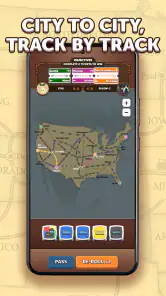

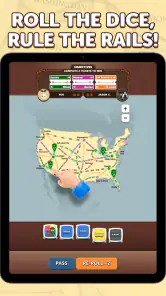
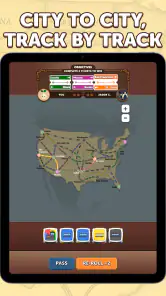


Analysis by Reviewed
I approached Ticket to Dice - Trains Tracks expecting a light board game, but its combination of dice decisions, route claiming, and a United States map gives each turn more weight than the simple presentation suggests. It is a free game from FunCraft Games, aimed at everyone, and it fits best when I want a short, approachable strategy session rather than a complicated simulation.
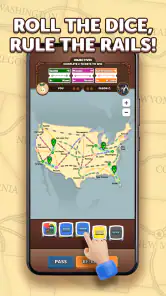
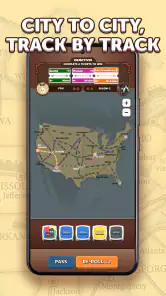
The central idea is easy to understand: move through a map of the USA, use dice results to pursue train routes, and try to finish ahead of rival players. That basic loop makes the game welcoming to newcomers, while the route choices create enough tension to stop every turn from feeling automatic. I found myself thinking less about a single lucky roll and more about how to turn that roll into a useful connection before another player reached the same opportunity.
From the first launch to a meaningful first win
What the game feels like before you know the rules
The board-game format is the most important thing to understand before installing. This is not an action title where quick reactions decide the outcome, and it is not a traditional puzzle built around finding one correct answer. The fun comes from weighing imperfect options. A dice result may open a promising route, but the best move can depend on what you are already building, what remains available, and how aggressively the rivals are progressing.
That makes it a good fit for someone who enjoys familiar tabletop ideas but does not want to learn a large rulebook. The map gives the session a clear visual purpose: routes are not abstract points on a menu, but parts of a larger journey across the country. I also like that the theme gives casual play a natural rhythm. You can understand what you are trying to accomplish even before you have learned the finer details of efficient route selection.
The current release is version 1.0.29 and requires Android 7.0 or later. It is available without an upfront purchase, although optional in-app items range from $0.99 to $49.99 each. That price structure is worth keeping in mind from the beginning: the game is easy to try, but anyone who dislikes optional purchases in free games should review the purchase flow carefully before handing the device to a child.
Latest News
A calm first setup makes the opening clearer
My advice for a first session is not to rush directly into trying to optimize everything. Start by identifying the basic cycle of a turn: check the dice result, inspect the routes that make sense, and choose the connection that improves your position rather than simply selecting the most obvious nearby option. The first meaningful success is not necessarily a dramatic win. It is understanding why one route is more valuable than another.
Before playing seriously, I would also make sure the device is running a compatible version of the operating system and decide whether purchase controls need extra attention. That small bit of preparation matters because a board game is most enjoyable when the player can concentrate on the map instead of stopping to solve setup problems. For younger players, an adult can explain that the free download does not mean every optional item is automatically free.
The age rating of Everyone makes the game suitable for a broad audience, but suitability is not the same as removing the need for supervision around spending. I would let a child explore the route system independently, then keep purchase approval with the adult. This is especially sensible for family play, where the appeal of collecting progress can make optional items tempting.
How I would play the opening turns
On the first few turns, I would resist the urge to chase every route that looks available. Dice introduce uncertainty, so a plan that depends on one exact future result can become fragile. Instead, I would look for moves that remain useful even if the next roll is ordinary. A route that supports more than one possible continuation is often more valuable than a flashy move that leaves the rest of the board awkward.
This is one of the first non-obvious lessons in the game: the strongest early move is often the one that preserves choices. New players naturally focus on immediate distance, but route games reward flexibility. If a connection can lead toward several areas, it gives you more ways to benefit from later dice results. That approach also reduces the frustration of feeling that one unlucky roll has ruined the entire session.
I would treat the first completed route as a learning checkpoint. After claiming it, ask yourself what changed: did it create a better path, block a rival, or merely use a result that would otherwise have been wasted? Thinking this way turns the opening from a sequence of random rolls into a simple review of cause and effect. It is a practical habit that helps the game become more strategic without making it feel heavy.
Where new players can become confused
The dice can make the game appear more random than it really is. Luck clearly influences what is possible, but the decision after the roll still matters. If I only judge a turn by whether it produced the route I wanted, I miss the more useful question: which available action leaves me with the best position for the next few turns?
Another common mistake is treating every rival move as an emergency. Competition matters because routes can change the value of your plan, but reacting to every opponent action can pull you away from your own objective. I prefer to intervene when a rival threatens a route that is central to my progress. If the contested connection is merely convenient, taking a different path may be better than spending several turns trying to recover it.
The map can also encourage overplanning. It is tempting to imagine a complete journey from one side of the country to the other, but dice results and rival choices can disrupt a long sequence. I get better results by planning one important connection ahead and keeping a broader direction in mind. That balance gives me structure without pretending I can control every future roll.
Three practical habits that improve the second session
First, I would separate essential routes from attractive routes. An essential route is one that supports the direction of your current plan or prevents a rival from seriously limiting you. An attractive route may look efficient but offer little value afterward. Making that distinction helps prevent the familiar board-game mistake of spending resources simply because an option is available.
Second, I would watch the map rather than only my own progress. The United States setting is not just decoration; it gives the board a spatial logic that helps you notice where competition is gathering. If several players are moving toward the same area, the value of a route may change quickly. Sometimes the best response is to claim a modest alternative early, before the crowded area becomes expensive in turns or opportunity.
Third, I would use unsuccessful turns as information. A poor dice result does not always mean that the turn was wasted. It can reveal which routes are too dependent on luck, which areas are becoming crowded, and whether your current plan is too narrow. This is particularly useful for first-time players because it replaces frustration with a concrete adjustment for the next round.
How it compares with familiar board-game alternatives
Compared with a classic tabletop train-route game, this mobile version is more convenient because the map and turn structure are always ready on the phone. I do not need to sort physical pieces or reserve a table. That makes it appealing for a quick break, a casual evening, or a family member who wants to learn the basic idea without committing to a long physical setup.
The trade-off is that a mobile game does not automatically provide the same social atmosphere as sitting around a table. If your favorite part of board gaming is conversation, negotiation, and seeing other players react in person, a physical alternative may still be better. On the other hand, if you prefer a focused solo-style experience or want to practice route decisions at your own pace, the phone format is more practical.
It also differs from pure dice games. A title based only on rolling and accepting the result would be easier to play but less satisfying for someone who wants decisions to matter. Here, the map and route choices give the roll a context. The game is therefore a middle ground: more thoughtful than a simple luck exercise, but less demanding than a deep strategy board game with a large number of systems to track.
Who will enjoy it, and who should skip it
I would recommend it to first-time board-game players, fans of route-building themes, and anyone who likes making small strategic choices under uncertain conditions. It is especially suitable for players who want a game that can be understood quickly but still rewards a more careful second or third session. The broad age rating also makes it a reasonable candidate for family-friendly play, provided purchase controls are handled responsibly.
I would be less enthusiastic about it for someone who wants complete control over every outcome. Dice can interrupt a carefully imagined plan, and that tension is part of the design rather than a problem to solve. Players who prefer fast reflexes, direct combat, or highly detailed long-form strategy may also find the board-game pace too restrained.
It may also be the wrong choice if optional purchases are a deal-breaker. The free entry point is convenient, but the presence of items priced from $0.99 to $49.99 means the experience should be approached with awareness rather than assuming there is no spending pressure. I would install it for the core game, not because I expect purchases to replace good decisions.
What to do after the first successful session
Once you have completed a session and understand the basic route flow, change your goal from simply finishing to improving one decision. In one game, focus on preserving flexible options. In another, pay closer attention to blocking a rival. In a third, try to avoid building a plan around one specific dice outcome. This kind of focused practice is more useful than trying to improve everything at once.
I also recommend noticing how your route choices affect the end of the game. An early move can look excellent because it creates immediate progress, yet leave you with awkward follow-up options later. Conversely, a slower connection may become valuable because it keeps several directions open. Reviewing that difference is where the game’s strategic layer becomes clearer.
The community response is encouraging without being overwhelming: the game holds a 4.4 average from over 170 ratings and has more than 40 written reviews. Its install count is above 10 thousand, which suggests a modest but real audience rather than the scale of a mainstream mobile giant. I read that as a reason to set expectations sensibly: this is a focused board game to try, not a massive social platform with an enormous ecosystem.
My final take after learning its rhythm
Ticket to Dice - Trains Tracks works because it gives dice a meaningful job. The roll introduces uncertainty, while the map asks me to decide how much that uncertainty should influence my plan. I enjoy that balance, especially when I stop chasing perfect routes and start choosing moves that keep future options alive.
The game is not ideal for players who dislike luck, competitive route pressure, or optional purchases in a free download. It also will not replace the atmosphere of a physical board game for people who play mainly for face-to-face conversation. But for a first-time player looking for an accessible introduction to route-based board gaming, it offers a reassuring path from installation to a real accomplishment: understand the turn, complete a useful connection, learn from the result, and gradually make better choices.
My recommendation is to try the free version with a simple first-session goal rather than expecting immediate mastery. Keep an eye on the map, avoid narrow plans, and treat each dice result as a prompt for judgment instead of a verdict. If that style of play sounds enjoyable, FunCraft Games has built a compact board experience that can grow with your attention. Its best quality is not the promise of a perfect roll, but the decision that follows an imperfect one.
Ticket to Dice - Trains Tracks Frequently Asked Questions
Who made Ticket to Dice - Trains Tracks, and what devices can run it?
Ticket to Dice - Trains Tracks is a board game developed by FunCraft Games. It is available for Android devices running Android 7.0 or later, making it accessible on a range of compatible phones and tablets. Before downloading, check that your device meets this requirement and that you have enough available storage for the installation.
What is Ticket to Dice - Trains Tracks?
Ticket to Dice - Trains Tracks is a digital board game inspired by classic railway route-building games. Players use dice and strategic decisions to claim connections, complete objectives, and build an efficient transport network. Its combination of luck, planning, and competition makes it suitable for casual players, families, and fans of tabletop-style games looking for a quick experience on a mobile device.
How do you play Ticket to Dice - Trains Tracks?
The main objective is generally to create railway routes between destinations while managing the results of your dice rolls. You must decide how to use available resources, which connections to prioritize, and when to take risks. Completing route objectives can earn extra points, while unfinished plans may reduce your final score. Learning the map and balancing short-term moves with long-term goals is essential.
Can Ticket to Dice - Trains Tracks be played offline?
Offline availability may depend on the specific game mode and version installed on your Android or iOS device. Some board-game apps allow solo play against computer-controlled opponents without an internet connection, while online multiplayer, advertisements, updates, or certain account features may require access to the web. It is best to check the store description and test the desired mode after installation.
Does the game support multiplayer?
Ticket to Dice - Trains Tracks may offer competitive play through local or online multiplayer, depending on the platform and current version. Multiplayer can make the game more engaging because opponents may block routes, compete for valuable connections, or change their strategies unexpectedly. Before downloading, review the latest app listing to confirm whether online matches, private rooms, or local play are supported.
Pros
- Simple rules make it easy for new players to start quickly.
- Short matches fit well into casual play sessions.
- Train-themed visuals give the game a pleasant
- recognizable style.
- Random dice rolls add variety to each round.
- Playable without advanced strategy knowledge.
Cons
- Dice-based outcomes can make victories feel heavily dependent on luck.
- Limited strategic depth may disappoint experienced board-game players.
- Ads may interrupt gameplay or reduce the overall polish.
- Progress can feel repetitive after several similar matches.
- Some features may require in-app purchases or extra unlocks.
- Category
- Board
- Version
- 1.0.29