Star Trek Fleet Command
- 42.72K
- 4.2
- Installs
- 10.00M
- Price
- Free

Screenshots
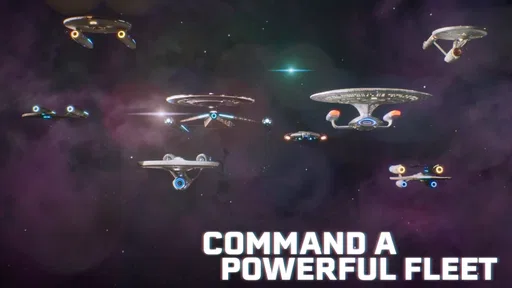
Analysis by Reviewed
I came to Star Trek™ Fleet Command expecting a familiar space-strategy setup, but its strongest impression is how it makes managing a growing operation feel tied to the wider Star Trek universe. It’s a free strategy game from Scopely, and its mix of exploration, station development, missions, and player interaction gives me several different reasons to return. The mood is appealing, though the number of systems can make the first sessions feel busier than the opening suggests.
A first impression shaped by scale
The game works best when I approach it as an ongoing command routine, not as a quick story that I can finish in one sitting. I might have only a few minutes to check what needs attention, or I might settle in for a longer stretch of exploring and planning. That flexibility is useful, but it also means the game doesn’t always provide the neat beginning, middle, and end of a compact match.
That distinction matters if you’re deciding whether to install it. Someone who wants to step into a recognizable science-fiction setting and gradually build a fleet has a clear reason to try it. If you’d rather open a game, play one complete tactical round, and put it away without keeping track of longer-term progress, a match-based strategy game will likely fit better.
Embarking on Your Galactic Journey
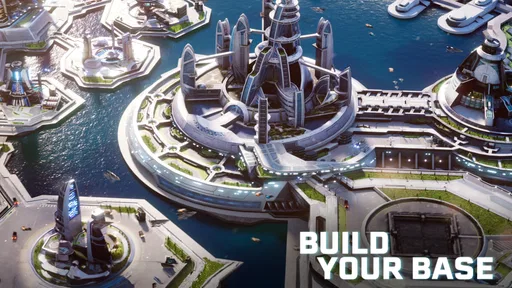
The moment you launch Star Trek™ Fleet Command, you’re immediately thrust into a dynamic universe filled with iconic characters, spaceships, and intriguing missions. The game does an impressive job of immersing players in its storyline. You start by building and customizing your very own space station, which serves as the heart of your operations. Trust me, the feeling of seeing your station grow and evolve is incredibly satisfying.
Gameplay and Mechanics
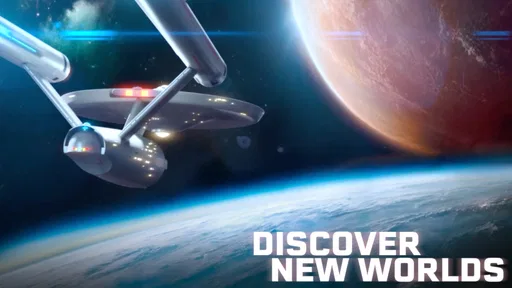
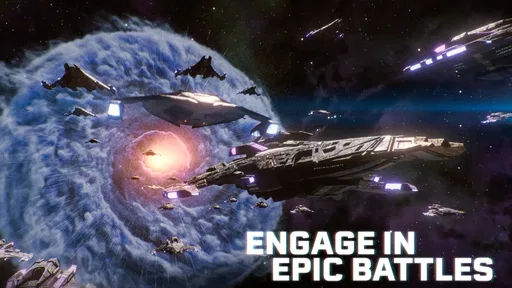
Let’s talk gameplay. The game combines elements of strategy, resource management, and role-playing. You’ll find yourself exploring new star systems, engaging in intense battles, and forming alliances with other players. It’s like being the captain of your own starship, making critical decisions at every turn. The controls are intuitive, though it might take new players a bit of time to get used to the myriad of options available.
The missions are varied and keep the gameplay fresh. One moment you’re negotiating peace treaties, and the next, you’re engaged in a full-blown space battle. The unpredictability and variety are what keep you coming back for more.
Keeping the world coherent
The setting is more than a backdrop for the interface. Ships and star systems give the decisions a recognizable Star Trek frame, so station growth and exploration feel like parts of the same undertaking instead of unrelated activities. For me, that connection is the game’s most distinctive strength: routine planning has a little more character when it belongs to a universe I already care about.
More From Our News Desk

Weather by Xiaomi Review: Clear at a Glance, Less Clear Up Close

X Under Pressure: Can It Recover When Posting Goes Wrong?

Clash of Clans Is Won Between the Battles

Android Auto Makes the Case for Quieter Car Software

MobiOffice: Transforming Mobile Productivity with Seamless Integration

EA SPORTS FC™ Mobile Soccer: Redefining Mobile Sports Gaming
There is a trade-off, though. A fan may enjoy spotting familiar elements and seeing them placed within a larger spacefaring routine, while someone unfamiliar with the franchise may see ships and names without getting the same emotional shorthand. You can still engage with the strategy, but the setting is less likely to carry the experience for you. I’d choose it for the combination of management and franchise atmosphere, not as a substitute for a focused tactics game.
Graphics and Sound
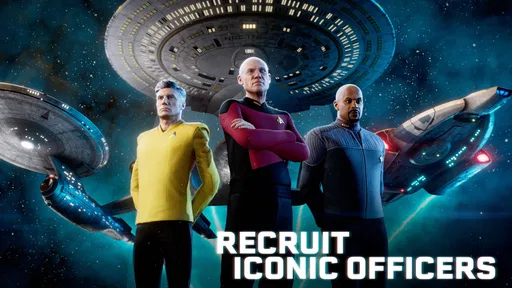
If there’s one thing that stands out in Star Trek™ Fleet Command, it’s the stunning graphics. The attention to detail in the ship designs and the vibrant colors of the star systems are breathtaking. It’s clear that the developers put a lot of effort into making the game visually appealing. Coupled with a soundtrack that feels like it’s straight out of a Star Trek episode, the immersive experience is complete.
How the sound and pacing land
The sound and visuals work most naturally when I let them establish the mood rather than expecting them to turn every action into a dramatic set piece. The spacefaring look gives exploration a sense of scale, while the soundtrack helps keep the tone familiar. I find that combination more effective over repeated visits than a constant push for spectacle would be: it supports the feeling of managing a larger operation.
The pacing is deliberately less tidy than a series of short, self-contained battles. I can make a choice, leave, and return to another part of the same ongoing plan. That makes the game easy to fit around an ordinary day, but it can also leave a session feeling unfinished. If I want a clear win screen and a natural stopping point every time, I’m more likely to enjoy a compact battle game.
Community and Social Features
One of the game's strengths is its community aspect. You can join alliances, team up with friends, and even compete against rivals. The social features add a layer of depth to the game, making it not just about individual progress but also about collaboration and teamwork. It’s a great way to meet fellow Trekkies and strategize together.
That social layer changes what a good fit looks like. I’d be more interested if I enjoyed coordinating with other people and didn’t mind a game world that continues beyond my own session. If I wanted a purely solo experience, I’d weigh that carefully before settling in; the alliance element is part of the appeal, but it can also make the game feel less self-contained than a single-player campaign.
What the Daily Rhythm Feels Like
This is a better fit for short check-ins across the day than for someone looking for one uninterrupted, self-contained match. I might open it while having coffee, review what needs attention, choose a mission, then come back later to decide what to develop next. That stop-and-return rhythm suits the fantasy of overseeing a fleet, but it can feel less satisfying if you want every play session to end with a clear victory or a complete story chapter.
A realistic routine might be checking in before work, choosing one priority instead of trying to clear every visible objective, and returning later when I have time to focus on exploration or a battle. The useful part is the continuity: I can keep a longer plan in mind without needing one long uninterrupted session. The downside is that if I’m already busy, another ongoing world can start to feel like a list of obligations rather than a relaxing game.
A useful habit is to decide what you want from a session before tapping through the available activities. If I’m focused on growing the station, I avoid getting sidetracked by every new objective; if I want a more active session, I prioritize exploring and combat. This helps keep the many options from turning into aimless menu-hopping, especially early on when the game is still introducing its systems.
Who Will Enjoy the Fleet Command Approach?
I’d recommend it most to Star Trek fans who enjoy seeing ships and settings from the franchise woven into a long-running strategy routine, and to players who like gradual development alongside other people. The broad appeal is reflected in an average rating of 4.0 from around 301,000 ratings, with more than 10 million installs. Those figures suggest a substantial audience, but they don’t change the personal fit: the alliance side is a draw if you enjoy coordinating, and a drawback if you prefer to play entirely alone.
It’s also a better match for someone who enjoys making small decisions that add up over time than for a player who wants every action to deliver an immediate payoff. I’d suggest trying it if the idea of checking a station, choosing a task, and gradually developing a fleet sounds satisfying. I’d skip it if I knew I’d resent returning to an ongoing game or if I wanted strategy to mean tightly bounded tactical puzzles above all else.
If you mainly want a quick arcade battle, a tightly paced tactical match, or a campaign that can be finished in a few sittings, I’d look at other kinds of mobile strategy games instead. Here, progress is bound to a larger ongoing world, so the most enjoyable parts often depend on returning and making another considered choice. It’s not a flaw so much as a commitment in pace that’s worth understanding before you settle in.
Spending, Learning, and Practical Trade-Offs
The game is free to start, and its in-app purchases range from $0.99 to $99.99 per item. I’d treat purchases as optional convenience rather than a requirement, and decide on a personal spending limit before playing if faster progress is tempting. The important trade-off is that paying may shorten some waits or smooth advancement, while patient play lets you learn how the station, missions, and fleet fit together. For a new player, understanding those connections can be more useful than rushing ahead.
If you’re wondering whether you need to spend to get started, I’d begin without buying anything and see whether the pace suits you first. That gives you time to learn which parts of the routine you actually enjoy, instead of paying to move faster before you know what you’re trying to accelerate. The temptation is understandable in a game built around gradual development, so setting a boundary in advance is more practical than deciding in the middle of a frustrating wait.
It is rated Everyone, runs on Android 7.0 or later, and its current version is 1.000.42152. I’d still make sure my device has enough room and that I’m comfortable with an online, socially connected game before committing to a regular routine. The initial learning curve is real: rather than trying to master every option at once, I’d follow the early objectives and pause to understand what each upgrade contributes. That approach makes the interface feel less crowded and helps avoid spending resources without a clear purpose.
Where Its Atmosphere Works Best
The art and sound are most effective when they support the scale of the setting rather than demand attention on their own. Star systems give exploration a sense of place, while the ship designs make fleet choices feel like part of a recognizable science-fiction world. The soundtrack adds to that tone, but I wouldn’t choose the game solely for its audio; the lasting appeal comes from the combination of setting and ongoing decisions.
That combination also explains why the game feels different from simpler base-building alternatives. It asks me to think about exploration, battles, and social cooperation as parts of one larger spacefaring routine, rather than treating every encounter as a separate puzzle. The benefit is a stronger sense of continuity; the cost is that there are more moving parts to learn and more reasons to check back in. Players who value a focused, single-player strategy challenge may find a more compact alternative easier to enjoy.
A sensible way to start
When I’m learning a game with several connected systems, I try not to treat every prompt as equally urgent. Following the early objectives and deciding on one immediate goal gives me a clearer sense of what the station and fleet are doing for each other. It also makes it easier to notice whether I’m enjoying the actual decisions or merely clicking through because the interface keeps offering another task.
That small pause is especially helpful before spending resources. If an upgrade supports the direction I’ve chosen, it feels like a deliberate investment; if I’m tapping it just to make a notification disappear, I’m probably moving too quickly. This isn’t a trick for skipping the learning curve, but it does make the early hours more readable and helps keep progress connected to a plan.
Who should choose a different kind of strategy game?
I wouldn’t point a player who dislikes persistent online worlds toward this as their first choice. The game’s long-term rhythm and social play are central to its character, so a solo campaign with a definite ending may be more rewarding if you want to control the whole experience on your own schedule. Likewise, someone who mainly wants precise, turn-by-turn tactical decisions may prefer a strategy title built around individual encounters rather than station growth and continued returns.
For a Star Trek fan who likes management, though, the combination has a clear appeal. The franchise gives the ships and exploration a recognizable identity, and the gradual structure provides reasons to revisit that world. I’d think of it less as a replacement for every other strategy game and more as a particular mood: part fleet oversight, part exploration, and part shared online routine.
Final thoughts on the atmosphere
In conclusion, Star Trek™ Fleet Command is a must-play for any Star Trek fan or mobile strategy enthusiast. The combination of strategic gameplay, stunning visuals, and a vibrant community makes it a standout in the mobile gaming world. So, if you’re ready to embark on an epic space adventure, this game should definitely be on your radar. Live long and prosper!
Star Trek Fleet Command Frequently Asked Questions
Do I need to know the Star Trek universe before playing Star Trek™ Fleet Command?
No prior knowledge of Star Trek is needed to get started. The game gives newcomers a way to explore its setting through fleet building, exploration, combat, and interaction with other players. Fans may enjoy recognizing the universe, but the strategy and progression can also appeal if you are simply looking for a space-themed multiplayer game.
How much of Star Trek™ Fleet Command can I play for free?
Star Trek™ Fleet Command is free to download and play, so you can begin without paying upfront. Optional in-app purchases are available, with prices ranging from $0.99 to $99.99 per item. Purchases can offer resources, ships, or upgrades and may speed up progress, but spending is not necessary to try the core experience.
Does Star Trek™ Fleet Command require an internet connection?
Yes. Star Trek™ Fleet Command is an online multiplayer strategy game, so you’ll need an internet connection to play and take part in its shared game world. That online focus supports fleet encounters and interaction with other players, including alliance play. If you’re looking for a game to play entirely offline, this one is not the right fit.
Is Star Trek™ Fleet Command suitable for players who are new to strategy games?
It can be a good choice for newcomers who enjoy building up a fleet and making decisions about exploration, combat, and cooperation. There are several parts to the experience, so expect to learn how they fit together as you play rather than treating it as a quick, self-contained action game. Familiarity with Star Trek is not required to try it.
What is Star Trek™ Fleet Command?
Star Trek™ Fleet Command is an expansive multiplayer strategy and role-playing game set in the beloved Star Trek universe. Players are tasked with building and managing their own fleets, engaging in epic space battles, and forming alliances. The game combines elements of exploration, combat, and diplomacy, offering a rich experience for both fans of the franchise and newcomers.
Pros
- Immersive storyline for Star Trek fans.
- High-quality graphics and sound.
- Strategic gameplay with alliances.
- Regular updates with new content.
- Cross-platform play available.
Cons
- Requires constant internet connection.
- Can be pay-to-win in late game.
- Complex mechanics for new players.
- Resource-heavy
- drains battery quickly.
- In-game purchases can be expensive.