Number Master
- 411.00
- 4.6
- Installs
- 5.00M
- Price
- Free

Screenshots
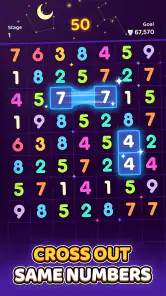
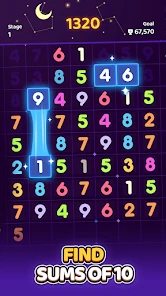
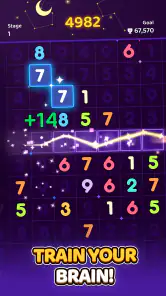
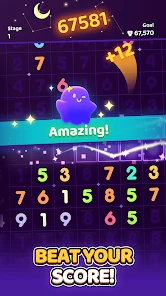

Analysis by Reviewed
When I first opened Number Master, I wanted to know whether its number puzzles would feel inviting or like homework. I found an approachable place to start: the game presents number challenges in a colorful, straightforward layout, and I could get into a puzzle without needing a long explanation. That makes it easier to try during a short break, though the game’s appeal depends on enjoying the act of thinking through number connections rather than looking for a story or a broad mix of activities.
What to expect from the puzzles
This is a puzzle game from Kiwi Fun, built around connecting numbers to progress. In my experience, the satisfying part is pausing long enough to consider the route or sequence before making a move. It has a familiar logic-game feel, but it is not simply Sudoku with a new look: the connection-based challenge asks me to think ahead in a different way. If you usually enjoy number puzzles but want something more hands-on than filling in a grid, that distinction may be exactly what you are after.
The game is free to download, with optional in-app purchases ranging from $0.99 to $29.99 per item. I would begin without spending anything and see whether the basic puzzle loop holds my attention first. That is a sensible approach for a casual game: the core question is whether the challenges themselves feel rewarding, not whether extra purchases are available. It is rated for Everyone, and its current version is 1.4.2; the game requires Android 6.0 or later.
The First Encounter
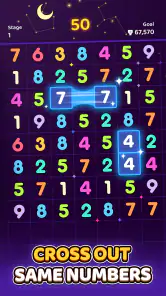
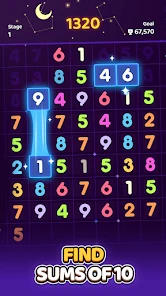
Downloading Number Master from the app store was a breeze. Once it was installed, I was met with a sleek and user-friendly interface. The app didn't waste any time and immediately presented me with a variety of number puzzles to dive into. The mix of colors and the straightforward layout made navigation a piece of cake.
Getting to a first satisfying solve
For a first session, I would treat the opening puzzle as a chance to learn how the game expects numbers to be connected, not as a test of speed. I found it useful to scan the whole challenge before committing to a route. That small pause can prevent the familiar frustration of making a quick move and then realizing it has boxed me into an awkward choice. When a puzzle feels unclear, I’d try one deliberate adjustment before reaching for a hint; it gives me a better sense of the game’s logic and makes a later assist more useful.
A realistic use case is a few minutes between errands or while waiting for someone. The short, focused nature of a number puzzle suits that kind of gap better than a game that asks me to follow a long sequence of events. I would avoid starting when I need to be interrupted at any second, though: once I am mapping out a promising connection, stopping mid-thought can make the session feel less satisfying. For a calmer break, a single puzzle is a reasonable goal; for a longer session, I’d continue only while the problem still feels enjoyable rather than turning it into a score chase.
Diving into the Gameplay
So, what does playing this game feel like? Imagine a blend of Sudoku and a classic number maze, with a twist that keeps you on your toes. Each level presents a unique challenge where you need to connect numbers in a specific way to progress. What I found particularly engaging was the level of thought and strategy required to connect these numbers efficiently. It's not just about speed; it's about thinking a few steps ahead.
More From Our News Desk

Clash of Clans Is Won Between the Battles

Android Auto Makes the Case for Quieter Car Software

MobiOffice: Transforming Mobile Productivity with Seamless Integration

EA SPORTS FC™ Mobile Soccer: Redefining Mobile Sports Gaming

How Microsoft OneDrive Became a Mobile Productivity Giant

How Google Translate Breaks Language Barriers Effortlessly
That makes it a good fit for someone who likes compact logic problems and wants a more tactile alternative to Sudoku grids or number-matching games. Those alternatives may be better if you prefer filling cells at your own pace, spotting pairs, or working with a familiar set of rules. Here, I get more value from considering how one connection affects what I can do next. The trade-off is that a player who wants a broad variety of puzzle mechanics may find the central number-linking idea repetitive after a while.
When the difficulty feels uneven
One of the coolest features is how the app adjusts the difficulty based on your performance. If you're breezing through, it ups the ante, and if you're struggling, it gives you a little nudge in the right direction. This dynamic difficulty adjustment kept me hooked because it felt like the game was genuinely adapting to my skill level.
That kind of adjustment can make a first session less intimidating, but I would not treat an easier stretch as proof that every later puzzle will feel equally smooth. If I get stuck, I try to identify the exact decision that is blocking me rather than restarting immediately. When I use a hint, I pay attention to what it reveals so the next puzzle becomes a chance to apply the lesson, not just another level to clear. The limitation is that anyone who prefers a fixed, predictable difficulty curve may find changing challenge levels less satisfying than a puzzle collection with clearly separated stages.
Returning without turning it into a chore
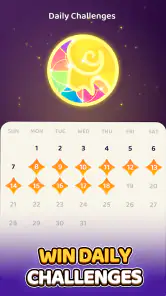
Replayability is a massive factor with any game, and Number Master nails it. With each level presenting new challenges and the promise of more complex puzzles, there's always something to come back to. I also appreciated the daily challenges and the leaderboard feature, which added a competitive edge. There's something satisfying about seeing your name climb up the ranks as you get better and better at the game.
For me, the daily challenge is best treated as an optional routine rather than an obligation. It can give a returning player a clear reason to open the game, while the leaderboard offers a comparison point for people who enjoy competing. If rankings make a relaxing puzzle feel stressful, I would simply focus on solving at my own pace. The game’s 4.6 average rating from around 11,000 ratings and more than 5 million installs suggest that many players have given it a try, but popularity cannot tell me whether its particular style of number connection will suit me.
Hints, spending, and practical expectations
Moreover, the app is pretty generous with hints. If you're stuck, you can use these to get a little push without feeling like you're cheating. It's a nice balance that ensures the game remains fun and challenging without becoming frustrating.
I’d save a hint for a genuine dead end, especially early on, because working through a puzzle unaided helps me learn what kinds of connections tend to work. If I am trying the game with a child or another beginner, I would let them make the first attempt and use the hint as a conversation starter about the next move. Since purchases are available, I would also check any purchase prompt carefully rather than assuming every extra is necessary to enjoy the puzzles. Someone who wants a completely purchase-free experience may prefer a game with no in-app buying at all.
Who should try it, and who may prefer another puzzle
I’d recommend giving it a go if you enjoy number-based logic, like solving a focused challenge in a spare moment, or want a gentle alternative to familiar grid puzzles. It is also a reasonable choice for a first-time player who wants to start playing quickly and learn by trying. I would skip it if I mainly want word games, a narrative campaign, or a wide rotation of unrelated puzzle types; the central appeal here is working through number connections. The game was released on October 31, 2024, and its overall presentation is aimed at accessible casual play rather than a specialist math course.
Choosing the right moment to play
I find the game works best when I can give a puzzle a little uninterrupted attention. It does not demand a long sitting, but a number-linking problem can still occupy my thoughts after I put the phone down. That makes it a better fit for a planned pause, such as a quiet coffee break, than for a moment when I am moving between tasks and likely to lose track of what I was considering. If I have only a brief wait, I would start only when I am comfortable stopping after the current decision rather than needing to finish a whole run.
For a first-time player, I would make the first meaningful success modest: understand what a valid connection looks like, complete an opening challenge, and notice which decision required the most thought. There is no need to chase a leaderboard position straight away. Treating the early puzzles as practice makes it easier to recognize whether the central mechanic clicks for you, and it gives you a fairer basis for deciding whether to return than judging the game by one quick glance.
How it sits beside other number games
Compared with Sudoku, this feels less like filling a board through deduction and more like working out a route through linked choices. Compared with number-matching games, it asks for more attention to what a move makes possible next, rather than simply spotting a pair. I would choose Sudoku when I want a familiar, self-paced grid, and a matching game when I want quick visual recognition. I reach for this one when I want the numbers to feel like a small path-planning problem.
That narrower identity is both its strength and its main trade-off. A consistent mechanic helps a new player learn by doing, but it does not provide the variety of a collection that alternates between word, picture, and arithmetic puzzles. If you enjoy mastering one kind of logic challenge, that focus can be satisfying. If you need frequent changes of pace to stay interested, a multi-mode puzzle app is likely a better use of your time.
Small habits that make a session smoother
One useful habit is to pause before each move and ask what options it leaves open, rather than judging a connection only by whether it seems to work immediately. I also try not to use a hint just because I am uncertain; I first look for the point where my reasoning stopped. That makes assistance more informative and helps me avoid turning every tricky moment into a skip. If I return after a break, I take a quick look at the whole puzzle again instead of assuming I remember the best route.
The competitive side deserves a similar bit of restraint. A leaderboard can make progress feel visible, but comparing speed or rank is not the same as learning the puzzle logic. I would use it as a light extra if friendly competition motivates me, and ignore it when I want a calm solo session. That choice matters because the same game can feel either like a relaxed brain teaser or a performance task depending on how much attention I give to rankings.
Final Thoughts
All in all, Number Master has been a delightful surprise. It's not just a game; it's a brain workout disguised as entertainment. Whether you're a math enthusiast or just someone looking for a new way to pass the time, this app has something for everyone. It’s intuitive, challenging, and most importantly, fun.
So, if you're ready to take on some number puzzles and see how far your skills can take you, give Number Master a try. Who knows? You might just find yourself addicted to cracking those numerical conundrums.
Number Master Frequently Asked Questions
What kind of puzzle game is Number Master?
Number Master is a puzzle game from Kiwi Fun, presented as an ultimate number puzzle challenge. It is free to download, and its age rating is Everyone, making it a potential option for players looking for a number-focused game. The game has a 4.6 average rating from around 11,000 ratings, giving prospective players a sense of its reception.
Will Number Master run on my device?
Number Master is available for Android and iOS, and the Android version requires Android 6.0 or later. Before downloading, check that your device meets the minimum operating-system requirement and has enough available storage for the installation. The game’s current version is 1.4.2, so keeping the app updated can help you access its latest release.
What is Number Master and how does it work?
Number Master is a puzzle game available on Android and iOS where players engage in various math challenges and puzzles aimed at improving numerical skills. It provides a fun and interactive way to enhance mathematical thinking through different levels of difficulty, catering to beginners as well as advanced users. The app includes features like timed challenges, daily puzzles, and a leaderboard to track progress and compete with friends.
Is Number Master suitable for all age groups?
Yes, Number Master is designed to be accessible for all age groups, from children to adults. The game offers a range of difficulty levels, ensuring that both young learners and seasoned math enthusiasts can enjoy and benefit from it. Additionally, the user-friendly interface and engaging graphics make it appealing to users of various ages, promoting a fun learning experience for everyone.
Does Number Master require an internet connection?
Number Master can be played offline, making it convenient for users who do not have constant access to the internet. However, certain features like leaderboards and daily challenges require an internet connection to function. This allows users to enjoy the game on the go, without worrying about connectivity, while still having the option to engage with online features when available.
Pros
- Intuitive interface for easy navigation.
- Engaging gameplay with increasing difficulty.
- Offline mode available for on-the-go play.
- Regular updates with new features.
- Multiplayer support for competitive fun.
Cons
- In-app purchases can be expensive.
- Ads can be intrusive at times.
- Limited customization options.
- Requires frequent internet connection.
- Some features locked behind paywall.

- Category
- Puzzle
- Version
- 1.4.2