My Tizi Town Daycare Baby Game
- 487.00
- 4.7
- Installs
- 10.00M
- Price
- Free

Screenshots
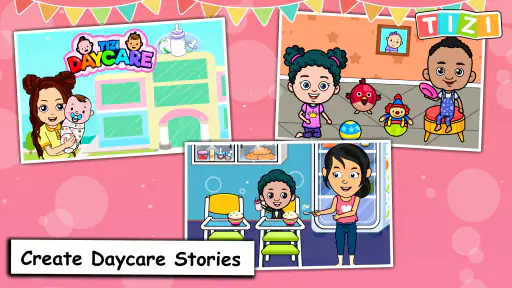
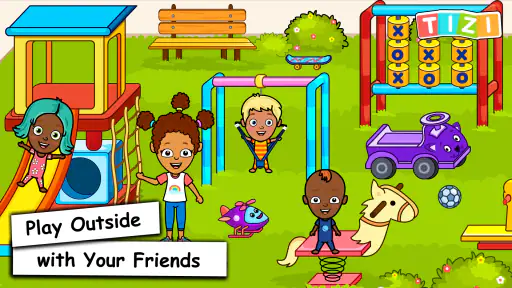
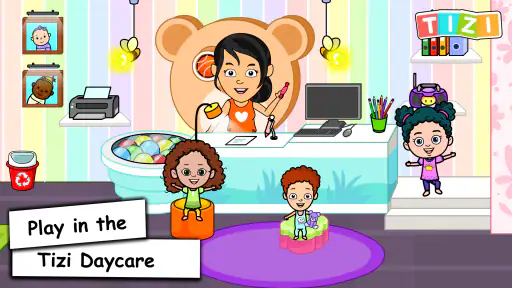
Analysis by Reviewed
I find My Tizi Town Daycare Baby Game works best as an open-ended pretend-play space, rather than a strict management challenge. Its focus on caring for babies and toddlers gives children familiar actions to act out, while the daycare setting leaves room for them to invent their own little stories. That makes it an easy game to pick up when a child wants to play independently or when an adult wants to join in and suggest what happens next.
Where it fits in a child’s day
I would see this as a short, low-pressure activity for a child who already enjoys pretend caregiving. It can work during a quiet spell at home, while an adult is nearby preparing a meal, or as something to share on the sofa when everyone wants a calm break. The key is to treat the game as a prompt for make-believe rather than as a way to keep a child occupied for an entire afternoon.
A realistic routine might be to let a child choose one daycare story before play begins: a toddler needs to get ready, spend time playing, and then settle down. The adult can ask what should happen next without taking over. That small bit of conversation turns a screen session into shared storytelling and gives a child a reason to make choices instead of simply moving from one object to another.
The game is most likely to suit children who like dolls, family role-play, and everyday scenes. It may also be a comfortable first step for a young player who is more interested in exploring than in winning. I would be less likely to recommend it to a child who expects levels, prizes, firm instructions, or a visible finish line; those expectations can make a deliberately loose play space feel aimless.
Exploring the World of Tizi Town
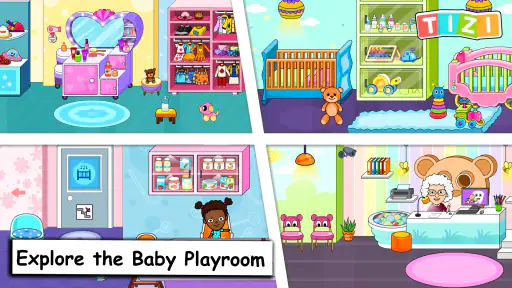
As soon as you open the app, you're greeted with bright, colorful graphics that are sure to catch your eye. The gameplay is straightforward yet engaging. You get to manage all the aspects of a daycare, from feeding and playing to changing diapers and keeping the little ones entertained. It's like a mini-world where you are in charge!
As an educational game from Tizi Town Games, it leans on imitation and make-believe rather than lessons, quizzes, or scores. I think that distinction matters: it may encourage imaginative role-play and simple routines, but it is not the right pick if you want structured teaching or progress tracking. Its Everyone age rating and free price make it approachable for families, though I would still check the current in-app experience with a child before relying on it as a long distraction.
Interactive Features Galore
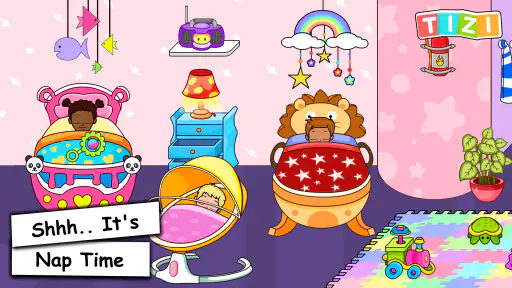
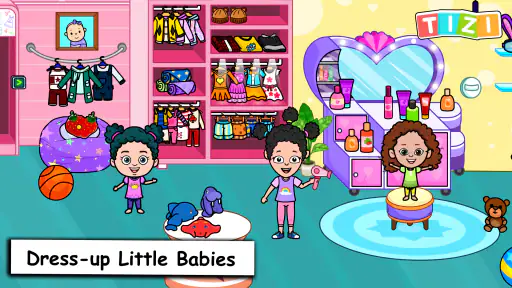
One of the cool things about My Tizi Town Daycare Baby Game is the sheer variety of activities available. You can dress up the kids in adorable outfits, take them to different playrooms, and even organize fun little parties. It's not just about babysitting; it's about creating a whole experience for the kids in your care.
You May Like

Clash of Clans Is Won Between the Battles

Android Auto Makes the Case for Quieter Car Software

MobiOffice: Transforming Mobile Productivity with Seamless Integration

EA SPORTS FC™ Mobile Soccer: Redefining Mobile Sports Gaming

How Microsoft OneDrive Became a Mobile Productivity Giant

How Google Translate Breaks Language Barriers Effortlessly
A useful way to keep play from becoming repetitive is to give it a small story before handing over the device: perhaps the toddlers are getting ready for a party, or it is time to settle down after play. That simple prompt gives a child a reason to move between activities instead of tapping objects at random. For a parent or caregiver, it also makes the game an easy shared activity during a quiet moment at home.
Compared with a puzzle game or a learning app built around right and wrong answers, this daycare play is less demanding and more flexible. That is a strength for children who enjoy acting out everyday scenes, but a limitation for anyone looking for a clear goal or a measurable sense of completion. If a child gets frustrated when a game does not explain what to do next, a guided activity game may be a better fit.
The app’s current version is 2.5.15, and it has been available since November 16, 2020. Those details tell me it is an established title, but they do not by themselves show what changed between releases or guarantee any particular feature. For someone already playing, I would judge an update by whether the game remains comfortable to use on their device and whether the child still finds fresh ways to play, rather than expecting a version number alone to signal a major redesign.
With a 4.7 average from around 22,000 ratings and more than 10 million installs, it has clearly found a sizeable audience. I treat popularity as useful context, not proof that every child will enjoy it: a toddler-care theme will appeal to some kids much more than others. It is also sensible to try a short session first and see whether the child can navigate the play without needing constant help.
Getting more from open-ended play
One small but useful approach is to let the child choose the story’s starting point, then offer a choice only when they seem stuck. For example, an adult might ask whether the babies should play or get ready for a party, rather than listing every possible action. This keeps the child in charge while avoiding the blank-page feeling that can come with an open-ended game.
I would also use the daycare setting as a chance to notice how the child organizes a pretend routine, without presenting the game as a lesson in responsibility. A child might decide that play comes before a change of clothes, or invent a completely different order. The value is in the conversation and imaginative choices, not in treating one sequence as correct.
For siblings or a caregiver and child sharing one device, taking turns choosing the next scene can make the play feel collaborative rather than competitive. It is a practical way to keep one player from controlling every decision. If a child prefers uninterrupted solo play, though, I would let them lead rather than turning every moment into a question-and-answer session.
Using the Daycare in Everyday Play
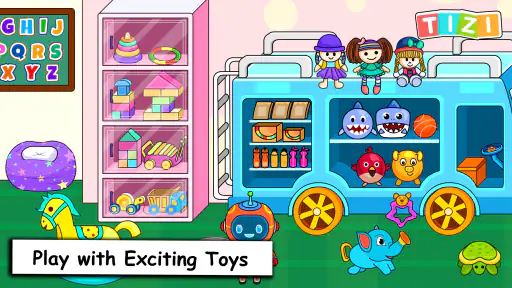
The app also boasts a range of interactive objects that you can use to keep the toddlers happy. From toys to musical instruments, there's a lot to explore, and trust me, you'll find yourself getting lost in the fun for hours!
In practice, I would set a simple boundary around a session: choose one pretend task, play it through, then put the device away. This helps turn the open-ended setting into a short routine rather than leaving a child swiping without direction. It is also a handy option for a waiting period or a calm break, but I would not count on it as a substitute for real-world play, conversation, or hands-on care activities.
One trade-off with open-ended play is that children may need a little help getting started, even when the controls feel simple. An adult can model one action, then let the child decide what happens next. If the child prefers collecting rewards, completing levels, or following a clear sequence, a conventional educational game is likely to hold their attention better.
For a parent deciding whether it will work on a particular day, I would think about the child’s mood as much as their age. When they are tired and want gentle, familiar play, a pretend daycare can be inviting. When they are restless and need a more active challenge, or when an adult needs an activity that can run without any involvement, this is not the option I would count on. Its strongest use is a little imaginative space, not a guaranteed distraction.
What to expect from the experience
The game’s straightforward controls are a practical advantage for younger players, but ease of movement should not be confused with a clear objective. A child can explore without much instruction, yet may still look to an adult for ideas about what to do. I would start by showing one interaction and then step back; explaining every action would turn a make-believe game into a set of directions.
Another useful trade-off is that a familiar daycare theme can make the play accessible, but it may not hold every child’s interest for long. Children who enjoy caring for dolls may return to the same kinds of scenes, while those who prefer vehicles, building, or puzzles may want a different activity. A short trial at home is a better test than assuming that a young age or an educational label guarantees a match.
Since the game is free, I would still make the first session an adult-supervised one. That gives a parent a chance to see how the child responds to the on-screen experience and whether the available play feels suitable for their household. It also helps answer a practical question: can the child explore comfortably, or will they need frequent help to stay engaged?
User-Friendly and Engaging
What sets this app apart is its user-friendly interface. It's designed to be intuitive, so even young kids can navigate through it without a hitch. The drag-and-drop functionality makes it easy to move the kids around and arrange the daycare setting just the way you like it.
Moreover, the app doesn't bombard you with ads, which is a breath of fresh air. You can enjoy uninterrupted playtime, which is especially important when you're dealing with the shorter attention spans of young players.
For families deciding whether to install it, the practical question is less “Is this educational?” and more “Does my child enjoy pretend caregiving?” If the answer is yes, its simple daycare premise can make it a pleasant choice. If your priority is a tightly guided curriculum, a competitive game, or a simulation with demanding management systems, I would choose something built specifically for that purpose instead.
When comparing it with other children’s games, I would place it closer to a digital dollhouse than to a teaching app or a complex life simulator. A lesson-focused alternative is better when a parent wants practice with a defined skill; a puzzle or level-based game is better when a child needs clear challenges and completion. This one is the better match when the point is to invent a scene and decide what the characters do next.
How updates matter to existing players
The version number and the game’s release history are useful landmarks, but neither tells a family exactly how the experience has changed over time. I would not infer new rooms, activities, or controls from a newer version alone. For a child who already plays, the meaningful test is practical: does the game still feel easy to handle, and can they find a story they want to act out?
When considering an update, I would also separate technical comfort from novelty. A child may be perfectly happy returning to familiar play, so the game does not need to feel dramatically different to remain useful. On the other hand, if the same child has stopped inventing scenarios and now asks for more direction, that may signal a need for a different kind of game rather than a problem that an update will solve.
The minimum operating system is 5.1, which gives families an immediate compatibility point to check before installing. I would confirm the device’s software version and then open the game with the child nearby, rather than assuming that compatibility alone means the experience will suit them. A comfortable fit depends just as much on the child’s play style as on whether the device can run it.
Final Thoughts
Overall, My Tizi Town Daycare Baby Game is a fantastic app for those who love simulation games with a sprinkle of creativity. It's educational, engaging, and downright fun. Not only does it entertain, but it also teaches responsibility and organization in a playful setting.
If you're looking for a game that combines fun and learning, this is definitely worth checking out. So go ahead, put on your virtual caregiver hat, and dive into the adorable world of Tizi Town. You won't regret it!
My bottom line is that this is best treated as a small imaginative play space, not a lesson plan or a babysitting guide. I would recommend it to a child who likes dolls, family role-play, and making up scenarios, especially when an adult can help shape the first few minutes. For a child who quickly loses interest without goals, or a parent seeking a more structured educational experience, another kind of game will be a better match.
As the game continues in its current form, I would watch for practical changes that affect everyday play: whether the controls remain easy for young users, whether the daycare activities continue to feel varied, and whether the experience stays comfortable for families. Those are the details that matter most to me; the title’s longevity and popularity are encouraging context, but the best test is still whether it fits the child in front of you.
My Tizi Town Daycare Baby Game Frequently Asked Questions
Who developed My Tizi Town Daycare Baby Game?
My Tizi Town Daycare Baby Game was developed by Tizi Town Games, a name families can use to identify the game when browsing for it. Its focus is pretend daycare play, where children can take on babysitting activities with babies and toddlers. If your child already enjoys imaginative role-play, this theme may be familiar and appealing.
How much storage space does My Tizi Town Daycare Baby Game require?
Storage needs can vary depending on the device and the version being installed, so it is sensible to check the available space on your phone or tablet before downloading. Keeping some room free can also help your device handle app updates and other files. The game is free to download, but that does not indicate how much storage it will use.
What devices can run My Tizi Town Daycare Baby Game?
My Tizi Town Daycare Baby Game is available for Android and iOS, giving families a choice of mobile platforms. On Android, the listed minimum operating system is version 5.1, so it is worth checking your device’s software before downloading. The game is presented as a daycare experience for children, with play centered on caring for babies and toddlers.
Is My Tizi Town Daycare Baby Game suitable for young children?
The game has an Everyone content rating and is designed as an educational experience for young players. Its daycare theme lets children explore pretend caregiving through interactive play. As with any game used by a child, parents can decide whether its activities and style suit their family, and can supervise play or help with the device as needed.
What is My Tizi Town Daycare Baby Game about?
My Tizi Town Daycare Baby Game is an interactive educational game designed for young children, where they can explore a virtual daycare setting. The game encourages creativity and imagination by allowing children to take care of babies, engage in various fun activities, and learn about responsibility and empathy through interactive gameplay. Its focus on looking after babies and toddlers gives children a playful way to try out everyday caregiving roles.
Pros
- Engaging educational content for kids
- Colorful and attractive graphics
- User-friendly interface for children
- Promotes creativity and imagination
- Regular updates with new content
Cons
- In-app purchases can be frequent
- Requires internet for some features
- Advertisements may interrupt play
- Limited free content available
- May not appeal to older children

- Category
- Educational
- Version
- 2.5.15