Magic Beat Racing music game
- 99.00
- 4.2
- Installs
- 10.00M
- Price
- Free

Screenshots






Analysis by Reviewed
Before you start, it helps to know what kind of game you are opening: this is a music game built around racing imagery and rhythm, rather than a conventional driving simulator. I’d approach Magic Beat Racing as a quick, music-led challenge where paying attention to the beat matters more than learning realistic vehicle handling. That makes it an inviting choice if you want something lively to try in a short break, though it may not satisfy someone looking for detailed car tuning, long-form racing strategy, or a deep music library.
A friendly first run
Getting started should feel straightforward: install the game, open it, and take a moment to understand the controls before worrying about a score. I recommend beginning with the easiest available option rather than trying to prove yourself on a demanding run immediately. Use the first attempt to notice how the music relates to what happens on screen. If a turn or other action catches you off guard, treat that run as practice; rhythm games often become much easier once your attention shifts from reacting late to anticipating the beat.
A useful first goal is simply to finish a run while staying attentive to the soundtrack. That is a more reassuring measure of progress than chasing a perfect result straight away. If the timing feels awkward, try another attempt with the sound clearly audible and fewer distractions around you. A quiet moment at home or a short pause between tasks is a better fit than playing while walking, crossing a street, or trying to follow a conversation. The game asks for visual and rhythmic attention, so it is best enjoyed when you can give it both.
Making the first session count
For a first-time player, the most useful question is not whether the opening attempt feels easy, but whether the game gives you a reason to try once more. I would set a modest target: learn the basic input, notice one musical cue, then complete a run without rushing. This keeps the first session from turning into a test of reflexes before you have even settled into the rhythm. If you make an error, identify what you were watching or listening to just beforehand. That small bit of reflection is more useful than tapping faster at random.
There is also a practical choice to make about where you play. Since the experience combines sound with moving visuals, headphones may help you focus on the beat in a noisy room, while the phone speaker is perfectly reasonable when you are somewhere quiet. Keep the volume comfortable and the screen easy to see. You do not need to turn a casual game into a setup ritual; the point is simply to remove distractions that make timing harder. If you are sharing a room, a short session with headphones can be more considerate than raising the volume.
What the numbers mean for a new player
XGAME STUDIO’s free music game has an Everyone age rating, and it has reached over ten million installs. Its average rating is 4.2 from around 52,000 ratings, with 99 written reviews. Those figures suggest that many people have tried it, but they cannot tell you whether its particular rhythm-and-racing style will suit you. The current version is 1.9.2, and it runs on Android 6.0 or later. It was released on December 30, 2022, so it is not a brand-new release; I’d judge it by whether the core play feels enjoyable to you rather than by expecting a newly launched game.
Who is likely to enjoy this blend?
I can see this working especially well for someone who likes rhythm games but wants more visual motion than a screen of notes, or for a casual player who wants a compact challenge without committing to a long racing campaign. It may also suit a younger player looking for an accessible music-themed game, although an Everyone rating is not a guarantee that every child will enjoy the pace or presentation. I would stay nearby for a first session if you are choosing it for a child, simply to see whether the controls and on-screen action feel comfortable for them.
More From Our News Desk

Clash of Clans Is Won Between the Battles

Android Auto Makes the Case for Quieter Car Software

MobiOffice: Transforming Mobile Productivity with Seamless Integration

EA SPORTS FC™ Mobile Soccer: Redefining Mobile Sports Gaming

How Microsoft OneDrive Became a Mobile Productivity Giant

How Google Translate Breaks Language Barriers Effortlessly
On the other hand, I would not pick it as my main music discovery tool. A game soundtrack can make repeated attempts enjoyable, but that is different from choosing albums or building a listening queue. Nor would I recommend it to someone who wants a realistic sense of speed, precise car handling, or a progression system centered on vehicles. The racing theme is part of the presentation; the reason to play is the rhythm-led challenge. Knowing that distinction before installing helps avoid expecting the wrong kind of game.
Where it fits among music games
Compared with a straightforward rhythm game, the racing presentation gives your attention another job: you are following motion as well as listening for timing. Compared with a standard racer, the musical pulse is the point, not realistic driving. That blend is the main reason I’d try it, but also the clearest reason some players may prefer an alternative. If you mainly want to practice songs or focus on note patterns, a dedicated rhythm game is likely a better match. If you want careful steering, vehicle upgrades, or realistic tracks, a traditional racing game will probably feel more rewarding.
There is a useful middle ground for players who like both categories but do not want a full simulation. Treat the game as an arcade-style rhythm diversion rather than a substitute for either a specialist music title or a racing game. That expectation makes its unusual combination easier to appreciate: motion adds energy, while the soundtrack gives the run a pulse. It is less suited to a player who wants to control every aspect of a race, or someone who prefers a calm, note-by-note rhythm interface without visual movement competing for attention.
Small habits that make attempts more useful
Rather than repeating runs without thinking, change one thing at a time. First, concentrate on the beat; on the next attempt, watch the track more closely and see which cue is easier for you to follow. If you keep making the same mistake, pause briefly instead of immediately restarting while frustrated. This simple reset can help you notice whether the problem is timing, divided attention, or just unfamiliarity. Also, think of the soundtrack as a guide rather than decoration: listening actively can make a run feel more predictable, even before your score improves.
One non-obvious tip is to avoid changing your focus every few seconds. Pick a single cue for the next attempt, whether that is the beat or what is happening on the track, and stick with it long enough to learn something. Then make a deliberate comparison on a later run. This is a more reliable way to work out how you process the game than trying to watch every detail at once. If you are playing with other people nearby, tell them you are doing a focused attempt; interruptions can make a rhythm game feel harder than it really is.
Another helpful trade-off is sound versus convenience. Playing quietly can be more considerate in shared spaces, but if the beat becomes difficult to hear, the central rhythm cue may be less useful to you. In that situation, choose a quieter moment or use headphones at a comfortable level rather than compensating by staring harder at the screen. If neither is practical, save the game for later. A short session when you can actually hear and see what is happening is likely to be more satisfying than several distracted attempts.
A realistic place in the day
For an everyday example, it could work well as a short after-school or commute break while you are seated and have a few uninterrupted minutes. It is less suitable as background entertainment during work or travel on foot, since the rhythm and moving visuals both ask for attention. I would also skip it if you need a broad choice of familiar songs or a serious racing simulation; the appeal here is the compact combination of music and motion, not those deeper features.
Picture waiting at home for a meal to finish or taking a seated break between errands: that is the sort of gap where a brief run can feel like a complete activity rather than a distraction that takes over the afternoon. I would avoid opening it when you have to keep checking the time or respond to someone immediately, because divided attention makes it harder to follow the rhythm. It is also not a good choice while walking or navigating a busy place. Save it for a safe pause, and the music-led focus becomes part of the fun instead of a nuisance.
If you are deciding whether to keep it installed after trying it, ask yourself what you wanted from the game. If a few short attempts leave you curious to improve your timing, it has found a useful place in your casual-game rotation. If you keep wishing you could select a wider range of songs, focus on a conventional note chart, or steer a car more realistically, that is a good sign to move on to a more specialized alternative. The best fit is a player who enjoys the hybrid idea itself, not someone hoping it will eventually become a different genre.
The Beat of the Race
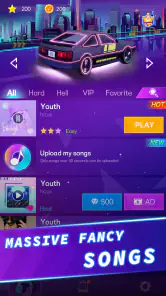
The first thing that struck me about Magic Beat Racing was its unique concept. Imagine racing through a track where the speed and intensity are dictated by the beat of the music. It's not just about speed; it's about timing and rhythm. This game requires you to sync with the music, and let me tell you, it's a game-changer. Each track feels like a new adventure, with its own set of challenges and surprises, all driven by the beat.
Graphics and Soundtrack
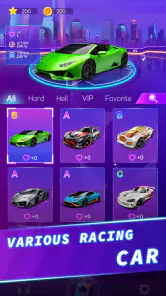
The visuals in the game are nothing short of stunning. The vibrant colors and dynamic environments make each race feel like a visual feast. But what really sets this game apart is its soundtrack. The developers have curated a fantastic mix of tracks that range from upbeat pop to intense electronic beats. The music is not just background noise; it's an integral part of the gameplay. Every twist, turn, and jump is synchronized with the track, making it a truly immersive experience.
Gameplay and Controls
Now, let's talk about the gameplay. The controls are intuitive, and even if you're not a seasoned gamer, you'll find yourself getting the hang of it pretty quickly. The game offers various modes that cater to different skill levels, so whether you're a newbie or a pro, you'll find something that suits you. The challenge lies in mastering the art of timing, as hitting the right beats can mean the difference between winning and losing.
For the first meaningful success, I would count a run where you recognize a cue and respond to it more deliberately than you did at the start. It need not be a perfect score. That gives you a clear next step: repeat the same approach and see whether your timing feels steadier. If the control response still feels unfamiliar, slow down mentally rather than making frantic inputs. Early progress in a rhythm game often comes from knowing when to act, not from acting more often.
When the presentation helps—and when it gets in the way
The racing visuals give the music a sense of movement that a simple rhythm interface may not have, and that can make a familiar kind of timing challenge feel more energetic. The trade-off is that visual motion can compete with listening, especially for someone new to rhythm games. If you find your eyes darting around and your timing slipping, simplify the task: choose one visual cue to track, then let the beat provide the broader rhythm. Players who prefer minimal screens may find a conventional rhythm title easier to read.
It is also worth being realistic about what a music game can offer as a repeat-play habit. The short-run format is appealing when you have only a little time, but repeated attempts can start to feel similar if you are not interested in improving your timing. I would use it in small sessions rather than expecting a long, story-driven evening of play. That makes its compactness a strength, while also setting a sensible limit for anyone who tends to lose interest once the initial novelty wears off.
Why You'll Love It
If you're a fan of rhythm-based games and love the adrenaline rush of racing, this game is a must-try. It's not just a game; it's an experience. The combination of thrilling races and a killer soundtrack will keep you hooked for hours. Plus, it's a great way to discover new music while having fun. The replay value is high, as you'll find yourself wanting to improve your timing and beat your high score.
My recommendation is simple: give it a focused first session, then decide based on how the rhythm-and-racing mix feels to you. It is free to play, so trying it does not require an upfront purchase, and the Everyone rating makes it broadly accessible by age classification. Still, accessibility does not mean it will suit every player: someone sensitive to busy visuals, looking for familiar songs, or expecting simulation-style driving should choose another kind of game. If you enjoy the central idea, keep it as a light, repeatable challenge rather than demanding more depth than it is trying to provide.
In conclusion, Magic Beat Racing is more than just a racing game. It's an innovative fusion of music and speed that brings a fresh twist to the genre. So, if you're ready to race to the rhythm, download it now and let the music take control!
Magic Beat Racing music game Frequently Asked Questions
Can I get Magic Beat Racing on Android or iPhone?
Magic Beat Racing is a mobile music game, but platform availability can differ by store and device. Before downloading, check that the game appears in the official app store you use and that your device meets its requirements. On Android, it is listed for devices running Android 6.0 or later. Downloading through an official store also helps ensure you get the legitimate app.
Who developed Magic Beat Racing, and what kind of game is it?
XGAME STUDIO developed Magic Beat Racing as a music game. Its central idea brings racing together with music, offering a casual experience for players who enjoy rhythm-themed play. The store’s brief description calls it “Magic Beat,” while its longer summary invites players to enjoy the music game. If that combination sounds appealing, the game’s premise is easy to understand before you install it.
Is Magic Beat Racing suitable for children?
Magic Beat Racing has an Everyone content rating, making it suitable for a broad audience, including children. Its music-and-racing format offers an accessible premise, though younger players may still benefit from adult guidance around device use and any optional purchases. The game is free to download, so it is worth reviewing purchase settings on the device if you want to manage spending.
How much storage space does Magic Beat Racing need, and will it run on my phone?
Magic Beat Racing is listed for devices running Android 6.0 or later, so checking your phone’s operating-system version before downloading is a useful first step. The game’s current version is 1.9.2. Available storage can vary as apps and devices change, so make sure your device has room for the download and normal app operation.
Who made Magic Beat Racing, and is it still popular?
Magic Beat Racing is a music game developed by XGAME STUDIO. It has an average rating of 4.2 from around 52 thousand ratings, alongside 99 written reviews, and has passed 10 million installs. These figures suggest that it has reached a broad audience, while individual experiences can still differ depending on a player’s preferences and device.
Pros
- Engaging rhythm-based gameplay.
- Variety of music tracks.
- Smooth and intuitive controls.
- Visually appealing graphics.
- Regular updates with new content.
Cons
- In-app purchases can be costly.
- Ads can interrupt gameplay.
- Requires internet connection.
- Limited offline play options.
- Battery consumption is high.

- Category
- Music
- Version
- 1.9.2