Jigsaw Puzzle Art: Relax Book
- 415.00
- 4.8
- Installs
- 1.00M
- Price
- Free
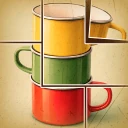
Screenshots
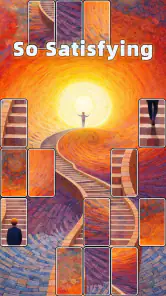

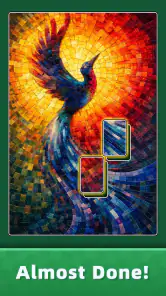
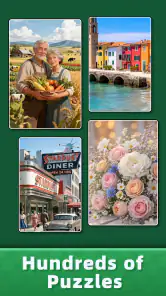

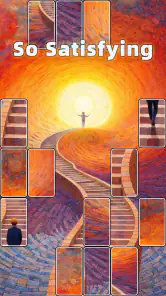

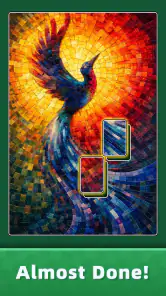
Analysis by Reviewed
I spent time with Jigsaw Puzzle Art: Relax Book as a quiet, low-pressure puzzle game, and its appeal is easy to understand: it turns picture assembly into something you can pick up whenever you have a few calm minutes. It is made by Runyou, belongs to the puzzle category, and is free to play. That combination makes it approachable, especially if you want a simple visual activity rather than a competitive game that demands constant attention.
The important distinction is that this is best viewed as a relaxing pastime, not as a deep strategy title. The central pleasure comes from looking at an image, finding relationships between pieces, and gradually making the picture recognizable. I found that rhythm suitable for short breaks, winding down before bed, or filling an otherwise dull wait. It does not ask me to learn complicated rules before I can enjoy it, which is one reason the Everyone age rating feels appropriate.
How the free experience feels in everyday use
The cost is straightforward: the game is available for free. That gives it an immediate advantage over puzzle products that require an upfront purchase before you can decide whether their style suits you. I could approach it casually, without treating the first session as a financial commitment. For someone who only occasionally enjoys jigsaw puzzles, that free entry matters more than a long list of advanced options.
At the same time, free access should not automatically be confused with unlimited value. A free puzzle game earns its place on a phone by being pleasant enough to return to, and that depends on how well the pictures, controls, and session flow match your habits. My recommendation is to judge it by the quality of the actual solving experience rather than by the fact that it costs nothing. If you want a polished, distraction-free puzzle environment, you should pay attention to how comfortable the game feels during several ordinary sessions.
The game has reached over one million installs and holds an average rating of 4.8 from around twenty-four thousand ratings, with hundreds of written reviews. Those figures suggest that its straightforward approach has connected with a substantial audience, although popularity cannot tell you whether its visual style will be your personal preference. I would treat the numbers as a useful sign of interest, not as a substitute for trying the game yourself.
Runyou has kept the current release at version 1.1.24, and the game was released on November 23, 2025. It supports devices running Android 7.0 or later. That compatibility is helpful for people using older Android hardware, though the final experience can still depend on the phone or tablet’s screen size and general responsiveness. A larger display is naturally more comfortable for identifying small visual details than a compact phone screen.
A practical routine for short sessions
One of the strongest use cases is the small gap in a normal day. Imagine waiting for an appointment with ten minutes to spare. A competitive game might make you worry about stopping halfway through a match, while a long-form adventure may take too much effort to begin. A jigsaw session fits that moment better because the activity is self-contained and visually understandable from the start.
More From Our News Desk
Weather by Xiaomi Review: Clear at a Glance, Less Clear Up Close

X Under Pressure: Can It Recover When Posting Goes Wrong?

Clash of Clans Is Won Between the Battles

Android Auto Makes the Case for Quieter Car Software

MobiOffice: Transforming Mobile Productivity with Seamless Integration

EA SPORTS FC™ Mobile Soccer: Redefining Mobile Sports Gaming
I also found it useful as a transition between demanding tasks. After working or studying, I could spend a little time arranging pieces without switching immediately to another stream of notifications. The act of concentrating on shapes and colors gives the mind a narrower target. That does not make it a wellness tool, and I would not treat it as a replacement for sleep or proper rest, but it can be a gentler alternative to endlessly scrolling through social feeds.
For the best experience, I recommend playing with the screen brightness set comfortably and using a stable grip rather than trying to solve while walking or moving around. Jigsaws rely on visual comparison, so glare, a small display, or a rushed posture can make an otherwise pleasant session feel unnecessarily fiddly. This is a simple adjustment, but it changes the balance between relaxation and frustration.
What makes the picture-based format approachable
The store’s short description identifies it as “Jigsaw Puzzle Art,” and that focus is important. The attraction is not a story campaign, character progression, or a complicated objective structure. The image itself is the reason to continue. I enjoyed the moments when a few correct placements began to reveal a recognizable area, because progress becomes visible without needing a score or a timer to make it meaningful.
That visual feedback also makes the game accessible to people who are new to digital jigsaws. You do not need prior knowledge of puzzle systems. A child, an older relative, or a casual player can understand the basic idea quickly. The Everyone rating reinforces that broad audience, although younger players may still benefit from an adult helping them manage screen time and device use.
There is a useful psychological difference between solving a digital jigsaw and completing a physical one. A phone does not require table space, sorting bowls, or a safe place to leave an unfinished picture. That convenience is the main reason I would choose this kind of app over a traditional box when traveling or during a short break. The trade-off is that the tactile feeling of handling real pieces is gone, so people who love the physical click of cardboard pieces may find the digital version less satisfying.
Small habits that improve the experience
My first practical tip is to avoid treating every session as a race. The game works better when I look for broad visual anchors before chasing tiny details. A distinctive color, a straight edge, or a strong shape can provide a starting point, while similar-looking areas are easier once the surrounding image has begun to form. This approach reduces random tapping and makes the process feel more deliberate.
A second tip is to stop when the activity stops feeling calming. Because the game is built around repetition and visual attention, a tired player may begin forcing progress and turning a relaxing pastime into a chore. Leaving a puzzle unfinished is not a failure; returning later with fresh eyes can be more enjoyable than pushing through a difficult section.
A third useful habit is to choose the device according to the kind of session you want. A phone is convenient for waiting rooms and commutes, but a tablet-sized screen is likely to be more comfortable for longer play because the picture has more room to inspect. That does not change the game’s rules, but it does change how much effort your eyes and fingers need to provide.
Where the value is strong, and where it is limited
The strongest value comes from convenience. A free jigsaw game that starts quickly can replace a physical puzzle when you want something portable and low commitment. It is also easier to fit into irregular schedules: one session can be brief, and another can last longer when you have more time. For casual players, that flexibility may be more valuable than a large collection of complex mechanics.
Its value is weaker for players who need constant novelty or a sense of measurable achievement. If your favorite puzzle games include elaborate progression, competitive leaderboards, timed challenges, or demanding logic systems, a picture-assembly experience may feel too gentle. The same is true if you want a game that rewards mastery with increasingly complex rules. This title’s appeal is its calm accessibility, so its simplicity can also be its main limitation.
Another trade-off is the difference between visual relaxation and visual fatigue. Looking closely at pieces can be soothing when the session is comfortable, but it can become tiring on a small screen or in poor lighting. I would not recommend long, uninterrupted play if your eyes are already strained. Shorter sessions with occasional breaks make more sense, particularly on older phones where the display may not be as easy to inspect.
Because the game is free, it is a sensible first choice for someone comparing digital jigsaws without wanting to pay before testing the basic appeal. However, players who are specifically seeking a premium, highly curated puzzle experience may prefer a paid alternative if they value a more controlled presentation or a different approach to progression. That is not a criticism of this game so much as a reminder that “free” answers the cost question, not every quality question.
How it compares with physical puzzles and other digital options
Against a physical jigsaw, this game wins on portability and storage. I can use it without clearing a table, and there is no risk of losing a cardboard piece between sessions. It is also a better fit for a quick break. The physical alternative wins on touch, scale, and the satisfaction of seeing a completed image occupy real space. If the ritual of sorting and handling pieces is central to your enjoyment, a phone game will not fully replace it.
Compared with competitive mobile games, the experience is less stressful because the picture, rather than another player, remains the focus. There is no need to maintain a winning streak or react to an opponent in real time. That makes it a better choice for quiet evenings and a poorer choice for anyone who wants excitement, social pressure, or fast reactions.
Compared with logic puzzles such as number grids or word challenges, the mental demand feels different. Jigsaw solving depends heavily on visual recognition and spatial matching. Someone who enjoys deduction and rule-based problem solving may find a traditional logic app more stimulating. Conversely, a player who wants a picture-led activity with an immediately understandable objective may prefer this format.
The game also sits between a toy and a mindfulness aid. It can occupy the hands and focus attention, but it should not be presented as a treatment or guaranteed method for reducing anxiety. I liked it as a modest way to slow down, not as something that promises a particular emotional result. That distinction helps set realistic expectations before installing it.
Who should install it, and who should pass
I would recommend it to casual puzzle fans, people who enjoy art-based activities, and anyone looking for a free game that can be played in flexible bursts. It is especially suitable if you prefer clear goals and a calm pace over stories, combat, or complicated menus. Families may also appreciate the approachable premise, provided play time is kept sensible and the device is comfortable for the player.
It is a good match for commuters and travelers who want an offline-feeling style of activity without carrying a physical puzzle, although I would still avoid assuming that every situation is suitable for concentrated screen use. It can also work well as a wind-down option when you want to do something more focused than scrolling but less demanding than a competitive game.
I would skip it if you need a strong narrative, multiplayer interaction, deep strategic systems, or a steady stream of high-intensity challenges. I would also look elsewhere if you are buying specifically for the tactile pleasure of real jigsaw pieces. Players with visual discomfort on small screens may prefer a larger device or a different puzzle format that does not require such close inspection.
Before deciding, ask yourself one practical question: do you enjoy the process of gradually revealing an image, even when there is no dramatic reward at the end? If the answer is yes, the free entry makes this an easy game to try. If you need every session to introduce a new rule or a harder intellectual test, its relaxed design may leave you wanting more.
My recommendation after playing
My overall view is positive, but deliberately modest. Jigsaw Puzzle Art: Relax Book succeeds because it keeps the basic pleasure of assembling an image easy to access. It is portable, free, suitable for Everyone, and compatible with Android 7.0 or later. The broad audience and strong average rating show that many players appreciate this kind of uncomplicated puzzle experience.
The best way to use it is as a small, repeatable break rather than as your only game. Give yourself comfortable lighting, use a larger screen when you plan to play for longer, and let difficult sections wait instead of forcing them. Those choices bring out the relaxing side of the design and reduce the main sources of friction.
My buy-or-skip verdict is simple: install it if you want a free, picture-focused jigsaw for calm short sessions; skip it if you are looking for competition, story, tactile pieces, or demanding logic. It does not need to be more ambitious than that to be worthwhile. For the right player, its restraint is exactly what makes it useful.
Jigsaw Puzzle Art: Relax Book Frequently Asked Questions
Does Jigsaw Puzzle Art: Relax Book work on iPhone or iPad?
Jigsaw Puzzle Art: Relax Book is available for Android devices, with Android 7.0 as its minimum operating-system requirement. If you are choosing a device for the game, check the platform and system requirements before downloading. The game is a casual puzzle option for players who want to fit illustrated pictures together, rather than a title built around fast action or competition.
How much space should I have available before installing the game?
It is sensible to leave some free storage on your device before installing Jigsaw Puzzle Art: Relax Book, as with any mobile game. The amount of space available can affect whether an installation completes smoothly and whether you have room for later updates or additional content. Check your device’s storage before downloading, and remove files or apps you no longer need if space is tight.
Who developed Jigsaw Puzzle Art: Relax Book, and what devices can run it?
Jigsaw Puzzle Art: Relax Book is a puzzle game developed by Runyou. It is available for Android devices, and the listed minimum operating-system requirement is Android 7.0. Before installing, check that your device meets this requirement and has enough available storage for the game. The game is rated Everyone, so its content is intended for a broad audience.
What is Jigsaw Puzzle Art: Relax Book?
Jigsaw Puzzle Art: Relax Book is a casual puzzle game focused on completing illustrated jigsaw puzzles in a calm, relaxing environment. Instead of competing against other players, you assemble pieces to reveal colorful artwork and progress through different collections. It is designed for short sessions or longer play periods, making it suitable for users who enjoy quiet, low-pressure entertainment on Android devices.
Is Jigsaw Puzzle Art: Relax Book free to download and play?
The game is free to download, allowing players to access its core puzzle experience without paying upfront. However, free mobile games may include optional purchases, advertisements, or premium content such as additional puzzle packs, hints, or ad removal. Before downloading, check the store listing for the current pricing model and review any in-app purchase details, especially if children will use the device.
Pros
- Large selection of relaxing artwork and puzzle themes
- Simple controls make pieces easy to move and place
- Adjustable difficulty suits both casual and experienced players
- Offline play is convenient when no internet connection is available
- Completed puzzles provide a satisfying sense of progress
Cons
- Some artwork and puzzle packs may require additional purchases
- Ads can interrupt play
- especially between puzzle sessions
- Small pieces may be difficult to handle on smaller phone screens
- Limited challenge for players seeking competitive or timed gameplay
- Battery usage may increase during longer puzzle sessions
- Category
- Puzzle
- Version
- 1.1.24