Farm Madness: Traffic Jam
- 2.00
- 4.5
- Installs
- 50.00K
- Price
- Free

Screenshots

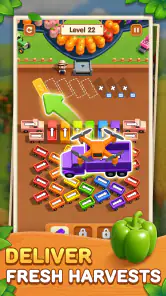
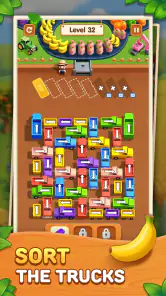

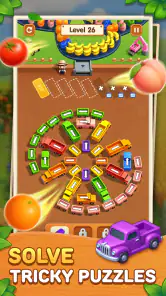

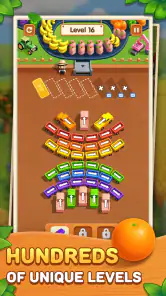

Analysis by Reviewed
Farm Madness: Traffic Jam is the kind of casual game I open when I want a short break rather than a serious gaming session. Its farm setting gives the experience a cheerful surface, but the appeal comes from the changing puzzle tasks: matching colors, sliding trucks, arranging parked cars, and finding ways out of crowded situations. I found it easy to understand within moments, while still offering enough small decisions to stop it from feeling like a completely automatic time-killer.
My overall view is positive, with one important qualification: this is best treated as a compact collection of relaxing puzzle challenges, not as a deep farming simulation or a long-form strategy game. If you enjoy switching between simple puzzle ideas, it has a friendly rhythm. If you want a detailed farm to build, a dramatic story, or a highly demanding brainteaser, its light approach may feel too modest.
How the farm puzzle experience works in practice
The game sits in the casual games category and is free to play. That combination makes sense here because the individual activities are designed around quick decisions. I could pick it up without studying a rulebook, understand the immediate objective, and put it down after a few minutes without losing the thread. The farm theme connects the presentation, while the puzzle formats provide the variety.
The color-matching sections are the most immediately familiar part. They reward looking at the board before touching anything, rather than making the first move that appears convenient. I found that taking a brief pause helped me spot combinations that were less obvious at first glance. That small habit matters because casual puzzles often become frustrating when every move is made reactively.
The truck-sliding challenges bring a different kind of pressure. Instead of simply searching for matching colors, I had to think about space, order, and the consequences of moving one vehicle too early. A useful approach is to identify which truck blocks the most routes and deal with the obstruction that affects the rest of the board. Moving a vehicle just because it is available can leave the remaining layout more awkward than before.
The car-parking puzzles are similarly simple to grasp but more interesting when the spaces become crowded. I recommend treating the parking area like a small planning problem: first identify the cars that can leave freely, then consider which movement opens a route for others. This is one of the more useful lessons in the game because it discourages random tapping and rewards a little forward thinking.
The escape-style tasks complete the mix. They are a good change of pace when matching begins to feel repetitive, and they make the farm setting feel more like a series of playful obstacles than one repeated board type. I liked that the game does not rely on a single puzzle rule for its entire identity. Even when each activity remains approachable, the change in thinking keeps the short sessions from blending together too quickly.
More From Our News Desk

Weather by Xiaomi Review: Clear at a Glance, Less Clear Up Close

X Under Pressure: Can It Recover When Posting Goes Wrong?

Clash of Clans Is Won Between the Battles

Android Auto Makes the Case for Quieter Car Software

MobiOffice: Transforming Mobile Productivity with Seamless Integration

EA SPORTS FC™ Mobile Soccer: Redefining Mobile Sports Gaming
Why the variety matters more than the theme
The farm presentation is pleasant, but I do not think the setting alone would be enough to carry the game. The stronger design choice is placing several familiar puzzle structures under one casual umbrella. A player who enjoys color matching may appreciate the truck and parking stages as breaks from the usual pattern, while someone who prefers movement puzzles can still return to the simpler matching rounds.
That variety also affects how I recommend playing. Rather than expecting a single continuous challenge, I would approach it as a rotation of small mental exercises. When I had only a few spare minutes, a quick board was suitable. When I wanted something slightly more deliberate, the vehicle puzzles gave me a reason to slow down and plan. The game works best when I accept that different sections are meant to create different moods.
One practical tip is to avoid playing every puzzle with the same tempo. Color matching can invite quick recognition, but truck and parking layouts usually benefit from scanning the whole arrangement first. Treating every stage as a race makes the more spatial puzzles unnecessarily messy. I got better results by separating observation from action: look at the available routes, decide on the first two or three useful moves, and only then begin.
A realistic everyday use case
I can easily see myself using this during a short wait, such as before an appointment or while taking a break from household tasks. The game does not require me to remember a complicated story or rebuild a large world after closing it. I can play a small number of puzzles, stop when I need to, and return later for another brief session. That makes it more convenient than a deeper strategy game when my attention is divided.
It also suits a relaxed evening when I want something interactive but not emotionally intense. The familiar farm atmosphere softens the experience, and the puzzle objectives give my hands and mind something to do without demanding a long commitment. I would not choose it for a gaming night centered on competition, but it fits well beside a podcast, a quiet break, or a few minutes of downtime.
A second useful routine is to use the different puzzle types according to energy level. When I am tired, the color-based tasks are easier to approach because the goal is visually immediate. When I feel more alert, the parking and truck layouts are better because they reward planning. This is a small but meaningful strength: the game can provide different levels of mental involvement without requiring a separate title for each mood.
Where the design is strongest—and where it falls short
The clearest strength is accessibility. The game is suitable for Everyone, and its basic ideas are understandable without demanding specialist knowledge. I never felt that I needed to master a complicated control system before enjoying the puzzles. That makes it a reasonable choice for casual players, younger audiences, or anyone who prefers games that explain themselves through the board rather than through lengthy instructions.
Another strength is the balance between recognition and variation. Matching, sliding, parking, and escape puzzles are not completely unfamiliar concepts, but combining them prevents the experience from becoming one-note. The game does not need an elaborate narrative to justify a short session; the changing objectives do that work instead.
I also appreciate that the vehicle challenges encourage a more careful style of play than the store summary might suggest. They are not merely decorative farm activities. When the layout is crowded, one careless movement can affect the options that remain. My best results came from identifying bottlenecks and preserving open space, which gives the game a little more thoughtfulness than a purely reflex-based casual title.
The main weakness is that the light structure may not satisfy players looking for long-term depth. The game offers a collection of approachable puzzle ideas, but I would not approach it expecting a rich progression system, extensive customization, or a detailed simulation of farm management. Its identity is closer to a relaxed puzzle bundle than to a traditional farming game. That distinction is important before downloading it.
There is also a possible repetition issue. Even with several puzzle styles, each individual format is built around a narrow central idea. Players who spend long uninterrupted sessions may notice the underlying patterns sooner than those who play in short bursts. I think the best way to avoid that fatigue is to stop after a natural break instead of forcing a long run. The game is more enjoyable as a frequent small diversion than as an all-day marathon.
Another limitation is the trade-off between simplicity and challenge. The approachable rules make the game welcoming, but experienced puzzle players may find some situations too gentle. If your favorite games demand complex chains of reasoning, precision timing, or highly punishing failure states, this title may feel more like a warm-up than a main event. In that case, a dedicated logic-puzzle game would probably offer a stronger challenge.
Small strategies that improve the experience
For color boards, I found it useful to search for moves that create space rather than only moves that produce an immediate match. Clearing one obvious group can be satisfying, but opening the center of a crowded arrangement often gives better follow-up options. This is especially helpful when the board looks busy and several matches seem equally attractive.
For trucks, I would look for the vehicle that controls access to the largest number of other moves. Freeing a truck that is already isolated may feel productive, but removing a central obstruction can transform the entire puzzle. The key trade-off is that a legal move is not automatically a useful move.
For car parking, I recommend leaving the easiest exit routes available until you know which vehicles depend on them. It is tempting to fill an open space immediately, yet that can create a new blockage. Thinking in terms of entrances and exits rather than individual cars makes these stages clearer.
For escape puzzles, I would first identify the intended direction of movement and then check whether the surrounding objects are blocking one another. Trying to solve the most visible obstruction first is not always efficient. A short visual scan can reveal that a less obvious object is the real reason the route is closed.
These approaches are not complicated tricks, but they change the feel of the game. Instead of tapping until something works, I could make each move with a reason. That added intention is where much of the entertainment comes from, especially for players who like casual games that remain calm without becoming completely mindless.
Who should download it, and who should look elsewhere?
I would recommend it to someone who likes colorful, low-pressure puzzle games and wants several familiar formats in one place. It is particularly suitable for short sessions, casual players, and people who enjoy switching between visual matching and simple spatial planning. Its Everyone age rating also makes it easier to recommend for shared household use, provided each player is comfortable with the game’s straightforward level of challenge.
It may also appeal to players who are curious about vehicle puzzles but do not want a specialized parking game. The truck and car stages provide enough movement-based thinking to make the experience more varied, while the matching rounds offer a softer alternative when the player wants something quicker.
I would skip it if your main reason for choosing a farm game is to grow crops, manage resources, expand buildings, or develop a persistent homestead. Those expectations do not match what I experienced here. I would also point demanding puzzle fans toward a more focused logic title if they want intricate systems and escalating complexity rather than a relaxed mixture of activities.
Compared with a standard color-matching game, this title has the advantage of changing the mental task before repetition becomes the only focus. Compared with a dedicated parking or traffic puzzle, it gives up some specialization in exchange for broader variety. Compared with a farming simulator, it is much easier to start and stop, but it does not offer the same sense of ownership or long-term planning. The right choice depends on whether variety and convenience matter more to you than depth in one specific genre.
Practical details before installing
The game is free, which makes trying it straightforward for anyone who wants a casual puzzle without an upfront purchase. It has passed fifty thousand installs, and its average rating is 4.5 from around eight hundred fifty ratings. Those figures suggest that it has found an audience, although I would still judge it by the kind of play session I want rather than by popularity alone.
Runyou is the developer, and the current version is 1.1.3. The release date is June 11, 2026, while the minimum operating system is Android 7.0. In practical terms, anyone checking compatibility should compare that requirement with the Android version on the device before installing. The game is aimed at broad casual use, but an older phone may still make the experience less comfortable if its screen is small or its touch response is unreliable.
One question many players have is whether the game is worth keeping installed after the first few sessions. My answer is yes if you regularly need a quick distraction and enjoy rotating between puzzle styles. If you only play games that offer a deep campaign or a strong sense of progression, you may run out of reasons to return sooner. Its value comes from convenience and variety rather than from becoming a central hobby.
Another question is whether it is better played quickly or slowly. I strongly prefer a flexible approach: use fast recognition for simple matching, but slow down for vehicle layouts. The game becomes less frustrating when I treat each board according to its rules instead of trying to maintain one constant pace.
It is also worth asking whether the farm theme changes the actual experience. In my view, it mainly provides a friendly frame for the puzzles rather than a separate management layer. That is not a flaw, but it sets the right expectation. If you enjoy the atmosphere and the puzzle variety, the theme works. If you want the farm itself to evolve through player decisions, another type of game would be a better fit.
After spending time with it, I see Farm Madness: Traffic Jam as a pleasant, accessible puzzle sampler with a useful change of pace between matching and vehicle-based challenges. Its strongest quality is the way it turns a short break into several different kinds of small decisions. Its biggest limitation is equally clear: the relaxed, compact design will not replace a deep farming simulation or a demanding specialist puzzle game.
I would recommend it to friends who want a free casual game for brief sessions, especially those who like parking puzzles but do not want to play only parking puzzles. I would tell serious strategy players to keep their expectations modest. For the audience it targets, though, the balance is convincing: easy to enter, varied enough to stay pleasant, and thoughtful enough that a few well-planned moves feel better than random tapping. My verdict is a warm recommendation for relaxed puzzle fans, with variety—not depth—as the reason to install it.
Farm Madness: Traffic Jam Frequently Asked Questions
What kind of phone or tablet does Farm Madness: Traffic Jam support?
Farm Madness: Traffic Jam is listed for devices running Android 7.0 or later, so it may suit older as well as newer Android phones and tablets. Before downloading, check that your device’s operating system meets that minimum. The game is also described for iOS, but device requirements can vary, so check the relevant app store page for compatibility with your Apple device.
What is Farm Madness: Traffic Jam?
Farm Madness: Traffic Jam is a casual puzzle game centered on helping farm animals escape crowded roads and traffic-filled areas. Instead of traditional farming or time-management mechanics, the game focuses on arranging movements, clearing paths, and solving increasingly difficult traffic puzzles. Its colorful farm theme, simple controls, and short levels make it suitable for quick sessions on Android or iOS.
How do you play Farm Madness: Traffic Jam?
The main objective is to guide animals and vehicles through a congested farm environment without causing collisions or blocking the available routes. You generally tap, swipe, or select objects in the correct order to create a safe path. Each level tests your timing, planning, and ability to recognize which animal or vehicle should move first. Later stages introduce more complicated layouts and obstacles.
Is Farm Madness: Traffic Jam free to download?
Farm Madness: Traffic Jam is free to download. Like many casual puzzle games, it may include optional in-app purchases, advertisements, or rewarded videos. Before downloading, check the store listing for the current purchase information, age rating, and any details about advertising or additional paid content.
Can Farm Madness: Traffic Jam be played offline?
Many of the core puzzle levels may be playable without a continuous internet connection, which is useful when traveling or when mobile data is limited. However, certain features—such as advertisements, rewards, cloud synchronization, updates, or promotional events—may require internet access. It is best to launch the game once while connected and confirm which functions remain available after switching to offline mode.
Pros
- Simple controls make it easy to start playing immediately.
- Short levels are convenient for quick gaming sessions.
- Colorful farm visuals give the game a cheerful atmosphere.
- Increasing traffic patterns provide a steady challenge.
- Works well for players who enjoy casual puzzle games.
Cons
- Repeated traffic puzzles may feel predictable after extended play.
- Some levels can depend more on timing than strategic planning.
- Busy scenes may become difficult to read on smaller screens.
- Progression may feel slow for players seeking constant variety.
- Frequent retries can become frustrating when mistakes reset the level.
- Category
- Casual
- Version
- 1.1.3