Cat Beats - Tiles Music Games
- 131.00
- 4.5
- Installs
- 5.00M
- Price
- Free

Screenshots







Analysis by Reviewed
I like rhythm games best when they make a spare moment feel lively without demanding a long commitment. Cat Beats – Tiles Music Games aims for that easy-to-start appeal, pairing a cute cat theme with beat-tapping play and K-pop songs. My first impression is that it is built for quick, cheerful sessions rather than deep practice or a serious music-game challenge. That focus is useful, though it also sets a clear limit: if you want precise rhythm training or a broad instrument-style experience, this may not be the right fit.
A sensible way to test a free game
Before deciding whether it deserves space on your phone, I would treat the first session as a small trial rather than a commitment. Play when you can focus on the beat, then notice whether you want to continue once that short pause is over. This is a better test of value than installing it simply because it is free: what matters is whether its particular combination of cats, tapping, and K-pop suits the way you like to spend a break.
What free access means here
Cat Beats – Tiles Music Games is a free casual game from Runyou. That makes it easy to try without paying upfront, and the game’s Everyone age rating makes its intended audience broad. I would treat “free” as a fact about getting started, not as a promise about every possible cost or the exact shape of the experience over time. The distinction matters: the available price information confirms free access, but it does not establish details about optional purchases or how any such offers work.
The game was released on December 2, 2025, and its current version is 1.1.10. It runs on Android 7.0 or later. Those details help with a practical decision: on a compatible Android device, there is no upfront price barrier to giving it a try. If you are deciding for someone else, the age rating is a useful starting point, but I would still check the game’s screen and sound suitability for that person rather than assuming every family has the same preferences.
Its popularity suggests that plenty of players have been willing to give it a chance: it has over 5 million installs, a 4.5 average rating, and around 15,000 ratings. Those figures are useful context, not a guarantee that its play style will suit you. Rhythm games are particularly personal: some people enjoy bright, forgiving tapping, while others want strict timing and a steeper learning curve.
Where the game earns its value
I find the clearest way to judge Cat Beats is to separate the cost of trying it from the value of continuing to play. It is free to access, so a short first session can answer whether the cats, tapping, and K-pop suit your mood without an upfront payment. From there, I would pay attention to whether it earns a place in your routine, rather than treating popularity as a promise that it will fit everyone.
A low-pressure way to meet the beat
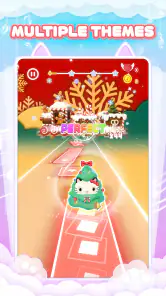
The appeal is straightforward: tap along with music while cute cat imagery gives the experience a lighter personality. That combination makes the game easy to understand even if you do not usually play music games. You can pick it up when you have a few minutes, focus on the beat, and put it down without needing to learn a complicated set of controls first.
More From Our News Desk

Weather by Xiaomi Review: Clear at a Glance, Less Clear Up Close

X Under Pressure: Can It Recover When Posting Goes Wrong?

Clash of Clans Is Won Between the Battles

Android Auto Makes the Case for Quieter Car Software

MobiOffice: Transforming Mobile Productivity with Seamless Integration

EA SPORTS FC™ Mobile Soccer: Redefining Mobile Sports Gaming
That simplicity is not automatically a weakness. A more demanding rhythm game can be satisfying, but it asks for concentration and often rewards repeated practice. Cat Beats is better positioned as a small mood lift: something to play during a short break, while waiting for a friend, or when you want an activity that feels more engaging than scrolling. In those moments, approachable tapping and a playful theme can be more valuable than a deep progression system.
K-pop gives the tapping a musical anchor
The K-pop angle gives the game a more specific identity than a generic sequence of tiles. If you already enjoy that style of music, familiar-sounding songs can make a short session feel more personal. If you are new to rhythm games, the music also gives you a natural cue to follow, rather than making each tap feel like an isolated task.
A practical tip is to decide what you want from a session before you start. If you are there for the songs, pay attention to the rhythm and enjoy the themed presentation; if you want to improve your timing, play when you can give the screen your full attention. Trying to use a music game as background entertainment while doing something else can make missed beats feel irritating instead of fun.
It is strongest as a quick, repeatable break
For me, the clearest use case is a short pause between chores or tasks. A quick round can provide a small change of pace without requiring the planning that a longer game session does. It may also work well as a shared, casual activity for someone who likes cats and pop music, provided they are comfortable with tapping games.
There is a useful trade-off here: games designed for quick access can fit more easily into daily routines, but they may not satisfy a player looking for a long-term skill pursuit. I would approach Cat Beats as a snack-sized game first. That expectation makes it easier to judge whether the experience is doing what you need, rather than comparing it unfairly with a complex rhythm title.
Small routines that suit a tap-based game
One realistic way I would use it is during the few minutes before a bus arrives or while waiting for a takeaway order: choose a moment when I can keep the phone steady, play a short session, and stop when it is time to move. That routine suits a game built around quick attention better than opening it when I need to remain focused on a conversation or watch for a busy crossing. The practical benefit is not just convenience; it is choosing a safe, unhurried moment so the tapping stays enjoyable.
If the music is unfamiliar, I would listen for the pulse first instead of trying to react to every visual cue at once. That gives a new player a simple focus and makes it easier to tell whether the beat itself feels natural. If the screen starts to feel busy, taking a pause is a better choice than turning a casual game into a frustrating test of reflexes.
Trade-offs compared with other rhythm games
The trade-off I would keep in mind is that an easygoing, casual rhythm game serves a different purpose from one built around demanding patterns or serious practice. Cat Beats may be the more enjoyable choice when I want a brief, cheerful distraction; a specialist alternative is better when I want precision, a tougher test, or music beyond its K-pop focus. That distinction makes the choice less about which game is universally best and more about what I want from the next few minutes.
Approachability versus precision
Compared with rhythm games that emphasize dense note patterns, demanding timing, or instrument-like controls, Cat Beats sounds aimed at a gentler entry point. That can be a real advantage for casual players and younger audiences: a cute presentation and simple tapping are less intimidating than a screen full of technical prompts. The flip side is that expert players may want more control, a sharper challenge, or a clearer training path than this kind of casual format is meant to provide.
One way to choose is to ask whether you want to relax or improve. If you want a light music-themed diversion, the accessible concept is a good match. If you want to measure your rhythm skills, learn complex patterns, or work through a demanding difficulty curve, a specialist rhythm game is likely the better alternative. The two styles serve different moods, and the more serious option is not automatically better for a five-minute break.
Music preference shapes the experience
The K-pop focus is a strength for fans, but it is also a filter. Players who rarely listen to K-pop may find that the musical identity does less to draw them in, even if they enjoy the cat theme. Before committing to regular play, I would give the available music a fair try and see whether the songs make you want to tap along. A rhythm game depends heavily on whether its music feels inviting to you.
Another practical point is the setting in which you play. A music-led game is naturally more enjoyable when you can hear the beat clearly, so a noisy commute or a quiet place where sound would disturb others may not be ideal. If you need to play silently, your enjoyment may depend more on watching the cues closely than on following the music. That is not a flaw unique to this title, but it is worth considering before expecting it to work equally well in every situation.
Free to start is not the same as unlimited value
Because the game is free, trying it has little upfront financial risk. The more important question is whether its style keeps you interested. A free game can still cost attention, and a simple rhythm loop can become repetitive if you want constant novelty or a substantial sense of advancement. I would judge its value by whether I naturally return for another short session, not by its install count or rating alone.
For a cautious first try, set a small test: play during one ordinary break and notice whether the tapping feels satisfying, whether the music holds your interest, and whether you want another round afterward. This gives you a better personal answer than trying to infer long-term enjoyment from a store score. If it becomes a pleasant routine, free access makes that especially easy to appreciate; if it does not, you can move on without having paid to discover the mismatch.
When a different game is the better fit
If your main goal is to practice exact timing, compare performance over demanding patterns, or spend a long session mastering a difficult chart, I would look at a more specialist rhythm game instead. Those alternatives put the challenge first; this one is more appealing when cheerful presentation and an easy-to-grasp activity matter more. Likewise, if K-pop is not music you enjoy, another casual music game with a style you actively choose may hold your attention better than trying to make the cat theme do all the work.
There is also a difference between a game for a short pause and one for a shared music session. Cat Beats makes most sense when one person can focus on tapping at their own pace. For a group that wants to trade songs, discuss artists, or turn music into a longer social activity, a music player or a more social game will likely serve that purpose better. Choosing by the moment you want to fill is more useful than expecting one small game to cover every kind of music entertainment.
Who is likely to get the most from it?
I would recommend giving Cat Beats a try if you like casual games, enjoy cute visual themes, or already listen to K-pop and want a simple way to interact with music. It also makes sense for someone who has bounced off more complicated rhythm games and wants a gentler starting point. Since it is free to access and has an Everyone rating, it is an easy candidate to consider for a broad audience, with the usual care around personal preferences and device suitability.
It is less compelling for players who want a serious rhythm-training tool, a highly demanding challenge, or a game whose main draw is a wide range of musical styles. It may also be a poor pick if you dislike tapping games, do not connect with the music, or prefer games with a strong narrative or long-form goals. Choosing a different game in those cases is not settling for less; it is matching the experience to what you actually want.
Runyou has made a clear casual proposition rather than trying to be everything to everyone. The game’s 131 reviews add another small point of context, but I would still use my own first session as the deciding test. A high average rating can indicate broad appeal while leaving plenty of room for individual tastes to differ.
My verdict on the value
Cat Beats – Tiles Music Games is worth trying if a cute presentation, K-pop, and quick beat-tapping sound like a good combination to you. Its strongest value is the easy, no-upfront-cost invitation to play a little music game when you have a spare moment. I would not pick it expecting a demanding rhythm workout or a deep alternative to specialist music games, but that is not the job it seems designed to do.
My recommendation is simple: install it if you want a light, friendly break and are curious about its musical style; skip it if you need precision challenges, a different genre of music, or a more substantial progression experience. The best reason to keep it is not its popularity but the small, repeatable pleasure of tapping along when the mood and setting are right.
A final check before installing
For Android users, the practical compatibility question is whether the device runs version 7.0 or later. Beyond that, I would make the decision based on the sound environment and the person who will play: a K-pop fan who enjoys short, responsive activities is a much more natural match than someone hoping for a quiet, silent game or a complex musical challenge. The Everyone rating makes the intended audience broad, but a parent or caregiver can still preview the experience and decide whether its music and screen activity suit their household.
So I would install it as a low-risk try, not as a promise of a long-term favorite. If one ordinary break leaves you in a better mood and makes you want another round, it is delivering exactly the kind of modest value I would want from a casual game. If you finish that first session and feel no pull to return, there is no reason to force it: pick a different rhythm style, or choose a non-music game that better fits the way you want to relax.
Cat Beats - Tiles Music Games Frequently Asked Questions
What is Cat Beats - Tiles Music Games?
Cat Beats - Tiles Music Games is a rhythm game built around tapping tiles in time with music, with a playful cat-themed presentation. The basic appeal is easy to understand: follow the notes as they appear and try to keep your taps aligned with the beat. Its simple controls make it approachable for casual players, while faster sequences can provide a greater challenge. Check the store listing to confirm which songs and features are currently available.
How do you play Cat Beats - Tiles Music Games?
Gameplay generally involves watching tiles move across the screen and tapping them at the right moment to match the music. Accurate timing helps you maintain a streak and earn a stronger result, while missed or late taps can interrupt your progress. It is worth trying the tutorial or an easier song first, especially if you are new to rhythm games. Headphones may help you hear the beat, though the game can also be played using visual timing cues.
Is Cat Beats - Tiles Music Games free to download and play?
The app may be available to download without an upfront purchase, but that does not necessarily mean every part of the experience is free. Mobile games can include advertisements, optional in-app purchases, or other restrictions, and these details may differ by platform, region, or version. Before downloading, review the current Google Play or App Store listing for pricing, available purchases, and any subscription information so you know what to expect.
Can I play Cat Beats - Tiles Music Games offline?
Offline availability can depend on the app version and how its songs or other content are delivered. Some rhythm games let players revisit downloaded tracks without an internet connection, while other features may require connectivity for loading content, showing advertisements, or saving progress. If offline play matters to you, check the latest store description and test the game with your device disconnected after installation. Do not assume every mode or song will be accessible without internet.
Is Cat Beats - Tiles Music Games suitable for children, and what should parents check?
The cat theme and straightforward tapping controls may appeal to younger players, but suitability depends on more than the visuals. Parents should check the age rating, advertising practices, privacy disclosures, and whether the game offers in-app purchases or links to external content. Rhythm games can also become challenging at higher speeds, so younger children may benefit from starting on easier songs. Review the current store listing and device purchase settings before letting a child download or play.
Pros
- Simple tap controls make it easy to start playing.
- Cute cat visuals give the game a distinctive style.
- Short rounds suit quick play sessions.
- Music and rhythm add variety to the tile-tapping gameplay.
- A casual format makes it approachable for younger players.
Cons
- Fast sections can be difficult for players with slower reactions.
- Repeated retries may make some levels feel frustrating.
- The rhythm gameplay may feel familiar to fans of music games.
- Small tiles can be challenging to tap accurately on compact screens.
- Enjoyment depends heavily on liking the available music.
- Category
- Casual
- Version
- 1.1.10