Hole Rush: Eat All Puzzle
- 2.10K
- 4.8
- Installs
- 1.00M
- Price
- Free

Screenshots
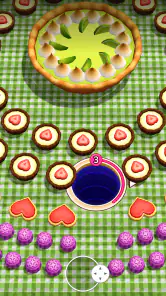
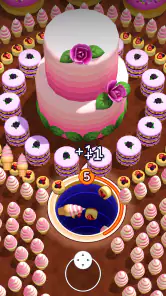
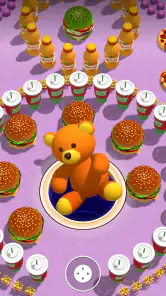
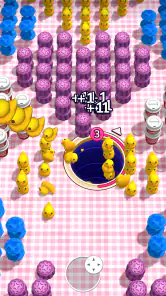
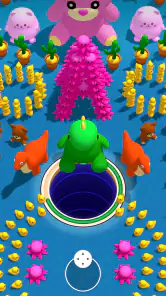
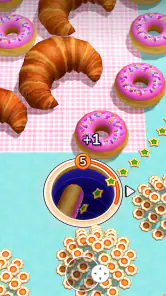
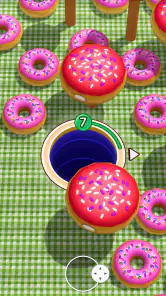
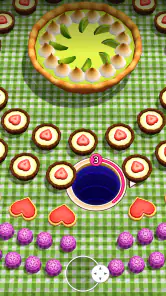
Analysis by Reviewed
I went into Hole Rush: Eat All Puzzle expecting a quick puzzle game built around a simple idea: guide a hole, swallow objects, and keep moving. That basic concept is easy to understand, but the appeal comes from how quickly a small action turns into a satisfying chain of decisions. I am constantly choosing what to absorb first, where to position the hole, and whether a short-term gain will make the next part of a level easier or more awkward.
This is a free puzzle game from Bluetile, aimed at Everyone and available for devices running Android 7.0 or later. It has already passed one million installs, which makes sense once you spend a few minutes with it. The controls are approachable, the rounds are easy to start, and the central mechanic does not require a tutorial-heavy explanation. I can pick it up for a brief break without needing to remember a complicated control scheme.
What makes it more interesting than a basic object-collecting game is the way the hole’s growth changes the board. At the beginning, some objects are out of reach because the opening is too small. After swallowing smaller pieces, I can return to areas that previously looked useless. That gives each stage a gentle rhythm: observe, collect, grow, and revisit. It is simple, but it gives the puzzle structure more purpose than merely sweeping across a screen.
How the eating mechanic becomes a puzzle
The most important thing to understand is that this is not just about moving quickly. The obvious object is not always the best first target. I often get better results by clearing a safe group of small items, then using the larger opening to take on objects that change the route through the level. That makes the game feel closer to a spatial puzzle than an ordinary arcade challenge.
My preferred approach is to scan the whole area before moving. I look for clusters that can be collected without crossing a dangerous or inconvenient path, then plan a loose route rather than chasing the nearest item. This small habit reduces wasted movement and helps preserve the feeling of control. If I rush toward whatever is closest, I can leave scattered pieces behind and spend extra time circling back.
The hole itself is the main source of progression inside a stage. Its changing size is not just a visual reward; it determines what I can interact with next. That creates useful moments of anticipation. I may see a tempting object in the distance, but I know I need to build up gradually before it becomes available. The game works best when I treat the board as a sequence of opportunities instead of a single open space.
There is also a satisfying physical quality to the swallowing action. Objects disappearing into the opening gives every successful movement a clear response, and that feedback makes routine collection feel rewarding. I would not call the mechanic deep in the way a complex strategy puzzle is deep, but it is more deliberate than the store summary alone suggests. The pleasure is in making the board progressively more manageable.
Small decisions matter more than fast fingers
One useful tip is to avoid immediately collecting every small object in a tight area if doing so forces an awkward exit. I sometimes leave one piece behind so I can keep a clean line toward a more valuable group, then return once the hole is larger. This is a minor adjustment, but it prevents the movement from becoming a series of cramped corrections.
Another good habit is to use the edges of the play area as natural boundaries. When I guide the hole along an edge, I can reduce the number of directions from which I need to approach an object. That makes the route easier to read, especially during a short session when I am playing casually rather than trying to complete a stage perfectly.
I also recommend separating collection from exploration. On a first attempt, I focus on learning where the useful groups are and which paths remain open. On a replay, I can optimize the order. This is more enjoyable than restarting repeatedly after every small mistake, because the game’s simple structure rewards learning the layout rather than relying only on reflexes.
Online competition changes the mood
The game also includes online competition, so it is not limited to solitary puzzle solving. That gives the collection mechanic a different purpose. In a relaxed stage, I can concentrate on a clean route and the satisfaction of clearing the board. In a competitive setting, the same actions feel more urgent because efficiency matters more than simply reaching the end.
I see the online element as a useful change of pace rather than the sole reason to play. Players who enjoy comparing performance will probably get more from it than people who want a completely quiet puzzle experience. It can also make mistakes feel more noticeable. A slow turn that seems harmless alone may become frustrating when I am thinking about another player’s progress.
The trade-off is that competition can pull the game away from its most relaxing quality. I prefer the puzzle side when I want a short mental reset, while the competitive side is better when I am in the mood to repeat a familiar type of challenge and improve my decisions. That distinction matters when deciding whether this should become a regular game or remain an occasional time filler.
What is free, and where the value needs a closer look
Hole Rush is free to download and play, so there is no purchase required before I can test the core experience. That is a meaningful advantage for a casual puzzle game. I can install it, try several sessions, and decide whether the swallowing mechanic suits me without committing money upfront.
There are in-app purchases ranging from $1.99 to $99.99 per item. Because the entry price is free, I would treat those purchases as optional spending rather than part of the basic cost of trying the game. The broad range means I would personally avoid buying anything immediately. I would first decide whether I actually enjoy the level design and online competition, then consider whether an optional purchase adds enough value to justify it.
This is where the game’s value depends heavily on the player. Someone looking for a free, quickly understandable puzzle can get a fair opportunity to evaluate it without paying. Someone who dislikes in-app purchase systems altogether may prefer a paid puzzle with one transparent price, even if that alternative offers fewer competitive elements. For me, free access makes the initial decision easy, but it does not automatically make every later purchase good value.
The current version is 2.5.0, and the game has a 4.8 average from around 68 thousand ratings, alongside roughly 2.1 thousand written reviews. Those figures suggest that the basic concept connects with a large audience, but they do not replace personal testing. A high average can tell me that many players enjoy the experience; it cannot tell me whether I will like the pace, the purchase structure, or the competitive pressure.
I would also avoid judging value by the number of installs alone. More than one million installations show that the game has reached a substantial audience, but reach is not the same as long-term suitability. The important question is whether the short sessions, growing-hole mechanic, and online option match the way I normally play puzzle games.
Where the game delivers good value
The strongest value is its low barrier to entry. I do not need to learn a large set of rules before the first meaningful decision. The opening mechanic is clear, and the game gives me an immediate reason to think about order and positioning. That makes it suitable for spare moments when I want something more interactive than scrolling but less demanding than a long strategy game.
It is also useful as a transition game. I can play it for a few minutes between tasks, then stop without losing the thread of a complicated story or campaign. The simple visual goal makes it easy to return after a break. If I am waiting for an appointment or winding down before bed, the puzzle format gives me a focused activity without requiring a large time commitment.
The value is less convincing for players who need constant novelty. The central action remains the same: move the hole, consume objects, grow, and solve the space in front of you. The pleasure comes from applying that loop efficiently, not from a wide variety of unrelated systems. If I want narrative progression, character development, or a deep collection layer, this is probably not where I would spend my time.
Compared with traditional tile-matching puzzles, Hole Rush feels more physical and spatial. I am navigating an area rather than swapping pieces or waiting for a chain reaction. Compared with purely reflex-based arcade games, it gives me more time to plan a route. That middle position is its main identity: it is accessible like a casual game, but its best moments come from thinking ahead.
Everyday use and practical play habits
A realistic use case for me is a short evening session after finishing routine work. I can play without sound being essential to understanding the objective, focus on clearing a few areas, and stop when I no longer feel like concentrating. The game works particularly well in that situation because its goal is visible at all times. I am not wondering what to do next; I am deciding how to do it efficiently.
For a longer session, I would alternate between careful puzzle attempts and online competition. Staying in one mode too long can make the repeated movement feel predictable. Switching modes gives the same core mechanic a different level of urgency. This is one of the more practical ways to keep the game from becoming repetitive too quickly.
If I were introducing it to a child or a family member, I would appreciate the Everyone rating and straightforward controls. I would still explain that optional purchases exist and should not be made casually. The game itself is easy to understand, but the spending decision deserves more attention than the puzzle rules do.
The limitations I noticed
The main limitation is repetition. Once I understand the best general route for a type of board, the act of collecting can become routine. The growing hole provides progression within a stage, but it does not completely solve the feeling that I am performing variations of the same action.
Online competition may also be a poor fit for players who prefer predictable pacing. A solo puzzle lets me pause mentally, inspect the area, and correct my plan. Competitive play encourages faster decisions and can make the experience less restful. I would choose another puzzle game if my priority were calm, uninterrupted problem-solving without any sense of comparison.
The free-to-play structure is another point of friction. Free access is helpful, but the presence of purchases between $1.99 and $99.99 means I would pay attention before spending. I would not assume that a purchase is necessary for enjoyment, and I would not recommend buying simply because the game is fun in its first few sessions. Try the free experience first, then judge whether any optional expense improves your own routine.
Players using older devices should at least check compatibility before installing, since the game requires Android 7.0 or later. That requirement is not unusually demanding, but it is still relevant if the device has been kept for many years. On a compatible phone, the game’s simple control idea should be easy to approach; the more important question is personal tolerance for repetition and optional purchases.
Who should install it, and who should skip it
I think Hole Rush is a good choice for someone who likes casual puzzle games with movement, visible progression, and a little competitive energy. It suits players who enjoy improving a route after learning a board, rather than players who need a completely new rule set in every round. The free starting point makes it especially easy to test without treating the decision as a major purchase.
It is also a good match for people who enjoy satisfying interactions. Watching the hole grow and then return for previously inaccessible objects gives the game a clear sense of momentum. That small loop is enough to make a short session feel complete, particularly when I finish by cleaning up an area that looked impossible at the start.
I would skip it if I want a premium puzzle with a single upfront price and no purchase decisions afterward. I would also look elsewhere if my ideal game is built around wordplay, logic grids, elaborate stories, or long-form strategic planning. Hole Rush is not trying to replace those experiences. Its appeal is immediate movement and spatial planning, not a large intellectual system.
For competitive players, the online mode may be the deciding factor. For relaxed players, it is better viewed as an extra way to vary the pace. I would not install it solely for competition unless I already enjoyed the underlying eating mechanic, because the competitive layer depends on that basic loop remaining fun after the novelty fades.
My verdict on the free download
My recommendation is to try Hole Rush if you want a free puzzle game that can be understood quickly but still rewards better ordering and positioning. The growing-hole mechanic is more engaging than a simple sweep across the screen, and the online option gives the game another mood when solo play starts to feel familiar.
I would keep expectations measured. This is not a deep replacement for a full premium puzzle adventure, and repetition can become the deciding weakness. I would also treat the in-app purchases carefully: free access is the clearest value, while later spending should be based on a specific benefit you personally want rather than on impulse.
Overall, Bluetile has built a focused casual game with a strong first impression and an easy everyday use case. I can recommend it to friends who want short, tactile puzzle sessions and do not mind a free-to-play structure. If that description sounds like you, install it and judge the core loop before spending anything. If you need rich variety or a completely purchase-free experience, skipping it will probably leave you happier.
Pros
- Simple controls make it easy to start playing immediately.
- Short levels are convenient for quick gaming sessions.
- Bright visuals give the game a cheerful
- casual feel.
- Increasing hole size creates a satisfying sense of progress.
- The puzzle format is suitable for players of different ages.
Cons
- Some levels may feel repetitive after extended play.
- Later challenges can rely more on timing than strategy.
- Frequent ads may interrupt the flow for some players.
- The game may offer limited depth for experienced puzzle fans.
- Performance can vary on older phones or tablets.

- Category
- Puzzle
- Version
- 2.5.0