Bus Jam: Car Parking Games
- 689.00
- 4.8
- Installs
- 5.00M
- Price
- Free

Screenshots

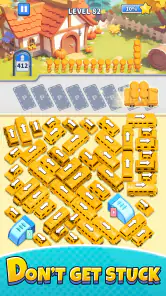
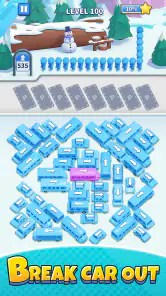
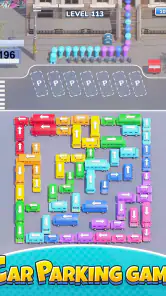
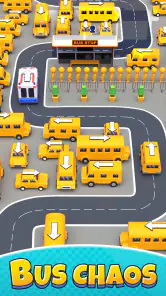
Analysis by Reviewed
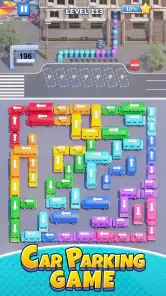
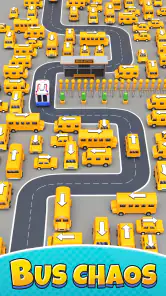
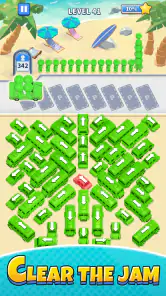
I like puzzle games that make me pause and plan rather than just tap quickly, and that is the appeal of Bus Jam: Car Parking Games. Its central challenge is arranging a crowded bus scene so passengers can board the right buses and traffic can move. That gives it a different feel from a conventional parking simulator: the fun comes from working out the order of moves, not simply steering one vehicle into a bay.
A simple routine that rewards looking ahead
My best approach is to take a moment before making the first move. I scan which buses can leave, which passengers are waiting, and what might be blocking the next useful move. In a puzzle built around buses and a jammed scene, a move that looks productive can still close off space needed a moment later. Thinking one or two steps ahead is more reliable than reacting to whichever vehicle seems easiest to move.
This makes the game a good fit for short breaks: I can work through a puzzle at my own pace, stop when I need to, and return when I have a few minutes. It suits someone who enjoys untangling a compact problem more than chasing a racing time. If I were looking for realistic driving practice, open-road exploration, or a story-led game, I would choose something else; this is about clearing a puzzle, not learning to drive a bus.
How the puzzles fit everyday play
A realistic use for me is a quiet wait at a station or a few minutes before an appointment. I can focus on one board, try a move, and reconsider the layout without needing a long session. The main trade-off is that a puzzle can take longer than expected when I make an early move that blocks the sequence. I treat that as a cue to slow down, not as a reason to rush through more taps.
First Impressions Matter
When I first downloaded Bus Jam: Car Parking Games, I was intrigued by its colorful interface and straightforward navigation. The game’s design is visually appealing, with crisp graphics and smooth animations that really draw you in. It's like stepping into a mini world where your primary mission is to master the art of bus parking. And let me tell you, it’s not as easy as it sounds!
Before getting attached to it, I would also consider practical fit. It is a free puzzle game from Joymaster Puzzle Game Studio, rated Everyone, and it has a 4.8 average from around 104,000 ratings, with over 5 million installs. The current version is 1.1.1, and the game requires Android 7.0 or later. That makes it easy to understand why it attracts a broad audience, but popularity alone does not make every puzzle style enjoyable: players who dislike trial-and-error or prefer direct action may find its careful sequencing less satisfying.
Gameplay and Mechanics
The gameplay is where Bus Jam truly shines. You start with simpler levels that help you get the hang of the controls. These intuitive controls are designed so even the newbies can catch on quickly. You’ll be twisting and turning your bus in all sorts of directions, trying to park in the tightest of spots without a scratch. The variety of levels keeps things fresh and exciting, with each stage presenting new obstacles and tighter parking spaces. It's a real test of patience and precision, but in the most enjoyable way!
More From Our News Desk

Clash of Clans Is Won Between the Battles

Android Auto Makes the Case for Quieter Car Software

MobiOffice: Transforming Mobile Productivity with Seamless Integration

EA SPORTS FC™ Mobile Soccer: Redefining Mobile Sports Gaming

How Microsoft OneDrive Became a Mobile Productivity Giant

How Google Translate Breaks Language Barriers Effortlessly
For a more deliberate routine, I avoid repeating the same failed sequence without learning from it. If a move creates a blockage, I mentally mark that relationship and test a different order next time. This small habit is more useful than tapping faster: it turns a retry into information about the board. When a level feels crowded, I look for moves that preserve options rather than only moves that immediately clear a bus or passenger.
There is also a meaningful distinction between this and the usual alternatives in the puzzle category. A classic sliding-block parking game tends to make vehicle positioning the whole challenge; here, the passenger-and-bus objective gives the order of departures an extra job to do. That added layer is satisfying when the pieces fall into place, though it can feel less transparent if you prefer puzzles with a single obvious target. I would recommend it to people who enjoy sorting and sequencing, not to someone expecting a full traffic-management simulation.
What I love about this game is the realistic physics. The buses handle differently based on their size and weight, adding a layer of realism that makes each parking attempt feel authentic. Plus, the sound effects and background music are perfectly tuned to enhance the gaming experience without being overwhelming. It’s just you, your bus, and the road.
Challenges and Levels
As you advance, the game introduces increasingly complex challenges. Narrow alleyways, sudden turns, and unexpected obstacles keep you on your toes. Each level demands strategic thinking and quick reflexes, ensuring that you’re constantly engaged. The satisfaction of finally parking that bus after several attempts is what makes this game so addictive!
One practical limit is that a puzzle-first game can become frustrating if I am tired or only half paying attention. A hurried choice may leave me unsure why the layout became harder, so I get more from it when I can give the board a little focus. I also would not choose it as a substitute for a deep strategy game: its appeal is the bite-sized challenge of arranging a bus scene, rather than a long campaign or a broad set of systems to manage.
It is worth checking the purchase details before deciding how to play. The game is free to download, while optional in-app purchases range from $0.99 to $99.99 per item. I would treat spending as a personal choice rather than part of the basic puzzle routine; anyone who prefers to avoid optional purchases can simply keep that boundary in mind. The game has 689 reviews, but I find the actual puzzle rhythm a more useful guide than review counts when deciding whether this particular style suits me.
Moreover, the developers frequently update the game with new levels, ensuring that even veteran players have something to look forward to. The added challenges mean there’s always a new level to conquer and a new high score to set. It’s this dynamic nature that keeps players coming back for more.
Why You Should Try It
If you’re someone who enjoys games that test your skills and patience, Bus Jam: Car Parking Games is definitely worth downloading. It’s not just about parking a bus; it’s about mastering a craft. The game is perfect for short bursts of play during your commute or while waiting in line. Plus, it’s a great conversation starter when you tell your friends you’ve become a virtual bus parking pro!
For a first session, I would focus on learning how each move affects the whole queue instead of trying to clear a level as quickly as possible. If I keep getting stuck, I step back and inspect which bus or passenger is constraining the next move, then change one part of the sequence at a time. That makes it easier to tell whether a new plan helped. It is a simple, repeatable way to improve without assuming there are special shortcuts or hidden mechanics.
In conclusion, Bus Jam offers a delightful mix of challenge and fun, wrapped in a package that’s easy on the eyes and addictive to play. Whether you’re a seasoned gamer or just looking for something new to pass the time, this app deserves a spot on your phone. So why not give it a spin and see if you’ve got what it takes to be the ultimate bus parking champion?
Making a short session count
The game works best for me when I treat a level as a small logic exercise rather than something to clear between two distracted glances. In an everyday situation, such as waiting for a delayed appointment, I can inspect the queue first, make a careful move, and pause if I am called away. On returning, I can reassess the visible positions rather than relying on a memorized chain of taps. That makes the format flexible, although it is less suited to moments when I cannot give even brief attention to the board.
A useful habit is to separate observation from action. Before moving anything, I identify the immediate goal and note which bus or passenger seems to be holding up progress. Then I make one move and check how the available choices changed. This is a modest discipline, but it helps distinguish a genuinely useful move from one that merely makes the scene look less crowded. It also reduces aimless retries without requiring a special shortcut or an assumed hint system.
Who will enjoy the bus-and-passenger logic
I would put this in front of someone who likes untangling queues, organizing objects, or finding a workable order under tight space constraints. It can also suit a casual player who wants a focused task rather than a large game world to explore. The bus theme gives the puzzle a clear visual identity, while the need to match passengers with departures prevents it from feeling exactly like moving blocks around a parking lot.
On the other hand, I would steer away from it if your favorite part of a driving game is acceleration, precise steering, or exploring roads. The central pleasure here is planning a sequence; it is not a substitute for a driving simulator. Nor is it the best pick if you want a strategy game built around long-term resource decisions. A conventional sliding-car puzzle may be a better choice if you want the spatial arrangement to be the only concern, while a traffic-management game is a closer fit if you want to control a larger flow of vehicles.
The distinction matters because the passenger objective can make the right next move less obvious than simply opening a path. I try to ask not only “What can move now?” but also “What will that movement allow afterward?” That question is particularly helpful when several buses seem accessible. It keeps me from spending a move on the most visually tempting option when a different departure may preserve more room for the rest of the sequence.
Useful checks before settling in
The game is free to start, which makes trying its puzzle style a low-commitment decision, but optional purchases are part of the experience. I would decide in advance whether I want to spend anything and keep that choice separate from the urge to get past a stubborn board. The listed purchase range runs from $0.99 to $99.99 per item, so it is sensible to be deliberate rather than treating every purchase prompt as a necessary step. The basic appeal is the board-solving itself; I would not assume that paying is required to enjoy the core idea.
For device fit, the Android minimum is version 7.0, and the game is also presented as suitable for Everyone. Those details make it approachable for a broad audience, but the puzzle’s patience requirement still matters more than the age label when choosing it for a particular person. I would show a child how to look at the full scene before tapping, since the useful lesson is about thinking through consequences, not simply moving quickly. The interface is straightforward enough to invite experimentation, but a little guidance can make early attempts less random.
One question people often have is whether they need to play for a long stretch to make progress. I find the compact puzzle format naturally compatible with brief sessions, but a level can outlast the time I expected if I have to rethink the order. Another practical question is whether repeated attempts are worthwhile: they are, provided I change my reasoning rather than replaying the same sequence. If a retry teaches me which move caused the bottleneck, it has served a purpose even when it does not immediately solve the board.
Where the challenge can stop being relaxing
There is a fine line between a satisfying jam and an irritating one. When I am alert, the need to consider space and passenger order gives each choice weight. When I am tired, that same demand can feel like needless friction, especially if I have already made a move that leaves fewer obvious options. I would not use it as background entertainment while doing something that needs constant attention; it rewards looking at the arrangement, not playing on autopilot.
It is also worth keeping expectations measured about variety. New levels and tighter situations give the puzzle a reason to continue, but the basic loop remains focused on moving buses, organizing boarding, and clearing a blocked scene. Players who want new mechanics or a big change of pace from one session to the next may eventually want another genre alongside it. I see that focus as both the game’s strength and its limit: it gives the puzzles a recognizable identity, but it does not turn them into a broad simulation.
A fair way to judge whether it suits you
My recommendation is to judge the first few boards by how much you enjoy planning, not by whether every attempt goes smoothly. If you like spotting dependencies and adjusting a sequence, the game has a clear hook. If you find yourself wishing the buses would simply drive freely or that the levels had a story to carry you forward, that is a useful sign that another kind of game may be a better use of your time. The 4.8 average and more than 5 million installs show that it has found a wide audience, but personal fit still comes down to whether this particular kind of reasoning feels rewarding to you.
Overall, I see this as an easy game to try and a more specific game to stick with. It is a pleasant choice for a short pause when I want a visual puzzle with a concrete goal, and its passenger-and-bus setup makes it stand apart from ordinary parking-block challenges. I would recommend it to patient puzzle fans who enjoy testing an order of moves, while suggesting that action-focused players look elsewhere. The best sessions are the ones where I slow down, protect future options, and enjoy finding a clean way through the jam.
Bus Jam: Car Parking Games Frequently Asked Questions
What kind of game is Bus Jam: Car Parking Games, and who might enjoy it?
Bus Jam: Car Parking Games is a puzzle game built around matching passengers with buses, solving parking puzzles, and clearing traffic jams. It may appeal to players who enjoy thinking ahead and working through crowded layouts one move at a time. The focus is on planning and puzzle-solving, so it offers a different kind of challenge from games centered on fast driving or racing.
Who developed Bus Jam: Car Parking Games, and how popular is it?
The game is developed by Joymaster Puzzle Game Studio and has attracted a substantial audience. It has over 5 million installs, an average rating of 4.8 from around 104,000 ratings, and 689 reviews. Those figures can give prospective players a sense of its reach, though the best way to decide whether its puzzle style suits you is to try the free game yourself.
Does Bus Jam: Car Parking Games have a tutorial for new players?
New players can get familiar with the game by starting with its parking and passenger-matching puzzles, which introduce the central idea of directing buses and clearing traffic jams. The challenges focus on working out the right moves rather than mastering complicated driving controls, making the game approachable if you are new to this kind of puzzle. As you play, later stages provide more demanding situations to solve.
How does the passenger-matching puzzle gameplay work?
Bus Jam: Car Parking Games combines parking puzzles with matching passengers to buses. You need to consider how buses move through a crowded layout and how to clear the traffic jam while getting passengers onto the appropriate buses. This means each level is a small planning challenge: choosing a sensible sequence of moves matters, and rushing without considering the space around the vehicles can make a puzzle harder to solve.
What is the main objective of Bus Jam: Car Parking Games?
Bus Jam: Car Parking Games is designed to challenge users with intricate parking scenarios where they must navigate buses through tight spots and complex traffic patterns. The main objective is to park your bus precisely without hitting obstacles, testing your driving and spatial skills. The game’s store summary also describes matching passengers with buses and clearing traffic jams. This game offers a variety of levels, each increasing in difficulty, to keep players engaged and entertained.
Pros
- Intuitive controls make gameplay accessible.
- Variety of levels keeps players engaged.
- Realistic graphics enhance the experience.
- Suitable for all ages
- fun family game.
- Offline mode available for on-the-go play.
Cons
- Ads can be intrusive and frequent.
- Limited customization options for cars.
- Repetitive challenges may bore some players.
- In-app purchases can be expensive.
- Occasional bugs affecting game performance.

- Category
- Puzzle
- Version
- 1.1.1