Bubble Word Jam
- 1.93K
- 4.6
- Installs
- 1.00M
- Price
- Free
Screenshots

Analysis by Reviewed
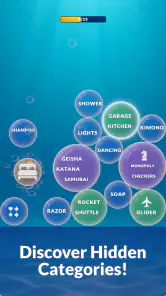
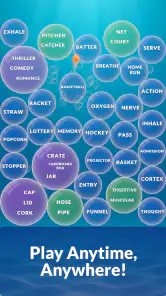
Bubble Word Jam gives word puzzles a playful, tactile spin: instead of only scanning a grid of letters, you work with bubbles and try to make sense of how words and categories fit together. I like that this premise gives a familiar kind of brain teaser a clearer visual identity. It feels suited to a quick break, when I want something more active than a plain word search but don’t have the time or focus for a long game.
That visual hook also sets expectations. This is a casual word game, not a deep vocabulary course or a sprawling story-driven adventure. Its appeal rests on the small satisfaction of spotting a connection, making a move, and seeing the puzzle respond. If you enjoy word challenges but find traditional letter grids a little flat, Bubble Word Jam offers a more animated way to engage with them.
A bright visual language for wordplay
Why the bubbles matter
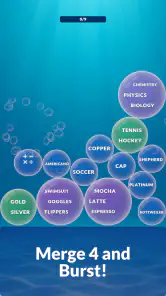
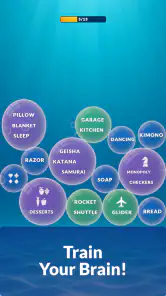
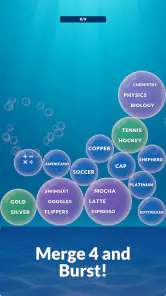
The bubble theme is more than a decorative label: it gives the act of sorting and solving a physical, easy-to-read feel. A word puzzle can become tiring when every clue looks like another block of text. Here, the central image suggests movement and a moment of release, which helps the experience feel light even when a category takes a few tries to work out.
I find that kind of presentation especially useful when playing in short bursts. The screen’s central task is easy to understand at a glance, so I don’t need to settle in for a complicated tutorial before I can enjoy a round. The game’s own premise is about combining categories and solving word puzzles, and that combination gives the activity a little more structure than simply guessing isolated words.
There is a trade-off, though. Players who prefer a restrained interface, dense word lists, or the feeling of working on paper may find the bubble presentation less satisfying than a classic crossword or word search. The visual style is part of the game’s identity, but it also means the experience is aimed at people who like their puzzles to feel playful rather than austere.
A setting that stays focused
Bubble Word Jam does not need an elaborate fictional world to make its premise work. Its mood comes from the visual language of bubbles and the simple goal of finding useful word relationships. That focus helps keep attention on the puzzle itself instead of asking me to remember a story, manage a character, or learn a separate set of world rules.
For me, that makes the game easy to pick up when my attention is divided. I can play a little while waiting for a kettle to boil or during a quiet pause between tasks, then put it down without feeling that I have abandoned a complicated plot. The limitation is equally clear: anyone looking for characters, narrative surprises, or a sense of exploration should choose a different kind of game.
The design works best when I treat each puzzle as a small exercise in noticing how words belong together. It is less about memorizing definitions and more about recognizing a pattern. That distinction matters if you are choosing between this and a vocabulary trainer: Bubble Word Jam is aimed at casual puzzle-solving, while a dedicated learning app may be a better fit for systematic practice.
Sound, rhythm, and short sessions
The game’s bubble-centered idea naturally suggests a satisfying pop as part of its mood, and that gives the puzzle a sense of response rather than leaving it as a static screen. The important point is the rhythm: a thought, a choice, and a bit of feedback. That loop is a good match for short sessions because it can make a small amount of progress feel complete.
I would not choose it primarily as a music or sound-design experience. The draw is the word challenge, with the presentation helping each action feel lively. If you often play with your phone muted—in a waiting room, on public transport, or while someone else is asleep—the basic appeal still comes from seeing the puzzle and making connections. The game’s identity is not dependent on a dramatic soundtrack or a story told through audio.
A useful way to keep the pacing enjoyable is to stop after a satisfying solve rather than turn every session into a test of endurance. Word games can become frustrating when I keep pushing through a puzzle after my attention has gone. Here, the casual framing makes it natural to play in small stretches. If you want a long, escalating challenge that demands sustained concentration, a more extensive puzzle game may suit you better.
How the mechanics fit the mood
At its core, Bubble Word Jam asks players to solve word puzzles and bring categories together. That gives the game two kinds of mental work: finding plausible words and deciding which ideas belong in the same group. I like this pairing because it can make a familiar word task feel less repetitive. A good solve is not only about knowing a word; it is also about seeing the organizing idea behind it.
One practical tip is to pause before committing to a connection and ask what broader theme could link the words you are considering. That small change in approach can help when a puzzle seems to have several plausible answers. Rather than guessing rapidly, I find it more useful to look for the shared category first, then test whether the individual words support it. This is a general solving strategy, not a promise that every puzzle has only one obvious route.
Another helpful habit is to treat a mistaken guess as information about the category, not as a reason to rush. If a grouping does not feel convincing, reconsider the relationship: are the words linked by meaning, use, or another recognizable theme? Taking a moment to name the connection in your head can make the next choice clearer. This approach is especially useful for players who enjoy language puzzles but sometimes get stuck between two possible interpretations.
The game is a better fit for relaxed pattern recognition than for competitive wordplay. Someone who wants to race an opponent, build a large vocabulary through lessons, or tackle intricate crossword clues may find the central loop too light. In contrast, players who like approachable puzzles with a visible, playful presentation are more likely to appreciate its balance of word knowledge and categorization.
Who will enjoy it—and who may not
I would recommend Bubble Word Jam to casual puzzle fans, people who enjoy spotting categories, and anyone looking for a low-commitment game to open during a spare moment. It can also work well for players who want a change from word searches: the emphasis on merging related ideas gives each puzzle a different kind of mental prompt. The Everyone age rating makes its intended audience broad, though younger players will still get the most from it if they enjoy reading and grouping words.
I would steer away from it if your ideal word game is a serious test of spelling, an expansive crossword, or a structured course with lessons and progress goals. It is also not the best pick if you want a game built around a detailed setting or character development. Those are not shortcomings so much as different priorities. Bubble Word Jam keeps its attention on accessible word puzzles and the visual pleasure of solving them.
Compared with a standard word search, it asks for more interpretation than scanning rows for a hidden term. Compared with a crossword, it is less centered on clues and intersecting answers. That puts it in a useful middle ground for people who want language-based thinking without the formality of a newspaper puzzle. If you prefer either extreme—the calm repetition of a simple search or the precision of a demanding crossword—those alternatives may be more satisfying.
Practical details before you play
Lion Studios Plus developed this free word game, and its broad reach suggests it has found an audience: it has over a million installs and a 4.6 average from around 43,000 ratings. Those figures make it easy to see why a casual player might give it a try, but they should not replace the more important question: do you enjoy category-based word puzzles presented with a bubbly, animated feel?
There are in-app purchases, priced from $0.99 to $99.99 per item, so “free” describes the starting price rather than every possible purchase. I recommend deciding in advance whether you are comfortable with optional spending and checking any purchase prompt carefully. If you only want to try the core experience, you can begin without treating an upgrade as a necessary part of the game.
The game was released on September 8, 2025, and its current version is 1.5.0. It requires Android 7.0 or later. Those details are worth checking before downloading, especially if you are using an older device. For most people deciding whether the game is worth opening, though, the more meaningful question is whether its particular blend of words, categories, and visual feedback sounds enjoyable.
One everyday use case is a short wait when I want to keep my mind lightly occupied without starting a demanding game. I can focus on a word relationship, try a grouping, and move on when I have had enough. That makes it a reasonable companion for brief breaks, while someone looking for a long session with layered goals may prefer a larger puzzle collection or a more involved word game.
A measured recommendation
What I appreciate most is that Bubble Word Jam gives a familiar mental activity a distinct, cheerful identity without asking players to learn a complicated world around it. The category element adds a useful twist, and the bubble presentation supports a quick, readable rhythm. Its strongest moments come when I pause, recognize the link between words, and feel the puzzle click into place.
Its limits are just as important to acknowledge. The light, casual approach will not satisfy every word-game fan, and its central appeal depends on liking visual feedback and category-based solving. It is not a substitute for a crossword, a vocabulary curriculum, or a narrative adventure. If those are what you want, another option will serve you better.
For a friend who enjoys approachable word puzzles and wants something easy to dip into, I would give Bubble Word Jam a try. It is free to start, broadly accessible, and built around a clear idea rather than a pile of unrelated systems. Go in expecting short, playful bouts of word-and-category thinking, and the game’s mood and mechanics make a coherent match.
Bubble Word Jam Frequently Asked Questions
What is Bubble Word Jam, and how do you play it?
Bubble Word Jam is a word puzzle game that combines letter-based challenges with bubble-popping mechanics. The main goal is generally to find or form words using the letters presented in each level, then clear bubbles or other obstacles to progress. Its exact objectives and available modes can vary by version, so check the in-game instructions when you start. It is a good fit for players who enjoy casual puzzles and short, level-based sessions.
Is Bubble Word Jam free to download and play?
The game may be available to download for free, but that does not necessarily mean every feature or item is free. Mobile puzzle games commonly offer optional in-app purchases, such as boosters, extra moves, or other conveniences, and may also include advertisements. Before installing, review the store listing for the current pricing and purchase information. If a child will be playing, consider setting purchase controls on the device to help prevent unintended spending.
Does Bubble Word Jam require an internet connection?
Whether Bubble Word Jam works offline can depend on the app version and the feature you want to use. Basic levels may be playable without a connection in some releases, while advertisements, purchases, event content, or progress syncing may require internet access. If offline play matters to you, check the game’s store description and test a level with your device disconnected. Avoid assuming that all modes and rewards will remain available offline.
Is Bubble Word Jam suitable for children?
Bubble Word Jam’s word puzzles and simple match-style play may appeal to a broad range of ages, but suitability depends on the child and the current version of the app. Review the age rating, privacy details, advertising disclosures, and in-app purchase information on the relevant app store before downloading. Younger players may benefit from adult supervision, especially if ads or purchase prompts appear. You can also use device-level parental controls to manage spending and screen time.
Can I save my progress or transfer it to another device?
Progress-saving and transfer options depend on the version of Bubble Word Jam and the platform you use. Some games save progress locally, while others offer cloud or account-based syncing; these methods can have different requirements and may not transfer between Android and iOS. Look in the game’s settings for account, backup, or restore options before changing devices or reinstalling. If you cannot find a clear backup method, assume that uninstalling could remove locally stored progress.
Pros
- Easy-to-learn word puzzles make it approachable for casual players.
- Short rounds fit well into quick breaks.
- Combines vocabulary practice with light
- accessible gameplay.
- Bubble-based mechanics add a visual twist to word searching.
- Progressive challenges can keep experienced players engaged.
Cons
- Some puzzles may feel repetitive after extended play.
- Later levels can be difficult without hints.
- Frequent ads may interrupt the flow of play.
- Small letters or targets may be harder to tap on compact screens.
- Requires an internet connection for some features or rewards.
- Category
- Word
- Version
- 1.5.0