Brick Blast - Ball Breaker
- 734.00
- 4.8
- Installs
- 5.00M
- Price
- Free
Screenshots
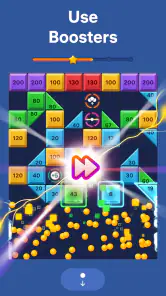
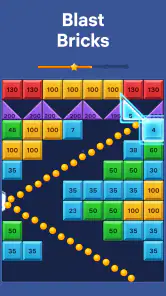
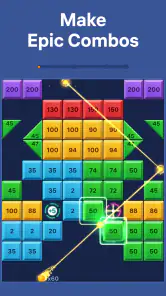
Analysis by Reviewed
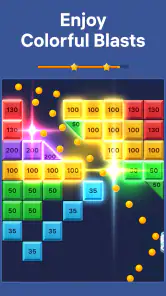
I picked up Brick Blast - Ball Breaker expecting a familiar time-killer, and that is exactly where its appeal begins. It is a puzzle game from Easybrain built around a simple action: aim a shot, send balls into a field of bricks, and try to remove the board before the arrangement becomes too difficult to manage. The idea is easy to understand in seconds, but the decisions become more interesting once I stop treating every shot as a quick tap and start looking for angles, rebounds, and the safest way to keep the next turn playable.
The game is free to download, carries a Teen content rating, and runs on Android devices using version 8.0 or later. Its current version is 1.9.0, and it has already passed five million installs with an average rating of 4.8 from roughly eighty-four thousand ratings. Those figures suggest that the straightforward format has found a large audience, but they do not tell me whether it is right for every player. After spending time with it, I see it as a compact puzzle for short bursts rather than a deep replacement for a full strategy game.
One shot is simple; choosing the right shot is not
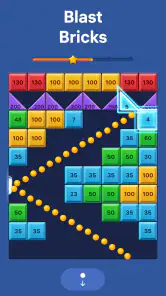
The first action is deliberately uncomplicated. I point toward the brick formation and release the balls. They travel, collide, bounce, and gradually reduce the obstacles in their path. That opening move gives the game an immediate physical quality: I am not merely selecting a tile or matching colors; I am trying to predict how a line will behave after it touches several surfaces.
That distinction matters because a direct hit is not always the best hit. A brick near the front may be tempting, but an angle that reaches deeper into the formation can create more useful contact during the same turn. I found myself looking for paths that enter a crowded area, bounce across several targets, and return toward the starting side. The best shots are not necessarily the most dramatic ones. They are the shots that leave the board in a shape I can still read afterward.
This makes the opening seconds more thoughtful than the store summary suggests. The controls are accessible enough for a casual player, yet the board asks for a small amount of planning before every launch. I can play with one hand while waiting for a drink or standing in a queue, but I still have a reason to pause briefly and inspect the available angles.
My most useful habit was to stop aiming at the largest visible cluster automatically. I first checked whether a shot could pass behind a stubborn brick, touch several targets, and return through an open lane. That approach often produced a better follow-up position than simply attacking the nearest obstacle. It is a small change, but it turns random firing into a repeatable decision process.
The board rewards geometry more than speed
Players coming from match-three puzzles may need a short adjustment period. In a match-three game, I usually search for a combination that is already visible. Here, the result depends on the route I choose and the way the balls move through the board. I have to think one turn ahead, sometimes two, especially when a difficult brick is positioned where it can restrict future options.
The game is also different from a traditional arcade brick breaker. I am not steering a paddle continuously at the bottom of the screen. The important moment happens before the launch, when I commit to an angle. That makes it calmer than a reflex-heavy arcade game, although the board can still create pressure when the available space becomes narrow.
For someone who wants immediate action with no planning, this may feel slower than expected. For me, the short aiming pause is what gives the loop its personality. The game does not ask me to master complicated controls. It asks me to read a small tactical problem and accept the consequences of my choice.
Why the impact feels satisfying
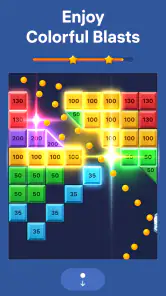
The feedback rhythm is the heart of the experience. I aim, release, and then watch the result unfold through a chain of collisions. Each contact confirms that the shot is doing useful work, while an unexpected bounce can reveal a better or worse position than I anticipated. The waiting period is brief, but it gives every launch a clear beginning, middle, and end.
That rhythm is more rewarding than simply watching a number rise. I can see which lane opened, which group of bricks weakened, and where the next attempt will need to go. A good turn changes the board visibly. A poor turn also teaches me something because it shows exactly which angle failed to reach the area I wanted.
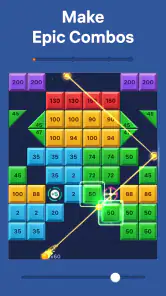
I especially liked the moments when a shot continued working after the obvious first target had disappeared. A ball that enters a useful corridor can keep producing contacts, and that creates a satisfying sense of momentum. It feels as if I found a route rather than merely pressed a button. The game’s strongest feedback comes from these compound turns, where one decision produces several small confirmations.
There is a trade-off, though. The same bouncing action that makes successful shots enjoyable can make a bad shot feel longer than it deserves. If I choose a weak angle, I still have to watch the balls complete their movement before I can try again. That is not a serious problem during a good run, but it can add friction when I already know the turn has not worked.
Small decisions that improve a run
I learned to treat open space as a resource. Clearing bricks is important, but preserving a usable route for the next launch can be more valuable than removing one extra target immediately. When the board becomes crowded, an aggressive shot that leaves no reliable return path may create trouble even if it scores well in the moment.
Another practical tip is to look for the angle that produces repeated contact rather than the angle that appears most direct. A straight approach can stop at the first layer, while a banked shot may reach the back and then sweep across the lower section. I do not need perfect mathematical precision; I only need to compare two or three plausible paths before committing.
I also found it useful to use the end of a turn as a planning screen. Instead of tapping immediately when the balls finish, I take a moment to identify the most dangerous brick and the widest available lane. This prevents the familiar mistake of reacting to the last collision rather than assessing the new board. The pause is short, but it makes the game feel more controlled.
These are not advanced systems hidden behind menus. They are habits created by the board itself. That is a strength because the game teaches through consequences instead of requiring a long tutorial. It is also a limitation for players who want a large set of unlockable mechanics, character abilities, or strategic layers. The satisfaction comes from improving my aim, not from building a complicated collection.
What counts as a reward here
The reward structure is mainly tied to clearing the board and seeing a successful plan work. I get a direct sense of progress when a dense formation becomes manageable, especially after a turn that reaches several targets at once. The reward is visual and tactical: fewer bricks remain, more space is available, and the next shot becomes easier to imagine.
That simplicity suits the game’s short-session design. I do not need to remember a large storyline or maintain a long-term build before enjoying a few minutes. I can open it, solve the immediate arrangement, and stop when I have had enough. For a commute, a short break, or a quiet moment before bed, that low commitment is one of its clearest advantages.
At the same time, players should understand what they are paying for if they choose to spend money. The game is free, and in-app purchases are listed at $14.99 per item. That makes it important to decide whether the basic loop already gives enough value before considering an optional purchase. I would not approach this as a game that needs spending to become interesting. Its central appeal is present in the aiming and clearing itself, so I recommend playing free first and judging whether the repeated cycle remains enjoyable.
The reward is less suitable for people who need a strong sense of collection or narrative progression. Someone who enjoys unlocking characters, decorating a space, or following a campaign may find the board-clearing payoff too narrow. In that case, a deeper puzzle adventure or a progression-heavy arcade title would probably provide a more satisfying long-term goal.
Why I keep starting another round
The session reset is quick and understandable. Once a board has been cleared or a run has reached its limit, the temptation to begin again comes from the feeling that the next attempt can be cleaner. I often restart not because the previous session was frustrating, but because I can see the mistake I made and want to test a different first angle.
This is where the game’s loop becomes effective: action, visible feedback, a modest reward, then a reset that invites a better decision. The reset does not require me to relearn the controls. I carry the lesson from the previous board into the next attempt, even though the immediate puzzle has changed. That makes another session feel like practice rather than repetition without purpose.
There is also a useful stopping point. Because the game is organized around compact board problems, I can finish a small session without committing to a long campaign. I would still avoid opening it when I need to focus on work, since the “one more attempt” feeling can make a short break expand. The same accessibility that makes it convenient also makes it easy to return to repeatedly.
For an everyday example, I can imagine using it during a ten-minute wait at a medical appointment. I would have enough time to make several considered shots, stop after a board, and put the phone away without losing the thread of a story. On a longer trip, however, I might eventually want more variety than the core loop offers. That is the point where I would switch to a puzzle game with distinct modes or a stronger campaign structure.
Who will enjoy it, and who should skip it
I recommend this game to people who like spatial puzzles, light arcade action, and decisions that remain readable on a small screen. It is a good fit if you enjoy improving through observation: notice the bounce, adjust the angle, protect the open lane, and try again. It also works well for players who want a free game that can be played in brief, self-contained sessions.
I would be more cautious recommending it to anyone looking for competitive depth, elaborate progression, or a story-driven experience. The appeal is concentrated in the board and the shot. If that action does not feel satisfying after the first few attempts, additional play is unlikely to transform it into a different kind of game.
It may also be a poor match for players who dislike waiting through the outcome of a committed move. The balls need to finish their route before the next decision, and a weak launch cannot always be corrected immediately. That pacing is part of the tension for me, but players who prefer constant control may feel that a conventional paddle-based brick breaker suits them better.
The Teen rating is worth keeping in mind for families choosing games for younger players. I would check the device and household expectations before handing it to a child, rather than assuming that a simple puzzle automatically fits every age group.
How it compares with familiar puzzle choices
Compared with match-three games, Brick Blast - Ball Breaker is less about spotting instant combinations and more about planning a physical trajectory. Compared with classic brick breakers, it gives up continuous paddle control in exchange for a deliberate launch-and-observe structure. Compared with endless runners, it is slower, more thoughtful, and easier to pause between decisions.
That middle position is useful. I can play it when I want more interaction than a passive time-filler but less pressure than a reflex game. It does not demand the same attention as a competitive action title, yet it still gives me a concrete problem to solve. The right alternative depends on what I want from the moment: fast reactions favor a traditional arcade game, while relaxed tactical aiming favors this one.
Easybrain’s approach is strongest when the board presents a clear but imperfect choice. If every shot were obvious, the game would become mechanical. If every arrangement were chaotic, improvement would feel random. The enjoyment sits between those extremes, where I can usually explain why a turn worked or failed.
My verdict on the complete loop
After playing it as both a quick break and a longer sequence of attempts, I think the game succeeds because its loop is honest. The first action is easy to learn, the feedback arrives immediately, the reward is visible in the cleared board, and the reset gives me a reason to test a better approach. Nothing in that cycle is complicated, but the combination is pleasant when I am in the mood for focused, low-pressure puzzle play.
Its limitations are just as clear. The experience depends heavily on whether I enjoy aiming and watching a chosen route unfold. Players who need extensive content variety, a narrative, or constant direct control should choose another option. The listed purchase price of $14.99 per item also means I would keep expectations sensible and make sure the free experience earns my time before spending anything.
For me, Brick Blast - Ball Breaker is worth trying as a free puzzle game for short sessions. I would recommend it to a friend who likes brick-breaking ideas but wants more planning than a paddle provides. My practical advice is to aim for future board position rather than only immediate damage, wait briefly before launching the next shot, and use each failed turn as information. When that style of play sounds appealing, the game has enough tactile feedback and repeatable decision-making to make another session feel deserved rather than automatic.
Easybrain has kept the concept focused, and that focus is both the reason to install it and the reason some players will move on. I would not call it a complete puzzle collection or a substitute for a deeper strategy game. I would call it a polished little aiming challenge that earns its place on my phone when I want a clear objective, a few thoughtful shots, and a satisfying reason to start over.
Pros
- Simple controls make it easy to start playing immediately.
- Short levels are convenient for quick gaming sessions.
- Brick-breaking gameplay remains relaxing and satisfying.
- Works well for players who enjoy casual
- low-pressure challenges.
- Progressive difficulty helps keep the experience engaging over time.
Cons
- Repeated layouts can make later sessions feel somewhat predictable.
- Some levels may depend heavily on lucky ball angles.
- The game may become repetitive without additional modes or goals.
- Ads can interrupt the flow
- depending on the version and settings.
- Players seeking deep strategy may find the mechanics too limited.
- Category
- Puzzle
- Version
- 1.9.0