Blockudoku®: Block Puzzle Game
- 32.78K
- 4.6
- Installs
- 100.00M
- Price
- Free

Screenshots

Analysis by Reviewed
In my experience, Blockudoku®: Block Puzzle Game works especially well as a shared-device pastime: one person can take a turn, hand the phone over, and let someone else tackle the next tricky placement. That casual handoff suits its unhurried puzzle format, though I’d treat a shared game as a shared score rather than a private profile. If several people want separate progress, it’s worth agreeing whose session is whose before play begins.
A small game for pauses, not a family scheduler
I’d reach for it during a wait at an appointment, a quiet break at home, or a short trip when everyone wants something to do without starting a long activity. Since there’s no timer pushing each move, a player can pause to think while another person watches or offers an idea. The trade-off is that the puzzle is still individual: it doesn’t turn a household into a team, so coordinating turns is up to the people sharing the device.
For a useful informal challenge, take turns placing a block and agree not to undo one another’s decisions. It makes the consequences of each move visible and gives younger players a chance to explain their reasoning. I wouldn’t use that as a substitute for separate accounts or private records; it’s simply a low-effort way to make a solo puzzle more sociable.
Agree on device and purchase boundaries
The game is free to play, with optional in-app purchases listed at $14.99 per item. On a device used by more than one person, I’d make sure everyone understands that free access and optional purchases are different things. An adult can set the household’s usual purchase expectations through the device’s own arrangements, rather than assuming the game itself provides family controls.
There’s also a practical boundary around attention. A puzzle can feel like a quick diversion, but trying to beat a score can encourage “one more round.” I find it easier to keep it casual by opening the game for a specific gap in the day and stopping when that break is over. That advice matters more on a shared phone, where one person’s ongoing session can make the device unavailable to everyone else.
Gameplay Experience
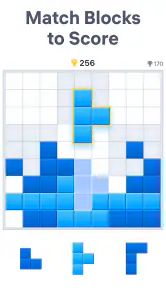
When I first opened Blockudoku®, I was greeted with a sleek and minimalistic design that’s easy on the eyes. The interface is clean, and the colors are soothing, making it a perfect companion for those long commutes or lazy Sundays. But don’t let the simplicity fool you; this game packs a punch in terms of strategy.
Age, trust, and what the game asks of players
Its Everyone age rating makes the puzzle broadly suitable for a household, and the basic activity is easy to explain: place shapes carefully and try to keep the board usable. I’d still decide whether a child should play independently or with an adult nearby based on the child, the device, and your household’s purchase rules. An age label is useful context, but it doesn’t replace those everyday decisions.
More From Our News Desk

Weather by Xiaomi Review: Clear at a Glance, Less Clear Up Close

X Under Pressure: Can It Recover When Posting Goes Wrong?

Clash of Clans Is Won Between the Battles

Android Auto Makes the Case for Quieter Car Software

MobiOffice: Transforming Mobile Productivity with Seamless Integration

EA SPORTS FC™ Mobile Soccer: Redefining Mobile Sports Gaming
For adults, the appeal is less about teaching a formal Sudoku method and more about spotting how one placement changes the available space. For children, that same cause-and-effect can make a brief shared session engaging, provided the goal is enjoyment rather than pressure to beat someone else’s score. I’d skip it for anyone who dislikes spatial puzzles or finds score-chasing frustrating; a cooperative game with a shared objective would be a better fit for that group.
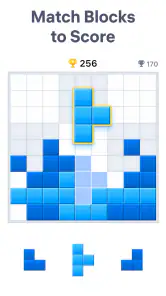
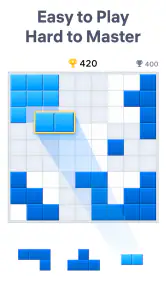
The objective is straightforward—fit blocks into a 9x9 grid, clear lines, and keep the board from filling up. Sounds simple, right? Well, here’s where it gets interesting. You need to think a few steps ahead. It’s a delightful mix of Tetris and Sudoku, where every move counts. Trust me; this game keeps your brain on its toes.
Making each placement count
What I love about Blockudoku® is the strategic depth it offers. You can’t just randomly place blocks and hope for the best. You’ve got to plan, strategize, and sometimes take a leap of faith. The game constantly challenges you to outdo your previous scores, pushing you to think more creatively with each playthrough.
My practical tip is to look at the full set of shapes available before committing to the first one. A shape that seems awkward may fit neatly after a line clears, while filling an obvious gap can leave the board chopped into pockets that are hard to use. I also try not to focus only on an immediate clear: preserving a broad open area can be more valuable than gaining points now and restricting later choices. The board’s changing space, rather than speed, is what makes a run succeed or collapse.
One feature that stands out is the variety of block shapes. It’s not just about filling rows or columns; you’ve got to manage different shapes and sizes, which adds an extra layer of complexity. It’s like solving a new puzzle with each move, keeping things fresh and exciting.
How it differs from familiar puzzle choices
Compared with a standard Sudoku app, this is more spatial and hands-on: you place shapes on a board instead of filling cells by deducing numbers. If you enjoy Sudoku mainly for logic and number patterns, this may not scratch the same itch. Compared with falling-block games, the pace is calmer because you can take time over a move, but the need to preserve room for the shapes still creates pressure. I see it as a useful middle ground for people who want deliberate decisions without a countdown.
That difference also helps answer when I’d choose something else. If I wanted a puzzle with a definite solved state, a conventional Sudoku would suit me better; if I wanted fast reactions, a real-time block game would be a stronger match. Here, the aim is to keep a run going and improve a personal result, so some sessions end because the board runs out of workable space rather than because a puzzle has been completed.
Why It’s Addictive
Let’s face it, we all love a game that we can’t put down, and Blockudoku® fits that bill perfectly. The satisfaction of clearing multiple lines in one go is immensely rewarding. Plus, with the absence of time limits, there’s no pressure. You can take your time to plan your moves, making it a perfect game for both quick sessions and extended gaming marathons.
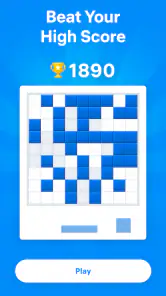
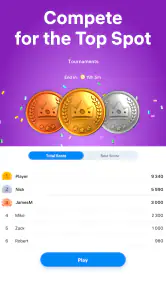
Another addictive aspect is the leaderboard feature. Competing against friends or even yourself adds that extra motivation to keep playing. It’s always fun to see your name climb up the ranks.
Where it fits—and where it doesn’t
Easybrain’s puzzle game is free, has an average rating of 4.6 from around 1.3 million ratings, and has passed 100 million installs. Those figures suggest it has reached a wide audience, but they don’t tell me whether a particular player will enjoy its score-focused loop. I’d recommend it to someone who likes quiet, repeatable spatial challenges and wants a game that can be picked up without learning a complicated ruleset.
The practical details are straightforward: it is rated Everyone, was released on November 22, 2019, and version 3.24.0 requires Android 8.0 or later. The game has also received around 33,000 written reviews, and optional purchases cost $14.99 per item. Those purchases are not necessary to understand the central block-placement challenge, but anyone sharing a device should still make sure purchases follow the household’s normal rules.
One friction point is that a high-score loop can feel repetitive once the basic placement decisions become familiar. Variety in shapes keeps individual turns interesting, but it doesn’t change the central goal into a story or a sequence of completed levels. If I’m in the mood for narrative, collaboration, or a clear finish line, I’d choose another kind of puzzle instead. This is at its best when I want to focus on one board and see how long careful choices can keep it alive.
A household verdict
One useful way to coordinate play is to keep shared-device sessions short and hand over only when the current player is ready to stop. That avoids interrupting a run and makes it easier to keep personal score expectations clear. If competing with friends or family makes the session tense, I’d leave the leaderboard out of the conversation and treat each turn as a puzzle rather than a contest.
Not to mention, it’s free to download with optional in-app purchases. So, you can enjoy the core experience without spending a dime, although a few extra features are available for those who want to dive deeper.
Choosing a good moment to play
I get the most from this kind of puzzle when I can give it a little attention without needing to finish anything else at the same time. A quiet stretch on public transport or a few minutes before dinner works better than playing while someone is asking me questions or the device is needed for directions. The game’s turn-by-turn pace makes it easy to pause mentally, but a crowded board still rewards concentration; a rushed placement can close off useful space and end a promising run sooner than necessary.
For a household, I’d make the handoff at a natural stopping point rather than taking the phone mid-run. That small courtesy matters because the score belongs to whoever is playing, even if everyone has been discussing possible moves. If the next person wants a fresh challenge, they can start their own run when the device is free instead of inheriting a board they didn’t shape.
Small habits that improve a run
When I’m deciding between a safe placement and a move that clears a line, I first check whether the clear will leave a usable area for the other shapes waiting in the set. Clearing is satisfying, but it is not automatically the best move if it creates narrow gaps that only a few shapes can occupy. I try to preserve flexibility, especially when the board is already broken into separate spaces. That habit is more useful than chasing a particular score because it helps me judge the board in front of me rather than repeat a fixed pattern.
I also avoid treating every awkward shape as a problem to solve immediately. Sometimes placing an easier piece first changes the board enough to make the difficult one fit afterward. This is a simple sequencing trick, but it gives the puzzle much of its depth: the available choices are connected, so the order can matter as much as the individual placement. If I’m playing with someone else watching, explaining that choice turns a quiet solo activity into a small reasoning exercise without needing extra rules.
Who will enjoy it most
I’d point this toward people who like arranging shapes, spotting patterns, and improving through repeated attempts. It suits a player who wants a compact puzzle rather than a campaign to complete, and it can work well for mixed-age households when everyone is comfortable taking turns and accepting that a run may end. The simple central action gives a newcomer an easy starting point, while the limited space keeps experienced players thinking about consequences.
I’d steer away from it if you need a shared team objective, a steady sequence of levels, or a puzzle that provides a clear answer at the end. It is also a less natural choice for someone who finds personal-best scores stressful. In those cases, a cooperative puzzle, a traditional Sudoku board, or a more structured logic game may be more satisfying. I like that distinction: this is not trying to be every kind of puzzle, and its strongest appeal is the open-ended effort to manage the board well.
What to expect before installing
It is a free puzzle game from Easybrain, but free access does not mean every possible purchase is irrelevant to a shared device. I’d talk through the household’s purchase expectations before handing a phone to a child, and I’d avoid assuming that one person’s decisions or score will be kept separate from another’s. The game is best treated as a casual activity on the device being used, with any boundaries handled through the household’s normal device arrangements.
Its Everyone rating makes the basic puzzle accessible across ages, but the game’s score-led structure can land differently from person to person. A child may enjoy finding a place for each shape, while another may focus on beating a relative’s result. I’d keep the emphasis on thoughtful moves rather than ranking if the point is to share a relaxed break. That approach also avoids turning a pleasant short session into a contest nobody asked for.
Why I’d keep it in the puzzle mix
What keeps me coming back is the combination of a quiet pace and decisions that still have consequences. It asks for attention without demanding quick reactions, and each new set of shapes makes me reassess the board instead of following a memorized route. That makes it an easy choice when I want a brief mental diversion, though I wouldn’t mistake it for a deep logic curriculum or a social game built around cooperation.
For a player choosing between puzzle styles, I’d start with the kind of satisfaction they want. Pick this when you enjoy spatial planning and the gradual challenge of protecting open space; pick number Sudoku when deduction is the main draw, or a level-based logic game when you want a defined finish. For me, that clear niche is the reason it works: Blockudoku® offers a straightforward way to think a few moves ahead, alone or with someone nearby, without asking for a long commitment.
Conclusion
To wrap it up, Blockudoku®: Block Puzzle Game is a delightful blend of strategy and simplicity. It’s the kind of game that hooks you instantly and keeps you coming back for more. Whether you’re looking to kill time or engage in a mental workout, this game has got you covered. So, why not give it a try? Dive into the world of Blockudoku® and see if you can master the art of block placement. Happy puzzling!
Blockudoku®: Block Puzzle Game Frequently Asked Questions
Can I play Blockudoku® in short sessions?
Yes. Blockudoku® is a puzzle game built around placing blocks on a grid, so it suits a quick play when you have a spare moment as well as a longer session when you want to focus on a score. The central task stays easy to understand, while choosing where each block belongs gives you a reason to think a move ahead.
Is Blockudoku® difficult to learn?
The basic idea is straightforward: place blocks on the grid and clear lines or squares. That makes it approachable for players who are new to block puzzles, while the need to preserve open space adds a layer of planning as you continue. If you enjoy learning by trying different placements and adjusting your strategy, the rules should feel accessible.
What kind of puzzle game is Blockudoku®?
Blockudoku® is a block puzzle game that combines elements of Sudoku and classic block games. Its play centers on arranging pieces on a grid and clearing completed lines and squares, rather than answering trivia or solving written clues. It may appeal to players who like visual logic puzzles and want a simple objective with room to plan.
What is Blockudoku® and how does it work?
Blockudoku® is a popular block puzzle game that combines elements of Sudoku and classic block games. The objective is to strategically place blocks on a 9x9 grid to clear lines and squares. Players must think ahead to avoid running out of space, making it both challenging and engaging.
Is Blockudoku® suitable for children?
Blockudoku® is rated Everyone, so its content is intended to be suitable for a broad audience, including children. Its puzzle-based play focuses on arranging blocks and clearing spaces rather than action or complex rules. As with any game, parents may want to consider their child’s screen time and whether the game’s ads or optional purchases are appropriate for them.
Pros
- Addictive and challenging gameplay.
- Smooth and intuitive controls.
- Visually appealing design.
- No intrusive ads during play.
- Regular updates with new features.
Cons
- Limited hints can be frustrating.
- Requires internet for some features.
- In-app purchases can be costly.
- Can drain battery quickly.
- Occasional lag on older devices.
- Category
- Puzzle
- Version
- 3.24.0