Bingo Cash
- 50.00
- 3.3
- Installs
- 10.00K
- Version
- 13.9.0
Screenshots
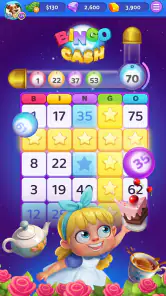






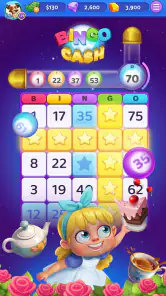
Analysis by Reviewed
I found Bingo Cash most interesting when I treated it as a quick competitive board game rather than as a traditional bingo hall in my pocket. Its central appeal is the live multiplayer format: you are not simply marking numbers at your own pace, but trying to stay alert while other players are chasing the same kind of result. That creates a sharper, more time-sensitive experience than casual offline bingo.
My overall view is positive but cautious. The game is easy to understand, free to start, and aimed at players who enjoy short contests with a competitive edge. At the same time, the promise of competing for real rewards changes how I would approach it. I would play for entertainment first, keep a strict personal limit around any spending or risk, and never treat a result as dependable income. That distinction matters more here than it would in an ordinary puzzle or board game.
How the live bingo format feels in practice
The basic attraction is immediate. Bingo has almost no learning barrier, so I could understand the objective without a long tutorial or a complicated rulebook. The challenge comes from reacting quickly, watching the board carefully, and making sensible decisions under pressure. That combination makes each session feel more active than drawing numbers on paper with family members.
The multiplayer setting also changes the mood. In a normal solo bingo app, the main opponent is boredom. Here, the presence of other players gives every round more tension, even when the rules remain familiar. I found myself paying closer attention because a missed number or a delayed action feels more important when the outcome is shared with a live field of competitors.
That does not mean the game becomes a deep strategy title. Bingo still depends heavily on number patterns and timing, so players looking for long-term planning, deck building, or elaborate tactical choices may find the decision-making limited. The skill element is best understood as attention, speed, and session management rather than the kind of strategy found in chess or a complex card battler.
One useful way to play is to decide before entering a match what kind of session I want. If I have only a few minutes, I can treat it as a quick distraction. If I am more focused, I can concentrate on accuracy and avoid jumping into another round immediately after a disappointing result. That small pause is valuable because fast competitive games can encourage impulsive replaying.
What makes the board-game design approachable
The board-game category suits this title well because the rules are recognizable. A new player does not need to memorize a large collection of abilities or understand a complicated economy before participating. That makes it easier to recommend to someone who wants a competitive game but does not normally play action games or strategy games.
I also think the format works well for short breaks. A realistic everyday use case would be waiting for an appointment or taking a brief pause between tasks. I could open a round, focus on the board, and put the phone away afterward without needing to remember a long story or preserve a complicated campaign state. That convenience is one of the strongest reasons to choose it over a larger board-game adaptation.
There is a trade-off, though. The same simplicity that makes Bingo Cash approachable can make repeated sessions feel similar. Players who enjoy discovering new maps, collecting characters, or unlocking layers of content may not find enough variety in the core bingo loop. I would therefore see it as a rotation game: something to play in short bursts, not necessarily the only game kept on a phone.
The developer, Papaya Gaming, has positioned the experience around live skill-based tournaments and competition for real rewards. That framing gives the game a stronger purpose than a purely decorative bingo app, but it also raises the standard for clarity and fairness in the player’s mind. Before taking part in any competitive event, I would read every on-screen condition carefully and make sure I understand what participation involves.
Where the competitive angle helps—and where it does not
The competitive format gives ordinary bingo a reason to demand concentration. I cannot simply leave the game running while doing something else and expect the same experience. The board needs attention, and the live pace rewards players who are prepared to respond rather than casually glance at the screen.
That is the first non-obvious tip I would give a new player: use it when you can actually watch the screen. Playing while commuting, cooking, or answering messages is a poor fit because divided attention can turn a manageable round into a frustrating one. The game may be simple, but the live setting makes interruptions more costly than they are in a solo puzzle.
The second tip is to separate entertainment decisions from reward expectations. If I enter a contest mainly because I expect to win money, every loss feels larger and I am more likely to chase the next round. If I enter because I enjoy the contest and regard a reward as an uncertain outcome, the experience stays healthier. This is especially important for anyone who is new to games that combine competition with real-world stakes.
A third practical habit is to review the result before immediately starting again. I would check whether I understood the round, whether the pace suited me, and whether I was playing attentively. That reflection is more useful than simply assuming that a loss means I should take a bigger chance next time. In a game built around repeated short contests, self-control is part of good play.
The main limitation: it may not satisfy every kind of bingo fan
My biggest reservation is that the live tournament focus can make the experience feel less relaxing than traditional bingo. Some people enjoy bingo precisely because it is social, slow, and low pressure. If that is your preferred version, a family bingo night or a calm offline app may be a better choice. Bingo Cash is more suitable when you want the familiar board concept with a competitive pulse.
The real-reward angle is another important limitation. It can make a simple board game feel financially meaningful, which is not automatically an advantage. Players who prefer games with no money-related pressure should skip this one and choose a standard free bingo title instead. The ordinary alternative may have fewer thrills, but it can be easier to enjoy without thinking about outcomes beyond the screen.
I would also avoid recommending it to anyone who tends to replay immediately after losing or who finds competitive reward systems stressful. The game’s accessibility makes it easy to begin another session, and that convenience is not always helpful. A clear personal boundary—such as stopping after a set amount of time or after a predetermined number of rounds—can prevent the short-session design from becoming an unplanned marathon.
Another trade-off is depth. Compared with a traditional tabletop strategy game, the choices here are narrower. Compared with a solo bingo app, however, the live competition adds urgency. The right comparison depends on what you want from a board game: choose Bingo Cash for immediacy and contest pressure, not for extensive strategic development or a rich narrative.
Who should try it, and who should look elsewhere
I think it is a good match for players who already understand bingo and want a more competitive mobile version. It also suits people who like short multiplayer events, quick decisions, and the possibility of competing for real rewards. The free price lowers the barrier to trying it, so curious players can see whether the format fits before committing to it as a regular pastime.
It may also appeal to casual players who do not want to learn a complicated game. The familiar board structure gives the experience an accessible starting point, while the live setting provides more tension than a completely passive number caller. For a friend who says, “I want something simple, but I do not want to play entirely alone,” this is the kind of app I would suggest testing.
I would not make the same recommendation to someone searching for a deep board-game simulation. If your ideal evening involves planning several turns ahead, building a collection, or exploring a campaign, a strategy board-game adaptation will probably offer more lasting variety. Likewise, if you want a completely calm experience with no competitive pressure, a conventional bingo app or physical game is likely the better fit.
The age rating is Everyone, which reflects the straightforward board-game presentation, but that should not be confused with suitability for every playing habit. The important question is not only whether someone can understand the rules; it is whether the competitive reward structure feels comfortable for them. I would introduce younger or inexperienced players with clear supervision around contest participation and spending decisions.
What to expect from the current release
The current version is 13.9.0, and the game runs on devices using iOS or Android 9 and later. That makes it relevant to people who keep an older compatible phone rather than upgrading constantly. Still, I would install it on the device I actually plan to use for matches and check that the screen is comfortable to watch for a full round, since visual attention is central to the experience.
The game is free to download, but “free” should not be interpreted as “without any decisions.” Because the concept involves tournaments and real rewards, I would inspect each event screen before joining and avoid assuming that every contest follows the same conditions. This is not a criticism of the board mechanic; it is simply sensible behavior whenever a mobile game connects play with real-world value.
Its current audience appears modest rather than enormous, with over ten thousand installs and an average rating of 3.3 from around a hundred ratings. I read that as a reason to approach it with realistic expectations, not as an automatic rejection. The rating suggests that the experience will not work equally well for everyone, while the install figure indicates that it is still a relatively small title compared with the biggest mobile games.
That smaller footprint can be a mixed experience. A niche game may feel more focused and less overwhelming than a giant gaming platform, but players may also be more sensitive to the quality of each individual session. If the live competition is the exact type of bingo you want, the app is worth trying. If you need a huge community, extensive content, or a long-established competitive scene, a larger alternative may be safer.
My final recommendation
After looking at the game as both a bingo fan and a cautious mobile player, I see Bingo Cash as a focused competitive diversion rather than a complete board-game replacement. Its strongest quality is the way live multiplayer turns a familiar activity into a more alert, time-sensitive contest. The rules are approachable, the free entry makes experimentation easy, and short sessions fit naturally into everyday gaps.
Its weaknesses are just as clear. The strategic depth is limited compared with serious board games, the competitive reward framing can add pressure, and repeated rounds may become repetitive for players who need constant novelty. I would also avoid treating any reward possibility as a reliable financial opportunity. The best experience comes from keeping the stakes emotionally and financially controlled.
My advice is to try one or two sessions when you have uninterrupted attention, learn how the tournament flow feels, and decide whether the pressure is enjoyable. Do not judge it against a complex strategy game, and do not approach it as a guaranteed way to make money. Judge it as a quick, live bingo contest with a distinctive reward-oriented edge.
For the right player, that is enough to make it worthwhile. I would recommend it to casual bingo players who want competition, short-form mobile gamers who enjoy live contests, and anyone curious about a more active alternative to ordinary number-marking apps. I would steer others toward a traditional bingo game or a deeper board-game adaptation. In my experience, the deciding factor is simple: if you want bingo to feel faster and more competitive, this game has a clear reason to exist.
Pros
- Quick bingo rounds make it easy to play during short breaks.
- Simple controls are suitable for both beginners and casual players.
- Bright visuals and sound effects create an engaging game atmosphere.
- Regular challenges can add variety beyond standard bingo matches.
- Progress rewards may encourage frequent play and continued participation.
Cons
- Cash-related features may vary by region and eligibility requirements.
- Some rewards can require patience
- extra tasks
- or in-app purchases.
- Ads may interrupt gameplay
- especially in free-to-play sessions.
- Results depend heavily on luck
- so progress may feel inconsistent.
- The app may use significant battery and mobile data during longer sessions.