Beat Jumper: EDM up
- 2.62K
- 4.4
- Installs
- 10.00M
- Price
- Free

Screenshots






Analysis by Reviewed
Beat Jumper: EDM up is the kind of music game I reach for when I want something immediate rather than a long campaign or a complicated rhythm setup. I tap into a bright, fast-moving world, follow the beat, and try to keep the run alive as the track pushes forward. It is built around the simple pleasure of matching movement to music, but the speed gives that simplicity a surprisingly tense edge.
After spending time with it, I see the appeal clearly: this is a quick-play game for people who enjoy electronic music, short challenges, and the satisfaction of improving through repetition. It is not trying to replace a full music player, a serious rhythm-training tool, or a deep console-style game. Its value is in turning a spare moment into an energetic test of timing.
How Beat Jumper turns EDM into a playable challenge
A straightforward idea that becomes demanding quickly
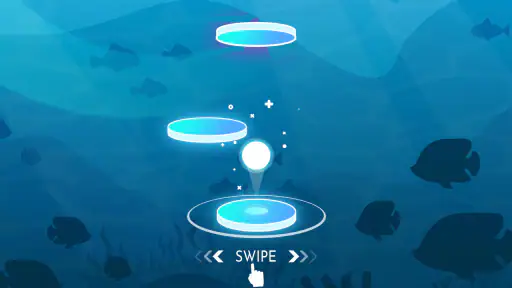
The basic interaction is easy to understand. You guide the bouncing character through a sequence shaped by the music, aiming to land correctly and keep the rhythm going. That low barrier matters because I can start playing almost immediately, without first learning a large set of controls or reading through a long tutorial.
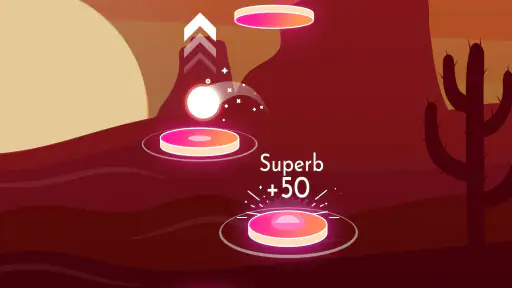
The difficulty comes from maintaining concentration. A song may feel manageable during its opening moments, then become much harder once the pace increases or the visual path demands quicker reactions. I found that the game rewards looking slightly ahead instead of staring only at the character. Watching the next landing point gives me more time to react and makes the experience feel less like random tapping.
That is one of the more useful habits to develop: listen to the pulse, but do not depend on sound alone. Visual movement and audio do not always feel equally easy to follow, especially when I am playing in a noisy room or with the volume turned down. Treating the music as guidance rather than the only source of timing makes the game more approachable in everyday situations.
Why the music changes the feel of each attempt
The EDM focus gives the game a particular personality. Electronic tracks naturally suit repeated patterns, rising intensity, and quick transitions, so the action feels more energetic than a slow, melody-led rhythm game would. When the visual movement and the beat line up, a successful sequence feels almost automatic, even though I am still making constant corrections.
The music also affects how willing I am to replay a difficult section. In many games, repeating a failed challenge feels like work. Here, the soundtrack can make another attempt feel worthwhile, particularly when I know exactly where I lost control and want to test whether a small adjustment will carry me further.
That said, players who prefer calm background music or a broad mixture of genres may find the presentation narrow. This is specifically aimed at the energy of EDM rather than offering a neutral rhythm-game atmosphere. If electronic music is not your taste, the central appeal may wear thin sooner than it would for someone who already enjoys that style.
What the current release tells me about accessibility
The game comes from AMANOTES PTE. LTD. and is listed as a free game in the music category. It has an average rating of 4.4 from around 61 thousand ratings, with more than 10 million installs, which suggests that the quick rhythm format has reached a substantial audience. Its content rating is Everyone, making it a comfortable option for general family use from an age-rating perspective.
On Android, the listed minimum requirement is Android 6.0, so the compatibility range is relatively broad for anyone using a device that still meets that software requirement. The current version is 2.9.2. I would still keep expectations realistic: compatibility does not guarantee identical performance on every phone, and a rhythm game is especially sensitive to stutters, delayed touch response, or distracting notifications.
One practical improvement is to prepare the phone before a serious attempt. Closing demanding apps, enabling a distraction-free setting, and using a stable grip can matter more here than in a turn-based game. A tiny interruption at the wrong moment can break a run, so the best experience comes when the device is treated as part of the timing setup.
Free access and what paid value means here
Because the game is free to download, I can try its central loop without committing money first. That is important for this particular genre: enjoyment depends heavily on whether the music, pace, and visual style suit me personally. A free starting point lets me answer that question through play rather than relying on screenshots or a short description.
There are in-app purchases ranging from $0.99 to $19.99 per item. I see those purchases as optional spending around the experience, not as a reason to install it. The sensible approach is to play the free portion long enough to decide whether the game earns a place in your routine, then consider spending only if the available extras genuinely improve your enjoyment.
The useful distinction is between free access and paid value. Free access gives me a low-risk way to test the core game. Paid value depends on what I personally want from the experience and how often I return to it. Someone who only wants occasional two-minute sessions may receive everything they need without buying anything, while a dedicated player may view optional purchases differently. I would not recommend spending simply to solve the frustration of a difficult run; improvement through timing is part of the game’s appeal.
Where it fits beside other music games
Compared with a traditional rhythm game that asks me to hit notes on fixed lanes, Beat Jumper feels more physical and spatial. I am not just watching symbols arrive in a line. I am following movement through a changing path, which makes successful play feel closer to steering through music than reading a conventional note chart.
That design is a strength when I want something visually active and easy to pick up. It is less ideal when I want detailed musical accuracy, a large range of control options, or the precision of a dedicated rhythm-training experience. A lane-based game may be the better choice for someone who enjoys studying patterns and mastering exact note sequences. A music app, meanwhile, is better when the goal is simply to listen without having to concentrate.
I also would not compare it directly with a full action game. The short-form structure is part of its identity. It works best as a compact challenge between other activities, not necessarily as the only game I play for an entire evening. That distinction helps set a fair expectation and prevents the simple controls from feeling like a weakness.
Small techniques that make repeated attempts more useful
My first practical tip is to separate recognition from reaction. On an early attempt, I try to notice the point where the path becomes difficult instead of obsessing over a high score. Once I know the trouble spot, the next run has a clear purpose. This turns failure into information and makes the retry loop less frustrating.
A second tip is to use short sessions when concentration starts to fade. Rhythm games can make me believe that one more attempt will fix everything, but tired reactions usually create more mistakes. Taking a brief pause often helps more than immediately repeating the same section. The game’s quick-play nature supports this approach because I do not need to reserve a large block of time.
A third tip is to decide whether sound or visuals are my stronger guide. With headphones or a quiet room, the beat may provide the clearest timing cue. In a public place, I may do better by focusing on the movement and using the music as background support. This flexibility is valuable because it lets the game remain playable in more than one daily setting, even though the audio remains central to its identity.
I also recommend treating the phone’s orientation and grip as part of the routine. If my hands cover important areas or the device shifts during a quick correction, the problem is not necessarily my timing. A stable hold reduces accidental input and lets me judge whether I actually need more practice. That sounds minor, but it becomes noticeable when the game asks for fast, repeated responses.
Everyday situations where it works well
I can imagine playing it while waiting for a friend, taking a break between tasks, or looking for a quick mental reset after a long stretch of work. The game gives me an active alternative to scrolling because it asks for attention without requiring a long narrative commitment. A few attempts can feel satisfying even when I do not reach the end of a challenging sequence.
It also suits someone who likes music games but feels intimidated by complicated control schemes. The first step is understandable, and the challenge grows through timing rather than through a large collection of buttons. That makes it a good introduction for a casual player who wants to see whether rhythm games are enjoyable before moving to something more demanding.
For families, the Everyone rating makes the age classification straightforward, but I would still remember that difficulty and fast visual movement are personal matters. Younger players may enjoy the colorful action, while some may need time to develop the timing needed for longer runs. The game is accessible to start, not automatically easy to master.
Where the experience can lose momentum
The biggest limitation is repetition. The same basic interaction that makes Beat Jumper approachable can also make it feel narrow if I am looking for constant mechanical variety. Much of the long-term appeal depends on whether I enjoy replaying musical challenges and refining reactions. Players who need new systems, exploration, or story progression may run out of reasons to continue.
The free-to-play structure is another point to consider. Since purchases are available, I pay attention to my own habits rather than assuming every optional item is necessary. The game is easiest to recommend when I am comfortable treating purchases as entirely discretionary. Anyone who dislikes in-app purchase prompts in free games may prefer a paid rhythm title with a clearer upfront model, where the cost and included content are easier to understand from the beginning.
There is also a difference between liking EDM and liking EDM as the engine of a game. I may enjoy electronic music while still finding the repeated focus on quick bouncing and reaction tiring after a while. That is not a flaw in execution so much as a matter of fit. The stronger the match between the player’s taste and the game’s pace, the more convincing the free experience becomes.
Who should install it and who should pass
I would recommend it to casual players who want a music game that starts quickly, to EDM fans who enjoy turning a beat into a challenge, and to anyone who likes improving through short repeated attempts. It is especially appealing if I value immediate controls, energetic presentation, and sessions that can begin and end without a lengthy setup.
I would be more cautious if I wanted a broad music library, a deep progression system, or a quiet game to play while multitasking. The need for timing means it does not work well as background entertainment. Nor is it my first choice for someone who wants a serious musical practice tool, because the goal is game performance rather than learning an instrument or studying composition.
Before spending money, I would install the free version and test three things: whether the EDM style keeps me engaged, whether the touch response feels comfortable on my phone, and whether I enjoy repeating a difficult section after a mistake. Those answers matter more than the headline rating or install count because they reveal whether the central loop matches my habits.
My verdict on its value
Beat Jumper: EDM up delivers a focused, energetic music-game experience at no download cost. Its strongest quality is the way it turns a very simple idea into a tense timing exercise without making the opening steps difficult to understand. I like that I can use it for a short break, yet still find room to improve when I return to a troublesome sequence.
I would not call it a complete substitute for deeper rhythm games, paid music titles, or ordinary listening apps. Its value depends on enjoying EDM, accepting repetition, and being comfortable with a free game that offers optional purchases from $0.99 to $19.99 per item. For me, that makes it an easy try rather than an automatic purchase recommendation.
My final recommendation is to start free, judge the feel of the controls, and spend only if the repeated challenge genuinely becomes part of your routine. If that loop clicks, the game is a lively companion for spare moments. If I want variety, musical breadth, or a fixed one-time purchase, I would look elsewhere instead.
Pros
- Simple one-touch controls are easy to learn.
- Fast-paced levels provide an engaging rhythm challenge.
- Colorful visuals match the energetic EDM soundtrack.
- Short sessions make it suitable for quick breaks.
- Many songs and stages offer replay value.
Cons
- Gameplay can feel repetitive after extended sessions.
- Some tracks or content may require in-app purchases.
- Difficulty increases sharply in later levels.
- Ads may interrupt the experience between attempts.
- Precise timing can be frustrating on smaller screens.

- Category
- Music
- Version
- 2.9.2