Ball Sort - Color Puzzle Game
- 222.00
- 4.7
- Installs
- 100.00K
- Price
- Free

Screenshots


Analysis by Reviewed
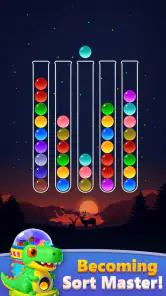
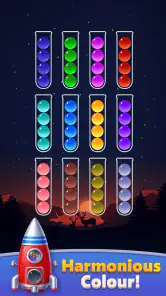
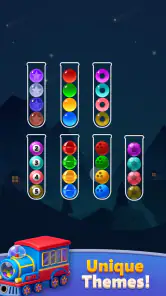
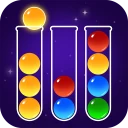
I spent time with Ball Sort - Color Puzzle Game as a quick, low-pressure puzzle rather than as a game I would sit down with for a long evening. Its central idea is easy to understand: colored balls need to be arranged into matching tubes, and each move has to be planned so that the board does not become blocked. That simplicity is exactly why it works well for short breaks. I can open it, solve a small challenge, and put my phone away without learning a complicated system first.
This is a casual game from SATORISYS PLAY, aimed at Everyone. It is free to access, which makes the decision to try it straightforward: there is no purchase price standing between the player and the basic experience. The game has reached over 100 thousand installs and holds a 4.7 average from around 6 thousand ratings, so it has clearly found an audience among people who enjoy this kind of tidy, color-based puzzle.
How the sorting puzzle feels in everyday play
The appeal comes from the contrast between the cheerful presentation and the careful thinking underneath. At first, moving a ball into a matching tube feels obvious. After a few moves, however, the available space starts to matter. A color may be visible but inaccessible, or a seemingly helpful move may cover the ball needed later. I found myself switching from quick tapping to looking several moves ahead, especially when several tubes contained mixed colors.
That makes the game a good fit for small pauses in the day. I can imagine playing it while waiting for an appointment, during a commute when I am seated, or between household tasks. It does not require a long story to remember, a team to coordinate with, or a large amount of attention before the first move. The board itself presents the problem, and the solution begins immediately.
The controls are also naturally suited to a phone. Sorting is a direct, visual action, so the player does not need a virtual joystick or a collection of buttons. That matters on a smaller screen, where overly detailed interfaces can make casual games tiring. Here, the important question is simply which ball to move and where it can safely go.
My favorite part is the moment when a messy arrangement becomes readable. Instead of treating every available move as equally useful, I started identifying colors that were buried and tubes that needed to remain open. This turns each level into a small exercise in organization. The satisfaction is not dramatic, but it is clear: the board gradually becomes cleaner because the plan was sound.
Why the basic idea remains engaging
Color sorting is familiar, but the pleasure does not depend on novelty. It depends on the way a simple rule creates consequences. A move can be legal and still be a mistake. That distinction gives the game more depth than its bright, approachable appearance suggests.
I recommend treating the empty tube spaces as working areas rather than as places to fill immediately. A common beginner habit is to complete the first matching stack that appears. In my experience, that can remove the flexibility needed to uncover another color. Keeping at least one useful space available often produces better results than chasing the quickest visible match.
Another practical habit is to look at the bottom of each mixed tube before moving anything. The top ball is the only one that can usually be handled right away, but the lower colors determine whether a tube is worth opening or preserving. Thinking about the hidden order makes the puzzle feel less random and helps prevent unnecessary backtracking.
I also found it useful to separate “progress” from “completion.” Making one tube look finished is satisfying, but temporarily breaking that arrangement can be the correct choice if it opens a buried color. Players who prefer a perfect-looking board after every move may find this uncomfortable. Players who enjoy planning around temporary disorder will probably appreciate it.
What the free experience means for value
Because the game is free, its value is mainly measured by how well it fills short periods of spare time. That is a favorable starting point for a casual puzzle. I do not need to justify a purchase before discovering whether the pace suits me, and someone looking for a simple distraction can try it without committing money.
The free price also changes how I judge the game. I am not expecting the narrative scale, audiovisual variety, or long-term progression of a premium puzzle title. Instead, I look for reliable pick-up-and-play entertainment, readable challenges, and enough variation in the sorting situations to make another round feel worthwhile. On those terms, the concept has a sensible focus.
Still, free access does not automatically make every limitation irrelevant. If you want a game with a strong story, a carefully presented campaign, or a sense of discovery beyond arranging colors, this may feel narrow even when it costs nothing. The value is strongest for people who specifically enjoy repeating a compact logic activity.
I would also avoid assuming that a free casual game will replace every other puzzle on a phone. It serves a particular mood: quiet concentration without a large commitment. When I want a richer challenge with multiple puzzle types, I would choose a broader brain-training collection or a more elaborate logic game instead. When I want something immediate and uncomplicated, this format is more convenient.
Small decisions that make difficult boards easier
One useful approach is to work backward from the colors that are least accessible. Rather than asking which ball can move now, I ask which ball must eventually be exposed and what needs to happen first. This prevents the board from being driven entirely by the most obvious top-layer move.
A second approach is to use a temporary tube deliberately. It is tempting to fill an empty space with any available color, but that can turn the space into a storage problem. I prefer to place a color there only when doing so either reveals a needed ball or creates a clear route for completing a stack. This makes the extra space a planning tool instead of a dumping ground.
There is also a useful stopping point. If I have made several moves without improving access to a buried color or creating a complete stack, I pause and inspect the whole arrangement again. Continuing to tap quickly can make a solvable board harder to read. A short reset in attention is often more useful than more movement.
These habits are not complicated, but they change the experience. The game becomes less about guessing and more about managing access, space, and order. That is where I think its strongest value lies: it gives a casual format enough structure to reward deliberate play.
Where the experience may feel limited
The same narrow focus that makes the game approachable may eventually feel repetitive. If you need constant changes in mechanics, characters, objectives, or visual themes, repeatedly sorting balls may not hold your attention. This is not a flaw in the central idea, but it is an important trade-off for anyone comparing it with larger casual-game collections.
The game also asks the player to enjoy self-directed concentration. There is no need to react quickly, but there is a need to care about the order of moves. Someone looking for action, competition, or immediate rewards may find the pace too gentle. I would skip it for a child or adult who wants fast animation and frequent surprises rather than a quiet logic task.
Another limitation is that the apparent simplicity can make mistakes feel more frustrating than expected. When the rules are easy, a failed arrangement often feels like a planning error rather than a lack of skill. I found that restarting my mental approach helped, but players who dislike undoing progress may prefer a puzzle with more forgiving mechanics or a hint-driven structure.
It is also worth keeping expectations realistic about the age rating. The Everyone classification makes the game broadly approachable, but it does not mean every player will find it equally compelling. Younger players may enjoy the colors and direct interaction, while older puzzle fans may want more demanding systems. The best audience is defined less by age than by patience for arranging and re-arranging a board.
How it compares with other casual puzzle choices
Compared with match-three games, this is calmer and more deliberate. Match-three play usually emphasizes spotting combinations quickly and responding to a changing board. Ball sorting gives me more time to inspect the position, but it also makes each move feel more permanent. If I want a relaxing logic exercise, I prefer this style; if I want bursts of momentum, a match-three alternative is likely better.
Compared with classic tile-matching games, the challenge is less about recognizing a pattern and more about preserving access. A tile game may reward scanning the whole screen for a pair, while this puzzle asks whether a move will help or obstruct a later sequence. That makes it a better choice for players who like planning, even if it offers less visual variety.
Compared with word puzzles, the game removes language from the equation. That makes it easier to start when I am tired and more accessible to people who do not want a vocabulary challenge. On the other hand, word games can provide a broader sense of learning or discovery. I would choose this one when I want spatial organization rather than mental wordplay.
Compared with a premium logic title, the free entry is its clearest advantage. A paid alternative may offer a more polished campaign or a more distinctive puzzle identity, but it asks for a purchase before it proves its fit. This game is better for testing the format casually. The trade-off is that players seeking a highly curated, expansive puzzle journey may find the premium option more satisfying.
Who will get the most from it
I think this game suits people who like orderly tasks, visual patterns, and short sessions. It is particularly useful when I want something interactive but not socially demanding. The board gives my attention a clear target without requiring sound, a story recap, or a complicated control scheme.
It can also work well as a gentle introduction to planning games. The color-based presentation is less intimidating than a puzzle built around numbers, symbols, or dense rules. A new player can begin by matching obvious colors and gradually learn to protect empty spaces and uncover blocked pieces. That learning curve feels natural because the board demonstrates the consequences of each decision.
For experienced puzzle players, the attraction depends on tolerance for repetition. Someone who enjoys refining a solution and spotting better sequences may find enough satisfaction in the basic format. Someone who needs new mechanics to stay engaged should look elsewhere sooner rather than later.
I would skip it if my main goal were competition, social interaction, a story campaign, or fast reflexes. I would also choose another game if I wanted a single purchase that clearly promises a large, varied experience. The free price makes trying it low-risk, but it does not change the kind of entertainment it provides.
Device fit, accessibility, and practical expectations
The minimum operating-system requirement is Android 7.1, and the current version is 1.1.0. That places it within reach of many older Android devices, which is useful for a game built around straightforward touch interaction. I would still judge the experience on the actual phone, especially if the screen is small, because sorting depends on seeing the colors and tube contents clearly.
The Everyone rating is another practical advantage for shared devices and family settings. The concept is easy to explain without exposing players to complicated themes. Even so, younger users may need help understanding why a move that looks correct can create a dead end. The game is simple to operate, but solving it still benefits from patience.
I would begin with short sessions rather than expecting a full evening of entertainment. That matches the format and makes the game easier to evaluate fairly. If I finish a few boards and still want to continue, that is a sign the sorting loop fits my preferences. If the repetition is already noticeable, a longer session is unlikely to change my opinion.
The developer, SATORISYS PLAY, has kept the identity of the game clear through its focused concept. For me, that focus is more important than a long feature list. I know what kind of activity I am opening, and the game does not need an elaborate explanation before it becomes playable.
My recommendation after weighing the trade-offs
My verdict is positive, but specific. I recommend Ball Sort - Color Puzzle Game to anyone who wants a free, easy-to-start sorting puzzle for quiet breaks. Its strongest qualities are the immediate rules, the phone-friendly interaction, and the way a basic color arrangement can develop into genuine planning. The high average rating, drawn from around 6 thousand ratings, supports the impression that this simple format works for many players.
I would not recommend it as a universal casual game. It is not the right choice when I want action, a story, competitive pressure, or a wide range of puzzle mechanics. The experience can also become repetitive for players who need constant novelty. Those are meaningful limitations, not reasons to dismiss the game; they simply define the audience that will appreciate it.
For a free download, the most sensible test is practical: play during the kind of short break when you normally reach for a casual game. Notice whether you enjoy protecting open spaces, planning around buried colors, and occasionally undoing a promising-looking arrangement. If those decisions feel satisfying, this game offers a clean way to spend spare minutes. If they feel like busywork, a match-three, word, or broader logic alternative will probably deliver better value for your time.
In my experience, the game succeeds because it does not overcomplicate its central task. It turns colored balls and a few available spaces into a compact problem that rewards looking ahead. That will not appeal to everyone, but for the right player, the strongest value is its frictionless access to thoughtful play: free to try, easy to understand, and just strategic enough to make one more round tempting.
Pros
- Simple rules make it easy to start playing immediately.
- Smooth controls make moving colored balls feel responsive.
- Short levels are convenient for quick gaming sessions.
- Increasing difficulty keeps the puzzle experience engaging.
- Works well as a relaxing game during breaks.
Cons
- Some levels may feel repetitive after extended play.
- Hints or extra moves may be limited without watching ads.
- Frequent ads can interrupt the flow between puzzles.
- Later stages may rely more on trial and error.
- Progress can feel slow if levels become especially challenging.
- Category
- Casual
- Version
- 1.1.0