Strangex
- 224.00
- 2.5
- Installs
- 100.00K
- Price
- Free

Screenshots


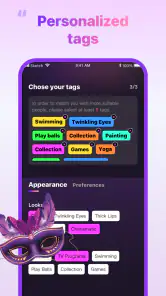

Analysis by Reviewed
I approached Strangex as a social app first and a dating app second, and that distinction matters. Its focus is matching, chatting, and meeting people, so the appeal is easy to understand: it aims to put conversation at the center instead of treating profiles as the whole experience. My overall impression is mixed. There is a useful idea here for adults who want a less formal way to start conversations, but the app still feels like a choice that requires patience, careful judgment, and realistic expectations.
It is free to install, which makes trying it relatively easy, although optional purchases range from $2.99 to $199.99 per item. That wide range is worth noticing before you become invested in the service. Strangex is marked Mature 17+, and I would take that seriously rather than treating it as a casual general-purpose messaging app. The conversations may be social and romantic, but the audience is clearly intended to be adults.
At the time of my review, the app is on version 1.0.16 and works on Android 7.0 or later. ByteCore Ltd. is the developer behind it. The service has passed the early discovery stage with over 100 thousand installs, yet its average sits at 2.5 from around 438 ratings and roughly 224 written reviews. That combination tells me to approach it as an evolving product, not as a polished replacement for every established dating service.
How the matching and chatting experience feels in practice
The central strength of Strangex is its straightforward purpose. You are not opening it to organize tasks, watch videos, or manage a community around a hobby. You are there to find people, begin a conversation, and decide whether that exchange deserves more of your time. That narrow focus can be refreshing when other social platforms bury personal interaction under feeds, advertising, and unrelated content.
I also like the idea of separating the first step from the pressure of an immediate offline meeting. Chat gives both people a chance to see whether they share a sense of humor, communicate respectfully, or simply have enough in common to continue. In a good interaction, that can make the process feel more natural than approaching someone with a long list of profile requirements.
Still, a matching app lives or dies by the quality of its conversations, not by the existence of a chat window. A match is only a starting point. I found it more useful to treat every new connection as a brief conversation test rather than as evidence of compatibility. Ask something specific, respond to what the other person actually says, and notice whether the exchange is balanced. If every message feels copied, rushed, or one-sided, moving on is usually better than trying to rescue it.
A practical routine for getting better conversations
My most useful approach was to avoid opening with a vague greeting and then waiting for the other person to do all the work. A short question connected to the profile or the current conversation gives the exchange somewhere to go. It also reveals more than a generic compliment: people who are genuinely interested usually add something of their own rather than replying with a single word.
More From Our News Desk

Clash of Clans Is Won Between the Battles

Android Auto Makes the Case for Quieter Car Software

MobiOffice: Transforming Mobile Productivity with Seamless Integration

EA SPORTS FC™ Mobile Soccer: Redefining Mobile Sports Gaming

How Microsoft OneDrive Became a Mobile Productivity Giant

How Google Translate Breaks Language Barriers Effortlessly
Another helpful habit is to keep early chats contained. I would not move immediately to a personal phone number or another private account just because a conversation seems exciting. Staying inside the app at first gives you time to evaluate consistency. Someone who changes their story, pushes for money, asks for sensitive information, or becomes hostile when you set a boundary is showing you enough to end the conversation.
This is an important trade-off with a service like Strangex. The app can make meeting new people feel accessible, but accessibility also means you must supply much of the filtering yourself. I would not rely on a match indicator to do the emotional or safety work for me. The strongest users will be the ones who can enjoy discovery without assuming that every connection is trustworthy.
Where it can fit into an ordinary day
Imagine finishing work, having twenty minutes before dinner, and wanting a social interaction that does not require committing to a full evening out. Strangex can fit that moment well. You can browse the social side of dating at your own pace, exchange a few messages, and decide later whether the person is worth continuing with. That is more manageable than arranging a meeting before you know whether conversation flows.
It may also suit someone who has recently moved to a new area and wants to practice meeting people without immediately joining a large public group. The important word is “practice.” I would use the app to learn who communicates well and who respects limits, not as a shortcut to instant intimacy. If a conversation progresses toward meeting in person, I would choose a public location, tell someone I trust where I am going, and keep the first meeting easy to leave.
For people who dislike endless text exchanges, the same workflow can work in reverse. Use a short chat to establish basic comfort, then make a clear decision. There is little value in maintaining a conversation for weeks when neither person is willing to clarify intentions. Strangex is best when it helps you move from curiosity to a sensible next step, whether that step is continuing or politely ending the exchange.
The main weakness: trust, polish, and value need careful handling
The biggest concern is not that the concept is unclear; it is that the relatively low average rating suggests the experience has not satisfied a large share of users. I cannot turn that rating into a diagnosis, but I would not ignore it. It is a signal to keep expectations modest and to pay attention to how smoothly the app behaves on your own device before spending money or investing significant time.
The product also has the feel of a young service. Its release date was October 8, 2024, and the current version is still early in its version history. That can be positive if you enjoy watching an app develop and are willing to tolerate rough edges. It is less attractive if you want a mature dating environment with years of refinement, a deeply established user culture, and a predictable experience across every part of the journey.
The purchase structure deserves a separate warning. Free access lowers the barrier to entry, but items priced as high as $199.99 can make experimentation expensive if you buy impulsively. I would use the free experience long enough to decide whether the available conversations are relevant and respectful. If the app does not produce value without a purchase, paying more is unlikely to solve the underlying problem.
That is also why I would not judge the service only by how many people appear available. A large-looking pool is not automatically a useful pool. Location, age range, communication style, and genuine activity matter more than a quick sense of abundance. If the people you encounter do not match what you want, an established alternative with a stronger local presence may be the better choice, even if its interface feels less adventurous.
What I would watch before becoming a regular user
First, I would check whether conversations develop beyond the opening exchange. A service can look active while producing very little meaningful interaction. Second, I would observe how quickly people pressure me to leave the app or share personal details. That is not a complaint about a particular feature; it is a practical test of the community around the service.
Third, I would keep a close eye on spending. Do not buy an item simply because a conversation has become emotionally intense. If you decide to purchase, know exactly what you are paying for and set a personal limit before opening the payment screen. The range from $2.99 to $199.99 makes that discipline especially important.
Finally, I would keep the app updated while remembering that an update number does not guarantee a perfect experience. Version 1.0.16 shows that ByteCore Ltd. is continuing to develop the product, but users should still make decisions based on the quality they actually encounter. If messages are unreliable, the interface becomes frustrating, or the available matches are not relevant, there is no reason to force yourself to stay loyal.
Who should try it, and who should choose something else?
Strangex is a reasonable experiment for an adult who wants a free entry point into social matching and dating chat. It may appeal to someone who prefers starting with conversation rather than arranging a meeting immediately. It also suits people who are comfortable doing their own screening and who understand that a newer app may have an uneven community.
I would be more cautious recommending it to someone who is easily discouraged by unanswered messages, inconsistent conversations, or a small-feeling local audience. Dating apps can make rejection and ambiguity more visible, and the modest average rating gives me no reason to promise a consistently smooth experience. If you need a highly dependable service with a well-established user base, a better-known alternative is probably the safer first choice.
It is also not the right pick for anyone under the stated age threshold, or for someone looking for a general social network without romantic or mature interactions. The Mature 17+ label sets the tone. Parents choosing an app for younger teenagers should look elsewhere, and adults who want professional networking, hobby groups, or family messaging should not expect Strangex to serve those purposes well.
Compared with conventional dating apps, its strongest possible difference is the emphasis on direct social exchange. That can feel less rigid than sorting through profiles, but it also places more responsibility on the user to decide whether a person is genuine and whether the conversation is going anywhere. Compared with broad social networks, it offers a clearer reason to connect, but it lacks the natural context that comes from sharing a workplace, interest, or long-standing community.
In other words, I see it as a focused experiment rather than a universal replacement. Choose a mainstream dating service if local activity and proven familiarity matter most. Choose a broader social platform if you want friendships built around shared interests. Choose Strangex when you specifically want to test a direct matching-and-chatting experience and are prepared to evaluate it with a skeptical eye.
My final verdict after weighing the trade-offs
I came away thinking that Strangex has a clear purpose but an uncertain level of maturity. I appreciate the simple route from finding someone to starting a conversation, and I can imagine it working for adults who want low-pressure social discovery. The free starting point makes that experiment accessible, while the chat-first approach can be more comfortable than committing to a date too early.
However, the 2.5 average from around 438 ratings is a meaningful caution sign, and the high end of the in-app purchase range makes careless spending a real risk. The app’s early release history also means I would not expect the same consistency as a long-established competitor. My advice is to use it slowly, keep personal information private, judge conversations by behavior rather than promises, and avoid paying until the free experience has already proved useful.
My recommendation is conditional: try it if you are an adult curious about a newer social dating app, but do not make it your only option. Give it a fair test, keep your boundaries firm, and be ready to leave if the matches, conversations, or overall value do not justify your time. For the right patient user, it may provide a fresh way to meet people. For everyone else, especially those wanting a polished and dependable dating routine, a more established alternative will likely be the better fit.
Strangex Frequently Asked Questions
What age rating does Strangex have, and is it suitable for younger users?
Strangex has a Mature 17+ age rating, so it is intended for adults rather than children. Because it is a social app for matching, chatting, and dating, users should consider whether its content and interactions are appropriate for them before downloading. Parents and guardians should pay particular attention to the age rating and supervise device use where needed.
What is Strangex and what can I use it for?
Strangex is an app designed for users who want to explore unusual content and interact with a distinctive digital experience. Depending on the version available in your region, its features may include browsing, discovery, social interaction, or entertainment tools. Before downloading, review the official store description carefully, because supported features, content categories, and availability can differ between Android and iOS releases. Its short description is simply “Strangex,” while its store summary describes it as an app for matching, chatting, and dating.
Is Strangex free to download and use?
Strangex is free to download, but it offers in-app purchases ranging from $2.99 to $199.99 per item. Users should check the app store listing for the available purchases and consider their costs before buying anything. Some functions may be limited unless you create an account or upgrade. We recommend reviewing the pricing details, renewal terms, and cancellation instructions before starting a trial or entering payment information.
Does Strangex require an account or personal information?
The information required by Strangex depends on how its features are structured. Basic access may be possible without registration, while interactive or personalized functions could require an email address, username, phone number, or other details. Before signing up, read the privacy policy and app permissions so you understand what data is collected, why it is needed, and how it may be used.
Is Strangex safe for all users?
Strangex should be used according to its official age rating and community guidelines. If the app includes user-generated, social, or unusual content, some material may not be appropriate for children or sensitive users. Parents should review the available safety controls and supervise younger users. Avoid sharing private information, report suspicious behavior, and download only from an official app store.
Pros
- Unusual concept appeals to players seeking something different.
- Simple controls make it easy to start playing quickly.
- Short sessions fit well into spare moments.
- Distinctive atmosphere gives the game a memorable identity.
- Progression encourages repeated play and experimentation.
Cons
- The unusual design may not appeal to every type of player.
- Limited guidance can leave new users unsure what to do.
- Replay value may decrease after the core mechanics become familiar.
- Some sections can feel repetitive during longer play sessions.
- Performance may vary on older Android and iOS devices.
- Category
- Social
- Version
- 1.0.16