SC Esport
- 89.00
- 4.2
- Installs
- 100.00K
- Price
- Free
Screenshots
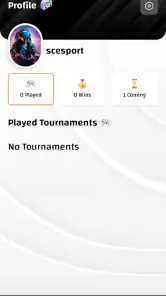
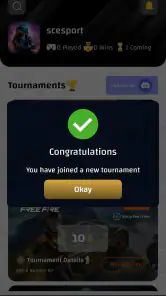
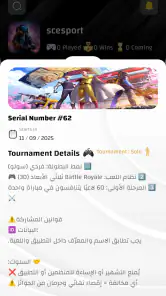
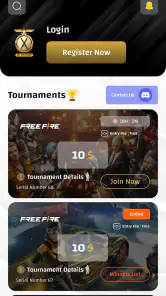
Analysis by Reviewed
I approached SC Esport as someone who already plays Free Fire and wants a more organized way to compete, rather than as a casual player looking for another place to launch a match. The app sits in the sports category and is built around daily tournaments where the possible rewards are diamonds or cash. That focus immediately makes it different from the usual Free Fire companion apps, which tend to concentrate on news, guides, statistics, or cosmetic information.
My first impression is that this is a practical tournament tool, not a complete replacement for Free Fire itself. You still need the main game to do the actual playing, while this app gives the competition a separate structure. That distinction matters. If you enjoy the pressure of a scheduled contest and want your performance to lead to something tangible, the idea is appealing. If you mainly play to relax with friends, the extra steps may feel unnecessary.
SC Esport is free to use, comes from SC ESport, and is marked for mature users aged seventeen and above. It has reached over one hundred thousand installs and holds an average rating of 4.2 from around one thousand ratings, which suggests that the tournament concept has found a real audience without making it universally suitable. I would treat those figures as a sign of interest, not as a guarantee that every event will match your expectations.
From opening the app to entering a tournament
The starting condition: deciding whether competition is worth the effort
The most important decision happens before joining anything: what do you want from the session? When I open an app like this after a normal Free Fire match, I am not simply asking whether I can play. I am asking whether I have enough time, concentration, and patience to follow a competition process. A casual match can be started and abandoned with relatively little consequence. A tournament asks me to pay attention to timing and to treat the result more seriously.
That makes the app especially interesting for players who already have a routine. For example, if I usually play in the evening after work, I can use that moment to look for a daily event rather than entering random matches. The useful change is psychological: the session has a purpose before the game begins. I am no longer just hoping for a good round; I am trying to complete a defined competitive task.
At the same time, I would not recommend installing it solely because the reward wording sounds exciting. Rewards can make a tournament more motivating, but they also raise expectations. You need to be comfortable with the possibility that your result will not lead to anything on a particular day. The app is better understood as a competition platform with an incentive, not as a dependable way to earn money or in-game currency.
Reading the event before committing
A sensible workflow starts with reading the available tournament information carefully. I would check the event details, the expected timing, the way participation is organized, and what action is required after a match. The exact habit is more valuable than rushing into the first visible option. A player who joins without understanding the sequence can easily finish a game and then wonder whether a result, screenshot, score, or other confirmation is needed.
More From Our News Desk

Clash of Clans Is Won Between the Battles

Android Auto Makes the Case for Quieter Car Software

MobiOffice: Transforming Mobile Productivity with Seamless Integration

EA SPORTS FC™ Mobile Soccer: Redefining Mobile Sports Gaming

How Microsoft OneDrive Became a Mobile Productivity Giant

How Google Translate Breaks Language Barriers Effortlessly
This is one of the less obvious trade-offs of a tournament app: the game itself may be familiar, but the surrounding process is not. The app becomes the place where I prepare, confirm, and follow up, while Free Fire remains the place where I perform. Treating those as two separate stages prevents a common mistake—playing well but losing track of the administrative step that connects the match to the contest.
I also prefer to choose an event that fits the time I genuinely have available. Daily availability sounds convenient, yet it can encourage impulsive decisions. If I only have a few minutes before leaving home, a tournament with a fixed flow may create more stress than enjoyment. When I have a quiet block of time, I can read the instructions, play without rushing, and return to the app afterward with a clear head.
Moving between SC Esport and Free Fire
The central handoff is simple in concept but important in practice. I use SC Esport to find or enter the competition, then move to Free Fire to play, and finally return to the tournament app to complete the result-related part of the process. This split means the quality of the experience depends not only on the game but also on how carefully I manage the transition.
Before leaving the tournament screen, I would make sure I know what I am supposed to remember. That might include the event I joined, the relevant timing, or the result that must be reported. I would avoid relying entirely on memory, especially if I am playing in a busy environment. A quick mental check before launching Free Fire is a small habit, but it reduces the chance of finishing a match and then selecting the wrong contest or forgetting where the result belongs.
This workflow also explains why the app may feel more useful to solo players than to people who already have a tightly coordinated team arrangement. A group that communicates through its own established channels may find the separate tournament handoff repetitive. A player who normally has no organized competitive outlet, however, can benefit from having one place to begin and end the session.
Playing with an outcome in mind
Once I am inside Free Fire, SC Esport cannot improve my aim, movement, decision-making, or network connection. Its value is indirect: it gives the match a competitive context. That changes how I approach the round. I am more likely to manage risk, think about consistency, and avoid throwing away a promising position for a flashy play.
For me, the best use is not necessarily chasing one spectacular result. It is using repeated tournament attempts to identify how I actually perform under pressure. Do I make poor decisions early? Do I become too cautious near the end? Do I play differently when a reward is involved? The app creates a reason to examine those patterns, even though the analysis itself still has to come from me.
There is a practical tip here that a generic description would not tell you: separate performance problems from process problems. If I lose because of a bad tactical decision, that is a Free Fire issue. If I lose because I missed a tournament step, misunderstood the event, or failed to return to the app, that is a workflow issue. Keeping those categories apart helps me improve instead of blaming the wrong part of the experience.
Returning to the app and completing the handoff
After the match, I return to SC Esport while the details are still fresh. This is the point where discipline matters more than excitement. I would review the tournament screen again, confirm that I am working with the correct event, and follow the available result process carefully. Even when the app feels straightforward, the return stage deserves attention because it connects personal performance with the competition record.
This handoff is also where the app’s limitations become visible. A player who expects the tournament platform to automatically understand everything that happened inside Free Fire may be disappointed. The two products are separate, so the user has responsibility for moving information from one stage to the other. That is not necessarily a flaw, but it does mean the experience is less seamless than playing a built-in event inside the main game.
I would also avoid treating the result screen as the end of the entire experience. If the outcome is favorable, I would still check what the next step is for the reward. If the result is disappointing, I would note whether the issue was gameplay, timing, or the submission process before joining another event. That short review makes daily participation more useful than simply repeating the same routine without learning from it.
What the result feels like
The strongest part of SC Esport is the way it gives an ordinary Free Fire session a clear beginning and end. I start by selecting a competition, play with a defined purpose, and return to see how that effort translates into a tournament outcome. Even when I do not win, the structure can make the session feel more meaningful than an unplanned series of matches.
The reward angle adds motivation, particularly for players who value diamonds or cash more than cosmetic progress inside a conventional battle pass. Still, I would keep expectations realistic. A reward possibility is not the same as a guaranteed return, and competitive outcomes naturally vary. The app works best when the reward is an extra reason to participate, not the only reason.
There is also a social result, even if the app is not replacing a voice-chat community or a full esports league. Entering tournaments gives a player a sense of participating in something more organized than ordinary matchmaking. That can be valuable for someone who wants competitive pressure but does not have a local group, a regular squad, or the time to commit to a larger league structure.
In everyday use, I can imagine opening the app during a planned evening session, selecting an event, checking the requirements, switching to Free Fire, and returning afterward to finish the process. The outcome may be a reward, a recorded result, or simply a clearer understanding of how I perform under pressure. The important point is that the app gives the session a framework without pretending to be the game itself.
Where the flow breaks
The first weak point is friction between applications. Every handoff creates an opportunity for distraction, confusion, or an incomplete submission. If I receive a message, lose track of the event, or close the wrong screen, the tournament experience becomes less smooth. Players who want one-tap integration may prefer competitions built directly into Free Fire or another service with tighter in-game support.
The second issue is emotional pressure. A reward-focused contest can make a player play more aggressively or become frustrated after a poor result. That is particularly relevant for younger users, although the mature age classification already signals that this is not being positioned as a child-oriented app. I would recommend treating each event as a competitive activity with limits, not as something to chase indefinitely.
The third break occurs when the user’s schedule does not match the tournament rhythm. Daily events sound flexible, but daily availability does not automatically mean every event suits every player. Someone who wants completely spontaneous play may find the structure restrictive. Someone with an unreliable connection or only short gaps in the day may also prefer ordinary Free Fire matches, where leaving carries less administrative weight.
Another limitation is that the app’s usefulness depends heavily on the quality of the tournament process. The more clearly an event explains what to do before and after playing, the more confident I feel. If I have to guess about a handoff, the reward path, or the status of a result, the competitive excitement quickly turns into uncertainty. My advice is to slow down at every transition instead of assuming that the next step will be obvious.
Who should use it, and who should skip it?
I think SC Esport is a good fit for Free Fire players who already enjoy competition and want a daily reason to take matches seriously. It is also suitable for players who lack a formal esports group but would like a more organized challenge than standard matchmaking. The free price makes experimenting easy, especially if you are willing to spend a few sessions learning the workflow before deciding whether it suits you.
I would be more cautious about recommending it to someone who only wants relaxed play, dislikes switching between apps, or expects every session to produce a reward. It is also not the right choice for a player who wants detailed coaching, deep match analytics, or a complete gaming community in one place. In those cases, a specialized training tool, a team communication service, or Free Fire’s own competitive options may serve the purpose better.
SC Esport runs on Android from version 7.0 onward, and its current version is 1.3.5. That makes it accessible to many Android users, but compatibility alone does not remove the practical need for a stable, comfortable setup. I would play with enough battery, a reliable connection, and a clear amount of time for both the match and the return to the tournament screen.
My recommendation after following the full workflow
After looking at the complete path from choosing an event to handling the result, I see SC Esport as a focused companion for competitive Free Fire players. Its best quality is not that it adds another place to launch the game; it is that it gives a normal match a tournament-shaped purpose. The handoffs are the price of that structure, and they require more attention than a built-in event would.
I would try it if I wanted daily competition, understood that rewards are an incentive rather than a promise, and was comfortable managing the transition between the tournament app and Free Fire. I would skip it if I wanted instant, consequence-free matches or a fully integrated experience. The app is most convincing when used deliberately: read first, play with a plan, return promptly, and separate gameplay mistakes from process mistakes.
SC Esport is a free sports app from SC ESport with a clear niche. It does not need to become a general-purpose gaming platform to be useful. For the right player, it turns spare time into a more structured challenge and provides a reason to care about the result of each match. For everyone else, the extra workflow may outweigh the appeal of competing for diamonds or cash. My honest view is that it is worth testing for committed Free Fire players, but only if they value the tournament routine as much as the possible reward.
SC Esport Frequently Asked Questions
Is SC Esport free, and what should I expect from its tournaments?
SC Esport is free to download and focuses on daily Free Fire tournaments offering real prizes, either diamonds or cash. The app is a sports app from SC ESport, so it may suit players looking for tournament opportunities as well as people following competitive gaming. Check the tournament details in the app before joining so you understand the requirements and prize terms.
What is SC Esport, and what can I use it for?
SC Esport is an esports-focused platform designed to help users follow competitive gaming content, teams, players, matches, tournaments, and related updates in one place. Depending on the version and region, it may provide schedules, results, news, rankings, statistics, live information, or community features. Its usefulness depends on the games and competitions currently supported by the app.
Is SC Esport free to download and use?
SC Esport is free to download. Its main focus is daily Free Fire tournaments with real prizes, such as diamonds or cash. Review the tournament details shown in the app before participating, since individual events may have their own requirements and prize terms.
Does SC Esport support live match scores and tournament updates?
The app is intended for esports followers who want convenient access to competition information, but the exact live features can vary according to the supported games and tournaments. Some events may include real-time scores, schedules, standings, or notifications, while others may only offer delayed results or basic information. Availability can also depend on an internet connection and regional coverage.
Do I need an account to use SC Esport?
An account may not be necessary for viewing all publicly available content, although certain functions can require registration. Creating an account may unlock personalized notifications, saved teams or tournaments, participation features, or access to exclusive content. During setup, check which permissions and personal details are requested, and read the privacy policy before providing information or connecting another account.
Pros
- Simple way to follow SC Esport news
- matches
- and team updates.
- Useful for fans who want esports content in one dedicated app.
- Quick access to the organization’s latest announcements.
- Helps supporters stay connected with the SC Esport community.
- Convenient mobile format for checking updates on the go.
Cons
- Content may be limited outside major SC Esport events.
- Update frequency can vary between tournaments and seasons.
- Appeal is mainly limited to fans of SC Esport and its teams.
- Some sections may depend on an active internet connection.
- The app may offer fewer features than larger esports platforms.
- Category
- Sports
- Version
- 1.3.5





