Poppy - Live Video Chat
- 54.00
- 4.6
- Installs
- 500.00K
- Price
- Free

Screenshots





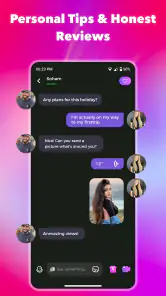
Analysis by Reviewed
Meeting someone through a video call usually asks for a little preparation: choosing a contact, sending a message, or arranging a time. Poppy - Live Video Chat takes the opposite approach. It is a social app built around random video conversations with strangers, so the main experience begins with uncertainty rather than a planned invitation. I found that this changes the rhythm of communication immediately. Instead of waiting for a reply from someone I already know, I had to decide whether I was ready to give a few minutes of attention to whoever appeared next.
That makes Poppy interesting for people who want spontaneous interaction, a break from familiar social circles, or a quick way to practise starting conversations. It is also an app that demands clearer personal boundaries than an ordinary messaging service. A stranger can appear without the context that normally makes conversation comfortable, and the value of each exchange depends heavily on how willing both people are to participate respectfully. My experience is that Poppy can feel lively and refreshing when approached casually, but it is not a replacement for dependable communication with friends, family, or colleagues.
How Poppy Changes the Pace of Social Conversation
A communication need built around spontaneity
Wolf Club Studio presents Poppy as a social app rather than a traditional chat tool, and that distinction matters. The service is free to download, with optional in-app purchases ranging from $0.99 to $99.99 per item. Its store summary describes random video chat with strangers, while the short store description simply calls it Poppy. Those details point to a focused idea: quick, unplanned face-to-face contact instead of a large collection of communication tools.
I can see the appeal on an ordinary evening when I want human interaction but do not want to write a long message or arrange a call. The app lowers the effort needed to begin. That is its strongest communication advantage. A person who feels stuck in a repetitive routine may find the unpredictability more engaging than scrolling through familiar feeds, because every conversation asks for a fresh reaction.
At the same time, low effort does not mean low responsibility. Video makes the interaction more immediate than text, and that immediacy can be uncomfortable if I open the app while distracted, tired, or not prepared to speak. Poppy works best when I treat it as a deliberate social activity, even if each conversation is brief. Opening it automatically whenever I feel bored can turn communication into another form of restless scrolling.
The app has reached over 500 thousand installs and holds an average rating of 4.6 from around 1.5 thousand ratings. That suggests a meaningful audience for this particular style of social discovery, but popularity should not be confused with universal suitability. Random video chat attracts people looking for very different experiences. Some may want friendly conversation, while others may be careless with their time or manners. The app’s basic concept creates that mixed environment by design.
What a typical conversation feels like
The central flow is easier to understand than the social consequences. I enter with the expectation that a stranger may appear, then I have to make a quick decision: greet them, wait for them to speak, or move on if the situation feels wrong. This is different from a messaging app, where I can read a profile, consider my response, and choose when to answer. Poppy puts the first impression in real time.
More From Our News Desk

Clash of Clans Is Won Between the Battles

Android Auto Makes the Case for Quieter Car Software

MobiOffice: Transforming Mobile Productivity with Seamless Integration

EA SPORTS FC™ Mobile Soccer: Redefining Mobile Sports Gaming

How Microsoft OneDrive Became a Mobile Productivity Giant

How Google Translate Breaks Language Barriers Effortlessly
That immediacy can produce surprisingly natural exchanges. A simple greeting, a comment about the moment, or a question about where someone is spending their time can be enough to create a short conversation. I found that open-ended questions work better than trying to sound impressive. The goal is not to perform; it is to discover quickly whether both people actually want to continue.
A useful habit is to decide on a personal stopping point before starting. For example, I can give myself a short window to try a few conversations, then leave rather than continuing automatically. This keeps the app from controlling the length of my evening. It also makes it easier to end a conversation politely because I already have a reason to stop that does not depend on the other person’s reaction.
The random format also changes how much context I need to provide. With an existing contact, a quiet moment is usually understandable. With a stranger, silence can feel like a failure or a sign that the connection is not working. I learned to accept that not every pause needs rescuing. If the conversation has no mutual energy after a few attempts, moving on is more sensible than forcing it.
Why the video format costs more attention
Video chat is more demanding than text because it combines listening, speaking, facial reactions, and awareness of the camera. Even a short exchange can require more concentration than reading a message. I had to pay attention not only to what was being said, but also to whether the other person seemed comfortable, distracted, or ready to leave.
This is where Poppy can conflict with everyday multitasking. I would not recommend opening it while cooking, travelling, working, or handling anything that needs concentration. A random conversation has no predictable timing, and the other person deserves more than half-attention. If I cannot look at the screen and listen properly, text-based communication is the better choice.
There is also an emotional attention cost. A pleasant interaction can lift my mood, but an awkward or rude one can linger longer than its actual duration. The unpredictability that makes the app exciting can also make it tiring. After several rapid conversations, I may remember the uncomfortable moments more strongly than the ordinary friendly ones. That is not a flaw unique to Poppy, but the app’s design makes the contrast especially noticeable.
My practical approach is to use it in small sessions rather than as an open-ended background activity. I keep the room around me private, remove obvious distractions, and stop when I notice that I am answering automatically. This improves the quality of the conversations and protects my attention. The app is more enjoyable when I choose to be present instead of treating each match as another item to process.
Boundaries are part of the experience
Because Poppy connects strangers through live video, boundaries should be decided before the first conversation, not after an uncomfortable moment. I avoid sharing identifying details, routines, contact information, or anything that would make it easy for a stranger to locate me outside the app. I also keep the camera pointed at a neutral background when I do not want my home environment visible.
A second important boundary is conversational. I do not owe a stranger an explanation for ending a call. A brief goodbye is enough, and leaving immediately is reasonable if the interaction becomes aggressive, sexual, manipulative, or simply unsettling. The mature 17+ age rating is a clear reminder that this is not an app I would treat as suitable for children. Parents and younger users should not assume that a random live-video environment has the same comfort level as a moderated family messaging service.
I also recommend avoiding the habit of moving a conversation to another platform too quickly. A stranger who pushes for personal contact before trust exists is giving me useful information about their approach. Keeping the interaction inside the original setting for as long as necessary makes it easier to step away. If the app offers any reporting or blocking controls during use, those should be treated as basic safety tools rather than last resorts, although I would still rely on my own judgement first.
Another boundary concerns presentation. A camera reveals more than words do, including surroundings, clothing, household details, and the reactions of people nearby. Before starting, I check what is visible behind me and whether anyone else could accidentally appear. That small preparation is one of the most practical ways to reduce unwanted exposure without making the experience feel overly formal.
How it compares with familiar alternatives
Poppy is a poor substitute for a normal messenger when the goal is reliable contact. Apps built around existing friends give me more control over who can reach me, when I respond, and how much personal context is already shared. They are better for planning, emotional support, and conversations that need continuity.
It also differs from social networks that rely mainly on feeds, posts, or comments. Those services let me observe before participating and often give me time to shape how I present myself. Poppy removes much of that preparation. Its advantage is immediacy; its cost is reduced control. Someone who enjoys browsing profiles before speaking may find the random format too abrupt.
Compared with text-only random chat, live video can create a stronger sense of presence, but it also makes privacy and attention more important. Text allows me to pause, reread, and leave quietly. Video asks for a faster decision and exposes more of the person behind the account. I would choose Poppy when I specifically want spontaneous face-to-face contact, not when I simply want casual conversation with minimal pressure.
The current version is 1.1.5 and supports devices running Android 8.0 or later. That makes it accessible to many older Android phones, although the quality of any live-video experience will still depend on the device, connection, lighting, and the other person’s setup. I would not judge the app solely by a poor conversation caused by technical conditions, but repeated friction in those areas would make a more established communication tool preferable.
Who will enjoy it, and who should skip it
Poppy suits people who are curious, socially flexible, and comfortable with short conversations that may not lead anywhere. It can be useful for someone practising greetings in another language, rebuilding confidence after spending too much time alone, or simply looking for a more active alternative to passive scrolling. The random structure encourages quick social decisions, which can be valuable for people who overthink every message.
It is less suitable for anyone who needs predictable contacts, strong identity context, or a calm communication pace. If unexpected video interactions create anxiety, a moderated community with topic-based rooms may be a better fit. If privacy is a major concern, a service limited to known contacts is safer by design. People who dislike ending conversations, or who feel pressured to remain polite when a stranger crosses a line, should be especially cautious.
I would also skip it during emotionally vulnerable moments when I am looking for dependable reassurance. A random stranger may be kind, but there is no guarantee of patience, compatibility, or continuity. Poppy can offer a moment of connection; it cannot promise the stable relationship that a trusted friend or professional support service provides.
A realistic everyday way to use it
Imagine finishing a long day and noticing that I have spent an hour moving between short videos without feeling any more connected. I open Poppy with a clear limit, sit somewhere private, and speak to a few strangers rather than trying to keep the session running indefinitely. One person may be quiet, another may end quickly, and a third may offer an unexpectedly thoughtful conversation. After that, I close the app and return to the rest of my evening instead of letting the search for a better interaction continue.
That scenario captures the app’s best use. It is not about collecting contacts or proving that every conversation will be memorable. It is about replacing passive consumption with a small, real-time social risk. The trade-off is that the result cannot be controlled. If I need a guaranteed outcome, Poppy will probably disappoint me. If I accept a few imperfect exchanges as part of the experience, it can make an ordinary evening feel less isolated.
My final view of the social experience
After using Poppy, I see it as a focused experiment in spontaneous communication. Wolf Club Studio has built the experience around the moment before a conversation is known: the quick greeting, the decision to continue, and the judgement that tells me when to leave. That creates a different social rhythm from messaging and feeds. It can be energising, but it asks me to manage my attention and boundaries actively.
The app is free, carries a mature 17+ rating, and includes optional purchases, so I would begin with the free experience and only consider spending after understanding how I actually use it. Its rating and growing install base show that many people enjoy the concept, yet the random nature remains the defining trade-off. The best reason to try Poppy is the chance of an unscripted human moment; the best reason to be cautious is that neither the person nor the pace can be predicted.
I would recommend it to adults who want brief, spontaneous video conversations and are comfortable ending interactions without guilt. I would not recommend it as a primary social lifeline, a children’s communication app, or a replacement for trusted relationships. Used in short, intentional sessions, Poppy - Live Video Chat can interrupt a dull routine and make communication feel immediate again. Used without limits, it can just as easily turn attention into another thing being spent without much control.
Poppy - Live Video Chat Frequently Asked Questions
What age group is Poppy - Live Video Chat intended for?
Poppy - Live Video Chat is rated Mature 17+, so it is intended for adults and older teens rather than young children. Because it connects people for live conversations with strangers, users should consider whether they are comfortable with that kind of social interaction before installing it. Parents and guardians should review the age rating and decide whether the app is appropriate for anyone in their care.
Will Poppy - Live Video Chat run on my Android or iOS device?
The app is listed for Android devices running version 8.0 or later. Before downloading, check your device’s operating-system version and make sure you have a reliable internet connection, since live video calls depend on connectivity. Poppy is a social app built around real-time conversations, so a device with a working camera and microphone will be important for using its main features.
What is Poppy - Live Video Chat, and how does it work?
Poppy - Live Video Chat is a social communication app designed for meeting people through live video conversations. After creating a profile, users can browse available contacts or receive suggestions and start chatting, depending on the app’s matching and access rules. The experience is focused on real-time interaction, so a stable internet connection, camera, microphone, and a comfortable environment are recommended.
Is Poppy - Live Video Chat free to download and use?
Poppy - Live Video Chat is free to download, but some features can require in-app purchases, credits, subscriptions, or other paid options. In-app purchases range from $0.99 to $99.99 per item, and access to certain video-chat functions, virtual items, or enhanced discovery tools may vary by region and account type. Before confirming a purchase, check the current pricing, renewal terms, and payment details shown in the official app store.
Is Poppy - Live Video Chat safe for meeting strangers online?
As with any live video-chat platform, users should remain cautious when interacting with people they do not know. Avoid sharing your home address, financial information, passwords, private documents, or personal contact details. Use available blocking and reporting tools when necessary, and end conversations that feel uncomfortable. Parents should also review the app’s age rating and supervise younger users.
Pros
- Quick matching makes it easy to start conversations with new people.
- Live video interactions feel more personal than text-only messaging.
- Simple interface is easy for first-time users to navigate.
- Useful filters help you find chats that match your interests.
- In-app reporting tools make it easier to flag inappropriate behavior.
Cons
- Video chat can use significant mobile data and drain your battery quickly.
- The quality of conversations depends heavily on the other users online.
- Some features may require purchases or premium access.
- Unexpected interactions may be uncomfortable for younger users.
- A stable internet connection is needed for smooth
- delay-free video.
- Category
- Social
- Version
- 1.1.5