OTTO SPORT
- 104.00
- 4.7
- Installs
- 100.00K
- Price
- Free

Screenshots
Analysis by Reviewed
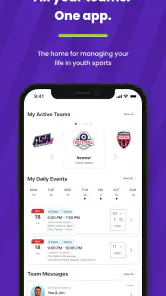
I approached OTTO SPORT as a practical sports app rather than as another general fitness download. Its purpose is team management, so the useful question is not whether it can replace a training plan or a live-score service, but whether it can make the everyday work around a team easier. In my experience, that distinction matters: organizing people, keeping information together, and maintaining a shared routine are very different jobs from tracking an individual workout.
The app comes from OTTO SPORT and is listed in the Sports category. It is free to install, which makes the first decision pleasantly simple: there is no purchase barrier to testing it with a team. It is also rated for Everyone, so its basic positioning is broad enough for youth groups, adult clubs, school teams, and informal sports communities. I would still treat the age rating as a content classification, not as a replacement for sensible supervision when younger players use any team platform.
How the free access translates into practical value
The clearest financial advantage is that access does not require an upfront payment. That makes the app easier to propose when a team is trying to avoid adding another shared expense, especially if the alternative is a patchwork of messaging apps, spreadsheets, and paper notes. Free access also lowers the risk of a trial: a coach or organizer can see whether the workflow suits the group before asking everyone to commit money.
That does not automatically make it the best value for every team. A free team-management app is valuable only when it reduces repeated effort. If players ignore updates, if a coach still has to duplicate every announcement elsewhere, or if the group already has a reliable system that everyone follows, installing another app may create more work than it removes. I would judge the price as a reason to test OTTO SPORT, not as proof that it will solve organizational problems by itself.
The public response gives the app a useful degree of reassurance. It has a 4.7 average from around a thousand ratings, with more than a hundred written reviews, and it has passed the hundred-thousand-install mark. Those figures suggest that it is not an abandoned experiment with no audience. They do not guarantee that its workflow will match the needs of a particular sport, but they make a trial feel reasonable rather than speculative.
One detail I appreciate is that the app is not presented as an expensive specialist platform. The developer is clearly identified as OTTO SPORT, the current version is 3.1.5, and the minimum Android requirement is 7.0. That broad device compatibility should help mixed teams where not everyone owns a recent phone. For a club, avoiding a situation in which several players cannot participate because of older hardware is a meaningful part of value.
Still, I would not make a large club-wide decision based only on the free label and the rating. Before moving all communication into it, I would test the complete routine with a small group: create the team structure, add the people who actually need access, publish a normal update, and see whether everyone understands where to look. The important measure is not how quickly the organizer can set things up once, but how much confusion remains after several ordinary training days.
More From Our News Desk

Clash of Clans Is Won Between the Battles

Android Auto Makes the Case for Quieter Car Software

MobiOffice: Transforming Mobile Productivity with Seamless Integration

EA SPORTS FC™ Mobile Soccer: Redefining Mobile Sports Gaming

How Microsoft OneDrive Became a Mobile Productivity Giant

How Google Translate Breaks Language Barriers Effortlessly
Where a team-management app can earn its place
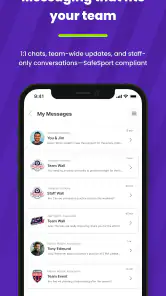
The strongest use case is a group that has outgrown casual messages but does not need a complicated club administration system. Consider a youth football coach preparing for a weekday session. In a messaging thread, the practical details can become mixed with jokes, unrelated replies, and last-minute questions. A dedicated sports workspace gives the organizer a clearer place to direct team-related information, while players and families know that the app is intended for that purpose.
The same logic applies to amateur basketball, volleyball, athletics groups, or recreational teams. The sport changes, but the organizational friction is familiar: people need to know what is happening, who belongs to the group, and where the latest instruction can be found. OTTO SPORT is most convincing when it becomes the team’s shared reference point instead of one more notification channel.
A less obvious benefit is the reduction of memory-based management. Coaches often carry small facts in their heads: which group is attending, who needs the next update, which notice was already sent, and which conversation contains the relevant detail. A dedicated app can encourage a more deliberate habit. Rather than relying on the organizer remembering every private message, the team can be guided toward one consistent place for team business.
That consistency is especially useful when responsibility is shared. If one coach is unavailable, an assistant or team coordinator can follow the same structure instead of searching through a personal chat history. I would not assume that the app removes the need for clear internal roles, but it can support a handover better than scattered conversations can. The practical tip here is to agree on a simple rule from the beginning: team-wide information belongs in the team space, while sensitive individual matters stay private and are handled directly.
A realistic weekly routine
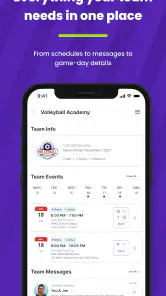
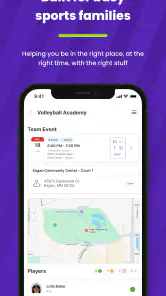
Imagine a small adult volleyball team with a training session on Wednesday and a match at the weekend. The organizer can use the start of the week to post the essential plan, then ask members to check the details before practice. After training, the group can be directed back to the same place for the next update. The value is not in producing a flashy presentation; it is in giving the team a repeatable rhythm that does not depend on one person forwarding the same message several times.
For a youth team, the routine needs a little more care because players and parents may both be involved. I would keep the information short, use consistent wording, and avoid assuming that every family checks notifications immediately. The app can be the central reference, but the coach should still set expectations clearly during the first session. A tool cannot compensate for unclear communication rules, and a free app is not a substitute for a responsible organizer.
Another useful workflow is the transition between seasons or groups. When a team changes members, a dedicated sports environment may be easier to reset mentally than a long-running chat filled with old conversations. I would still review membership carefully and remove people who no longer need access, because clean organization is part of the benefit. The app helps only when the person managing it keeps the structure current.
What it does better than familiar alternatives
The usual alternative is a messaging service. Messaging is fast, familiar, and already installed on most phones, so it remains a strong choice for a very small group that only needs occasional reminders. Its weakness is that important information can disappear into a stream of replies. OTTO SPORT has a clearer sports-specific identity, which may make it easier for a club to separate team administration from personal conversations.
Another alternative is a shared spreadsheet. A spreadsheet can be flexible, especially for organizers who want to build their own tables, but it often places the burden on one technically confident person. It is also less natural for daily team communication. OTTO SPORT is a better fit when the goal is a shared team routine rather than a custom database. On the other hand, a spreadsheet may remain preferable for a club that needs unusual columns, detailed financial tracking, or highly customized reporting.
Calendar tools are useful for dates, but a calendar alone does not create a complete team-management habit. It can tell people when something happens without becoming the natural home for the surrounding instructions. OTTO SPORT makes more sense when the organizer wants sports activity and team communication to feel connected. If the only requirement is to publish a few fixtures, a calendar may be simpler and less disruptive.
Large club-management platforms can go further than a lightweight app, particularly when an organization needs administration across many squads, formal registration, payments, or extensive reporting. Their extra depth can be worthwhile, but it can also introduce training time and complexity. I would choose OTTO SPORT for a focused team workflow and look elsewhere when the club’s needs extend into full organizational administration.
The trade-offs I noticed before recommending it
The first trade-off is adoption. Every member must understand that the app is now part of the team’s routine. If half the group checks it and the rest waits for messages from the coach, the organizer ends up maintaining two systems. My practical advice is to announce one clear starting point, demonstrate it briefly in person, and stop duplicating ordinary updates after the transition period. Otherwise, the app never gets a fair test.
The second trade-off is that a dedicated tool can feel excessive for a tiny informal group. If four friends arrange a casual game once a month, a familiar chat may be quicker. OTTO SPORT earns its place when there is recurring activity, a changing group, or a real need to keep sports information separate from everyday conversation. The more stable the team routine, the more likely its structure will repay the initial setup effort.
The third trade-off is expectation management. A sports team-management app should not be treated as an automatic coach, attendance solution, or performance-analysis system unless those capabilities are specifically part of the experience you have tested. I would use it for the organizational layer and keep specialist tools for specialist jobs. Combining tools can be sensible, but only if each has a clearly defined role.
There is also a human limitation that no interface can fully remove: people still need to read, respond, and act. A well-organized update does not guarantee attendance, punctuality, or commitment. The app can make instructions easier to find, but the coach remains responsible for making them understandable and following up when someone is repeatedly missing information.
For that reason, I would avoid flooding the team with unnecessary notices. One concise update with the essential action is more useful than a stream of minor messages. A good workflow is to prepare the information before sending it, put the key point first, and use the same naming pattern for recurring activities. This small discipline makes the app feel calmer and also makes it easier for members to scan what matters.
Who is likely to get the most from it?
OTTO SPORT is a strong candidate for coaches, captains, and volunteer coordinators who currently manage a team through a mixture of personal messages and memory. It should also appeal to small clubs that want a recognizable sports home without immediately adopting a heavy administration suite. The free cost is particularly helpful for groups that need to prove usefulness before requesting a club budget.
It can also suit families around youth sports, provided the organizer establishes clear communication boundaries. Parents often need reliable team information, while young players may use a different device or have limited independence with apps. The best result comes when the team agrees who is expected to check updates and how urgent changes will be handled. That is a workflow decision, not a button inside the app, but it determines whether the platform helps.
Players who dislike group-chat noise may appreciate the separation from personal conversations. Someone who wants every team detail in a single, recognizable location has a good reason to try it. The app is less compelling for an individual athlete looking for workout tracking, coaching plans, nutrition guidance, or personal statistics. Its value is collective rather than individual.
I would also be cautious about recommending it as the sole system for a large, complex organization without a proper pilot. A club with many teams and administrative layers may eventually need more specialized controls than a focused team app provides. Starting with one squad is the sensible approach. If the organizer can maintain clean membership, timely updates, and consistent participation, the club can then decide whether the same model scales.
Device compatibility is another practical consideration. With Android support beginning at version 7.0, the app is accessible to many older Android phones, which is helpful for mixed-device teams. I would still ask members to install it before the first important event rather than on the day itself. That gives the organizer time to identify login or notification problems without turning a match-day change into a technical exercise.
My verdict on the value
After looking at its role carefully, I see OTTO SPORT as a focused, low-risk option for teams that need more structure than a chat but less complexity than a full club-management platform. The free access is the main practical reason to try it, while the sports-specific purpose is the reason it may remain useful after the trial. Its reported 4.7 average and audience of over a hundred thousand installs add confidence, but the real test is whether a team can make it part of its everyday habit.
I would recommend it to a coach or captain who is tired of repeating the same information across scattered conversations. I would also recommend starting small, agreeing on communication rules, and measuring success by fewer missed updates rather than by the number of features used. That approach gives the app a fair chance and prevents the team from creating a second layer of unnecessary administration.
I would skip it if your group only needs occasional casual messages, if everyone already follows a simple calendar perfectly, or if you are searching for individual training analysis rather than team organization. I would also look at a more comprehensive platform when you need broad club administration and a lightweight team workspace no longer covers the job.
For the right audience, the best value is not the absence of a purchase price; it is the time saved when a team finally knows where its information lives. That is why I see OTTO SPORT as worth testing: it is free to begin with, accessible to a broad range of Android devices, and aimed at a real problem that many coaches and captains handle badly with improvised tools. It will not organize a team without cooperation, but with a clear routine and realistic expectations, it can become a useful shared base for sports life.
OTTO SPORT Frequently Asked Questions
What should I check before installing OTTO SPORT?
OTTO SPORT is a sports app developed by OTTO SPORT, with a 4.7 average from around 1K ratings. Its age rating is Everyone, so it is presented for a general audience. If you are comparing sports apps, consider whether a sports team management app suits what you need and make sure you select the app published by OTTO SPORT.
What is OTTO SPORT, and what can I use it for?
OTTO SPORT is designed to give sports fans convenient access to sports-related information and services from a mobile device. Depending on the version and region, it may provide updates, schedules, results, news, team or event details, and other useful content. Before downloading, check the official store description because available features can vary by country and may change after updates.
Is OTTO SPORT free to download and use?
The OTTO SPORT app is free to download. Some features or services could require registration, paid access, subscriptions, or purchases handled through the app or an associated provider. I recommend reviewing the pricing information shown in the Google Play Store or Apple App Store before installing. Also check whether mobile data charges may apply while streaming or refreshing content.
Do I need to create an account to use OTTO SPORT?
Some basic content may be accessible without an account, while personalized features can require registration. An account may be needed to save preferences, receive notifications, access exclusive information, or use services connected to a sports organization. During setup, review the requested permissions and privacy policy carefully, particularly if the app asks for contact details, location access, or notification permissions.
Does OTTO SPORT work on both Android and iPhone devices?
OTTO SPORT is available for Android devices that meet its operating-system requirement; compatibility and availability can depend on your region and device. Before downloading, confirm that the developer name matches the official publisher and review the supported device information in your app store. Older phones may not support every feature or may experience reduced performance.
Pros
- Quick access to sports offers
- products
- and services in one place.
- Useful for comparing available sports equipment before making a purchase.
- Clean layout makes browsing categories straightforward for most users.
- Can help users discover promotions and limited-time deals more easily.
- Convenient option for customers who prefer managing sports purchases on mobile.
Cons
- Some features may depend on location or available local services.
- Product information may vary in detail between different listings.
- Large catalogs can make finding a specific item time-consuming.
- Notifications and promotional content may feel excessive for some users.
- A stable internet connection is needed for most browsing and account features.
- Category
- Sports
- Version
- 3.1.5





