OohYeah - Video Chat & Call
- 60.00
- 4.1
- Installs
- 100.00K
- Price
- Free

Screenshots


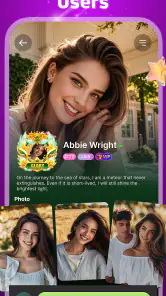

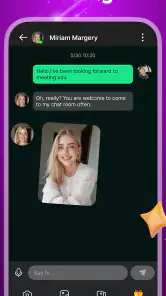
Analysis by Reviewed
Video chat apps can be exciting, but they also ask for more trust than a normal social feed. You are not only sharing messages; you may be showing your face, your surroundings, your voice, and your time to someone you have never met. I approached OohYeah with that in mind. It is a free social app from VIVI LIMITED built around meeting people through video chat, and its mature audience positioning makes it a product that deserves a more careful look than a casual messaging tool.
My overall impression is mixed in a useful way. The idea is easy to understand, the worldwide video-chat focus gives it a clear purpose, and the low barrier to downloading makes it simple to try. At the same time, the experience depends heavily on how comfortable you are with live interaction and on the choices you make before, during, and after a call. I would recommend approaching it as a controlled experiment rather than as a place to immediately share personal details.
What the app is really like to use
OohYeah sits in the social category, but it feels more direct than a conventional community app. Instead of spending most of your time reading posts or reacting to polished profiles, the central appeal is the possibility of talking with people in other parts of the world through video. That immediacy can make a short conversation feel more personal than a long text exchange, although it also means there is less time to think before responding.
The app is free to install, which removes the biggest obstacle for someone who simply wants to see whether this style of socializing suits them. Its mature rating of 17+ is important context, not a decorative label. I would not treat the app as appropriate for younger users, and parents should not assume that a general social app with video calls is suitable just because the download itself costs nothing.
In everyday use, I can imagine opening it after moving to a new city, wanting casual international conversation, or looking for a less formal way to practice speaking with people from different backgrounds. It could also appeal to someone who finds large public social networks exhausting and prefers a one-to-one exchange. The trade-off is that a live call exposes more of your identity and environment than a text message does, so the app rewards preparation.
The current version is 1.0.22, and the app requires Android 6.0 or later. That makes it accessible to many Android users, including people who are not carrying a recent phone. However, compatibility is not the same as comfort: video calls can be demanding on an older device, a weak connection can affect the conversation, and a small screen may make it harder to notice what is happening before you accept an interaction.
Trust begins before the first call
When I review a video-chat service, I do not judge trust from its bright presentation or from the promise of meeting people worldwide. I look at whether the user can make deliberate choices. Before using OohYeah, I would check the app’s permission prompts carefully, especially anything related to the camera, microphone, notifications, or contacts. I would grant only what is needed for the action I am taking, rather than approving every request automatically.
More From Our News Desk

Clash of Clans Is Won Between the Battles

Android Auto Makes the Case for Quieter Car Software

MobiOffice: Transforming Mobile Productivity with Seamless Integration

EA SPORTS FC™ Mobile Soccer: Redefining Mobile Sports Gaming

How Microsoft OneDrive Became a Mobile Productivity Giant

How Google Translate Breaks Language Barriers Effortlessly
This is particularly important because a camera permission is not a minor convenience. It changes the privacy level of the entire interaction. If I only want to explore the interface, I would keep the camera disabled until I am ready to make a call. I would also inspect the phone’s system settings afterward, because those controls are often the clearest way to see whether access remains active and to revoke it when I am finished.
I would use a neutral background for early conversations and remove visible documents, work screens, school materials, delivery labels, or photographs that reveal where I live. This is one of the most practical precautions with a video-chat app: the room behind you can disclose more than you intended. A plain wall is not exciting, but it gives you control over what the other person learns.
The same principle applies to your profile and conversation. I would avoid using a username that matches my other social accounts, and I would not volunteer my full name, workplace, exact neighborhood, travel plans, or private contact details during an initial call. A friendly conversation can still remain limited. Being open-minded does not require being identifiable.
Controls matter more than the novelty
The most useful question is not whether OohYeah can connect you with strangers. The store summary already makes that purpose clear. The practical question is how confidently you can stop an interaction that becomes uncomfortable. Before treating the app as part of my routine, I would locate every visible option for ending a call, leaving a conversation, blocking an account, reporting behavior, and managing notifications. I would not wait until a problem occurred to search for those controls.
That workflow is a concrete test of user agency. Start with a short session, keep notifications limited, and end the call yourself rather than allowing the conversation to drift into a longer exchange. Afterward, review whether the app leaves you feeling in control. If you cannot quickly find the action you need, that friction is meaningful, even if the conversation itself was pleasant.
I would also separate experimentation from commitment. Use the first session to understand how discovery works, how calls begin, and where account settings are located. Do not make purchases, add personal information, or move the conversation to another service simply because the other person is friendly. A person who pressures you to act quickly is giving you a reason to slow down.
There is a subtle advantage to this staged approach. It lets you evaluate the social design without confusing novelty with compatibility. Many video-chat apps feel engaging during the first few minutes because every interaction is unpredictable. After the novelty fades, what matters is whether you can choose who to engage with, control your availability, and leave without feeling obligated.
Where privacy decisions become especially important
Live video creates several data-sensitive moments. The first is the camera preview, before another person even appears. I would use that moment to check lighting, clothing, background, and accidental reflections. A mirror, window, name badge, or computer notification can reveal information that never enters the conversation verbally.
The second moment is the call itself. I would assume that anything visible or audible could be remembered or captured by the other participant, regardless of what the app interface suggests. That does not mean every user has bad intentions; it means the safest boundary is one I can maintain myself. I would avoid showing private documents, children, other people who have not agreed to appear, or anything that identifies my daily routine.
The third moment is after the call. I would close the session, review notification previews, and check whether I still want the app to have camera or microphone access. If I decide not to continue, removing permissions and uninstalling the app are straightforward ways to reduce future exposure. I would also avoid leaving the app signed in on a shared phone.
Payments deserve the same attention. OohYeah is free, but it includes in-app purchases ranging from $2.99 to $99.99 per item. That is a wide enough range for me to treat every purchase screen cautiously. I would not buy anything merely to keep a conversation going, unlock attention, or respond to pressure from another user. I would review the item, confirm the amount, and use the device’s purchase protections before spending.
For a teenager near the age boundary, or for a family-shared device, I would enable purchase authentication and make sure the account holder understands that free installation does not mean every part of the experience is free. The mature rating and paid items together make this an app I would keep separate from an unsupervised child’s device.
Who will get the most from it
I think OohYeah is best suited to adults who genuinely enjoy spontaneous conversation and can maintain firm personal boundaries. If you are curious about different accents, cultures, and personalities, the video format can feel more natural than sending carefully edited messages. It may also help someone who wants low-stakes social contact after work, provided that “low stakes” does not become an excuse to reveal private information.
A realistic scenario would be using it for ten minutes during a quiet evening: I would sit somewhere private but not show the room, start with a general topic such as hobbies or travel, and end the call as soon as the conversation stops feeling comfortable. I would keep the session short enough that I could evaluate the interaction rather than becoming invested in it. If the person asks for money, private contact details, intimate material, or urgent help, I would end the call and use the available account controls.
The app may also work for people who are tired of the performance involved in traditional social networks. A video conversation can reveal personality faster than a carefully arranged profile. But that benefit comes with an unusual vulnerability: you have less control over how you are seen. Someone who prefers to think before replying, communicate asynchronously, or keep their identity compartmentalized may be happier with a text-first service.
When another kind of social app is better
Compared with ordinary messaging apps, OohYeah is more immediate and potentially more international, but less predictable. A familiar messenger is usually better for conversations with people you already know because the relationship and identity are established elsewhere. A text-based community is usually better when you want moderation, topic-based discussion, or time to decide whether you trust someone.
Compared with a conventional dating service, a video-first social app may feel less focused on profile browsing and more focused on direct interaction. That can be refreshing, but it also removes some of the filtering that helps users decide whom to contact. If your goal is a serious relationship, carefully defined preferences, identity context, and slower communication may matter more than instant video.
Compared with a group video platform, OohYeah appears aimed at social discovery rather than planned calls with friends, colleagues, or classes. I would not choose it for work meetings, private family conversations, or anything that requires dependable scheduling and clear participant identity. Its appeal is spontaneity, and spontaneity is exactly what makes it a poor fit for sensitive discussions.
People who dislike unexpected social pressure should probably skip it. The same is true for anyone who cannot comfortably refuse a request, anyone seeking a child-friendly environment, or anyone who wants strong separation between online and offline identity. The app is not automatically wrong for those users, but its central format works against their needs.
A practical first-session routine
My recommended starting routine is deliberately simple. I would install the app, read each permission request instead of tapping through it, and open the settings before trying to meet anyone. I would create the least identifying profile that still allows normal use, choose a neutral location, and keep the first call brief.
During that call, I would watch for pressure rather than trying to make the other person like me. Does the conversation respect a “no”? Does the person push for another app, private details, money, or a longer call? Do I feel free to end the session? Those answers tell me more about whether the service is a good fit than the excitement of meeting someone new.
After leaving, I would check notifications and permissions, then decide whether I want to return. If I do, I would establish a personal rule: no private contact details during early conversations, no purchases made under pressure, and no calls from places that reveal my routine. These rules are not overcautious; they are a practical way to keep the app enjoyable without allowing it to set the boundaries for me.
I would also keep expectations realistic. A worldwide audience does not guarantee meaningful conversation every time, and a video connection does not prove that someone is trustworthy. Some sessions may be awkward, brief, or simply uninteresting. That is normal for spontaneous social discovery, but it means the app should complement your social life rather than become your only source of connection.
My cautious verdict
OohYeah has a clear attraction: it makes the idea of talking with people around the world feel immediate, and the free entry point makes trying it easy. Its average rating is 4.1 from around 693 ratings, while the app has passed 100K installs, so it has attracted a meaningful early audience without being something I would treat as universally established. Those figures suggest interest, not a guarantee that every interaction will be safe, enjoyable, or well matched to you.
I like the concept more than I trust it blindly. The right way to use this social app is with deliberate permissions, a controlled background, limited personal disclosure, and a clear exit plan. I would also remember that the developer is VIVI LIMITED, the mature rating sets an important boundary, and in-app purchases can reach $99.99 per item. Those details make careful account and payment habits essential.
My recommendation is therefore conditional. If you are an adult who enjoys spontaneous video conversations and is comfortable enforcing boundaries, OohYeah is worth a cautious trial. Start slowly and judge the experience by how much control you retain, not by how quickly you meet someone. If you want dependable communication with known contacts, structured communities, strong identity context, or a child-appropriate environment, I would choose a different kind of social app instead.
The best reason to try OohYeah is curiosity; the best reason to stay is feeling in control. If that control is missing at any point, ending the call, changing permissions, limiting notifications, or removing the app is the sensible choice. For me, that balanced approach turns an uncertain video-chat experiment into a manageable one without pretending that free access removes the responsibilities of live social interaction.
OohYeah - Video Chat & Call Frequently Asked Questions
Is OohYeah - Video Chat & Call available for my phone?
OohYeah - Video Chat & Call is available for Android devices running Android 6.0 or later. It is a social app for connecting with people through video chat and calls, so check your device’s operating system before downloading. The app is free to download, while some features may involve in-app purchases.
Who is OohYeah - Video Chat & Call intended for?
OohYeah is intended for adults, with a Mature 17+ content rating. Its focus is social communication and video chat with people worldwide, so consider whether that kind of interaction suits you before creating an account. As with any service that connects you with strangers, use good judgment, protect your personal information, and leave conversations that make you uncomfortable.
What is OohYeah - Video Chat & Call, and how does it work?
OohYeah - Video Chat & Call is a social communication app designed for meeting and talking with other users through video calls, voice calls, and messaging features. After creating an account, you can explore available profiles or conversations, connect with people, and start a call when both sides are comfortable. The exact features may vary by region, account type, and app version.
Is OohYeah - Video Chat & Call free to download and use?
The app is free to download, but some communication features or premium options can require in-app purchases. In-app purchases range from $2.99 to $99.99 per item, so check the pricing shown inside the app before making a purchase, especially if virtual gifts, extended calls, or profile-related features are involved. Availability and costs can change, so review the current terms in the relevant app store.
Do I need to create an account to use OohYeah?
An account is generally required to use the main social and calling functions. Registration may involve providing basic information such as a name, age, email address, phone number, or a profile photo, depending on the sign-up method available. Use accurate information where required, choose a strong password, and avoid sharing private details with people you meet through the platform.
Pros
- Quick video calls with a simple
- beginner-friendly interface.
- Useful for meeting new people beyond your existing social circle.
- Chat and calling features are convenient for spontaneous conversations.
- Profile-based discovery makes it easy to find potential contacts.
- The app can make casual social interaction feel more engaging than texting.
Cons
- Some features may require in-app purchases or paid credits.
- User quality and responsiveness can vary considerably.
- Privacy settings should be checked carefully before sharing personal details.
- Video calls may use significant mobile data and battery power.
- Unexpected messages or unwanted contact may require active moderation.
- Category
- Social
- Version
- 1.0.22