Locals.com
- 3.04K
- 4.6
- Installs
- 500.00K
- Price
- Free

Screenshots
Analysis by Reviewed
I came to Locals.com expecting another social app built around constant scrolling, but its appeal is more focused: it gives creators a place to build a direct relationship with people who actively choose to follow their work. That difference matters. Instead of treating every interaction as a quick reaction in a crowded public feed, the app is designed around creator-led communities and the idea that online communication can feel more intentional.
After spending time with it, my impression is that Locals.com works best when I already know whose voice I want to follow. It is less convincing as a general-purpose replacement for every social network, and more useful as a dedicated space for creator communities, discussions, and ongoing updates. The app is free to install, aimed at Teen users, and developed by LOCALS. Its store presence shows a 4.6 average from around 13 thousand ratings, with over 500 thousand installs, so it has moved beyond being an obscure experiment while still feeling more focused than the biggest social platforms.
Why a creator-focused social space feels different
The main communication problem Locals.com tries to address is familiar: creators often depend on platforms where algorithms, trends, and short-lived reactions decide what people see. Followers, meanwhile, may want a clearer way to keep up with a particular person or community without competing with an endless stream of unrelated posts. Locals.com places the creator at the center of that relationship.
That focus changes my expectations as a user. I do not open it primarily to discover random viral content or fill spare minutes with an infinite feed. I open it with a reason: to see what a creator has shared, read community discussion, or take part in a space organized around a common interest. That makes the app feel calmer in one sense, but it also means its value depends heavily on the communities available to me.
If you already follow creators who use the service, the app can become a useful second destination for their longer-form communication. A creator may use a public platform for visibility but rely on a more dedicated community space for people who want closer contact. That split can make online attention more deliberate. I am less likely to wander into unrelated content, yet I am also less likely to discover something completely unexpected.
This is the first important trade-off: Locals.com is better for chosen attention than accidental discovery. People who want a clean connection with specific creators may appreciate that. People who enjoy the broad variety and rapid novelty of mainstream social feeds may find it narrower.
Who gets the most value from it
I would recommend trying it if you follow independent commentators, educators, entertainers, or niche personalities and want a more concentrated way to keep up with them. It can also suit users who prefer community discussion over public performance. When the right creator is present, the app gives a conversation a clear home instead of scattering it across several unrelated networks.
More From Our News Desk

Clash of Clans Is Won Between the Battles

Android Auto Makes the Case for Quieter Car Software

MobiOffice: Transforming Mobile Productivity with Seamless Integration

EA SPORTS FC™ Mobile Soccer: Redefining Mobile Sports Gaming

How Microsoft OneDrive Became a Mobile Productivity Giant

How Google Translate Breaks Language Barriers Effortlessly
Creators may also find the concept appealing because the service is built around independence rather than treating them as interchangeable content suppliers. That does not automatically make every community engaging, of course. A strong creator still needs to communicate clearly, post with some consistency, and participate enough for followers to feel that the space has a purpose.
I would be more cautious if you are looking for a single app to connect with all your friends, discover local events, exchange private messages, and consume every kind of media. Locals.com is not the obvious choice for that broad social role. A general network is usually more convenient when your priority is keeping an existing circle together rather than following creator-centered communities.
How conversations feel when the feed has a purpose
The most noticeable difference is the rhythm. On a large general platform, a conversation can disappear quickly beneath new posts, recommendations, advertisements, and unrelated reactions. In a creator-focused environment, the discussion has more context. I know why the people in a space are there, and that shared reason makes even ordinary comments easier to understand.
That does not mean every thread is thoughtful. Community spaces still depend on the behavior of their members. Some discussions may be lively and useful, while others may repeat familiar arguments or become dominated by a small number of voices. The app can provide a more direct setting, but it cannot manufacture trust or good conversation on its own.
One practical habit helps: I treat each creator community as a separate conversation room rather than as one giant social identity. I decide which spaces deserve regular attention and which are better checked occasionally. This prevents the app from turning into another undifferentiated stream of notifications and opinions.
For a creator, that separation can make communication clearer too. An update intended for dedicated followers does not have to compete with unrelated topics. For a follower, the benefit is that context is easier to retain. I can remember what a community is discussing because the subject is tied to the creator and the people gathered around them.
Compared with a messaging group, Locals.com feels more open and creator-led. A private chat is excellent for a small circle that already knows one another, but it can become noisy, difficult to search, or uncomfortable for newcomers. Compared with a public social network, Locals.com feels more intentional, though it may offer less variety and fewer reasons to open the app when I am not following an active community.
The hidden cost of another place to check
The app’s focused design does not eliminate attention costs; it changes them. Every additional social platform creates another inbox, another feed, and another mental reminder. If I follow too many creators, the supposedly calmer experience can become a collection of obligations. The problem is no longer random content alone. It is the feeling that I should keep up with several separate communities.
My most useful approach is to avoid treating every update as urgent. I check the communities that matter to me at chosen times instead of responding whenever something appears. This is especially important for creator-led spaces, where frequent posts can create the impression that active participation is expected. A healthy community should support interest, not demand constant availability.
There is also a discovery cost. Mainstream networks are often good at showing me something I did not know I wanted. Locals.com is more dependent on deliberate choice. If I have not found creators who fit my interests, the app may feel quiet or limited. That is not necessarily a flaw in its purpose, but it is a real limitation for anyone who measures a social app by the breadth of its recommendations.
I also would not assume that moving to a creator-focused service automatically improves information quality. A smaller or more focused community can feel clearer, but clarity and accuracy are different things. I still need to judge claims, watch for overconfident opinions, and decide whether a creator’s style suits me. The app changes the setting of communication; it does not remove the need for personal judgment.
Boundaries that make the experience more sustainable
Locals.com makes the most sense when I use it with firm boundaries. Before joining a community, I ask myself what I actually want from it: updates, discussion, access to a particular creator’s work, or simply curiosity. That small decision prevents me from joining spaces that I will never meaningfully visit.
I also separate reading from participating. Not every post needs a reply, and not every disagreement deserves my attention. In a creator-centered community, it can be tempting to feel closer to the person behind the posts than I really am. Remembering that I am still choosing how much time and emotional energy to give keeps the experience more comfortable.
For families, the Teen content rating is worth taking seriously. A parent or guardian should consider which communities a younger user wants to join and how much independent interaction is appropriate. The app’s social nature means the quality of the experience depends not only on the interface but also on the people and topics a user encounters.
There is another boundary involving money. The app itself is free, but it includes in-app purchases ranging from $1.99 to $119.99 per item. I would not enter a creator community assuming that every part of the experience is included at no cost. Before paying, I would first decide whether the creator’s ongoing content and community participation justify the expense for me, rather than treating payment as a default requirement for belonging.
That pricing range also makes it sensible to slow down before confirming a purchase, especially if the app is being used on a shared device. The important question is not simply whether a paid option exists, but whether it adds something I will use repeatedly. A one-time burst of curiosity is a weak reason to spend; a community that genuinely improves how I follow a creator is a stronger one.
Everyday use: following one creator without losing the evening
Imagine that I finish work and want to catch up with a creator whose discussions I value. On a large social network, I might search for the latest post and then lose half an hour to unrelated recommendations. With Locals.com, I can go directly to the relevant community, read the current conversation, and leave when I have caught up. That direct route is the app’s strongest everyday promise.
The benefit is not that the app makes me more disciplined automatically. I still have to close it. The benefit is that the reason for opening it is clearer. I am less likely to confuse general browsing with meaningful communication. For anyone trying to reduce background scrolling while staying connected to selected creators, that distinction can be genuinely useful.
On another day, I might check the same community during a short break and find that the conversation has moved on. That can be positive because the discussion feels active, but it can also create pressure to read everything. I prefer to accept that I will miss some posts. A social app becomes healthier when I can return without feeling that I have failed because I was offline.
This is where Locals.com changes communication rhythm most clearly. It encourages a return to specific communities rather than a constant scan of the entire internet. Whether that feels liberating or restrictive depends on what I want from social media. I enjoy it when I have a clear interest; I miss broader discovery when I want something spontaneous.
What the current app details mean in practice
Locals.com has been available since May 28, 2020, and the current version is 2.1.32. It supports devices running Android 7.0 or later, which makes it accessible to many older Android phones rather than limiting it to recent hardware. That is helpful if I want to try the service without replacing a perfectly usable device.
The developer is LOCALS, and the app’s stated direction is closely tied to helping creators operate independently. I see that as more than a slogan only when the community I join actually feels connected to a creator’s work. If the creator rarely engages or the discussion lacks a clear purpose, the independence-focused idea becomes less noticeable in daily use.
The free entry point lowers the barrier to exploring the service. I can decide whether a community fits me before committing money, although the presence of paid items means I still need to pay attention during the sign-up and participation process. For a casual user, that may be enough. For someone who intends to support several creators, the costs can become a meaningful part of the decision.
The rating is encouraging, but I would not use it as a substitute for checking whether the app matches my communication habits. A high average can tell me that many users are satisfied, yet it cannot answer the personal questions that matter most: Are the creators I care about active there? Do I want focused communities or broad discovery? Can I maintain another social destination without adding stress?
Where it beats familiar alternatives, and where it does not
Against a mainstream social network, Locals.com wins when I want a more deliberate relationship with selected creators. The conversation has a stronger center, and I can avoid some of the noise that comes from mixing friends, brands, news, entertainment, and recommendations in one feed. It loses when I want maximum reach, effortless discovery, or one place where everyone I know already spends time.
Against a private messaging app, it offers a better fit for creator-to-audience communication. A messaging group can become awkward when thousands of people are present, while a public creator community can give followers a clearer shared context. On the other hand, private messaging remains better for personal conversations, quick coordination, and groups where every participant knows one another.
Against subscription-based creator platforms, the comparison depends on what I value. Locals.com’s social emphasis makes conversation and community central, while a platform built mainly around exclusive media may be better if my only goal is receiving premium content. I would choose Locals.com when interaction matters as much as access, and another service when the content itself is the whole reason I am paying.
The app is therefore not a universal social replacement. Its advantage is specialization. That specialization is worthwhile only when it matches my habits, which is why I would begin with one or two communities rather than trying to rebuild my entire online life inside it.
My verdict on attention, clarity, and control
After using Locals.com as a focused social destination, I see a thoughtful alternative to the noisy, all-purpose feed. It gives communication a clearer center and makes it easier to follow creators because I chose to be there. The strongest benefit is not a flashy feature; it is the change in intention. I open it for a particular relationship or community rather than surrendering my attention to whatever appears next.
Still, I would not recommend it to everyone. If you mainly need friends, private chats, broad discovery, or a single network with the largest possible audience, your usual alternatives may be more practical. I would also skip it if the creators I care about are not active there, because a focused community app cannot be useful without communities worth returning to.
For the right user, though, Locals.com offers a healthier pattern: choose the voices that matter, visit their spaces deliberately, and leave without feeling required to monitor everything. I like that balance. The app does not solve every problem in online communication, but it gives me more control over where conversations happen and how much attention they receive. My recommendation is to try it selectively, starting with a community that already has a clear reason for you to join.
Locals.com Frequently Asked Questions
What devices and operating systems can run Locals.com?
Locals.com is available for mobile use, and its Android version requires Android 7.0 or later. Before downloading, check that your device meets this requirement and that you have enough storage and a reliable internet connection for the content you want to access. The app is free to download, so you can install it and explore its available features before deciding whether to join a paid community.
Who develops Locals.com, and what is its focus?
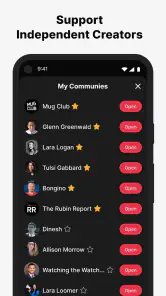
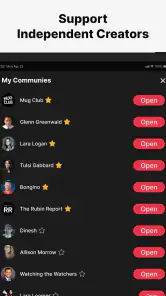
Locals.com is a social app developed by LOCALS, with a focus on helping creators build independent communities and share content with their audiences. Its store summary, “We empower creators to be independent,” reflects that creator-centered approach. The experience is shaped by the individual communities on the platform, so the kinds of posts, discussions, and other content you encounter can vary from one creator to another.
What is Locals.com and what can I do with it?
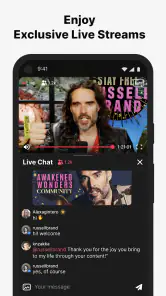
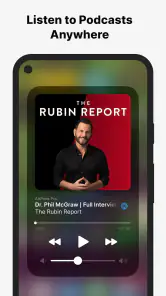
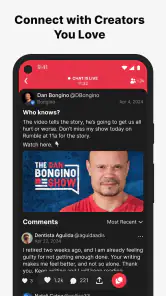
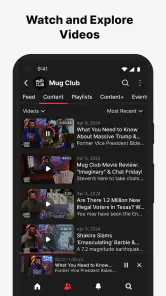
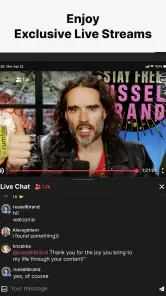
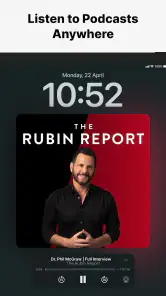
Locals.com is a community and content platform where creators publish posts, videos, livestreams, podcasts, and other updates for their audiences. After creating an account, you can follow available communities, read or watch creator content, participate in discussions, and interact with other members. The exact experience depends on each creator’s community, posting schedule, membership settings, and the features enabled for that space.
Is Locals.com free to use, or do I need to pay for communities?
Locals.com can be used to browse the platform and access some publicly available content without paying, but many creators offer subscription-based communities. Paid memberships may unlock exclusive posts, videos, livestreams, chats, or other benefits defined by the creator. Prices, billing periods, trials, and included features can vary, so review the membership details carefully before subscribing. Canceling a subscription may also depend on the platform or payment method used. The app itself is free, while in-app purchases range from $1.99 to $119.99 per item.
How do I find creators and communities on Locals.com?
You can generally discover communities through the platform’s search and browsing features, recommendations, creator links, or invitations shared outside the app. Because Locals.com is organized around individual creators and their communities, the quality and subject matter can vary considerably. Before joining, check the creator’s description, recent activity, membership price, available content, and community rules to make sure it matches your interests and expectations.
Pros
- Connects users with people and communities in specific local areas.
- Offers a broad range of viewpoints and user-generated discussions.
- Profiles and posts can help discover niche local interests.
- Available on mobile devices for convenient browsing on the go.
- Useful for networking beyond mainstream social media platforms.
Cons
- Content quality and activity can vary significantly by location.
- Some communities may feel politically or socially polarized.
- Public posts may expose more personal information than expected.
- Finding relevant conversations can be difficult in busy feeds.
- Certain features or interactions may require an account or subscription.
- Category
- Social
- Version
- 2.1.32