Kinzoo: Fun All-Ages Messenger
- 774.00
- 4.7
- Installs
- 500.00K
- Price
- Free

Screenshots


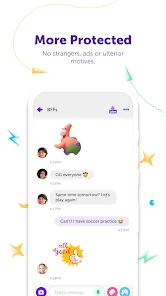





Analysis by Reviewed
I think Kinzoo works best when a family wants a shared place to talk without turning every exchange into another social-media feed. Its mix of messaging, calls, stories, and lightweight activities gives relatives different ways to connect, while the family-focused approach makes it feel more approachable for younger users. It is not a replacement for every chat app, but it may suit households that want to introduce children to digital communication with more guidance.
Made by Kinzoo Technologies Inc., this free social app has a 4.7 average from around 9,600 ratings and over 500,000 installs. It is rated Everyone, runs on Android 6.0 and up, and its current version is 9.5.2-Google-release77187. Optional in-app purchases range from $0.99 to $49.99 per item, so I would check those details with a child before treating every part of the experience as free.
A family chat that has more than one rhythm
The useful idea here is variety: a quick text can handle a practical question, while a voice message or video call can make a distant relative feel more present. Stories and messenger games offer another way to spend time together, especially when a child is not yet keen on a long conversation. That range is more meaningful than simply adding colorful decorations to a basic chat screen.
A realistic use is a family coordinating a weekend visit. One person can share a detail in the group conversation, a child can respond with a sticker or voice note, and relatives who cannot attend can still join a call. My tip would be to keep one group for shared plans and use direct conversations for personal messages; it makes busy family chats easier to follow without needing several separate apps.
Compared with mainstream messengers, Kinzoo’s appeal is its family-oriented framing and its blend of communication with stories and games. A general-purpose chat app may be a better fit if your friends and relatives already use it, or if you need a familiar tool for work and community groups. Kinzoo makes more sense when the goal is a dedicated family space rather than persuading everyone to move their everyday conversations.
What parents should weigh before choosing it
For a child’s first messaging experience, the ability to manage contacts can be a practical starting point: agree as a family who belongs in the child’s conversations, then revisit that list as needs change. That is more useful than treating a child-friendly design as a substitute for parental involvement. I would also discuss when calls and messages are appropriate, so the app supports connection without becoming a constant interruption.
There are trade-offs. A family-focused messenger is only helpful if the people you want to reach are willing to use it, and maintaining another communication app can create friction. The playful elements may also be less appealing to adults who only want a plain, fast text tool. If your household needs a work messenger, broad community features, or a single app everyone already checks, a conventional alternative may be simpler.
More From Our News Desk

Clash of Clans Is Won Between the Battles

Android Auto Makes the Case for Quieter Car Software

MobiOffice: Transforming Mobile Productivity with Seamless Integration

EA SPORTS FC™ Mobile Soccer: Redefining Mobile Sports Gaming

How Microsoft OneDrive Became a Mobile Productivity Giant

How Google Translate Breaks Language Barriers Effortlessly
If you are deciding whether to try it, consider who will actually use it, whether you want stories and games alongside chats, and whether optional purchases fit your family’s expectations. Kinzoo is a stronger fit for relatives who want to make everyday contact more engaging than for someone seeking a bare-bones messenger. The free entry point makes it possible to explore, while a quick conversation about purchases and screen-time boundaries can prevent surprises.
Making the most of a family-first messenger
I would start by choosing a small, clear purpose rather than inviting every relative at once. For example, use Kinzoo first for the people who regularly coordinate school pickups, visits, or check-ins with grandparents. Once everyone knows where practical updates belong, it is easier to tell whether the app is genuinely helping or merely adding another notification stream. A smaller circle also gives a child time to learn how to reply, start a conversation, and recognize which messages need an answer.
It helps to agree on a few habits before the first busy week. A family can decide whether schedule changes go in the group chat, whether calls are for urgent matters or casual catch-ups, and when it is fine to leave a message unanswered. Those simple conventions matter because a messenger that combines several kinds of communication can otherwise blur the line between a quick update and an invitation to keep chatting. The tool works best when the family sets the pace, rather than letting every alert set it for them.
For relatives who live far apart, a short, recurring call can be more useful than expecting a child to sustain a long conversation. Stories or a messenger game can give everyone a shared starting point, then the family can switch to talking naturally. That is a practical strength: it gives shy or younger users something to do together, instead of making every interaction depend on asking questions and finding topics. Adults should still follow the child’s interest; an activity is an opening, not a reason to stretch a call past the point where it feels enjoyable.
Another useful choice is to keep group chats focused. A group for a visit or a family announcement can be easy to scan if people avoid mixing every side conversation into it. Direct chats are better for details meant for one person, while the group remains a place for shared information. This is not a special technical trick; it is a workflow that makes any family messenger calmer, and it is especially helpful when children are still learning how to follow a conversation with several participants.
Where the all-ages approach helps—and where it doesn’t
The broad age appeal is most convincing when adults are willing to participate, not merely install the app for a child. Grandparents can answer with a voice message, parents can share a plan, and children can join in through a call or an activity. That creates a shared space across generations without requiring every interaction to feel like a formal check-in. It is also a better fit for families who want communication to feel warm and informal than for people who only need a tool for terse logistics.
At the same time, “for all ages” should not be read as “no guidance needed.” A parent still has to help a younger user understand who to contact, what to share, and how to handle messages that arrive at inconvenient times. I would treat the first few conversations as a chance to build those habits together. The app can make family communication more inviting, but it cannot make decisions about boundaries on a child’s behalf.
Parents may also want to look at purchase expectations before a child explores every part of the app. It is free to start, but optional purchases are part of the experience, so I would explain that some items may cost money and agree on whether purchases need adult approval. That small conversation is easier before a child encounters something they want than after. It also keeps the app’s playful side from creating an avoidable disagreement about what “free” means.
Questions about whether it suits a particular family are best answered by considering the family’s habits. If a child mostly needs to reach a parent for pickup changes, a basic calling or messaging option may be enough. If the aim is to help a child stay in touch with several relatives and make those conversations more engaging, Kinzoo has a clearer reason to be in the mix. The difference is not simply age; it is whether the family values the extra ways to connect enough to maintain another app.
How it compares with the usual choices
Most families already have a default messenger, often because friends, relatives, or school groups use it. That network effect is hard to beat: people are more likely to see a message in an app they already open. Kinzoo’s advantage is not that it can replace every familiar chat, but that it gives a household a more deliberately family-oriented place to communicate. If you have to convince every relative to switch, the effort may outweigh the benefits; if the people you care about are happy to join, the focused setting can be worthwhile.
A standard messenger is usually the cleaner choice for work groups, neighborhood coordination, or conversations with people outside the family. Those tools are built around broad communication, and their familiarity can make them easier for a mixed group to adopt. Kinzoo is more appealing when the audience includes children and the family wants stories and games alongside messages and calls. I would not try to force one app to serve both purposes if doing so makes either the family space or the practical group harder to use.
It is also worth being realistic about the extra features. Stories and games can give relatives an easy shared activity, but they will not matter to every household. Adults who prefer plain text may see them as unnecessary, while a child who enjoys them may find them a useful reason to take part. The right question is not whether the app has more than messaging; it is whether those additions lead your family to communicate more comfortably. If nobody uses them after the first few tries, their presence alone is not a reason to keep the app.
Small habits that make the experience smoother
One practical way to avoid notification fatigue is to set expectations about response time. Family members can make clear that a message is not automatically urgent and that a missed call can be returned later. This is especially useful when a child is learning to communicate independently: they can feel included without being expected to stay available throughout the day. I would also keep essential, time-sensitive arrangements easy to spot rather than burying them among casual updates.
Think about the child’s role in choosing contacts. Rather than treating the contact list as a one-time setup, revisit it when family routines change or when a new relative becomes part of regular conversations. That creates a chance to talk through why someone is included and what kinds of messages make sense. It is a more constructive approach than assuming that a child-friendly environment removes the need for an adult to check in.
For a household trying the app for the first time, I would make the first week a simple test: pick one recurring family need, invite only the people involved, and see whether the combination of messages, calls, and activities makes that need easier to handle. If the group keeps falling back to another messenger, that is useful evidence that the familiar option suits the family better. If relatives start using the shared space naturally, the app has earned its place rather than becoming another icon nobody opens.
That trial also answers a common practical concern: whether Kinzoo can be the family’s only messaging app. It can be the main place for a close family group if everyone is willing to use it, but I would not assume it can replace the apps needed for work, school, friends, or wider community conversations. Choosing it as a dedicated family channel is a more realistic expectation than asking it to become the one messenger for every part of life.
If you're like me, always on the lookout for a fun and secure way for families to stay connected, then you might want to check out Kinzoo: Fun All-Ages Messenger. This app isn't just about sending texts; it’s about creating a safe digital space for everyone, from kids to grandparents, to share memories and stay in touch.
What Makes Kinzoo Special?
First off, one of the standout features of Kinzoo is its commitment to privacy. In a world where data privacy is a huge concern, Kinzoo ensures that your data stays yours. They don't sell user data or show ads, which is a breath of fresh air!
The app is incredibly intuitive. Even if you’re not tech-savvy, you’ll find it easy to navigate. The interface is colorful and engaging, which is perfect for kids. Plus, it’s designed to be a place where kids can safely communicate without the pressures of social media.
Features That Bring Us Closer
Beyond messaging, Kinzoo offers multimedia sharing. You can send photos, videos, and even voice messages. It’s like having a family scrapbook right in your pocket. The app also includes fun stickers and emojis that kids absolutely love. Trust me, the sticker game is strong with this one!
One feature that I found particularly interesting is the option to create group chats. This is perfect for planning family events or just sharing daily updates. Everyone can stay in the loop without the need for multiple apps.
For parents, Kinzoo provides the peace of mind that traditional social media platforms don't. You have control over who your child interacts with, and can easily manage contacts. This control makes it easier to introduce kids to digital communication in a safe way.
Why You Should Give It a Try
In today’s fast-paced world, staying connected with loved ones can be challenging. Kinzoo: Fun All-Ages Messenger bridges that gap by providing a platform that is both fun and secure. Whether it's sharing a silly sticker or a heartfelt voice note, Kinzoo keeps the lines of communication open and enjoyable for all ages.
So, if you’re looking for a messenger app that promotes family connection without compromising on safety, give Kinzoo a try. It might just become your family’s new favorite way to stay in touch!
Kinzoo: Fun All-Ages Messenger Frequently Asked Questions
Can children use Kinzoo, and what should parents know before setting it up?
Kinzoo is designed for all ages, with a focus on helping families and children communicate. Its content rating is Everyone, and parental consent is required for children to set up an account. Parents can control the contacts their kids interact with, which can help families decide who is able to connect with younger users.
What is Kinzoo: Fun All-Ages Messenger and who is it designed for?
Kinzoo: Fun All-Ages Messenger is a communication app that facilitates safe and fun messaging for users of all ages. It's especially designed for families and children, ensuring a secure environment where kids can connect with family members and friends. The app emphasizes privacy and safety, making it suitable for kids, while also being enjoyable for adults. It’s a great tool for families wanting to stay connected without the worries of exposure to inappropriate content.
How does Kinzoo ensure the safety and privacy of its users?
Kinzoo prioritizes user privacy and safety by implementing various protective measures. The app doesn’t collect personal data and is ad-free, ensuring a distraction-free environment. It requires parental consent for children to set up an account, and parents can control the contacts their kids interact with. All communications are encrypted, providing an extra layer of security. This approach makes Kinzoo a trusted choice for families concerned about digital privacy.
What features does Kinzoo offer to enhance user experience?
Kinzoo offers a range of features designed to enhance the messaging experience while keeping it safe. Users can send text messages, photos, and videos, and enjoy creative tools like drawing and voice notes. The app includes playful elements like stickers and GIFs to make conversations more engaging. Kinzoo's interface is user-friendly, making it accessible and enjoyable for both children and adults. These features make it a versatile platform for communication across generations.
Does Kinzoo support video calls, games, and stories?
Yes. Kinzoo brings together messaging with video calls, messenger games, and stories, making it more than a place to exchange text and media. These options can give family conversations a more playful feel and offer different ways to spend time together in the app. If you are mainly looking for a family-friendly way to chat, call, play, and read, those activities are central to its appeal.
Pros
- User-friendly interface for all ages
- No ads for a distraction-free experience
- Supports multimedia messages
- Strong emphasis on privacy and safety
- Cross-platform compatibility
Cons
- Limited customization options
- No video call feature
- Requires internet connection
- Lacks integration with other apps
- Some features require payment
- Category
- Social
- Version
- 9.5.2-Google-release77187