Hiki: Autism ADHD & ND Dating
- 1.12K
- 3.5
- Installs
- 100.00K
- Price
- Free

Screenshots

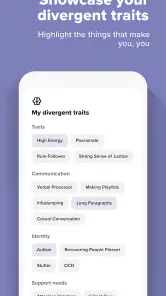


Analysis by Reviewed
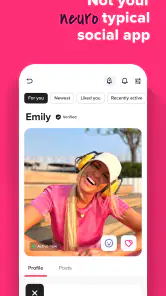
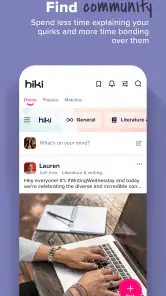
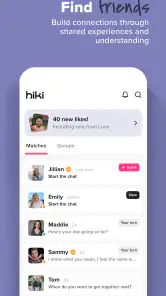
I approached Hiki as a social app with a fairly specific purpose: helping autistic, ADHD, and otherwise neurodivergent adults meet potential dates, friends, or people who already understand that communication does not always follow a conventional rhythm. That focus changes the experience from the beginning. I was not looking for a huge general-purpose dating pool or a stream of polished profiles. I was looking for a space where directness, slower replies, intense interests, and different social habits could be treated as part of the conversation rather than immediate warning signs.
That distinction matters in everyday use. Many mainstream dating apps reward quick reactions, short messages, constant visibility, and fast movement toward a date. Hiki feels more relevant when you want the social part to be clearer and less performative. It is free to download, although it includes optional in-app purchases ranging from around fifteen dollars to nearly three hundred dollars per item. The app is intended for mature users, with an age rating of Mature 17+, and it comes from HIKI, INC.
My overall impression is positive but measured. This is not a magic solution for loneliness, and it cannot guarantee that every conversation will be comfortable or compatible. Its value comes from giving neurodivergent people a more focused place to begin. If you want a broad dating app with the largest possible audience, another service may be more practical. If you want to meet people around shared neurodivergent experience and communicate without pretending to be someone else, Hiki is much easier to understand.
Why a neurodivergent social space can change the first conversation
The strongest reason to try this app is not simply that it is labeled for autistic and ADHD users. It is that the label gives context before a message is exchanged. On a general dating platform, I often have to decide how much personal information to disclose, when to explain a delayed response, and whether a direct question will be misunderstood. Hiki makes those questions less central because the people joining are already looking for a community built around neurodivergence.
That does not mean every user will have the same communication style. Autism, ADHD, and other forms of neurodivergence are broad experiences, and two people can still have very different needs. One person may prefer frequent messages, while another may need long gaps. Someone may want a highly literal conversation, while someone else enjoys playful ambiguity. The benefit is not automatic compatibility; it is a better chance that these differences can be discussed without needing a long explanation first.
I found the app most useful when treating it as a place to make expectations visible. Instead of trying to appear endlessly available, I would be more comfortable saying that I reply slowly during work, that I prefer specific questions, or that I need a clear plan before meeting. Those details can prevent unnecessary guessing. Clarity becomes part of attraction rather than a negotiation after confusion has already started.
This is especially helpful for people who have been told they are too intense, too quiet, too literal, or too inconsistent on conventional platforms. Hiki does not remove the need for social judgment, but it changes the starting assumption. A focused interest can become an opening topic instead of something to hide. A pause in messaging can be discussed instead of immediately interpreted as rejection.
More From Our News Desk

Clash of Clans Is Won Between the Battles

Android Auto Makes the Case for Quieter Car Software

MobiOffice: Transforming Mobile Productivity with Seamless Integration

EA SPORTS FC™ Mobile Soccer: Redefining Mobile Sports Gaming

How Microsoft OneDrive Became a Mobile Productivity Giant

How Google Translate Breaks Language Barriers Effortlessly
The audience size is also worth putting into perspective. Hiki has passed one hundred thousand installs, with an average rating of around three and a half stars from roughly four thousand ratings and about one thousand reviews. That gives it a real community, but it is still more specialized than the largest dating networks. In a smaller city, I would expect the number of nearby or immediately compatible people to be limited. The app makes more sense if I am willing to search patiently and judge conversations by quality rather than by an endless supply of profiles.
How the conversation rhythm feels in practice
The most important adjustment is to stop treating messaging speed as the main measure of interest. Hiki is better suited to conversations where people can explain their rhythm. A reply after several hours, or even later, does not have to mean the connection has disappeared. For users with ADHD, attention can move sharply between tasks. For autistic users, composing a thoughtful response can take energy, especially when the intended tone is difficult to predict.
I would use the first few exchanges to establish a simple communication agreement. A message such as “I may take time to answer, but I am still interested” can prevent a great deal of unnecessary anxiety. Another useful approach is to ask whether the other person prefers short check-ins, longer conversations, or planned times to talk. These are not formal settings I would expect the app to solve automatically; they are habits that make the service work better.
One practical workflow is to avoid sending a sequence of open-ended questions. Broad prompts can be tiring when the other person is unsure how much detail is expected. Specific choices are often easier: “Would you rather talk about a favorite hobby or what your week has been like?” This keeps the exchange moving without demanding instant improvisation. It also gives the other person a clear way to redirect the topic.
Another useful habit is to separate enthusiasm from urgency. A person can be deeply interested in a subject and still need a break from messaging. If I notice that a conversation has become an information dump, I would pause and ask whether the other person wants more detail. That small check protects both sides: the enthusiastic person does not have to suppress their interests, and the listener does not have to silently endure overload.
For dating, I would not rush from a promising chat to an in-person meeting simply because the conversation feels unusually comfortable. Shared neurodivergent identity can create quick familiarity, but compatibility still requires practical discussion. I would ask about preferred communication, sensory considerations, public versus quiet places, and what each person expects from the meeting. The app can help people find one another; it cannot replace that preparation.
Attention, energy, and the cost of staying socially available
Social apps often assume that attention is free. Notifications, profile browsing, message threads, and the pressure to answer can turn a potentially positive experience into another demanding task. Hiki is not automatically protected from that problem. Its focused community may make conversations more meaningful, but meaningful conversations can also require more concentration and emotional energy.
I would recommend using it in defined sessions rather than keeping it mentally open all day. A short visit to read messages and respond to the people I genuinely want to know is more sustainable than repeatedly checking for signs of interest. This is particularly relevant for ADHD users who can fall into a cycle of intense app engagement followed by exhaustion and avoidance. A routine creates a middle ground between hyperfocus and disappearing.
There is also a difference between attention needed to read and attention needed to compose. A message may look simple but still require decisions about tone, timing, detail, and implied meaning. When a conversation matters, I would draft a response, leave it briefly, and reread it for clarity before sending. That approach can reduce the fear of being misunderstood, although it should not become a demand to produce perfect messages every time.
For autistic users, the opposite issue can appear: too much effort may go into decoding a vague answer. If someone repeatedly gives unclear replies, I would ask a direct follow-up instead of trying to infer the hidden meaning. “Are you interested in continuing this conversation?” is more useful than spending an evening analyzing a short response. Hiki is a good environment for direct communication, but the user still has to choose directness.
I also think the app is better for deliberate connection than for passive scrolling. Browsing can feel safer than messaging, but it does not create a relationship by itself. I would choose a small number of profiles that genuinely interest me, mention something specific, and accept that not every attempt will receive a reply. That workflow reduces the attention cost and makes each interaction more intentional.
Boundaries are not an optional extra
A community built around understanding does not mean every member will respect boundaries. I would still treat Hiki like any social or dating service: avoid sharing sensitive personal details too quickly, be cautious with requests for money, and pay attention to pressure. A shared diagnosis or identity can create trust quickly, but it is not proof that someone is safe, honest, or compatible.
The clearest boundary is often about pace. If someone pushes for constant messaging, immediate intimacy, or an in-person meeting before I am ready, I would say so plainly. A respectful response is useful information. If the person argues, mocks the boundary, or treats accommodation as an inconvenience, I would end the interaction rather than trying to explain myself into being understood.
Meeting offline deserves its own plan. I would choose a public location, arrange independent transportation, tell someone I trust where I am going, and set a time limit that can be extended only if the meeting feels comfortable. For people with sensory sensitivities, the venue matters as much as the person. A crowded, loud place may make a promising connection seem worse than it is, while a quieter setting can make conversation easier.
It can help to describe practical needs without apologizing for them. I might say that I need a quieter table, that unexpected plan changes are difficult, or that I may look away while listening. These statements give the other person a chance to respond appropriately. They also reveal whether the connection is based on mutual respect rather than on a demand to perform conventional social behavior.
Privacy and emotional boundaries matter in messaging too. I would avoid turning the first conversation into a complete history of diagnosis, trauma, or medical information. Sharing personal details should be gradual and mutual. Hiki’s specialized setting may reduce the fear of judgment, but it should not pressure anyone to disclose more than feels safe.
Where Hiki fits beside mainstream dating and social apps
Compared with a general dating app, Hiki’s main advantage is relevance. On a broad service, I may spend time explaining why I communicate differently or filtering out people who treat neurodivergence as a novelty. Here, the central purpose is already visible. That can make the first message less defensive and the choice of conversation topics more natural.
The trade-off is reach. Mainstream platforms usually offer more people, more local options, and a wider range of relationship goals. If my priority were finding someone nearby quickly, I might use a larger service alongside Hiki. The broader option could be more efficient for location-based dating, while Hiki could be the place where I look for people more likely to understand my communication needs.
Hiki also differs from ordinary social networks. A general community may be better for following a hobby, joining a large discussion, or maintaining existing friendships. Hiki is more focused on meeting people for friendship or dating, so the emotional stakes can be higher. That focus is useful when I want intentional connection, but it may feel too narrow if I only want casual conversation without any possibility of romance.
The app is free to use in its basic form, which lowers the barrier to trying it. Optional purchases are listed from about fifteen dollars to nearly two hundred ninety dollars per item, so I would inspect each purchase carefully and avoid assuming that paying is necessary to judge the community. The existence of paid options does not automatically make the experience better. I would first see whether the available conversations and local community fit my needs.
Who will benefit most, and who should look elsewhere
I would recommend Hiki to an adult who wants dating or friendship with people who understand neurodivergence as a normal part of life. It is especially appealing if previous apps made you feel pressured to answer instantly, hide your interests, or interpret every delay as rejection. It can also suit someone who wants to be more direct about boundaries from the beginning.
It may be a good choice for a person who prefers thoughtful one-to-one conversations over rapid-fire matching. Someone who enjoys discussing focused interests, wants to explain their communication style, or needs a slower path toward meeting could find the app more comfortable than a mainstream alternative.
I would be more cautious about recommending it to someone who wants a large local pool immediately. A specialized community can mean fewer relevant profiles, particularly outside major population centers. It is also not the right choice for a person seeking an anonymous, no-expectations chat space; the dating and friendship purpose gives interactions a clearer but more consequential direction.
People who dislike discussing communication needs may also find the app frustrating. Hiki creates a promising context for those conversations, but it does not make them unnecessary. The best results require saying what helps, asking what the other person needs, and accepting that shared neurodivergence does not erase ordinary incompatibility.
My social verdict after weighing the everyday trade-offs
Hiki stands out because it treats communication differences as central rather than incidental. In my experience, that can make a first interaction less exhausting: I spend less time trying to appear typical and more time deciding whether the person in front of me is kind, interesting, and respectful. The app’s greatest strength is not speed. It is the possibility of a clearer starting point.
There are still real limitations. The community is specialized, so local choice may be narrower than on mainstream dating services. Conversations can require patience, and the app cannot prevent mismatched expectations, poor boundaries, or the attention fatigue that comes with any social platform. Optional purchases also mean I would approach upgrades carefully rather than treating them as essential.
The current version is 4.0.22, and the app supports devices running Android 8.0 or later. It has been available since July 14, 2019, giving it a longer presence than a brand-new social experiment. Those details are useful when deciding whether an older phone can run it, but the more important question is whether its focused community matches the kind of connection I want.
My recommendation is to try Hiki with a clear personal plan: decide how often you will check it, state your communication rhythm early, keep private information private until trust develops, and judge people by how they respond to boundaries. If you want the widest possible dating marketplace, pair it with a mainstream service or choose that route instead. If you want a more intentional place to meet autistic, ADHD, and other neurodivergent people, Hiki is worth exploring because it makes room for a slower, more explicit, and less performative way to connect.
Hiki: Autism ADHD & ND Dating Frequently Asked Questions
What does Hiki’s Mature 17+ age rating mean before I download it?
Hiki is intended for neurodivergent adults and has a Mature 17+ content rating. That rating is useful to consider before installing, particularly if you are choosing an app for a younger person or managing a family device. Check the age rules shown for your region and the app store you use, and make sure the intended user is comfortable with a social and dating environment.
Which devices can run Hiki: Autism ADHD & ND Dating?
Hiki is available for Android and iOS, and the listed minimum operating-system requirement is version 8.0. Before downloading, check that your device meets the requirement and has enough space for the app. Keeping your operating system and app updated can also help with compatibility and security. The current version is 4.0.22, so users with older devices may want to confirm compatibility in their app store.
What is Hiki: Autism ADHD & ND Dating designed for?
Hiki is a dating and social app created for autistic, ADHD, and other neurodivergent adults. Its main purpose is to help people connect with others who may share similar experiences, communication styles, interests, or accessibility needs. During testing, the app felt more focused on understanding and community than conventional dating platforms, although users can still approach connections as friendships, conversations, or romantic relationships.
Who can use Hiki, and is it suitable for everyone?
Hiki is primarily intended for adults who identify as autistic, ADHD, or otherwise neurodivergent, as well as people who are comfortable engaging with that community. Before downloading, check the current age requirements and eligibility rules in your region, since platform policies can change. The app may not be the best choice for users seeking a general-purpose dating service with a very large mainstream audience.
Does Hiki offer safety and privacy features?
Hiki includes standard tools expected from a modern social and dating platform, such as profile controls, blocking, and reporting options. Nevertheless, users should remain careful when sharing personal details, photos, locations, or contact information. Avoid sending money, arrange first meetings in public places, and report suspicious behavior promptly. No dating app can completely eliminate scams, harassment, or privacy risks.
Pros
- Designed specifically for autistic
- ADHD
- and neurodivergent daters.
- Profiles can make communication preferences and support needs clearer.
- Community-focused approach may feel less judgmental than mainstream apps.
- Useful filters help users find people with shared interests or identities.
- Encourages more direct conversations about boundaries and accessibility.
Cons
- The user base may be smaller outside major cities or regions.
- Some features may require a paid subscription or in-app purchases.
- Matching quality depends heavily on the number of active local users.
- Not every profile will be equally respectful or genuinely neurodivergent.
- Users should still verify identities and stay cautious when meeting offline.
- Category
- Social
- Version
- 4.0.22