Gela: Live Your Global Moment
- 54.00
- 4.7
- Installs
- 1.00M
- Price
- Free

Screenshots
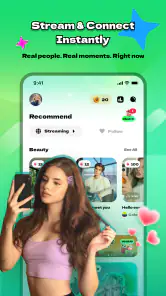



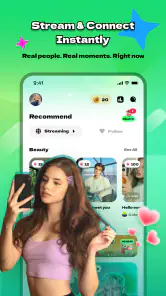



Analysis by Reviewed
Most social apps ask me to wait for a reply, scroll through a feed, or fit a conversation around notifications. Gela: Live Your Global Moment takes a different approach. It is built around immediate social interaction, and that changes the rhythm of communication from “send something and come back later” to “show up and take part now.” After spending time with it, I found the appeal easy to understand: when the moment is active, the app feels more like joining a room than checking a mailbox.
That immediacy is also the main thing to think about before installing it. Gela is not simply another place to collect messages. It is a social app from WarmLink Company aimed at people who enjoy live contact and the energy that comes from being present at the same time as other users. It is free to install, carries a Mature 17+ age rating, and supports optional purchases ranging from under a dollar to almost a hundred dollars per item. I would treat it as an app for deliberate, real-time social use rather than something to leave open all day.
How Gela Changes the Way Conversations Happen
A better fit for people who want presence instead of delayed replies
In my experience, the strongest reason to try Gela is the feeling of shared timing. Ordinary messaging is convenient because it lets everyone answer when they have a spare minute, but that flexibility can also make conversations feel fragmented. One person replies during lunch, another returns late at night, and a simple exchange stretches across an entire day. Gela’s live focus makes the interaction feel more immediate, which can be refreshing when I want a social moment rather than another unfinished thread.
This works especially well for casual connection. If I have a short break and want to meet people who are also available now, a live environment makes more sense than sending a message into an uncertain queue. The app’s store summary, “Instant Streams, Real-Time Fun,” captures that emphasis without needing to turn the experience into a formal event. The point is not necessarily a deep conversation every time. Sometimes it is simply the pleasure of being around activity while it is happening.
That said, the live format changes the responsibility on the user. I cannot approach every interaction as if it were an email that can be carefully edited and revisited later. The faster pace rewards openness and quick reactions, but it can also make clarity harder when people rush. I found that the best results came from entering with a small intention: catch up, listen for a while, meet someone with a shared interest, or enjoy a brief social break. Without that intention, real-time apps can easily turn into background noise.
What the conversation flow feels like in everyday use
Gela is most useful when I let the conversation develop naturally instead of trying to control every exchange. Live social spaces tend to have a different texture from private chats: several moments can compete for attention, and the most interesting interaction may not be the one I expected when I opened the app. I learned to spend a little time observing the pace before jumping in. That small pause helps me understand whether a particular stream feels relaxed, fast-moving, welcoming, or simply too busy for the kind of conversation I want.
One practical workflow is to use the app in short sessions. I might open it after work, look for an active moment that matches my mood, participate for a while, and close it when the conversation naturally reaches a stopping point. This is more satisfying than keeping it running indefinitely because the session has a beginning and an end. It also prevents the app from competing with every other task on my phone.
More From Our News Desk

Clash of Clans Is Won Between the Battles

Android Auto Makes the Case for Quieter Car Software

MobiOffice: Transforming Mobile Productivity with Seamless Integration

EA SPORTS FC™ Mobile Soccer: Redefining Mobile Sports Gaming

How Microsoft OneDrive Became a Mobile Productivity Giant

How Google Translate Breaks Language Barriers Effortlessly
Another useful habit is to separate listening from performing. Not every visit needs me to contribute constantly. I can first understand the tone, then decide whether I have something useful or enjoyable to add. That approach lowers the pressure that often comes with live communication. It is also a good way to judge whether the app suits me: if I only enjoy it when I am actively entertaining others, the format may become tiring quickly.
For a realistic everyday example, imagine finishing a long commute and wanting human contact without arranging a scheduled call. A conventional social feed might give me posts to browse, while a messaging app might leave me waiting for someone to answer. Gela can fill that in-between space by offering a more immediate social experience. I could spend a short period listening and responding, then leave without creating a long chain of obligations. That is a meaningful difference for people who want connection but do not want to plan every interaction.
Why instant interaction can improve clarity—and sometimes reduce it
Fast conversation has one clear advantage: misunderstandings can often be addressed immediately. If someone reacts to a comment in a way I did not expect, I can clarify while the context is still fresh. Delayed messaging often makes small ambiguities grow because each person interprets the silence differently. In a live setting, the social temperature is easier to read.
The trade-off is that speed can encourage careless wording. I would not use Gela for a sensitive topic simply because the format feels immediate. Important conversations benefit from time, privacy, and the ability to think before responding. Live interaction is better for shared moments, light discussion, spontaneous discovery, and social energy than for settling complicated disagreements.
I also found that clarity depends on restraint. When several things are happening at once, saying less can be more effective than trying to explain everything immediately. A short, specific response is easier to follow than a long message written in a hurry. This is one of the less obvious skills the app encourages: real-time communication is not just about reacting quickly; it is about choosing what deserves a reaction.
The hidden cost of attention
The same immediacy that makes Gela engaging can make it demanding. A live social app naturally pulls my attention toward what is happening now, even when I opened it with only a few minutes to spare. The risk is not limited to time spent inside the app. The bigger cost is divided attention: I may still be thinking about an active conversation while trying to work, study, eat, or talk with someone beside me.
I recommend treating the app like a social appointment, even when no appointment exists. Before opening it, I decide whether I have enough attention for a live exchange. If I am already tired or handling something important, browsing a delayed feed may be less disruptive. Gela is at its best when I can be present, not when I am trying to squeeze it between several demanding tasks.
A helpful tactic is to end a session at a natural pause rather than waiting until the app has exhausted me. Live spaces can make “one more minute” feel reasonable because something new may happen next. I found it easier to stop after a completed exchange or a clear change in topic. This preserves the enjoyable part of spontaneity without allowing the app to set my entire evening’s rhythm.
The app’s popularity suggests that the format has broad appeal. It has passed one million installs and holds a 4.7 average from around six and a half thousand ratings. Those figures tell me that Gela is not an obscure experiment, but they do not remove the need to decide whether live communication matches my habits. A highly rated social app can still be a poor personal fit for someone who prefers quiet, asynchronous contact.
Boundaries matter more in a live social space
Because Gela is rated Mature 17+, I would approach it with the same care I use for any adult-oriented social environment. That does not mean assuming every interaction will be uncomfortable, but it does mean being intentional about what I share, who I engage with, and when I leave. I would avoid giving strangers identifying details, moving too quickly into private contact, or treating a friendly first exchange as proof of trust.
The most useful boundary is simple: I do not owe an ongoing conversation to anyone. If an interaction becomes pressuring, confusing, or unpleasant, leaving is a complete response. Live platforms can create a false sense of obligation because the other person is present and expects an immediate reaction. Remembering that I can pause or exit makes the experience feel more controlled.
I would also set a spending boundary before exploring optional purchases. The app itself is free, but individual in-app items can cost from $0.99 to $99.99. That range is wide enough that casual tapping deserves attention. I prefer deciding in advance whether I am willing to spend anything, then checking the amount carefully rather than making a purchase in the excitement of a live moment. This is especially important for anyone sharing a device or payment method.
Privacy and attention boundaries belong together. I do not want to reveal personal information simply because a conversation feels warm, and I do not want to let a stream follow me into every quiet moment of the day. Turning the experience into a contained activity gives me more control over both. I can enjoy the social side without making the app responsible for my availability.
Who will get the most from Gela?
I think Gela is a strong match for people who enjoy spontaneous interaction, prefer live energy to passive scrolling, and are comfortable making quick social decisions. It can suit someone who has irregular free time and wants to find a social moment without arranging a call. It may also appeal to users who feel that ordinary messaging has become too slow or too transactional.
The app is less convincing for people who want carefully organized communities, long-form discussion, or a calm archive of conversations. If my priority is finding old messages, planning group events, managing a project, or communicating with a known circle on my own schedule, a traditional messaging or community app is likely the better tool. Gela’s strength is immediacy, so asking it to behave like a structured communication hub misses the point.
I would also hesitate to recommend it to someone who finds live social settings exhausting. The ability to participate instantly can feel liberating, but it can also create pressure to respond before I am ready. If I routinely open social apps when I should be resting, Gela’s active format may intensify that habit. In that case, a slower platform with clearer stopping points would be healthier.
How it compares with familiar alternatives
Compared with ordinary messaging, Gela feels less dependable for precise, private, one-to-one communication, but more lively when I want to share the same moment with other people. Messaging wins when timing is flexible and the content matters more than atmosphere. Gela wins when the atmosphere is part of the reason I opened the app.
Compared with a standard social feed, it offers a more immediate sense of participation. A feed lets me consume updates at my own pace, while Gela asks me to respond to a living social environment. That can feel more human, but it also gives me less control over the pace and less opportunity to polish what I say. I would choose the feed for quiet browsing and Gela for active presence.
Compared with video or voice calling, Gela appears better suited to casual discovery than to a planned conversation with a specific person. A call has a clear participant list and purpose; a live social app has more room for chance encounters. That freedom is attractive, although it means the experience may be less predictable. People who need dependable communication should keep their usual calling tools rather than replacing them entirely.
Performance expectations and practical setup
Gela currently sits at version 1.6.5 and supports devices using Android 7.0 or later. That makes it accessible to people who are not carrying the newest phone, which is useful for a social app that depends on reaching a broad audience. I would still keep the operating system updated where possible, especially because live interaction is more sensitive to general device performance than a simple text-based app.
Before using it seriously, I would check how it fits into my phone routine. Live social use can be more comfortable with headphones in a private setting, but headphones also make it easier to miss what is happening around me. I would avoid using it while walking through traffic, driving, or doing anything that requires full awareness. The app may be social, but it should not override basic situational attention.
I would also begin with a short trial rather than assuming that a high rating guarantees a perfect match. Spend enough time to experience both the excitement of joining a live moment and the effort of keeping up with it. Notice whether I close the app feeling connected or mentally crowded. That personal response is more useful than popularity alone.
My social verdict after living with the rhythm
Gela: Live Your Global Moment is a focused social app with a clear personality. It makes communication feel more immediate, and that can restore some of the spontaneity that disappears in endless message threads and passive feeds. I enjoyed it most when I entered with a defined amount of time, listened before reacting, and treated each interaction as a moment rather than a commitment.
Its limitations come from the same design choice that gives it energy. Live communication can pull attention away from real-world priorities, make rushed responses more likely, and require firmer boundaries around privacy and spending. The Mature 17+ rating is worth taking seriously, and the optional purchases deserve deliberate handling rather than impulse decisions.
WarmLink Company has made something that is more useful for presence than for organization. I would recommend Gela to an adult who wants spontaneous, real-time social contact and understands that the experience works best with clear limits. I would skip it in favor of conventional messaging, a quieter feed, or a structured community platform if I needed reliable planning, careful discussion, or complete control over timing.
My final recommendation is positive, with one condition: use Gela as a place to visit, not a place that gets to claim every spare moment. When I protect my attention and keep my boundaries visible, its live rhythm feels refreshing. Without those limits, the same immediacy can become tiring. For the right user, that balance makes the free app worth trying.
Gela: Live Your Global Moment Frequently Asked Questions
Who is Gela designed for, and is it suitable for younger users?
Gela is a social app for people interested in sharing and discovering moments with others. Its content rating is Mature 17+, so it is intended for adults and older teens rather than young children. Parents and guardians should consider that rating before allowing a younger person to use it, and review the app’s privacy options and community expectations together.
What does Gela cost, and are there purchases inside the app?
Gela is free to download, with in-app purchases available at prices ranging from $0.99 to $99.99 per item. You can start without paying for the download, but optional purchases may add to your costs if you choose to make them. Check purchase prompts carefully, especially if someone else uses your device or payment account, and review the store’s current purchase details before proceeding.
What is Gela: Live Your Global Moment?
Gela: Live Your Global Moment is a social and lifestyle app designed to help people connect, share experiences, and discover moments from around the world. Its main appeal is encouraging users to interact through photos, videos, updates, or location-based experiences. Before downloading, users should review the app’s current features, supported regions, and community guidelines, as availability and functionality may vary by device and location.
Is Gela: Live Your Global Moment free to download and use?
The app is free to download, though it offers in-app purchases that may involve additional payments. Users should check the listing on the Google Play Store or Apple App Store for the latest pricing information before installing it. It is also worth reviewing purchase terms carefully, particularly if premium social, communication, customization, or discovery features are offered.
Does Gela require access to my location, camera, or personal information?
Because Gela focuses on sharing and discovering global moments, it may request permissions such as camera, photo library, microphone, notifications, or location access. These permissions can support posting content and finding relevant experiences, but they are not always necessary for every feature. We recommend checking the permission prompts carefully and allowing only the access you are comfortable providing.
Pros
- Helps you discover nearby events and activities with a global community.
- Useful for meeting people who share your interests while traveling or locally.
- Clean interface makes browsing social opportunities quick and straightforward.
- Can inspire spontaneous plans instead of relying only on traditional travel guides.
- Supports cultural exchange by connecting users from different backgrounds.
Cons
- Some areas may have few active users or limited event listings.
- Meeting strangers requires caution and sensible privacy settings.
- Event quality can vary because listings depend on community contributions.
- Notifications may become distracting if many activities are posted nearby.
- Some features may work better in major cities than in smaller locations.

- Category
- Social
- Version
- 1.6.5