Gaydoo
- 632.00
- 3.8
- Installs
- 100.00K
- Price
- Free

Screenshots




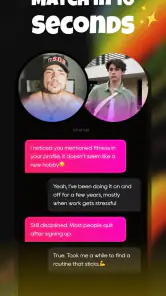



Analysis by Reviewed
I approached Gaydoo as a social app for adults looking to meet men nearby, not as a general-purpose messaging tool. That distinction matters in a shared household. The app can be useful to one person on a personal phone, but it is not something I would casually leave open on a family tablet or a device that several people use. Its purpose is intimate, its audience is adults, and the way it fits into daily life depends heavily on privacy, clear account boundaries, and honest conversations about who is using the device.
That focus gives Gaydoo a fairly direct identity. The store summary points toward meeting real guys near you, while the short description identifies it simply as Gaydoo. In practice, I see its appeal in the combination of local discovery and social contact: instead of waiting for a conversation to develop in a broad online community, you can use it with the intention of finding people in your area. Whether that becomes a useful way to meet someone depends less on the app name and more on how carefully you manage expectations, personal information, and first meetings.
How Gaydoo fits into everyday social use
A personal app rather than a shared household tool
The most realistic use case is simple. Imagine finishing work, opening the app on your own phone, and checking whether there are interesting local profiles or conversations worth pursuing. You might be looking for a date, a new friend, or a connection with someone who understands the local LGBTQ+ scene. That is the kind of focused moment where a location-oriented social app makes sense. I would not treat it like a feed to browse casually while sitting with family or passing a phone around the room.
On a shared device, the experience changes immediately. A roommate, partner, teenager, or visiting friend could see notifications, profile details, conversations, or the app icon. Even without opening a message, the presence of the app may reveal something personal about the account holder. Gaydoo therefore works best when the account belongs to one adult and the phone is protected by that person’s normal device security. The important boundary is not a special household feature; it is using a private device and keeping the account separate from everyone else’s.
I also would not create one account for several people in a household. A social profile represents an individual’s identity and intentions, so sharing login access can create confusion about who is speaking, what has been promised, and how another person interprets a conversation. It can also make it difficult to judge whether a message is genuinely from the person shown in the profile. For a household that wants to coordinate plans, ordinary private messaging between trusted adults is more suitable than passing one Gaydoo account around.
What I would do before creating an account
My first step would be deciding what I actually want from the app. “Meeting people nearby” can mean dating, friendship, conversation, or something more casual, and those goals do not always line up. I would keep my profile honest but restrained at the beginning: enough information to show personality and intent, without immediately publishing details that make me easy to identify at home, work, or in a small neighborhood.
A useful boundary is to separate public introduction from private logistics. A general area may help local discovery, but I would avoid giving a new contact my exact address, workplace, daily route, or predictable schedule. If a conversation moves toward meeting, I would choose a public location and tell someone I trust where I am going. That advice is especially important with any app built around nearby contacts, because convenience can make users reveal more than they intended.
More From Our News Desk

Clash of Clans Is Won Between the Battles

Android Auto Makes the Case for Quieter Car Software

MobiOffice: Transforming Mobile Productivity with Seamless Integration

EA SPORTS FC™ Mobile Soccer: Redefining Mobile Sports Gaming

How Microsoft OneDrive Became a Mobile Productivity Giant

How Google Translate Breaks Language Barriers Effortlessly
Gaydoo is free to install, which lowers the barrier to trying it. It also includes in-app purchases ranging from about ten dollars to roughly one hundred dollars per item. I would not spend immediately. First I would use the basic experience long enough to decide whether the local community, conversation quality, and overall comfort level justify paying for anything. The presence of optional purchases does not automatically make the app poor value, but it does make patience worthwhile. I prefer to understand what I am getting before treating an upgrade as part of my routine.
Keeping account boundaries clear at home
One practical issue is notification privacy. On a personal phone, I would review how message previews appear on the lock screen and whether the device is likely to be seen by other people. I would also avoid logging in on a shared browser or leaving an unlocked phone unattended. These are ordinary privacy habits, but they matter more here because a message can expose a person’s dating life or sexual identity without any deliberate disclosure.
I would also keep Gaydoo separate from household planning. If I arrange to meet someone, I would record the practical details in my own calendar or notes only if that feels safe, and I would share the necessary information with a trusted person through a private channel. I would not expect the app itself to serve as a family organizer, emergency contact system, or shared itinerary. That separation prevents a personal social account from becoming mixed up with grocery lists, school schedules, or a partner’s messages.
For couples or housemates, the healthiest approach is explicit consent around device use. Someone borrowing a charger or checking the time should not automatically gain access to a personal social profile. If a household shares an Apple or Android account for purchases, that does not mean everyone should share Gaydoo access. Store-account arrangements and social-account identity are different things, and treating them as interchangeable can create avoidable misunderstandings.
Coordination without losing control
Gaydoo’s local emphasis can make arranging a meeting feel easier, but I would still slow down at the coordination stage. Before agreeing to a time, I would confirm the person’s name or preferred way to be addressed, make sure we have compatible expectations, and choose a place where leaving is straightforward. A busy café, public bar, or community venue is more sensible for a first meeting than a private home. If the conversation becomes uncomfortable, I want the option to end it without negotiating transportation or personal safety.
There is also a useful distinction between being nearby and being available. A local profile does not tell me that someone is free tonight, emotionally ready to meet, or interested in the same kind of relationship. I would avoid interpreting proximity as urgency. A short conversation about plans and expectations can prevent the common mistake of rushing because the app makes a person seem immediately accessible.
For a shared household, coordination should happen outside the account in a controlled way. If I live with a partner and want them to know I am going out, I can say so directly without handing over my profile or messages. If I am concerned about privacy, I can tell a trusted friend the venue and expected return time. The goal is a safety check, not a group review of every conversation. That balance respects the user’s autonomy while still giving another person enough information to help if plans go wrong.
One of the less obvious trade-offs is that local discovery can narrow the social world as well as make it more convenient. In a small town or tight-knit community, a profile may be recognizable even when it contains little personal information. In a large city, there may be more choice, but also more conversations to sort through. I would adjust my profile detail and meeting pace to the size of my community rather than using the same approach everywhere.
Age context and trust
Gaydoo carries a Mature 17+ content rating, and I would treat that as a firm signal that it belongs in an adult context. It is not an app I would install for a younger family member, place on a child’s device, or describe as a harmless general social network. The rating should shape where the app is installed, who can access the device, and how adults discuss its use in a household.
That age context does not remove the need for judgment. A person can meet adults through the app and still encounter misleading profiles, incompatible intentions, or pressure to move faster than feels comfortable. I would avoid sending intimate images to someone I have not learned to trust, and I would be cautious about requests for money, account access, or urgent favors. Those are not unique to Gaydoo, but the personal nature of the service makes them especially important.
Trust should build in stages. First I would look for consistency in the conversation. Then I would consider a brief voice or video interaction if that option is available to both people and feels comfortable, without assuming it proves someone’s identity. Finally, I would meet in public and keep control of my own transport. I would not let a good-looking profile or an intense first conversation replace basic verification and boundaries.
The developer is TouchChat, and the app has reached over one hundred thousand installs. Its average rating is 3.8 from around two thousand ratings, with more than six hundred written reviews. I read those figures as a sign of a real but mixed user experience rather than a universal recommendation. A social app can be valuable to one person and frustrating to another because local activity, expectations, and conversation quality vary so much. I would use the rating as a reason to test the app personally, not as proof that it will produce a good match in my area.
How it compares with broader alternatives
Compared with a general social network, Gaydoo has a clearer purpose. A broad platform may offer larger communities, interest groups, and established contacts, but it can take more effort to find people who are open to the same kind of connection. Gaydoo’s local orientation is more direct when the goal is meeting men nearby. The trade-off is that a focused app may feel less useful if the nearby pool is small, inactive, or not aligned with what I want.
Compared with a mainstream dating app, the experience is likely to feel more specifically oriented toward gay men rather than asking me to filter a wider audience. That focus can reduce ambiguity, but it does not guarantee compatibility or safety. A larger dating service may offer a broader range of profile tools or a more familiar matching routine, while Gaydoo’s appeal is its narrower social purpose. I would choose between them based on the kind of connection I want and how active each service is where I live.
Compared with LGBTQ+ community forums or group chats, Gaydoo seems better suited to one-to-one discovery than to long-running discussion. Community spaces can be stronger for finding events, advice, and shared interests without immediately turning every interaction into a potential date. Gaydoo is more appropriate when I want to meet individual people, but I would not use it as my only source of local community. A forum, event group, or trusted real-world organization may offer more context before a private meeting.
Version, compatibility, and practical expectations
The current version is 3.1.0, and it requires Android 6.0 or later. That makes the app accessible on many older Android phones, although actual comfort will still depend on the device, available storage, notification behavior, and the quality of the local network. I would update it through the normal app store process and avoid installing unofficial copies, especially for a service involving personal conversations and location-sensitive social activity.
I would also approach the app as something that needs regular attention rather than a one-time download. Profiles can become outdated, conversations can lose momentum, and local availability changes. A good workflow is to check messages when I have time to respond thoughtfully, remove conversations that no longer feel right, and avoid leaving an account active if I am not prepared to manage new contact. That keeps the experience more intentional and reduces the chance of giving someone the impression that I am available when I am not.
The app was released on May 23, 2024, so I would keep my expectations practical rather than assuming it has the depth or maturity of every long-established competitor. A newer service can feel more focused, but it may also have a less predictable local community. The best test is not simply whether the interface opens smoothly; it is whether I can find respectful, relevant conversations in the places and circumstances where I would genuinely use it.
Who should try it, and who should skip it
I think Gaydoo is worth trying for an adult man who wants a focused way to discover nearby gay connections and is comfortable taking responsibility for privacy and meeting safety. It may suit someone who has moved to a new city, wants to expand a social circle, or prefers a more direct environment than a general-purpose network. It can also be useful to someone who wants to start online but ultimately meet people in real life, provided the transition happens at a sensible pace.
I would skip it if I need a household-friendly social app, a supervised service for younger users, or a platform that doubles as a shared family communication space. I would also look elsewhere if my main goal is group discussion, community organizing, or a large selection of specialized interest groups. A broader LGBTQ+ community platform may be better for those needs, while a larger dating service may be preferable if local activity in Gaydoo is too limited.
I would be cautious about using it on a work phone, a shared family tablet, or any device where notifications and account history are visible to others. The app’s purpose is personal enough that device ownership and privacy are part of the decision, not afterthoughts. If I cannot maintain that separation, the convenience of local discovery is not worth the household friction it could create.
My household verdict
My overall view is that Gaydoo has a clear role: it is a free social app for adults who want to meet gay men nearby, with optional purchases and a deliberately personal use case. I like the directness of that purpose, and I can see why it would appeal to someone who wants local connections rather than a general online audience. At the same time, the app should be treated as private adult software, not as a casual shared-device download.
The strongest way to use it is with firm boundaries: one person per account, a private device, restrained profile details, gradual trust, and public first meetings. I would test the free experience before considering any purchase, and I would compare its local activity with broader dating apps and LGBTQ+ community spaces instead of assuming one service can do everything. The key trade-off is convenience versus privacy: nearby discovery is useful, but it requires more care around identity, visibility, and expectations.
For the right adult user, I think Gaydoo is worth exploring. For a household looking for shared communication, it is the wrong tool. Its Mature 17+ context, personal subject matter, and local focus make account separation essential. Used privately and thoughtfully, it can be a practical starting point for meeting people; used casually on a communal device or rushed into without trust, it is much more likely to create discomfort than connection.
Gaydoo Frequently Asked Questions
Who is Gaydoo intended for, and is it suitable for younger users?
Gaydoo is a social app aimed at adults looking to connect with other men, whether for conversation, friendship, dating, or meeting people nearby. Its mature audience makes it unsuitable for children and younger teens. The app has a Mature 17+ age rating, so users should consider that classification before installing and use it in a way that feels comfortable and appropriate for them.
What is Gaydoo and what can I use it for?
Gaydoo is a social and dating app designed to help LGBTQ+ users connect, discover nearby people, and start conversations in a more community-focused environment. After creating a profile, you can typically browse other members, view shared interests, exchange messages, and explore opportunities for friendship, dating, or networking. Available features may vary by region, account type, and app version.
Is Gaydoo free to download and use?
Gaydoo is free to download, but some functions may require in-app purchases or other premium access. Purchases range from $9.99 to $99.99 per item, so check the current pricing shown in your app store and inside the application before paying. Also review which features are available without a purchase, so you can decide whether the free experience suits your needs.
Is Gaydoo safe and private for LGBTQ+ users?
Gaydoo may include standard privacy and safety controls such as profile management, blocking, reporting, and settings for controlling personal information. However, no dating or social platform can guarantee complete safety. Avoid sharing your home address, financial details, passwords, or intimate content too quickly. Meet new contacts in public places, tell someone you trust about your plans, and report suspicious behavior through the app.
How do I create a profile and find people on Gaydoo?
To get started, you will usually need to register with basic account information and create a profile containing details such as a photo, age, location, interests, and what you are looking for. Once your profile is ready, discovery tools can help you browse or filter other members. A complete, respectful profile generally makes it easier to receive genuine interactions and find compatible connections.
Pros
- Simple interface makes browsing and discovering profiles easy.
- Supports private conversations for more personal connections.
- Useful location-based discovery for finding nearby users.
- Profile-focused design helps users share interests and identity.
- Free access lets newcomers explore the main features before paying.
Cons
- The active user base may vary considerably by location.
- Some features may require a premium subscription or in-app purchases.
- Profile quality and completeness can differ widely between users.
- Location features may raise privacy concerns for some members.
- Occasional inactive or unresponsive profiles can make matching slower.
- Category
- Social
- Version
- 3.1.0