Duet Dating App: Chat & Meet
- 2.77K
- 3.7
- Installs
- 1.00M
- Price
- Free

Screenshots





Analysis by Reviewed
I approached Duet Dating as a social app for people who want more than an endless stream of quick profile decisions. Its central idea is simple: meet people around a sense of personal resonance, then decide whether a conversation is worth your time. That makes it appealing if you find conventional dating apps too focused on appearance and rapid swiping, although it does not remove the usual uncertainty that comes with meeting strangers online.
What stood out to me first was the app’s positioning. It is not presented as a general social network or a casual chat room; it is specifically built around dating and meeting new people. The developer, Duet - Meet People You Resonate With, gives the product a clear identity, while the store summary, “Resonate & Date with New Match,” points toward compatibility as the experience’s main theme. In practice, I would treat that promise as a starting point for better conversations, not as a guarantee that every match will be meaningful.
The app is free to install, which makes it easy to try without committing money at the beginning. It is marked for mature users aged 17 and over, so I would still approach every interaction with normal online-dating caution. The current version is 2.77.1, and the app has passed one million installs, with an average rating of 3.7 from roughly 6.8 thousand ratings. Those figures suggest an established audience, but also a mixed experience: large enough to offer activity, yet not so highly rated that I would ignore possible friction.
How Duet Dating feels when you use it
A dating experience built around connection
My first practical recommendation is to give the app a clear purpose before opening it. If you are only browsing because you are bored, the experience can quickly become another stream of profiles and uncertain conversations. It works better when you know what you want to discover: a serious relationship, a slower introduction, or simply people whose interests and outlook feel closer to yours.
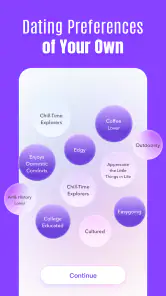
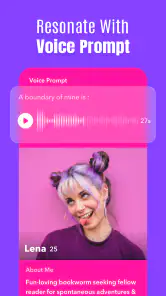
The “resonate” concept is useful because it encourages a slightly different mindset from ordinary matching. Instead of asking only whether someone looks attractive, I found myself thinking about whether I could imagine talking with that person for more than a few messages. That shift matters. It can help users notice personality cues and shared values, but it also means the quality of your own profile becomes especially important. A vague profile gives the other person very little to connect with.
I would spend time writing specific details rather than relying on broad labels. Mentioning the kind of weekend you enjoy, the subjects you can discuss for hours, or the type of relationship pace you prefer gives a potential match something usable. This is more effective than trying to sound universally appealing. On a resonance-focused app, being slightly more specific may reduce random attention while improving the quality of the conversations that remain.
A realistic everyday use case
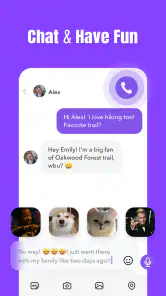
Imagine checking the app after work rather than during a long, distracted commute. You have ten minutes, so you review a few profiles, pause on one that shares your interest in quiet evenings and live music, and send a message tied to that detail. Instead of opening with a generic greeting, you ask what kind of venue they prefer. That small change turns the app from a profile catalogue into a conversation tool.
More From Our News Desk

Clash of Clans Is Won Between the Battles

Android Auto Makes the Case for Quieter Car Software

MobiOffice: Transforming Mobile Productivity with Seamless Integration

EA SPORTS FC™ Mobile Soccer: Redefining Mobile Sports Gaming

How Microsoft OneDrive Became a Mobile Productivity Giant

How Google Translate Breaks Language Barriers Effortlessly
If the person replies while you are busy, you do not need to force an immediate exchange. Dating apps can create pressure to answer quickly, but a slower response is often better than sending something careless. I would use short sessions, keep notifications from controlling my schedule, and stop when the interaction begins to feel repetitive. This approach also makes it easier to notice whether a match is genuinely engaging or simply producing constant low-effort messages.
Another useful workflow is to separate discovery from decision-making. During one session, look for people who seem compatible. During another, return to the conversations that actually developed. That prevents every new profile from interrupting a promising exchange. It also gives you a clearer sense of whether the app is helping you meet people or merely encouraging more browsing.
Where it differs from familiar dating apps
Compared with a conventional swipe-first service, Duet Dating appears more attractive to users who want compatibility to influence the first impression. The advantage is emotional: you may feel less like you are judging a stack of photographs and more like you are looking for a person with whom conversation could work. The trade-off is that a resonance-based approach depends heavily on the information people choose to share and how honestly they present themselves.
Compared with a broad social network, the app has a narrower purpose. You are not joining primarily to follow public posts, maintain an existing community, or consume general entertainment. That focus can make your intentions easier to understand, but it also means the experience may feel limited if you want friendship, group discussion, or a large variety of social activities.
A traditional dating service with a long-established local user base may be better if your priority is maximum choice in a particular area. Duet Dating may be the more interesting experiment if you are tired of surface-level matching and willing to invest more effort in reading profiles and starting thoughtful conversations. I would not choose it solely because the word “resonate” sounds appealing; I would choose it if that style of meeting people matches how I prefer to make decisions.
Trust begins with visible choices
Trust in a dating app is not created by a friendly interface alone. I look for the choices the app lets me make while using it: what I share, how much I reveal in a conversation, whether I can slow down contact, and whether I can leave an interaction without feeling trapped. With Duet Dating, I would treat every profile detail as optional from a personal-safety perspective, even when the app encourages openness.
I would avoid placing a home address, workplace location, daily routine, or other details that make my movements easy to predict. A profile can feel warm and personal without identifying exactly where I live or when I am usually alone. This is particularly important because the app is designed to connect you with new people, not only with contacts you already know.
The mature age label is another reason to keep boundaries clear. It does not replace judgment, and it should not be read as proof that every person you meet is suitable or trustworthy. I would never treat a profile, a charming conversation, or a claimed shared interest as verification of someone’s identity. Before meeting anyone, I would keep the first meeting public, tell a trusted person where I am going, and arrange my own way home.
Handling personal information during a match
The most sensitive moments usually arrive after a conversation becomes comfortable. A new match may ask for a phone number, another social account, photographs, or details about your schedule. My advice is to delay each step until there is a clear reason to take it. Moving off the app can make communication easier, but it can also reduce the separation between your dating activity and your personal life.
I would use a simple test: if sharing the information would make me uncomfortable with a stranger knowing it, I would not share it merely to keep the conversation moving. Someone respectful should accept a slower pace. Pressure, guilt, sudden requests for money, repeated attempts to obtain private images, and stories designed to create urgency are all reasons to end contact rather than investigate further.
Payment deserves special caution. The app is free to download, but it includes in-app purchases ranging from $4.99 to $359.99 per item. That is a wide range, so I would inspect each purchase screen carefully and avoid assuming that a paid option is necessary for a good experience. I would also set a spending limit before exploring optional features. Dating uncertainty can make people chase better results, and that is exactly when an impulsive purchase is easiest to justify.
For families or anyone sharing a device, I would also review the device’s purchase protections and notification previews. A dating app can reveal more through lock-screen messages than through its profile screen. Turning off sensitive previews and checking account billing settings are small steps, but they give you more control over who sees your activity and how easily purchases can happen.
Account control and personal agency
The strongest way to use Duet Dating is to remain the person making the decisions. Do not let a match’s enthusiasm determine how quickly you disclose information, move to another channel, or agree to meet. I would begin with in-app conversation, look for consistency over time, and pay attention to whether the other person respects a clear “not yet.” Their response to a boundary tells me more than polished profile text.
I also recommend reviewing your own profile after using the app for a few days. New users often write what they think sounds attractive, then discover that it invites conversations they do not actually want. If you prefer quiet plans, say so. If you are looking for a committed relationship rather than casual chatting, make that clear. Better expectations can reduce mismatched conversations and save time.
When a match is not working, ending the conversation is enough. You do not owe a detailed explanation to someone you have never met. If the app presents controls for managing unwanted contact, I would use them promptly rather than continuing to reply out of politeness. If a person becomes threatening, manipulative, or persistently intrusive, preserve relevant evidence and use the app’s available reporting or blocking options rather than trying to resolve the situation alone.
One trade-off is that stronger privacy habits can make the early stage feel slower. You may exchange fewer personal details and take longer to arrange a meeting. In my view, that is a worthwhile cost. The purpose is not to create instant intimacy; it is to find out whether someone can communicate respectfully without demanding access to your life.
Who will enjoy it most?
I think Duet Dating suits adults who are tired of making decisions based almost entirely on photographs and want a more conversation-led approach. It is also worth trying if you enjoy writing about your interests, prefer a deliberate pace, and are comfortable deciding for yourself which connections deserve attention. The free entry point makes experimentation straightforward, provided you remain careful around optional purchases.
It may be particularly useful for someone who has already tried large swipe-based apps and found that a high volume of matches did not lead to better conversations. A smaller number of more considered interactions can feel less exhausting. The app’s focus gives you a reason to ask whether you actually connect with someone, rather than treating every match as a competition for attention.
I would skip it if you want a completely anonymous browsing experience, because dating requires at least some personal presentation and vulnerability. I would also look elsewhere if your main goal is a large public community, group events, or non-dating social interaction. People who dislike writing profiles or starting conversations may find the resonance angle demanding rather than refreshing.
It is not the right choice for anyone expecting the app to make relationship decisions for them. No matching concept can replace judgment, communication, or safety planning. If you are hoping for guaranteed compatibility, immediate replies, or a frictionless path from download to relationship, this app is likely to disappoint. Its value depends on the effort you bring and the quality of the people active in your area.
What the rating and scale suggest
The app’s 3.7 average from about 6.8 thousand ratings gives me a measured impression rather than a glowing one. I read that as a reason to test it personally, not as a reason to dismiss it. User experiences can vary significantly depending on location, age group, expectations, and how active the local dating pool is.
With more than one million installs, it has enough visibility to be a credible option rather than an obscure experiment. Still, overall install numbers do not tell me how many suitable people are nearby or how active conversations will be today. I would judge it after a short, focused trial: complete a thoughtful profile, start several genuine conversations, and see whether the responses fit what I want.
The developer name makes the product’s intended philosophy clear, but a name alone is not a substitute for examining the choices shown inside the app. I would review account settings, notification behavior, purchase prompts, and any privacy explanations available during setup. Trust should come from what I can see and control, not from assumptions about the brand.
My cautious verdict
Duet Dating is an interesting dating app for people who want the idea of compatibility to matter before a conversation becomes serious. I like the way its identity encourages users to look beyond a quick visual decision, and I think the free starting point makes it reasonable to explore. The best results will come from users who write specific profiles, ask meaningful questions, and resist the pressure to move too quickly.
My reservations are equally practical. A resonance-focused promise cannot guarantee honest profiles or respectful matches. The mature audience label calls for sensible boundaries, and the wide range of optional purchase prices means I would approach spending carefully. The mixed rating also tells me to keep expectations realistic and assess the local experience rather than assuming the app will work equally well for everyone.
My recommendation is to try it as a controlled experiment, not as a shortcut to trust. Keep personal details limited, use short sessions, judge conversations by consistency, and make every move at your own pace. If you want thoughtful dating interactions and are willing to participate actively, Duet Dating may offer a welcome change from ordinary swipe routines. If you want the biggest possible pool, broad social features, or effortless results, a more established alternative may suit you better.
For me, the app’s real strength is not the promise of finding a perfect match. It is the invitation to make more deliberate choices about who deserves a conversation. Used with that modest expectation—and with careful attention to privacy, spending, and boundaries—it is worth a look.
Duet Dating App: Chat & Meet Frequently Asked Questions
Is Duet Dating App: Chat & Meet available on my device?
Duet Dating App: Chat & Meet is a social app for people interested in meeting and dating, and it requires Android 10 or later. Before downloading, check your device’s operating system version and make sure you have enough space for the installation and future updates. The app is free to download, so you can try it without an upfront purchase.
What does the Mature 17+ age rating mean for Duet?
Duet is intended for mature users aged 17 and older, so it may not be suitable for younger teens. Dating apps involve interacting with other people, and users should make thoughtful choices about what they share and whom they meet. If you are considering the app for someone else, check the age rating and discuss privacy, respectful communication, and safe dating practices first.
What is Duet Dating App: Chat & Meet, and how does it work?
Duet Dating App: Chat & Meet is designed to help people discover potential matches, start conversations, and meet others who share similar interests. After creating a profile, you can usually add photos and personal details, browse or receive suggested profiles, and interact through likes or messages. The exact matching and communication options may depend on your location, account settings, and the app’s current features.
Is Duet Dating App: Chat & Meet free to download and use?
The app is free to download, but free access does not necessarily include every feature. Optional in-app purchases may cost from $4.99 to $359.99 per item, so check the price and terms shown before making a purchase. If you subscribe or buy an upgrade, review the billing frequency, renewal terms, and cancellation instructions in the app store or within Duet’s payment screen.
How can I protect my privacy and personal information on Duet?
Before using Duet, review the permissions requested by the app and only provide information you feel comfortable sharing. Avoid posting your home address, workplace details, financial information, or private documents on your profile or in messages. Check the privacy settings regularly, use a strong password, and remember that profile content may be viewed or saved by other users despite the app’s safety controls.
Pros
- Simple profile setup makes it easy to start meeting people quickly.
- Chat tools help users continue conversations within the same app.
- Location-based discovery can show potential matches nearby.
- The interface is generally easy to navigate for first-time users.
- Useful for people seeking casual conversations or new social connections.
Cons
- Match quality can vary depending on the number of active local users.
- Some features may require a paid subscription or in-app purchases.
- Users may encounter inactive
- incomplete
- or outdated profiles.
- Dating apps require caution when sharing personal information with strangers.
- Notifications and frequent messages may feel distracting for some users.

- Category
- Social
- Version
- 2.77.1