Dora: Find Real Companionship
- 20.42K
- 4.1
- Installs
- 500.00K
- Price
- Free

Screenshots

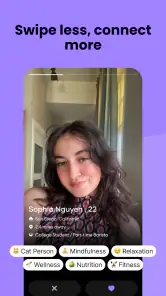

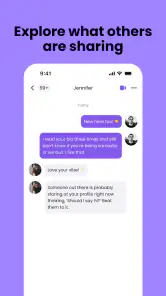

Analysis by Reviewed
When I try a dating app, I pay attention to more than the promise of meeting someone. I want to know whether the experience feels calm, understandable, and respectful when I am deciding what to share. Dora: Find Real Companionship takes a softer approach to adult dating, and that tone is noticeable from the moment I begin using it. It is a free social app from aprilsaidev, aimed at mature users who want conversation and connection rather than a noisy stream of quick judgments.
My overall impression is cautiously positive. Dora feels most suitable for someone who wants to approach dating at a slower, more personal pace, but it is not a universal replacement for larger dating services. Its audience is smaller, its mature rating means it is not intended for younger users, and the presence of optional purchases makes it important to understand where the free experience ends. I would recommend trying it with sensible privacy habits rather than treating it as a guaranteed shortcut to a relationship.
How Dora feels as an adult social app
The app sits in the social category, although its purpose is clearly centered on adult companionship and dating. The store summary presents it as warm and simple, and that description matches the kind of experience I expect from its positioning: less pressure, fewer distractions, and more attention to whether a conversation feels genuine. That does not automatically make every interaction meaningful, but it gives the app a clearer personality than services built entirely around rapid swiping.
Dora was released on June 11, 2025, and the current version is 1.2.14. It runs on Android 8.0 and later, which makes it accessible to people using older supported phones as well as newer devices. I appreciate that practical reach because dating apps can become frustrating when they demand recent hardware for a fairly simple social purpose. At the same time, compatibility alone does not tell me whether the app will feel equally smooth on every device, so I would keep expectations realistic if I were using an older phone.
The app has passed the early curiosity stage: it has more than 500 thousand installs, an average rating of 4.1 from roughly 32 thousand ratings, and about 20 thousand written reviews. Those figures suggest that Dora has attracted a meaningful audience, while the less-than-perfect average is a useful reminder not to assume that every user has the same experience. I read that combination as a reason to explore the app personally, not as proof that it will suit everyone.
Because Dora is rated Mature 17+, I would not install it on a teenager’s phone or treat it as a general-purpose friendship app for all ages. The age boundary matters here because dating conversations can involve personal, romantic, or adult subjects. Parents and guardians should also remember that an age label is not a substitute for supervision or good online safety habits.
What makes the approach appealing
The strongest idea behind Dora is its emphasis on companionship. That wording changes how I would use it. Instead of opening the app with a checklist and trying to judge people in seconds, I would use it to look for signs of patience, emotional availability, and compatible conversation. This is especially useful for someone who finds mainstream dating apps exhausting because every profile seems to compete for immediate attention.
More From Our News Desk

Clash of Clans Is Won Between the Battles

Android Auto Makes the Case for Quieter Car Software

MobiOffice: Transforming Mobile Productivity with Seamless Integration

EA SPORTS FC™ Mobile Soccer: Redefining Mobile Sports Gaming

How Microsoft OneDrive Became a Mobile Productivity Giant

How Google Translate Breaks Language Barriers Effortlessly
A realistic everyday scenario would be using Dora after work for a short, deliberate session. I might review a few profiles, notice which ones communicate clearly, and begin one conversation with a simple question about interests or daily routines. The important part is not spending an hour collecting matches. It is leaving the app with one or two conversations that feel worth continuing. That workflow protects my time and makes the app’s quieter positioning more practical.
There is also a useful trade-off here. A warm, simple dating environment can feel less intimidating, but simplicity may mean fewer tools for sorting, filtering, or managing a large number of conversations than I would find in a more established alternative. If I already know exactly what age range, distance, lifestyle, or relationship structure I want to filter by, I would inspect Dora’s available choices carefully before committing to it as my main dating service.
Trust begins with what the app lets me control
For a dating app, trust is not created by friendly language alone. I look for visible choices around account setup, profile information, conversations, and the ability to stop using the service. Dora should be judged through those practical moments: whether I can understand what I am publishing, whether I can decide how much personal detail to reveal, and whether leaving an uncomfortable interaction feels straightforward.
My advice is to treat the first profile as a limited introduction rather than a personal biography. I would avoid adding a workplace address, daily route, private phone number, financial details, or information that could identify my home. A dating profile does not need to explain every part of my life to be interesting. A few genuine interests and a clear idea of what kind of connection I want are usually safer and more useful than excessive detail.
I would also pause at every permission request and consider whether it is necessary for the action I am taking. If a feature works without a particular permission, I would prefer not to grant it. If the app asks for access that affects personal information, I would read the device prompt carefully rather than tapping through automatically. This is not a criticism unique to Dora; it is the right habit for any social app where strangers may see what I choose to publish.
Another trust checkpoint is account recovery. Before investing time in conversations, I would make sure I understand how I can regain access if I change devices or lose a login method. I would also check the account settings for ways to edit profile information, manage notifications, and remove the account when I no longer want to participate. These controls matter because a dating app should not become difficult to leave simply because I have already built conversations there.
Handling sensitive conversations without losing control
The most data-sensitive moments arrive after a match, not during installation. A new contact may quickly ask for a phone number, another messaging account, private photographs, or details about where I live. I would keep the conversation inside Dora until trust develops naturally, and I would not let enthusiasm pressure me into sharing something I would regret later.
One useful habit is to separate emotional trust from identity verification. Someone can be charming, attentive, and still not be who they claim to be. I would avoid sending money, accepting urgent requests, or sharing documents and account credentials. If a conversation moves immediately toward secrecy, financial help, or pressure to leave the app, I would treat that as a reason to stop rather than as a test of affection.
I would also think carefully before uploading photographs. A picture can reveal more than a face: street signs, school names, work badges, house numbers, and recognizable landmarks can expose a routine or location. Cropping or choosing a less revealing image is a small step, but it gives me more control over what a stranger can learn. The same caution applies to voice messages and live video, which can reveal background details I did not intend to share.
If I encounter harassment, impersonation, threats, or unwanted sexual content, I would preserve enough information to explain what happened, then use the app’s visible reporting or blocking controls if available. I would not continue arguing with the person to prove a point. The best social design is not only about finding someone; it is also about letting users disengage quickly when an interaction becomes unsafe or unwelcome.
Free access, purchases, and everyday decision-making
Dora is free to install and use, but it includes in-app purchases ranging from $3.99 to $99.99 per item. That wide range is important because a free download does not necessarily mean every useful action remains free. Before paying, I would identify exactly what a purchase changes, whether it is a one-time item or part of a continuing commitment, and whether the benefit is genuinely useful for my way of dating.
I would not buy anything simply because a conversation feels exciting or because the app creates a sense of urgency. Dating decisions are emotional, and that can make optional upgrades feel more important than they really are. My preferred approach would be to use the free experience first, learn whether Dora has enough suitable people for my location and preferences, and only then consider spending money.
The purchase range also affects who should skip Dora. If I want a completely free dating experience with no prompts toward optional spending, I would compare it with services whose business model feels clearer to me. On the other hand, someone who is comfortable paying for convenience may find the option reasonable, provided the purchase screen explains the commitment plainly and the user remains in control of the decision.
I would keep notifications restrained as well. Dating apps can turn every message into an interruption, which encourages reactive decisions and makes it harder to maintain boundaries. A quieter schedule—checking at a chosen time rather than responding instantly—helps me judge conversations on their quality instead of on the pressure of a notification.
Where Dora fits beside familiar dating alternatives
Compared with a large, highly competitive swipe-based service, Dora’s appeal is its more companion-focused identity. I would choose Dora when I want to slow down, write more thoughtful introductions, and see whether a person’s communication style feels compatible. I would choose a larger alternative when reach, dense local activity, detailed discovery filters, or a broad range of relationship preferences is more important than atmosphere.
Compared with friendship-first social platforms, Dora is more direct about adult romantic connection. That can save time for people who already know they want to date, but it may feel too focused for someone seeking casual community, hobby groups, or non-romantic conversation. If my main goal were meeting people around a shared activity without romantic expectations, I would look elsewhere.
Compared with matchmaking services that emphasize extensive questionnaires and structured compatibility, Dora’s simple presentation may be easier to enter but may place more responsibility on me. I would need to ask better questions, notice inconsistencies, and decide whether a connection is actually suitable. That is not necessarily a weakness, but it means the app cannot do all the emotional filtering on my behalf.
The smaller scale can be either a strength or a limitation. A less crowded environment may make conversations feel more manageable, while a smaller pool can reduce the chance of finding a close match in a rural area or for a very specific preference. I would give Dora a fair trial based on the people I can actually meet, not just on its overall install count or rating.
Three practical ways to get more from the app
First, I would write a profile that creates an easy opening rather than trying to sound impressive. Mentioning one concrete interest, one preferred kind of conversation, and one realistic expectation gives another person something to respond to. This works better than a vague claim about loving everything or a long list of demands. It also helps me notice who reads carefully and who sends the same message to everyone.
Second, I would use a gradual disclosure plan. In the first conversations, I would share general interests and communication preferences. Later, if the interaction remains respectful, I might discuss broader lifestyle details. I would delay information that identifies my home, workplace, schedule, or family. This makes trust something I observe over time instead of something I grant because a profile looks attractive.
Third, I would set a stopping rule before I become emotionally invested. If someone repeatedly ignores a boundary, avoids reasonable questions, asks for money, or pushes me into another service immediately, I would end the conversation. Having that rule in advance matters because it is harder to make a calm decision when I am already hoping the connection will work.
A fourth useful habit is to review my own profile after a week. I would remove details that feel too revealing, update anything that attracts the wrong kind of attention, and check whether my wording accurately describes what I want. This turns privacy into an ongoing process rather than a one-time setup task. It also keeps my profile honest as my experience with the app develops.
Who should try Dora, and who should look elsewhere?
I think Dora is a good candidate for adults who prefer thoughtful conversation over rapid matching, want a straightforward entry into social dating, and are willing to take responsibility for their own boundaries. It may also suit someone returning to dating after a long break, because its companionship-oriented tone feels less aggressively competitive than some familiar alternatives.
I would be more hesitant to recommend it to someone who needs a very large local dating pool, highly specialized filters, or a fully free experience with no optional purchases. People who dislike sharing any personal information with a social service should also think carefully before joining; even a carefully managed profile involves decisions about visibility and contact with strangers.
The Mature 17+ rating makes the intended audience clear, but adults should still use judgment about who they meet and what they share. I would never treat the app’s tone as a guarantee that every person on it is trustworthy. The real test is whether I can maintain control while using it: choosing what appears on my profile, deciding when to reply, refusing requests, and ending contact when necessary.
My final view is that Dora: Find Real Companionship is worth trying if its calmer adult-dating focus matches what I want. Its 4.1 average and growing audience make it more than an obscure experiment, while its free entry lowers the risk of exploring it. Still, I would approach it as a tool for starting conversations, not as a promise of compatibility or safety.
I would install it, keep my first profile deliberately modest, review every account and permission choice, and spend nothing until I understood the everyday experience. The best reason to use Dora is the control it can give me over the pace of meeting people, not the hope that an app can make every difficult dating decision for me. With that mindset, it can be a comfortable option for adults seeking sincere connection; without it, a larger or more structured alternative may be the better fit.
Dora: Find Real Companionship Frequently Asked Questions
What does Dora mean by “real connection,” and is it aimed at dating?
Dora describes itself as a warm, simple dating app for adults seeking real connection. Its social and companionship-focused purpose makes it relevant to people interested in meeting others and building connections through conversation. Before downloading, consider whether that dating-oriented approach matches what you want from a social app; the experience will also depend on the people who use it and how you choose to interact.
Who is Dora: Find Real Companionship best suited for?
Dora is most suitable for adults who want a social app centered on companionship and dating. It may appeal if you are open to starting conversations and exploring connections with other people, rather than using a social platform only to follow existing friends. Think about the kind of interaction you are comfortable with before creating a profile, and take time to decide what personal details you want to share.
Is Dora: Find Real Companionship intended for adults, and what age rating does it have?
Dora is intended for adults seeking companionship, and its content rating is Mature 17+. That makes it a poor fit for children and younger teens. Before downloading, consider whether the app’s social and dating-oriented purpose suits you, and review the age guidance shown in your app store. If you are setting up a device for someone else, check its age restrictions as well.
Which phones can run Dora: Find Real Companionship?
Dora is available for Android and iOS devices, with Android support starting at version 8.0. Check your phone’s operating system before downloading, since an older Android version may not be compatible. Keeping your device’s software up to date can also help with app compatibility and security. The current version is 1.2.14, so you may need an update later to continue using the latest release.
What is Dora: Find Real Companionship, and how does it work?
Dora: Find Real Companionship is a social and companionship-focused app designed to help people connect through conversations and shared interests. After creating a profile, users can explore available connections, start chats, and decide which interactions feel comfortable and meaningful. The experience is intended to encourage genuine communication rather than simply browsing profiles, although the quality of matches depends on the people using the platform and how actively you participate.
Pros
- Profiles focus on shared interests and meaningful connections.
- Discovery tools make it easy to find compatible people.
- The interface is clean
- modern
- and simple to navigate.
- Useful for meeting people beyond your existing social circle.
- Conversation features encourage ongoing interaction and engagement.
Cons
- The quality of matches can vary depending on your location.
- Some features may require in-app purchases or a subscription.
- New users may receive limited responses until their profile gains visibility.
- Sharing personal information requires careful privacy awareness.
- Notifications can become distracting if activity levels are high.
- Category
- Social
- Version
- 1.2.14