Deep Dive - Bass Fishing App
- 409.00
- 4.3
- Installs
- 100.00K
- Price
- Free

Screenshots
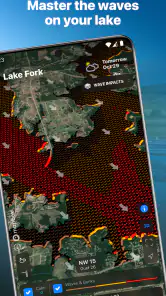
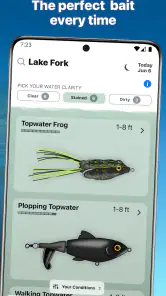
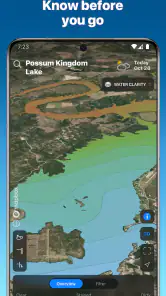
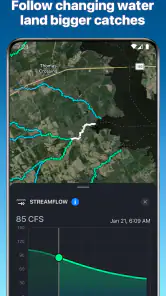
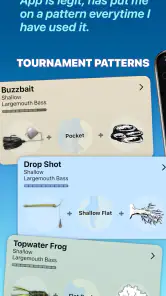
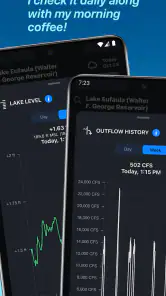
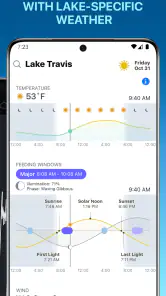
Analysis by Reviewed
I approached Deep Dive - Bass Fishing App as a practical fishing companion rather than a game, and that distinction matters from the first tap. It is a free sports app from Deep Dive Technologies, Inc. designed around bass-fishing preparation: studying lake maps, checking promising fishing areas, reviewing bait and lure ideas, and watching weather and bite-time information before heading out. I like that its purpose is focused. It does not try to become a social network, a general outdoor planner, or an arcade-style fishing game.
My overall impression is that it works best as a planning tool you keep beside your tackle box, not as a replacement for local knowledge or time on the water. The app has a 4.3 average from around 2.3 thousand ratings, with more than 100 thousand installs, so it has clearly found an audience among anglers looking for a digital aid. It is rated for Everyone, which also makes it approachable for families and younger users learning the basics of bass fishing.
What the app is really useful for before a trip
The strongest part of the experience is the way several decisions can be brought together in one place. Instead of checking a map in one app, weather in another, and lure information somewhere else, I can use Deep Dive to shape a simple plan: identify the lake area I want to explore, consider the conditions, think about likely bite periods, and narrow down the tackle I will carry.
That workflow is more valuable than any individual feature. A lake map alone can show where I am, but it does not automatically tell me what to throw. A lure guide alone can suggest equipment, but it cannot put that choice into the context of a particular body of water. Combining those steps helps reduce random decisions, especially when I have limited time and do not want to bring every rod and box of tackle.
I found the app most appealing for short, deliberate trips. If I had only a morning available, I could use the forecast and bite-time information to decide whether an early start was worthwhile, then review likely locations and prepare a smaller selection of baits. That is a realistic advantage over relying on memory or scrolling through unrelated search results.
How quickly it fits into a normal fishing routine
Perceived speed matters more in this type of app than flashy animation. When I am standing beside a truck or boat, I want to open the relevant information without navigating through a complicated entertainment interface. Deep Dive’s focused purpose makes it feel suited to quick checks: look at the map, review conditions, adjust the plan, and put the phone away.
That said, map-based tools naturally feel heavier than a simple text page. Loading a visual lake view, moving around an area, or switching between information categories can demand more patience than checking a basic weather screen. I would not judge the app by whether every transition feels instant; the useful question is whether it gets me to a practical decision without unnecessary wandering. In that respect, its focused sports design is an advantage.
More From Our News Desk

Clash of Clans Is Won Between the Battles

Android Auto Makes the Case for Quieter Car Software

MobiOffice: Transforming Mobile Productivity with Seamless Integration

EA SPORTS FC™ Mobile Soccer: Redefining Mobile Sports Gaming

How Microsoft OneDrive Became a Mobile Productivity Giant

How Google Translate Breaks Language Barriers Effortlessly
A good habit is to do the detailed preparation at home, while the connection and battery are not under pressure. I would choose the lake, inspect the areas that interest me, and decide on a starting approach before leaving. At the water, I would use the app for confirmation rather than trying to build an entire strategy from scratch. This reduces waiting and keeps the phone from becoming the center of the outing.
There is also a subtle trade-off between detail and speed. More map context and more fishing guidance can improve a decision, but too much information can slow down the moment when I simply need to choose a spot. I recommend using the app to create a short plan with a first location, a backup area, and a small lure selection. That is more efficient than repeatedly browsing every available option.
What happens during heavier use
The app becomes more demanding when several parts of the experience are used together. A quick look at bite times is a light task; moving through lake information while checking weather and comparing bait choices is a more involved session. I would expect the most noticeable strain during extended map browsing, especially if the phone is already handling navigation, music, or other outdoor tools at the same time.
This is where I would keep expectations realistic. Deep Dive is useful because it gathers fishing decisions together, but a phone running several active apps outdoors can become warm, consume battery, or feel less responsive regardless of the individual app. I would not leave the display open continuously while traveling across the lake. A short check, followed by putting the phone away, is the sensible approach.
For a full-day outing, I would prepare in stages. Before departure, I would study the map and weather. At the launch point, I would confirm the conditions and select the opening lure. Later, I would return to the app only when changing areas or reassessing the plan. This workflow limits unnecessary screen time and makes the tool more useful than constantly watching it.
One of the better practical insights is that the app can help with tackle discipline. Rather than treating every lure recommendation as a reason to buy or carry more equipment, I would use it to compare possibilities and then choose a compact set based on the day’s conditions. That turns the app into a filter for decisions, not another source of clutter.
Reliability, recovery, and the role of judgment
I see Deep Dive as a planning reference, not an authority that can guarantee a catch. Weather changes, fish move, water clarity varies, and local pressure can make yesterday’s successful pattern less useful today. Bite-time guidance may help me choose when to start, but it should not persuade me to ignore what I can observe on the water.
That limitation is important because the app’s convenience can create false confidence. A promising map area is still only a starting point. I would combine its suggestions with shoreline structure, wind direction, water temperature if I have it from another source, and what nearby anglers are actually seeing. The app is strongest when it organizes my thinking, not when it replaces it.
In everyday use, recovery matters too. If I close the app while changing locations, I want to be able to return without losing the purpose of the session. I would treat it like a reference tool and keep my plan simple enough to reconstruct quickly: target area, likely timing, and a few lure choices. Even if I need to reopen a screen, that is less frustrating than depending on a complicated chain of saved steps.
My reliability judgment is therefore practical rather than absolute. The app is dependable as a convenient place to consult fishing-related information, but I would still carry a backup plan. Save the lake name and key areas in your own notes, keep ordinary navigation available, and do not assume the app should be your only source of directions or weather awareness. That is good outdoor practice for any mobile fishing companion.
Device limits and cost considerations
The application supports Android 7.0 and newer, which gives it a broad reach across older and more recent phones. That is useful for anglers who keep a rugged or inexpensive spare device for outdoor trips instead of risking their newest phone near water. On older hardware, however, map movement and screen changes may feel less fluid than on a current device, particularly when the phone is warm or short on free storage.
I would also pay attention to screen visibility and battery condition, even though those are not unique to this app. A bright outdoor environment can make map reading harder, while constant screen use can shorten a fishing day. A protective case, a power bank, and a habit of checking information in short bursts will improve the experience more than trying to keep every screen active.
The app itself is free to install, which makes experimentation easy. It includes in-app purchases ranging from $4.99 to $79.99 per item, so I would explore the free experience first and only pay when I understand exactly which additional value fits my fishing habits. The wide range suggests that not every user will have the same spending path, and casual anglers should be careful not to treat every optional purchase as necessary equipment.
For someone who fishes occasionally, the free starting point may be enough to decide whether the workflow feels natural. A tournament-minded or highly committed angler may find more reason to consider paid additions, but I would still compare the cost with the alternatives already available through general map, weather, and fishing-reference tools. The convenience of combining information is the main reason to spend, not the assumption that payment automatically improves fishing results.
Where it beats ordinary alternatives
The usual alternative is a loose collection of tools: a general map application, a weather service, a tide or activity forecast where relevant, and search results for lures. That setup can work, but it makes the angler do the organizing. Deep Dive’s appeal is that it starts from the fishing question rather than from a generic map or forecast.
Compared with a paper lake map, the app is more convenient for quick changes and weather-aware planning, but paper remains valuable as a backup and never needs charging. Compared with asking local anglers, it is available immediately, but it cannot reproduce personal knowledge of a particular cove, ramp, or seasonal pattern. Compared with a dedicated fish finder, it serves a different purpose: it helps prepare and choose, while on-water electronics can reveal what is happening beneath the boat.
That comparison also shows when I would skip it. If I already have a trusted local routine, a detailed charting system, and a separate weather setup, Deep Dive may add little beyond convenience. It is less compelling for someone who wants live boat instrumentation, detailed personal catch records, or a full social fishing community. Its value is concentrated in pre-trip research and lightweight decisions, not in becoming an entire fishing operating system.
A realistic morning with Deep Dive
Imagine I have a free morning but need to be home by midday. The night before, I would open the app to review the lake map and identify two areas rather than trying to cover the whole shoreline. I would check the forecast, look at the suggested bite window, and choose a first lure plus one alternative. That preparation gives me a clear opening plan without pretending I know exactly where the fish will be.
At the lake, I would check the conditions once more and begin at the first selected area. If the water or wind does not match my expectation, I would switch to the backup location instead of spending the entire morning repeatedly refreshing information. The app helps me make that change quickly, while my own observations decide whether the change is justified.
On the way home, I could use the same planning habit for the next trip: remember which area I tried, note what conditions felt different, and avoid assuming that a recommendation is permanent. Even without turning the outing into a formal data project, the app encourages a more intentional routine than grabbing random tackle and hoping for the best.
Who should install it and who should look elsewhere
I would recommend Deep Dive to a beginner who wants more structure than a basic weather app provides, especially someone learning how lake location, timing, and lure choice connect. It is also a good fit for an experienced angler who wants a compact planning reference before short trips. Families can use it as an accessible way to discuss where to fish and how conditions affect a day outdoors.
I would be more cautious if your priority is advanced boat electronics, offline-first navigation, extensive catch journaling, or a large community of anglers sharing live reports. Those needs call for a different kind of product. I would also skip it if you dislike in-app purchase models and want every possible tool included without evaluating optional spending. The free entry point is friendly, but the presence of purchases means I would make that decision deliberately.
The current version is 2026.1.1, and the app’s continued versioning makes it reasonable to expect an actively maintained product experience, although I would still keep my outdoor backup habits. For me, the important point is not chasing every update; it is making sure the app remains comfortable on the device I actually take fishing.
My performance verdict
Deep Dive feels most successful when I use it in short, purposeful sessions. It can make preparation faster by bringing lake context, fishing locations, lure ideas, weather, and timing into one sports-focused experience. It is not something I would leave running constantly, and I would not rely on it alone for navigation, safety, or final fishing decisions.
Its resource demands are best managed through preparation: load the important information before leaving, limit continuous map browsing, and keep a backup power option for long outings. On a compatible phone, the focused design should make ordinary checks manageable, while older or heavily loaded devices may need more patience during map-heavy use.
My recommendation is simple: use Deep Dive to turn a vague fishing outing into a practical starting plan, then let real conditions on the water take over. The free installation makes it easy to test, the Everyone rating keeps it broadly approachable, and the combination of planning tools gives it a clearer purpose than a generic map or forecast. Just keep your expectations grounded: it can improve preparation and reduce guesswork, but it cannot replace experience, observation, or a sensible backup plan.
Deep Dive - Bass Fishing App Frequently Asked Questions
What does Deep Dive - Bass Fishing App show about lakes and fishing conditions?
Deep Dive is a sports app focused on bass fishing. Its store summary highlights lake maps, fish spots, pro baits and lures, weather forecasts, and bite times, bringing several kinds of trip-planning information together. These tools can help anglers think through where and when to fish, while actual conditions on the water and local knowledge should still guide decisions.
Who develops Deep Dive - Bass Fishing App, and what should I check before installing it?
Deep Dive - Bass Fishing App is developed by Deep Dive Technologies, Inc. It is listed for Everyone and supports devices running Android 7.0 or later. The app is free to download, with in-app purchases available. Before installing, check that your device meets the operating-system requirement and review the app-store page for purchase options and compatibility details.
What is Deep Dive - Bass Fishing App, and who is it designed for?
Deep Dive - Bass Fishing App is designed for anglers who want practical information and helpful tools for targeting bass. It can be useful for beginners learning basic techniques as well as experienced fishermen looking to organize their approach around conditions, locations, lures, and seasonal behavior. Its features include lake maps, fish spots, weather forecasts, bite times, and information about baits and lures.
Does Deep Dive - Bass Fishing App work without an internet connection?
Offline availability may depend on the specific feature you are using. General reference content or previously loaded information may remain accessible, but functions involving maps, weather, cloud synchronization, account services, or updated fishing data can require an internet connection. If you plan to use the app on remote lakes or rivers, test it beforehand and download or save anything important when a reliable connection is available.
Can the app help me choose the right lure or fishing technique?
The app is intended to support bass-fishing decisions by helping users consider factors such as water conditions, season, depth, structure, and lure selection. Its store summary mentions pro baits and lures, along with weather forecasts and bite times. It should be treated as a planning and learning aid rather than a guarantee of success. Bass behavior changes quickly, so local knowledge, observation, legal regulations, and real-time conditions remain important even when following the app’s suggestions.
Pros
- Useful bass-fishing tips for improving technique and lure selection.
- Helps anglers plan trips around locations
- conditions
- and target species.
- Practical information for both beginners and more experienced fishermen.
- Can make time on the water more organized and focused.
- Convenient reference to keep fishing knowledge available on your phone.
Cons
- Some features may require an internet connection in remote fishing areas.
- Information may not match local regulations or conditions everywhere.
- Beginners could find advanced fishing terminology difficult at first.
- Frequent use outdoors may drain your phone battery quickly.
- Results depend on the accuracy and freshness of the available fishing data.
- Category
- Sports
- Version
- 2026.1.1





