Crunchyroll Manga
- 553.00
- 4.6
- Installs
- 100.00K
- Price
- Free

Screenshots
Analysis by Reviewed
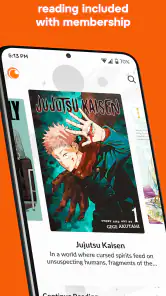
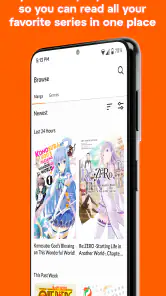
I approached Crunchyroll Manga as a reading app rather than as an extension of a video service. That distinction matters. Its purpose is to put manga in one focused place, with the convenience of reading without advertisements and continuing when an internet connection is not available. After spending time with it, I see a straightforward choice: it is most appealing to readers who want a dedicated Crunchyroll manga experience, while people who prefer a broader comic library or a very flexible reading system may be happier elsewhere.
The app is free to install, and Crunchyroll, LLC presents it as a comics app for mature readers. It carries a Mature 17+ age rating, so I would not treat it as a general family reading shelf. The current version is 1.4.1, and it runs on Android 8.0 or later. Those details make it accessible to many existing Android users, although the age rating is an important part of deciding whether it belongs on a shared family device.
What I would consider before choosing it
My first decision criterion is reading habit. If you usually read one or two series in short sessions, the value comes from reducing friction: open the app, find the chapter, and read without the interruptions normally associated with ad-supported mobile content. If you collect many publishers, jump between comics and graphic novels, or want one app to act as a universal library, the decision becomes less obvious.
The second criterion is where and how you read. Manga is particularly well suited to phones because pages can be read in small bursts, but a phone screen also makes navigation and page orientation important. I found the strongest use case to be planned reading: save what I intend to read before leaving home, then use the offline option during a commute, flight, or weak-signal break. That workflow is more dependable than assuming every train carriage, waiting room, or hotel has a usable connection.
There is also a difference between “free to install” and “free as a complete reading service.” The app itself costs nothing to download, while its in-app purchases range from $13.99 to $179.99 per item. I would check the available access options inside the app before building a long-term reading routine, especially if I expect to follow several series. A reader who only wants to sample the experience can start cautiously; a committed reader should think about the total cost of maintaining access over time.
Social proof is encouraging but not decisive. The app holds a 4.6 average from around 2.7 thousand ratings, with over 500 reviews represented in its store feedback, and it has passed 100 thousand installs. I read that as a sign of genuine interest rather than proof that every reader will enjoy it. Manga apps are personal: catalog preferences, reading frequency, screen size, and tolerance for subscriptions or purchases can matter more than a high average.
A focused reading space instead of a crowded entertainment hub
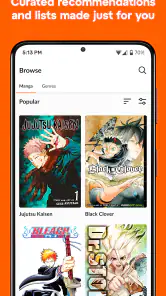
What I like most is the app’s clear identity. It does not ask me to treat manga as a small tab hidden among unrelated entertainment. The experience is centered on comics, which makes it easier to enter a reading mindset. That sounds minor, but a focused app can be more pleasant when I want ten quiet minutes with a chapter rather than a long session of browsing.
More From Our News Desk

Clash of Clans Is Won Between the Battles

Android Auto Makes the Case for Quieter Car Software

MobiOffice: Transforming Mobile Productivity with Seamless Integration

EA SPORTS FC™ Mobile Soccer: Redefining Mobile Sports Gaming

How Microsoft OneDrive Became a Mobile Productivity Giant

How Google Translate Breaks Language Barriers Effortlessly
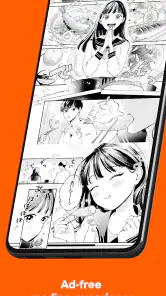
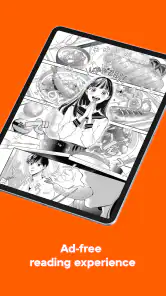
The ad-free promise is another meaningful advantage. Advertisements can be especially disruptive in comics because they break the rhythm between panels and pages. Removing that interruption makes the reading surface feel calmer, and it helps short sessions feel complete. I would not call that a reason for everyone to pay, but for someone who reads daily, avoiding repeated interruptions can be more valuable than it first appears.
Offline access is the feature I would use most strategically. I would prepare several chapters while connected to Wi-Fi, then test that they open before leaving. This is a useful habit because “available offline” is only helpful when the content has actually been prepared. It also prevents the common mistake of waiting until a connection has already disappeared. For commuters, travelers, and readers with inconsistent mobile data, this can be a practical difference rather than a decorative feature.
My less obvious tip is to treat downloads as a reading queue, not as a permanent archive. I would keep the next few chapters ready, finish them, and remove older material when storage becomes a concern. That keeps the app easier to manage and avoids downloading an entire reading history that I may never revisit. It is a small workflow change, but it suits a phone better than trying to reproduce a large desktop library on limited local storage.
How the reading routine feels in everyday use
Imagine a normal weekday: I leave home with a few minutes before work, read part of a chapter on the train, close the app at my stop, and return later during lunch. In that situation, the combination of focused reading and offline preparation is more important than having a long list of advanced tools. I do not need to solve a complicated setup each time; I need the next chapter to be easy to reach and the reading session to resume without distractions.
For a weekend reader, the pattern is different. I might browse more, compare several series, and decide whether the app’s available selection justifies making it my main manga destination. That is where I would slow down before spending money. A dedicated manga app can be excellent for a particular reading ecosystem while still feeling incomplete to someone whose tastes move across many kinds of comics.
One practical question is whether the service suits a shared device. Because the content rating is Mature 17+, I would keep it on my personal profile rather than installing it casually on a child’s tablet. The rating does not tell me that every title will appeal to every adult reader, but it does set a clear boundary for household use. Parents should make their own decision based on the reader’s age and the individual titles being accessed.
The trade-off between simplicity and control
Crunchyroll Manga’s simplicity is a benefit until I want more control than the app provides. Readers who like a clean, direct path from library to chapter will appreciate less clutter. Readers who organize their collections with elaborate tags, custom reading orders, or a large mixture of formats may find a specialist library manager more comfortable.
I also see a trade-off in offline reading. It is excellent when I plan ahead, but it asks me to think about preparation. Someone who expects every chapter to be instantly available in any situation may find that habit inconvenient. My workaround is simple: whenever I am on reliable Wi-Fi, I prepare the next reading session rather than waiting until the last minute.
Another point is screen size. On a compact phone, manga pages may require more zooming or careful orientation than on a tablet. I would not reject the app for that reason, but I would test a few pages before committing to a purchase. The same content can feel relaxed on a larger display and cramped on a small one. A reader who mostly uses a tablet may judge the experience differently from someone who reads one-handed on a phone.
Where other manga and comic apps may fit better
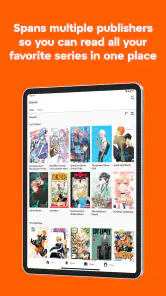
The usual alternatives fall into different groups, and each group solves a different problem. A broad digital comic marketplace may be better for someone who wants manga alongside graphic novels, western comics, and other formats in one account. A publisher-specific reader may be preferable when a favorite catalog is concentrated there. A library-borrowing service can make more sense for readers who prioritize borrowing over ownership or paid access. I would choose among these categories based on the collection I actually read, not on the interface alone.
Crunchyroll Manga has the clearest advantage when the reader values a dedicated manga environment, ad-free sessions, and the ability to prepare reading for offline use. An alternative may win when catalog breadth is the main concern. Since no single app can be the best home for every publisher and every reading model, I would make a short list of the series I care about and check which category serves them most consistently.
There is also a difference between reading convenience and collection permanence. Some people want a service that feels like a current reading subscription: open it, read what is available, and keep moving. Others want to build a carefully owned digital library that remains central to their personal collection. I would lean toward Crunchyroll Manga for the first mindset. If permanent personal organization is the priority, I would compare purchase and library-management options elsewhere before switching.
Readers who dislike recurring decisions about access should pay attention to the purchase structure. The presence of in-app purchases from $13.99 to $179.99 per item means the financial commitment can become substantial depending on how much is purchased. I would not assume that a free download makes the whole experience inexpensive. Before paying, I would identify whether I am buying occasional convenience or committing to a large reading habit.
What switching actually involves
Moving to this app is easy at the installation level, but changing a reading routine takes more thought. I would first decide which series I want to read immediately, then prepare only a manageable amount for offline use. That avoids spending time filling the device with chapters I may not start. I would also keep a note of where I stopped in each series during the transition, because switching apps can make a familiar reading queue feel scattered.
The bigger cost is not technical; it is organizational. If I already have bookmarks, purchases, or a carefully arranged library in another service, I should expect some manual rebuilding. The benefit is that I may end up with a cleaner, more focused reading list. The downside is that readers with a large established collection may not want to recreate their habits simply for an ad-free interface.
My advice is to run a short trial period before making a large purchase. Read during the times you normally read, including one session with a weak connection if offline use matters. See whether the catalog matches your taste, whether the screen feels comfortable, and whether the app’s navigation fits your memory of where you stopped. That test answers more than a quick installation because it measures the complete routine rather than the first impression.
Who should use it, and who should skip it
I would recommend it to a manga reader who wants a focused app, dislikes advertisements inside reading sessions, and values preparing chapters for travel or unreliable connectivity. It is also a sensible starting point for someone already comfortable with Crunchyroll’s ecosystem and looking for a dedicated comics experience rather than a general digital bookstore.
I would be more cautious if your reading list spans many comic categories or depends on a particular collection that is not available in your preferred service. I would also skip it as a primary choice if you rarely read manga, do not want to plan offline sessions, or strongly prefer owning and organizing every item independently. In those cases, a broader marketplace, a borrowing service, or a library-focused reader may match your priorities better.
For younger readers, I would not install it without considering the Mature 17+ rating. For families, a separate age-appropriate comics solution is likely the more responsible choice. That is not a criticism of the app; it is simply a reminder that its intended audience is adult-oriented.
My recommendation after weighing the trade-offs
My recommendation is to try Crunchyroll Manga as a focused reading tool, not to treat it automatically as your only comics library. Its strongest combination is clear: ad-free reading, offline preparation, and a dedicated manga setting. Those qualities make a real difference during commutes, travel, and short daily breaks. I especially like the idea of keeping a small, intentional offline queue rather than relying on a connection every time I want to read.
At the same time, I would make the catalog and payment model part of the decision before committing heavily. The free installation lowers the barrier to testing, but in-app purchases can reach $179.99 per item, so a reader with a large appetite should plan carefully. I would start with the series I genuinely intend to read, test the workflow on my own phone, and only then decide whether the app deserves a central place in my routine.
The app’s 4.6 average and growing install base suggest that it has found an audience, but my final judgment is more specific: it is a good fit for readers who value a calm, dedicated manga experience over maximum flexibility. It is not the universal answer for every comic collection, and it does not need to be. If your priority is convenient manga reading with fewer interruptions and preparation for offline moments, I think it is worth trying. If your priority is the widest possible library or detailed long-term collection control, compare alternatives before switching.
Crunchyroll Manga Frequently Asked Questions
Is Crunchyroll Manga free to download, and what might I pay for?
Crunchyroll Manga is free to download, but some access may involve in-app purchases. The app’s listed purchase range is from $13.99 to $179.99 per item, so check the purchase details shown in the app before confirming anything. What you can read may depend on the title, chapter, and access option available to you; downloading the app does not necessarily mean every manga is included at no extra cost.
Is Crunchyroll Manga suitable for children?
Crunchyroll Manga is rated Mature 17+, so it is intended for older teens and adults rather than young children. Manga can cover a wide range of themes, and the age rating is a useful signal to consider before installing it for yourself or someone else. If you are choosing content for a younger reader, review the individual series and use your family’s usual guidance around age-appropriate reading.
What is Crunchyroll Manga, and what can I read in the app?
Crunchyroll Manga is a mobile reading service focused on Japanese comics, allowing users to browse and read manga digitally on compatible Android and iOS devices. The catalog can include popular series, simulpub chapters, and back-catalog content, although availability varies by country and licensing agreements. Before downloading, check the current in-app selection and whether your preferred titles are supported in your region.
Do I need a Crunchyroll subscription to read manga?
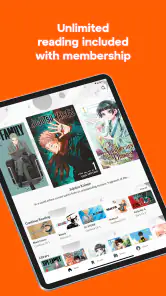
Access requirements depend on the title, chapter, territory, and the current Crunchyroll service structure. Some content may be available through a paid Crunchyroll membership, while other chapters can require separate access or may not be offered in every market. Subscription benefits and manga availability can change, so review the pricing page and the information shown in the app before assuming that all manga is included.
Can I read Crunchyroll Manga offline?
The app’s summary highlights ad-free reading and offline access, making it worth considering if you want to read without a connection. Offline availability may still depend on the title or access option, and downloaded chapters can have usage limits. If you frequently travel or have limited data, check the app’s current settings and title pages to see how to save chapters and whether they remain accessible as expected.
Pros
- Official access to popular manga from trusted publishers.
- Clean reading interface with smooth page navigation.
- New chapters can appear close to their Japanese release.
- Library tools make it easy to track series and chapters.
- Available on both Android and iOS devices.
Cons
- The catalog varies considerably by country and licensing rights.
- Many titles require a paid Crunchyroll subscription to read.
- Some manga are unavailable in digital format or end abruptly.
- Offline reading may be limited to supported subscription plans.
- Readers may need separate apps for manga and anime content.
- Category
- Comics
- Version
- 1.4.1