ChatSpace - Chat, Talk & Fun
- 324.00
- 3.7
- Installs
- 100.00K
- Price
- Free

Screenshots
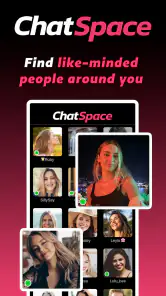




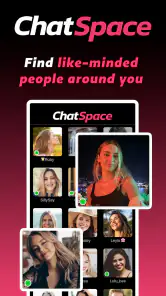


Analysis by Reviewed
I approached ChatSpace as a quick way to move from wanting a conversation to actually having one, rather than as a replacement for every social network on my phone. That distinction matters. This is a free social app from Coshi B.V. aimed at mature users, and its appeal is the promise of less setup before reaching real people. In practice, I found the experience most useful when I had a clear reason to start a conversation, but less convincing when I wanted a carefully organized community, a dependable contact list, or a polished long-term social home.
The app has a 3.7 average from around 1.6 thousand ratings, with more than 100 thousand installs. Those figures suggest that ChatSpace has found an audience, although they also point to an experience that will not feel equally smooth for everyone. It is currently at version 0.0.68 and works on Android 8.0 or later. The mature 17+ rating is important: I would not treat this as an app for younger users or as a casual family chat tool.
From wanting a conversation to deciding whether ChatSpace fits
The starting condition: when speed matters more than a full social profile
The best starting point for ChatSpace is a moment when I want to meet or message people without spending a long time constructing an online identity first. Traditional social platforms usually ask me to follow accounts, build a profile, manage contacts, and understand a complicated feed before the social part becomes useful. ChatSpace takes a more direct position. Its core idea is that the conversation should begin early, with less ceremony around it.
That makes the app interesting for someone who is curious about live social interaction, wants a change from familiar contacts, or simply dislikes the administrative side of larger networks. I can imagine opening it during a quiet evening, after moving to a new area, or when I want a lightweight conversation that does not depend on an existing friend group. The experience is more immediate than a conventional social feed because the purpose is closer to entering a chat space than browsing a personal media archive.
There is a trade-off at the entrance, though. Less complicated sign-up can be convenient, but it also means I should be more deliberate about what I share and how quickly I trust a new contact. The app’s mature rating reinforces that point. I would keep personal details, location information, workplace information, and private photographs out of an early conversation until the other person has earned that level of trust.
My practical advice is to decide what you want from the first session before opening the app. If the goal is a brief conversation, I can judge the service by how quickly it gets me there. If the goal is to build a stable circle of friends, I need to look more closely at how well conversations continue after the first exchange. Those are different jobs, and ChatSpace is naturally better suited to the first one.
The first steps: reducing setup without removing judgment
The initial appeal is the low barrier. I do not approach ChatSpace expecting a long profile-building exercise or a complex social map. That helps the app feel approachable, especially for someone who has avoided larger platforms because they seem over-designed. The important change in mindset is that the app’s simplicity shifts more responsibility onto the user. I have to decide which conversations are worthwhile instead of relying on a carefully tuned feed to filter everything for me.
More From Our News Desk

Clash of Clans Is Won Between the Battles

Android Auto Makes the Case for Quieter Car Software

MobiOffice: Transforming Mobile Productivity with Seamless Integration

EA SPORTS FC™ Mobile Soccer: Redefining Mobile Sports Gaming

How Microsoft OneDrive Became a Mobile Productivity Giant

How Google Translate Breaks Language Barriers Effortlessly
Once I reach the chat-oriented part of the experience, I would begin with a neutral opening rather than immediately asking for personal information. A short question about interests, a light comment, or a response to the conversation’s direction gives me a better sense of whether the interaction is genuine. This is one of the less obvious ways to use the app well: treat the first exchange as a screening step, not as proof that a new connection is already trustworthy.
That workflow also helps with the app’s mature audience. A 17+ label does not make every interaction appropriate or safe, so I would still use the platform with normal online boundaries. If a chat becomes uncomfortable, demanding, or overly personal too quickly, there is no benefit in forcing it to continue just because the app made the introduction easy.
Moving from the first message to a useful exchange
Chat apps often feel impressive for the first few minutes and then become vague. ChatSpace’s real test is what happens after the opening line. I look for whether a conversation can develop naturally, whether the interface stays out of the way, and whether I can tell which interactions deserve more attention. The app’s direct format works best when the other person is also ready to participate. It cannot manufacture chemistry, patience, or a shared interest.
For an everyday example, imagine that I have an hour to spare after work and want to talk rather than scroll. I open ChatSpace, start with a simple topic, and spend the first few minutes checking whether the exchange is balanced. If the other person asks questions as well as answering them, I continue. If the conversation consists of one-word replies or repeated requests for private information, I leave it there. The useful outcome is not merely sending a message; it is reaching a conversation that feels worth my time without turning the session into a long search.
This is where ChatSpace differs from a conventional social network. A feed-based service gives me a stream of posts and lets social contact emerge indirectly through comments, reactions, or mutual follows. A dedicated messaging service usually assumes that I already know who I want to contact. ChatSpace sits between those models: it is more immediate than a feed and less dependent on an established address book. That middle ground is its clearest identity, but it also means the quality of the experience depends heavily on who is available and how they use the space.
Handoffs: deciding what happens after a promising chat
A good first conversation creates a handoff. I need to decide whether to keep chatting in the app, return later, or move the connection elsewhere. This is a point where I would slow down. The convenience of starting quickly should not pressure me into sharing another account, phone number, email address, or social profile before I am ready.
For a casual interaction, staying inside ChatSpace is the sensible choice. It keeps the conversation tied to the place where it began and avoids expanding a brief encounter into a larger personal connection. If the exchange becomes genuinely useful or friendly over several sessions, I can make a separate decision about whether another communication tool is better. A familiar messenger may offer a stronger contact-management system, while a social network may be better for seeing a person’s broader public activity. ChatSpace is most valuable at the introduction stage; another service may be better for the long-term relationship.
This handoff also reveals a limitation. An app built around immediate connection can feel less satisfying when I need a structured history of relationships, groups, or ongoing projects. Someone organizing a volunteer team, managing a club, or coordinating recurring events will probably be happier with a platform designed around groups and known contacts. ChatSpace can start a conversation, but I would not automatically choose it as the main workspace for a complicated community.
There is another practical handoff to consider: paid elements. The app is free to install and use as an entry point, but in-app purchases range from $5.99 to $359.99 per item. That is a wide range, so I would not spend anything impulsively during the excitement of a new conversation. I would first use the free experience long enough to understand what I actually need, then check the exact item and its value before confirming a purchase. For many users, the free starting point may be enough; for others, optional spending could become a meaningful part of the experience.
The result: what a successful session looks like
A successful ChatSpace session is not necessarily a large number of messages or a long list of new contacts. For me, the better result is one conversation that feels mutual, comfortable, and worth continuing. The app lowers the distance between opening a social app and reaching another person, which is useful when I do not want to spend time curating a profile or navigating a busy content feed.
The app is especially suitable for people who enjoy spontaneous conversation and can make their own decisions about boundaries. It may also suit users who have become tired of social platforms where the main activity is watching content rather than speaking with anyone. The directness can make the experience feel more active: I am there to interact, not just to consume updates.
At the same time, I would not recommend it as the only social app on a phone. It does not replace a private messenger for trusted contacts, a community platform for organized groups, or a public network for following creators and interests. Its role is narrower and clearer. Use it as a doorway to conversation, not as a complete digital life.
Where the flow breaks: friction, uncertainty, and the wrong expectations
The first break occurs when I expect every available conversation to be meaningful. No social matching or chat environment can guarantee that. Some sessions will feel lively, while others may be quiet, repetitive, or poorly matched to what I want at that moment. The app’s promise of immediacy should therefore be read as faster access to interaction, not a guarantee of instant friendship.
The second break is trust. A simple route into chat is helpful, but it can also make it easy to respond too quickly. I would avoid treating a friendly tone as evidence of identity, and I would be cautious about requests involving money, private images, urgent favors, or moving off the app immediately. This is not a criticism unique to ChatSpace; it is a direct consequence of using any service that helps strangers begin conversations quickly.
The third break is value. Because the app is free, it is easy to try, but the presence of purchases means I need to understand the difference between enjoying the basic experience and feeling pressured to enhance it. The upper end of the listed purchase range is substantial for an app I would use casually, so I would set a personal spending limit before exploring optional extras. If I cannot identify a clear benefit, I would keep using the free route or uninstall it.
The fourth break is maturity. The 17+ classification means I would not install it for a child, hand over my phone expecting a child-safe environment, or assume that every conversation will be suitable for all audiences. Adults should still use judgment, and younger users should choose a service intended for their age group instead.
Who should choose it, and who should skip it
I would recommend ChatSpace to an adult who wants a low-friction way to begin conversations with people outside an existing contact list. It makes sense for someone who prefers direct interaction to endless feed browsing, enjoys spontaneous chats, and is comfortable ending conversations that do not feel right. It is also a reasonable app to test when I want to see whether a new social space feels more natural than the mainstream alternatives I already use.
I would skip it if my main need is private communication with people I already know. A conventional messenger is more appropriate there. I would also skip it if I need reliable group administration, a professional identity, detailed contact organization, or a public portfolio. Those tasks require tools with a different structure, and trying to force ChatSpace into those roles would create unnecessary friction.
I would be cautious if I dislike uncertainty in social apps. The quick-start design is a strength for confident users, but it may feel exposed to anyone who wants extensive context before replying. In that case, a network built around mutual connections or visible communities could offer a better sense of who is on the other side of a conversation.
My final take after following the whole workflow
ChatSpace succeeds at one focused job: shortening the path from opening a social app to starting a chat. I like that it does not require me to treat socializing as a long profile-management project. The experience feels most worthwhile when I enter with a modest goal, start carefully, keep personal information private, and judge the quality of the exchange rather than chasing activity for its own sake.
Coshi B.V. has positioned this as a mature social app rather than a general-purpose communication utility, and that framing is useful. The free entry point makes it easy to test, while the in-app purchase range means I would approach optional spending with restraint. Its 17+ rating also deserves attention before installation, especially on shared devices.
My recommendation is conditional but positive: try ChatSpace if you want spontaneous conversations and are comfortable managing your own boundaries. Do not choose it as a replacement for a trusted messenger, a structured community platform, or a carefully moderated network built around known connections. When I use it for the job it actually handles well—making a first social connection quickly—it is appealing. When I expect it to provide the organization and certainty of a mature communication system, the gaps become much easier to notice.
ChatSpace - Chat, Talk & Fun Frequently Asked Questions
Is ChatSpace available for both Android and iOS?
ChatSpace is a social app for chatting and connecting with other people. Before downloading, check that your device meets the operating-system requirements shown for the version you plan to install. On Android, the current version requires Android 8.0 or later. Availability and compatibility can vary by device and platform, so use the relevant app store to confirm that ChatSpace can be installed on your phone.
What is ChatSpace - Chat, Talk & Fun, and what can I do with it?
ChatSpace - Chat, Talk & Fun is a social communication app designed for meeting people, starting conversations, and enjoying casual online interaction. Its description focuses on connecting and chatting with real users without complicated sign-ups or waiting. After creating a profile, users can typically browse available communities or chat options, send messages, and participate in conversations based on shared interests. The experience can vary depending on the active user base, location, and features available in the current version.
Is ChatSpace free to download and use?
ChatSpace is free to download, but some features may depend on in-app purchases. Individual in-app items range from $5.99 to $359.99, so check the payment screen carefully before making a purchase and make sure you understand what it unlocks. The app has a Mature 17+ age rating, which is also worth considering before downloading. Avoid confirming a payment unless you are comfortable with its price and terms.
Is ChatSpace safe for chatting with strangers?
As with any social or stranger-chat application, users should be careful when sharing personal information. Avoid revealing your home address, phone number, passwords, financial details, workplace information, or private photographs to people you have just met. Use the app’s blocking and reporting tools when available, and remember that profiles may not always represent a person accurately. ChatSpace is rated Mature 17+, so younger users should follow the applicable age requirements and use parental guidance.
Does ChatSpace require an account, and what permissions might it request?
ChatSpace is promoted as offering no complicated sign-ups, though it may still require registration before users can access messaging or social features. Depending on the platform and the functions you choose, it could request permissions such as notifications, camera, microphone, contacts, or photo-library access. Grant only permissions that are necessary for the features you intend to use. It is also worth checking the privacy policy to learn how profile information, messages, device data, and optional media permissions are handled.
Pros
- Simple interface makes conversations easy to start and follow.
- Supports casual chats without requiring advanced technical knowledge.
- Useful for meeting people with similar interests and hobbies.
- Fun features can make conversations more engaging than standard messaging.
- Available on mobile
- making chats convenient while traveling or away from a computer.
Cons
- User activity may vary
- so some chats or communities can feel quiet.
- Public conversations may expose users to unwanted messages or behavior.
- Privacy settings should be reviewed carefully before sharing personal details.
- The experience can depend heavily on the quality of other users.
- Frequent chatting may consume noticeable battery and mobile data.
- Category
- Social
- Version
- 0.0.68